
Government/Policies
2027: APC Challenges Atiku to Explain Legal, Financial Basis of Fuel Subsidy Plan

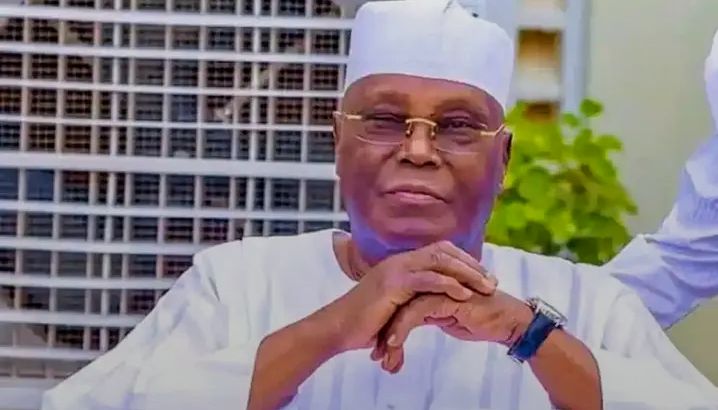
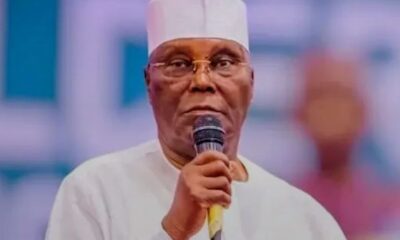
The All Progressives Congress Presidential Campaign Council (APC-PCC) has challenged the presidential candidate of the African Democratic Congress (ADC), Atiku Abubakar, to explain the legal, financial and operational framework for his proposed production subsidy on locally refined petroleum products.
The council said Atiku must clarify how the proposed intervention would operate within the provisions of the Petroleum Industry Act (PIA) 2021 and how the Federal Government would finance the scheme if implemented.
The demand followed Atiku’s recent proposal for a production subsidy targeted at petroleum products refined in Nigeria and sold to Nigerian consumers.
Atiku had said the proposed policy, which he would introduce if elected president in 2027, would be different from the previous petrol subsidy regime because it would support domestic refining rather than subsidise imported fuel.
He said only products confirmed to have been refined in Nigeria would qualify, while the programme would operate under a fixed spending limit, National Assembly approval and independent audits.
However, in a statement issued on Sunday, APC-PCC spokesman, Dele Alake, said the proposal raised important legal, fiscal and practical questions that Atiku needed to address.
APC questions PIA compliance
Alake cited Section 205(1) of the Petroleum Industry Act, which provides for wholesale and retail prices of petroleum products to be determined under unrestricted free-market pricing conditions.
The APC-PCC therefore asked Atiku to explain whether refineries that benefit from the proposed subsidy would be required to sell petrol at a government-prescribed price.
“If the answer is yes,” the council said, Atiku should identify the legal framework that would allow government to impose such a condition and explain how it would remain consistent with the PIA.
The council also asked what would happen if refiners received government support without being required to reduce their pump prices.
According to Alake, Atiku should explain how public support to refiners would translate into lower prices for consumers if there were no enforceable mechanism linking the subsidy to pump prices.
The debate comes as the Nigerian Midstream and Downstream Petroleum Regulatory Authority (NMDPRA) maintains that it does not fix petrol pump prices or issue administrative pricing templates except where statutory conditions for intervention are met.
APC demands cost of proposed subsidy
The ruling party’s campaign council also questioned the potential cost of Atiku’s proposal and how it would be funded.
Atiku has previously explained that his model could involve reducing the cost of crude supplied to qualifying domestic refineries.
He has argued that lowering the cost of refinery feedstock would enable local refiners to produce petrol more cheaply without forcing them to sell below cost.
But the APC-PCC argued that preferentially priced crude could reduce the value accruing to the Federation and, consequently, affect revenues available to the federal, state and local governments.
The council claimed that, depending on the size of the discount, the volume covered and whether the intervention applied to the entire crude barrel or only petrol sold domestically, the cost could run into trillions of naira annually.
It therefore asked Atiku to provide details on the proposed subsidy rate, annual spending limit, volume of crude or petrol to be covered, source of funding and the mechanism that would ensure that consumers actually benefit through lower pump prices.
The APC-PCC also requested safeguards against diversion, smuggling and fraudulent claims, as well as clarification on whether amendments to the Petroleum Industry Act would be required.
Council questions Atiku’s previous position
Alake also questioned Atiku’s current position on subsidy in relation to his previous support for downstream petroleum deregulation.
He recalled that Atiku, while speaking at the Lagos Business School in November 2022, had described the petrol subsidy system as fraudulent and pledged to complete its removal.
The APC spokesman also referred to an August 25, 2026 post by Atiku on X in which the former vice president stated that he would “restore it”, arguing that Atiku should explain the difference between his earlier position and the proposed production subsidy.
Alake said Atiku should also explain how the proposed arrangement would avoid problems associated with the former subsidy system, including alleged abuses, smuggling and fiscal losses.
The council further recalled that diesel and aviation fuel were deregulated during the administration of former President Olusegun Obasanjo, when Atiku served as vice president.
It said petrol remained the major petroleum product under the old subsidy arrangement before the reform process culminated in the Petroleum Industry Act.
Atiku says subsidy would support local refining
Atiku has maintained that his proposal is not a return to the former system of subsidising imported petrol.
He has described the policy as a production subsidy designed to reduce the cost of locally refined fuel.
According to him, government support would be directed at domestic refining so that qualifying refineries could obtain crude at a lower effective cost, produce petroleum products more cheaply and pass the benefit to consumers.
He has also argued that lower fuel prices could reduce transportation and logistics costs, with possible effects on the prices of food and other goods.
Atiku has compared the proposal to government support for local manufacturers, saying the objective would be to lower production costs while encouraging domestic investment and job creation.
APC highlights CNG and deregulation
The APC-PCC contrasted Atiku’s proposal with the Tinubu administration’s efforts to reduce transportation costs through compressed natural gas (CNG) conversion and electric mass transit initiatives.
The council said more than 120,000 vehicles had been converted to CNG and that CNG and electric-bus programmes had reduced fares on some routes.
It also maintained that the Federal Government would continue operating a deregulated downstream petroleum market, which it said had encouraged investment in domestic refining.
The council cited the Dangote Petroleum Refinery as an example of increased domestic refining capacity.
Fuel prices remain major political issue
The renewed dispute over petrol subsidy comes as fuel prices remain a major economic and political issue ahead of the 2027 presidential election.
Atiku has argued that the removal of petrol subsidy since 2023 has contributed to higher transportation, production and logistics costs, placing pressure on households and businesses.
The APC-PCC, however, said the administration would continue implementing measures aimed at reducing transportation costs while maintaining the deregulated petroleum market.
The council also said the NMDPRA was working with the Federal Competition and Consumer Protection Commission on concerns about price-gouging and with the Nigeria Customs Service to tackle the diversion of petroleum products across Nigeria’s borders.
The APC-PCC ultimately challenged Atiku to publish a detailed policy document alongside an independent legal and fiscal assessment of the proposed production subsidy.
Until those details are provided, Alake said, the proposal lacks a clearly established legal and operational framework.
The exchange has further placed fuel pricing, domestic refining and the future of petroleum subsidies at the centre of the economic debate ahead of the 2027 presidential election.






Government/Policies
Nigeria at UNGA 2026: Tinubu, Shettima Face Questions Over Democracy, SDGs, Cost of Delegation

President Bola Tinubu is expected to address the 81st United Nations General Assembly in New York this week, amid questions over Nigeria’s progress on democracy, development and the Sustainable Development Goals.
Unless there is a change in his plans, Tinubu is expected to deliver Nigeria’s national statement on Thursday, while Vice-President Kashim Shettima could again represent the country at the high-level gathering, as he has done in the past two years.
The development comes against the backdrop of renewed debate over the constitutional procedure for transferring presidential powers during the President’s absence from the country.
According to a Premium Times report cited in an opinion article examining Nigeria’s participation in the UN General Assembly, Tinubu has not formally transferred power to Shettima during his overseas absences since assuming office in 2023.
The issue has generated questions about the practical application of constitutional provisions concerning presidential authority when the President is away from the country.
The 81st UN General Assembly is being held under the theme, “Restoring trust, managing transformation: a United Nations that delivers for all.”
The theme places particular emphasis on restoring confidence in international institutions, accelerating development and ensuring that the benefits of economic and social progress reach wider populations.
For Nigeria, the theme also provides an opportunity for the government to explain its progress towards the Sustainable Development Goals and its broader development commitments.
Nigeria and the unfinished development agenda
The UN’s current development agenda has its roots in the Millennium Declaration adopted by world leaders in 2000.
The declaration eventually produced the Millennium Development Goals, which set targets to be achieved by 2015.
The opinion article argued that while countries including China, Brazil and Rwanda recorded significant progress during the MDG period, Nigeria struggled to achieve most of the targets.
China, for instance, recorded a dramatic reduction in extreme poverty over the period, with hundreds of millions of people lifted out of poverty.
Nigeria, by contrast, achieved the MDG target relating to net primary school enrolment but recorded limited progress in several other areas.
The article noted that despite significant economic growth during the administration of former President Olusegun Obasanjo, poverty remained widespread.
Nigeria was subsequently described by the World Bank as the country with the largest number of people living in extreme poverty, particularly around 2018, although poverty measurement methodologies and estimates have changed over time.
Buhari’s 100 million poverty pledge
Former President Muhammadu Buhari also made poverty reduction a major component of his administration’s development agenda.
In 2015, while the Sustainable Development Goals were being launched, Buhari said poverty eradication and reducing inequality were central to his government’s plans.
He also promised to tackle unemployment and inequalities which, according to him, had been worsened by policies that benefited a small section of the population.
Four years later, Buhari announced a plan to lift 100 million Nigerians out of poverty within 10 years.
He argued that Nigeria could achieve the feat with the right leadership and a clear sense of purpose, citing the experiences of countries such as China and India.
However, critics later questioned the extent to which the administration’s poverty reduction targets were achieved.
The article also criticised Buhari for what it described as limited public emphasis on the SDGs during his later years in office.
Tinubu and the 2030 Agenda
The current administration has also made economic reforms, poverty reduction and social intervention programmes central to its public messaging.
At the 2023 UN General Assembly, Tinubu called for stronger international cooperation among African countries to advance the 2030 Agenda and the SDGs.
In 2024, Shettima similarly discussed the difficulties confronting developing countries in financing the implementation of the Goals.
However, the article questioned whether Nigeria would use this year’s UN gathering to provide a detailed account of its progress towards the 17 SDGs.
The 17 Goals cover areas including poverty eradication, quality education, gender equality, decent work, reduced inequalities, climate action, peace and justice, and stronger institutions.
The UN General Assembly provides several platforms where governments, development organisations, civil society groups and private-sector actors showcase initiatives linked to the Goals.
These include the SDG Media Zone and other events designed to highlight development initiatives and partnerships.
First Lady’s social protection initiative questioned
Another issue raised in the article concerns the role of First Lady Oluremi Tinubu in the administration’s social intervention efforts.
While President Tinubu was away on vacation, the First Lady launched the Household Prosperity and Empowerment Social Protection Project, described as a $1 billion social protection programme.
The initiative is intended to move vulnerable Nigerians from short-term assistance towards longer-term economic empowerment and self-reliance.
However, the article questioned the constitutional and institutional basis for the initiative, describing it as an area requiring greater scrutiny.
It also linked the programme to questions surrounding government cash-transfer programmes.
The concerns come as Nigeria continues to face scrutiny over the management and distribution of social protection funds, including issues raised by the Auditor-General regarding billions of naira in cash transfers intended for vulnerable Nigerians.
Questions over cost of UN trips
The article also raised concerns about the financial implications of Nigeria’s annual participation in the UN General Assembly.
It estimated that if a large delegation of senior officials travelled to New York, the cost of airfare and official estacode allowances could run into hundreds of millions of naira.
According to figures cited in the article, the estimated cost could reach about N638 million for a one-week trip or approximately N835 million for two weeks, based on official allowances and assumptions about first-class travel.
The figures do not include accommodation, airport transfers, security, protocol vehicles, aides, communications, hospitality and other logistical expenses.
The article also referred to foreign-exchange transactions associated with previous presidential and vice-presidential trips.
It cited transactions involving millions of dollars and euros around the period of Tinubu’s 2023 UN General Assembly trip, as well as a later foreign-exchange transaction associated with Shettima’s international travel.
Such figures, however, require careful verification against official financial records before they can be treated as the complete cost of any particular UN delegation.
What will Nigeria tell the world?
At the centre of the debate is whether Nigeria’s delegation will use the UN platform to provide a detailed account of the country’s progress on democracy, poverty reduction and the SDGs.
Nigeria has repeatedly affirmed its commitment to the 2030 Agenda, while successive administrations have introduced programmes aimed at reducing poverty, improving social protection and expanding economic opportunities.
At the same time, the country continues to face challenges involving poverty, unemployment, inequality, education, healthcare, insecurity and institutional accountability.
The UN General Assembly therefore offers the Nigerian government an opportunity to present measurable evidence of its progress while also outlining the areas where further international cooperation and domestic reforms are required.
The broader question raised by the article is whether the annual gathering in New York should be treated principally as a diplomatic ritual or as an opportunity for governments to demonstrate concrete results to the people they represent.
For Nigeria, the answer may depend less on the speeches delivered at the General Assembly and more on measurable outcomes at home.
If the country is able to demonstrate sustained progress in poverty reduction, institutional accountability, economic opportunity and the other SDGs, the story at the UN becomes easier to tell.
If not, questions about the gap between official declarations and realities facing citizens are likely to remain part of Nigeria’s international image.
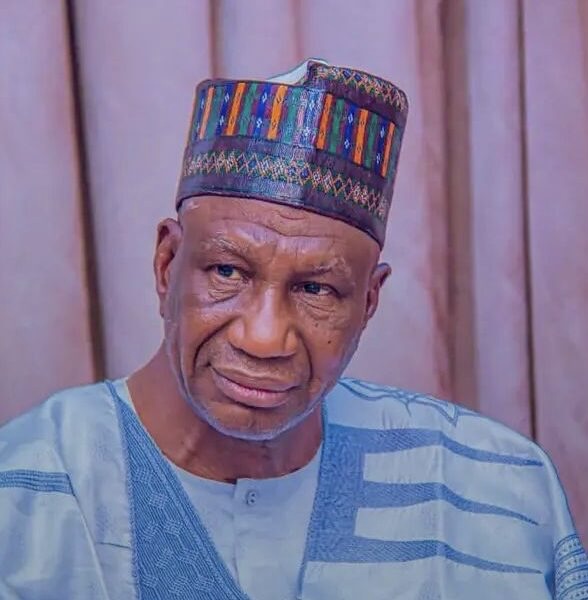
The All Progressives Congress governorship candidate in Yobe State, Baba Wali, has pledged to sustain and build on the achievements of Governor Mai Mala Buni if elected governor in the 2027 governorship election.
Wali made the commitment on Saturday during a visit to the Gudi Emirate in Fika Local Government Area as part of his consultations with traditional rulers and other stakeholders ahead of the election.
The APC candidate said his seven-year experience working in the Buni administration had given him a clear understanding of the policies, programmes and development agenda of the current government.
He assured residents that, if elected, his administration would prioritise continuity while introducing measures aimed at consolidating the gains already recorded by the present administration.
Wali expressed appreciation to Governor Buni for giving him the opportunity to serve in his government, describing the experience as valuable to his political and administrative career.
“I will be forever grateful to the Governor of Yobe State, Mai Mala Buni, for allowing me to work in his administration for seven years.
“If I win the election, my administration will continue from where Buni stopped.
We will continue with the good works of the present administration and build on the achievements recorded so far for the benefit of the people of Yobe State,” he said.
Wali also acknowledged the contributions of former Yobe governor and current Minister of Police Affairs, Ibrahim Geidam, to his career.
He said Geidam provided him with significant support and opportunities during his time in government, adding that he remained grateful for the role the former governor played in his development.
Explaining the purpose of his visit to the Gudi Emirate, Wali said he was at the palace to seek the prayers, guidance and support of Emir Ismaila Gadaka and the people of the emirate ahead of the 2027 election.
He also appealed to the traditional institution and residents of the emirate to support the APC and its candidates at both the state and national levels, including President Bola Tinubu.
“We are urging the Emirate of Bade to support us and all the APC candidates,” Wali said.
The APC candidate further maintained that his experience in government had exposed him to the challenges confronting Yobe State and equipped him with the knowledge needed to provide effective leadership.
He said his administration, if given the mandate, would focus on consolidating existing achievements and addressing areas requiring further attention.
Responding, the monarch assured Wali of the emirate’s support, noting that traditional institutions would continue to support political candidates whose emergence would contribute to the development and well-being of the people.
The monarch, however, urged political leaders to put the interests of the people above political considerations and ensure that government policies and programmes translated into tangible development across the state.
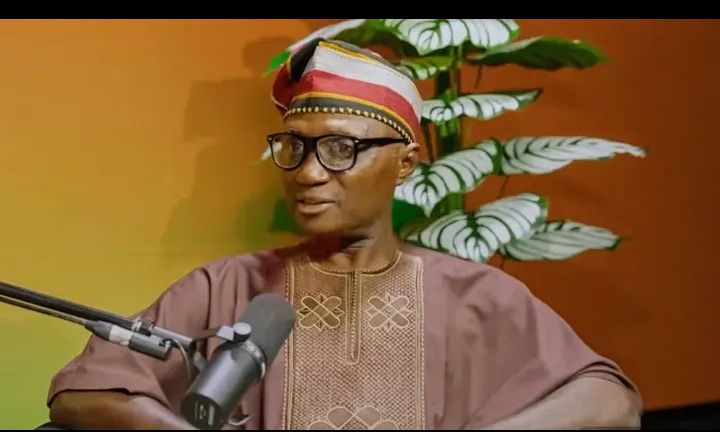
A professor at Obafemi Awolowo University, Tunji Ogunyemi, has warned that restoring petrol subsidy could push more than 15 states in Northern Nigeria into severe financial crisis within three months.
Ogunyemi issued the warning while speaking on Open Forum 360, a podcast hosted by Dare Adekanmbi, on Friday.
He was reacting to the proposal by the African Democratic Congress presidential candidate, Atiku Abubakar, to introduce a form of petrol subsidy if elected president in 2027.
The university don argued that bringing back subsidy would reduce the amount of money available for distribution through the Federation Account, a major source of revenue for most state governments.
According to him, any significant reduction in Federation Account allocations could leave many states unable to meet their financial obligations.
“I think it is calamitous, to say the least, if we reverse the subsidy regime in Nigeria in favour of returning the subsidies,” Ogunyemi said.
He described the Federation Account as the financial lifeline of more than 30 states, arguing that only a handful of states could operate without depending heavily on federal allocations.
“The Federation Account is the jugular of more than 30 states in the federation. Only about four states in Nigeria can survive without the Federation Account,” he stated.
Ogunyemi cited Lagos, Delta and Rivers among states he said had stronger internally generated revenues and could cope better with reduced federal allocations.
He contrasted them with states such as Taraba, which he said rely significantly on Federation Account revenue.
“So if you now say reduce the accrual from the account, I tell you more than about 15 states in the north will collapse. They will collapse within three months,” he warned.
Salary, Pension Payments at Risk
The professor also cautioned that a reduction in government revenue could make it difficult for states to pay workers and pensioners.
He said states could return to the period when governments struggled to meet monthly salary obligations, while pension payments could also become increasingly difficult.
“The second is that states will return to a regime of incapacity to pay salaries, let alone pensions,” he said.
Ogunyemi further warned that the Federal Government could also experience financial difficulties if its share of national revenue declined.
He noted that between 60 and 70 per cent of federal government expenditure goes towards recurrent spending, describing the spending as largely consumption-related.
According to him, reduced revenue would leave the government struggling to finance even essential recurrent obligations, while funding for infrastructure and other capital projects could suffer.
Debt Servicing Concerns
The don also raised concerns about Nigeria’s ability to service its debts if government revenue falls significantly.
He warned that difficulties in meeting debt obligations could negatively affect the country’s financial standing and creditworthiness.
Ogunyemi also questioned the political implications of Atiku’s subsidy proposal, suggesting that the promise could be aimed at winning public support ahead of the 2027 presidential election.
He argued that Atiku, having served as Vice-President, should provide Nigerians with clearer explanations of the potential fiscal consequences of restoring subsidy.
Atiku Clarifies Subsidy Proposal
Atiku had initially promised to restore petrol subsidy, arguing that Nigerians had not benefited sufficiently from its removal and questioning how the savings from the policy had been utilised.
He later clarified that his proposal was not a return to the previous import-subsidy arrangement.
The former Vice-President said he favoured a targeted and capped intervention designed to support domestic refining and production, with transparency and auditing mechanisms to prevent abuse.
President Bola Tinubu removed the petrol subsidy on May 29, 2023, during his inauguration, declaring that “fuel subsidy is gone.”
The announcement was followed by a sharp increase in petrol prices, contributing to higher transportation and living costs across the country.
The Federal Government has continued to defend the policy, arguing that subsidy removal was necessary to reduce fiscal pressure and free up resources for governments at federal, state and local levels.
The Ministry of Finance said the reforms generated an estimated N15.8 trillion in resources for the Federation between June 2023 and December 2025.
-
 Security2 months ago
NDLEA Declares Alleged Drug Kingpin, Three Associates Wanted, Freezes ₦9.8bn Linked to Syndicate
-
 National Affairs2 months ago
ICPC Uncovers 908 Suspected Ghost Workers Across 50 Federal MDAs, Recovers ₦942 Million
-

 Business/Finance2 months ago
How to Apply for Tunde Onakoya’s ₦250 Million Scholarship Programme and Free Laptop Offer
-
 Politics2 months ago
Atiku Challenges Tinubu to Reveal Details of ₦15.13bn SUV Procurement in 2026 Budget
-
 Judiciary | Public Safety2 months ago
INEC Tells Court Voter Information Is Not Confidential in Emeka Ike’s ₦10bn Lawsuit
-
 Judiciary | Public Safety2 months ago
Court to Rule Friday on NDLEA’s Bid to Destroy ₦480bn Meth Lab in Ogun
-
 Security2 months ago
Family Paid ₦50 Million Ransom to Secure Release of Abducted Kebbi Judge
-
 News2 months ago
2026 Budget: FG Earmarks ₦962.83bn for SUVs, Empowerment Projects Amid Debt Concerns