
2027 Elections
2027: INEC Warns AI Misuse Poses Real Threat to Election Credibility

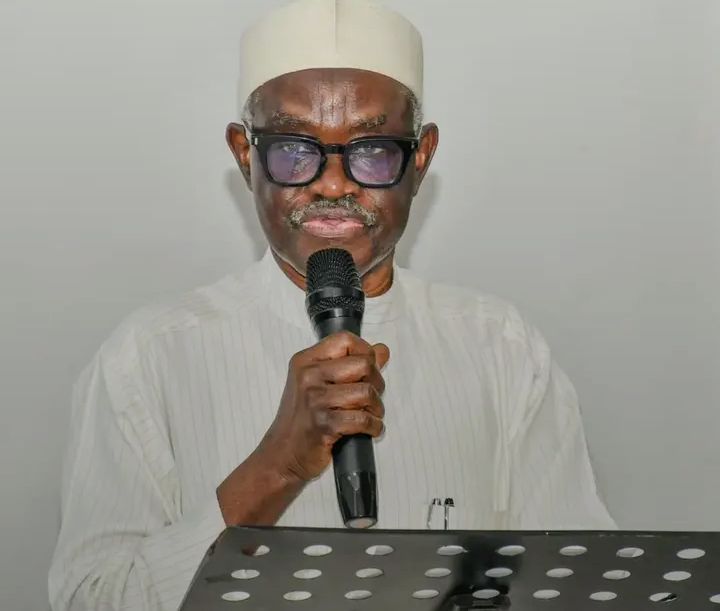
The Independent National Electoral Commission has warned that the misuse of artificial intelligence in creating and spreading manipulated content is no longer a distant or theoretical threat to Nigeria’s 2027 general elections.
INEC said the growing accessibility of generative artificial intelligence had made it cheaper and increasingly difficult to detect fabricated audio, videos and images, raising concerns about the potential effect of manipulated information on voters and confidence in the electoral process.
The commission raised the alarm on Monday in Abuja during a capacity-building workshop for its Public Affairs Officers drawn from states across the country.
The warning was contained in a statement signed by INEC’s Director of Voter Education and Publicity, Victoria Eta-Messi.
Declaring the workshop open, INEC National Commissioner and Chairman of the Information and Voter Education Committee, Mohammed Haruna, said artificial intelligence could be exploited not only to produce fabricated content but also to develop highly targeted messages aimed at exposing different groups of voters to conflicting narratives.
Haruna said, “Generative AI has made it cheaper and considerably harder to detect manipulated audio, video and images.”
He stressed that the threat posed by AI to elections went beyond fake photographs, videos and audio recordings, noting that the technology could also be used to create targeted communication capable of presenting different versions of events to different segments of the electorate.
According to him, the development has made it necessary for electoral technology and electoral communication to be considered as interconnected components of election management.
Haruna recalled that INEC Chairman, Professor Joash Amupitan, had recently noted that electoral credibility no longer depended solely on physical election materials and technology such as ballot papers, the Bimodal Voter Accreditation System and result sheets.
Amupitan, according to Haruna, had emphasised that the information environment in which voters formed their judgments was equally important to the credibility of elections.
The INEC chairman had consequently called for electoral technology and electoral communication to be treated “not as separate concerns but as a single discipline.”
INEC trains communication officers ahead of 2027.
Haruna said the workshop was organised in response to the changing information environment and was designed to equip Public Affairs Officers with the knowledge and practical skills required to communicate accurately and respond to emerging information threats ahead of the 2027 elections.
The workshop is themed, “Strengthening PAOs Capacity for Credible, Verified and Responsible Election Communication Towards 2027.”
Describing the Public Affairs Officers as “the frontline communicators of INEC in the states,” Haruna said the credibility of the commission’s communication depended significantly on their work.
He said participants would receive training in verification, escalation procedures and clear and consistent messaging.
Haruna added that the skills acquired would be particularly important as the 2027 general elections approach and the volume of election-related information circulating across traditional and digital platforms increases.
INEC raises concern over misinformation
In her welcome remarks, Eta-Messi said Public Affairs Officers played an important role in shaping Nigerians’ perception of the electoral commission.
“It is through you that Nigerians form much of their impression of who we are, what we stand for, and how reliable our information is,” she said.
She noted that INEC operated under constant public scrutiny and was frequently confronted with attempts to misrepresent its activities and undermine public confidence in the commission.
According to her, the challenge requires public communication officers to be adequately prepared to distinguish verified information from misinformation and disinformation.
Eta-Messi disclosed that the workshop was not intended to be a one-off intervention.
She said additional capacity-building programmes were already at an advanced stage of planning, with support from development partners.
Describing the current training as “the beginning of sustained engagement,” the director said the objective was to ensure that INEC’s communication officers were sufficiently equipped to handle their responsibilities.
Officers to receive AI communication training
Presenting the objectives of the workshop, INEC.
Deputy Director, Information and Publicity, Wilfred Ifogah, said the programme was designed to strengthen the practical.
communication skills required by Public Affairs Officers in their daily duties and in preparation for the 2027 elections.
Ifogah said the training would clarify the lines of escalation between Public Affairs Officers, heads of department, the Voter Education and Publicity Department and Resident Electoral Commissioners.
He added that the programme would promote consistency in press statements, talking points and social media communication across the commission.
The training will also strengthen the officers’ ability to monitor the information ecosystem and respond appropriately to misinformation and disinformation.
Ifogah said participants would be introduced to the responsible use of artificial intelligence in communication work, including its practical applications, limitations and safeguards relating to confidentiality and verification.
He said the objective was not simply to expose officers to new technology but to ensure that they understood how to use it responsibly while maintaining the accuracy and credibility expected of INEC communication.
Participants, he added, were expected to leave the workshop with “a shared appreciation of the standards of accuracy, consistency and professionalism required of every Public Affairs Officer of this Commission,” particularly as Nigeria moves towards the 2027 general elections.
The commission’s latest warning places the information environment alongside electoral technology as an important area of preparation for the 2027 polls, with INEC seeking to strengthen its ability to verify information and respond to false or manipulated narratives in real time.






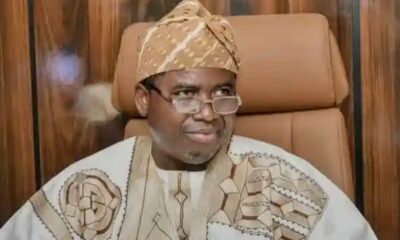

The All Progressives Congress (APC) in Oyo State has warned members and promoters of the political group, Boye Nation, against campaigning for candidates of different political parties ahead of the 2027 general elections.
The party insisted that anyone supporting President Bola Tinubu’s re-election bid must also work for all other APC candidates contesting elective positions in the state.
It consequently urged the group to either return to the APC and support its candidates across board or stay away from its campaign activities.
The warning followed the circulation of a video on social media showing campaign-branded vehicles displaying photographs and messages in support of President Tinubu and the governorship candidate of the Allied Peoples Movement (APM) in Oyo State, Bimbo Adekanmbi.
The vehicles reportedly carried the symbol of Boye Nation alongside the logos of the APC and APM, although no accompanying voice messages were heard.
In a statement issued in Ibadan on Thursday, the Oyo APC Publicity Secretary, Olawale Sadare, said the party had received reports indicating that some individuals behind the activities of Boye Nation in the state were allegedly planning to create confusion within the political space.
Sadare, however, said the APC remained open to reconciliation with aggrieved members who had left the party, urging them to reconsider their political decisions.
He said, “We have got the reports from different sources that some individuals, who are behind the Boye Nation activities in Ibadan, are perfecting plans to create confusion in the polity.
“Some of these people celebrate their confusion on social media, but we can only wish them the best of luck. Information has it that some individuals who left our party recently are now trying to campaign for President Bola Tinubu against the presidential candidate of their new party.
“While we sympathise with the man in question, as he and his group must have realised the fatal error in their recent political move, we urge them to return home and play the role expected of them as progressive family members.”
The APC spokesman cautioned that the party’s willingness to reconcile with former members should not be interpreted as weakness.
He also rejected the use of campaign materials bearing the identities of multiple political parties, stressing that support for Tinubu must extend to other APC candidates.
“If you are supporting our presidential candidate, Asiwaju Tinubu, you must be intentional by working for the governorship, senatorial, House of Representatives and House of Assembly candidates of the APC at the same time, as doing otherwise would be unacceptable to us,” the statement added.
PUNCH Online reports that Ajiboye Sangogade, popularly known as Boye Nation, a former personal assistant and loyalist of ex-Minister of Power, Bayo Adelabu, led a group of APC members who defected to the APM in Oyo State in September 2026.
The development highlights the political differences surrounding party loyalty and campaign alignments ahead of the 2027 general elections.
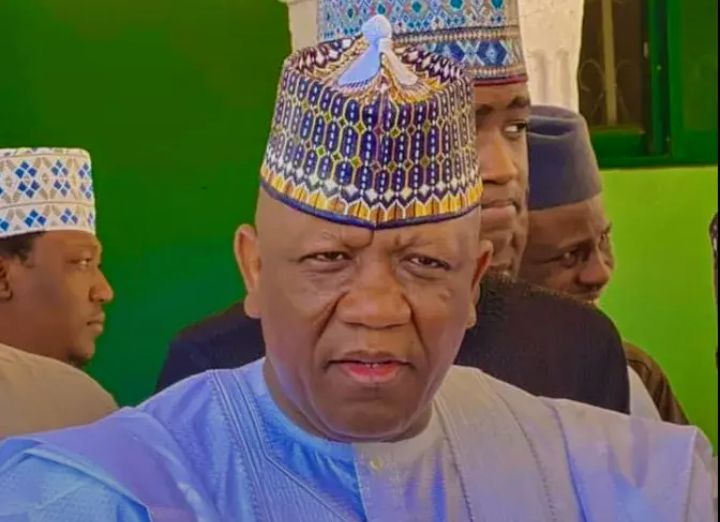
Former Zamfara State Governor and Director-General of the All Progressives Congress Presidential Campaign Council, Abdulaziz Yari, has challenged Ekiti residents to deliver at least 800,000 votes for President Bola Tinubu in the 2027 presidential election.
Yari made the appeal on Thursday during the APC campaign rally in Ekiti State, where he urged residents to increase their support for Tinubu, insisting that the President had performed well and deserved a second term.
Speaking at the rally, which was monitored on television by our correspondent, Yari said the Tinubu administration had not neglected Ekiti, citing investments in education, road infrastructure, youth development and women’s empowerment.
“Asiwaju has not forgotten the people of Ekiti. He has done his best by introducing schools and universities, constructing roads, providing educational support to youths and empowering women, among other initiatives,” he said.
Yari urged Ekiti residents not to allow what he described as the achievements of the Tinubu administration to go to waste.
“The labour of this great democrat cannot be allowed to go in vain,” he added.
Tinubu is seeking re-election in the January 16, 2027, presidential election, as scheduled by the Independent National Electoral Commission.
2027 Elections
Politics Is Expensive’: Wike Reacts to Opposition Complaints Over Abuja Billboard Costs
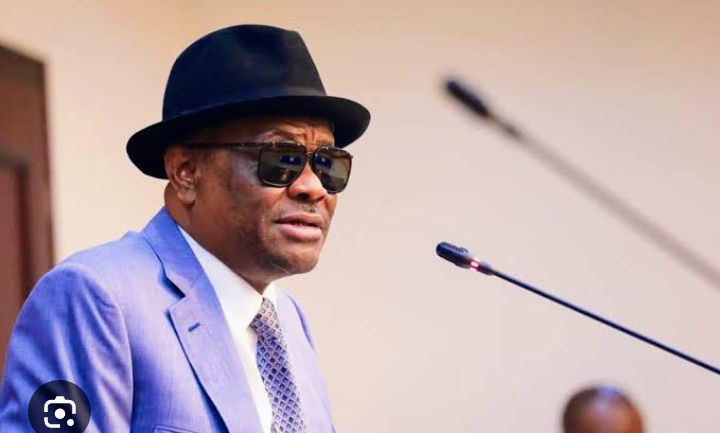
The Minister of the Federal Capital Territory (FCT), Nyesom Wike, has defended the high cost of billboard advertising in Abuja, insisting that political campaigns are expensive globally and that parties should explore alternative. platforms, including social media, to reach voters ahead of the 2027 general elections.
Wike made the remarks during his monthly media chat in Port Harcourt, Rivers State, on Thursday, following complaints by opposition parties over the rising cost of securing billboard spaces in the nation’s capital.
Some opposition parties have expressed concerns that the increasing charges for prominent billboard locations in Abuja could restrict their ability to publicise candidates and campaign messages, potentially creating difficulties for parties with limited financial resources.
However, the FCT minister dismissed suggestions that the charges were intended to disadvantage opposition parties, explaining that the increase was part of the administration’s revenue-generation efforts.
According to him, political parties should recognise the financial demands of electioneering and take advantage of digital platforms to communicate with their supporters.
“Politics is expensive all over the world,” Wike said, adding that parties could use their social media platforms to campaign.
The minister maintained that the FCT administration was interested in generating revenue through billboard advertising, particularly during periods when demand for advertising spaces increases.
“We want money. The FCT wants money, and part of us making money is through the billboards to raise our revenue.
“If we know that in a given time, people will rush the billboard and authority feel that we will raise the funds to make more money,” he said.
Wike insisted that the charges were not introduced to target any political party, stressing that the revenue generated would be channelled into infrastructure development and improved public services across the territory.
“The authority did not raise funds against you, because it is you.
“I am going to use the money to do more roads, to improve the schools,” he stated.
The former Rivers State governor also questioned the significance opposition parties attached to billboard advertising, arguing that the medium alone could not determine the outcome of an election.
He suggested that political parties should focus on broader campaign strategies rather than relying heavily on outdoor advertising to secure electoral support.
“For Christ’s sake, a billboard does not win an election; how many people in the villages know about the billboard?” he said.
Addressing concerns about unequal access to campaign advertising platforms, Wike noted that political parties and other organisations also pay substantial amounts to secure premium advertising slots in media organisations.
He further explained that the FCT administration was not responsible for determining which individuals or organisations secured billboard spaces, maintaining that advertisers could make advance payments to reserve preferred locations.
“People go and pay a year ahead for billboards, ‘how will I know?’ ‘My business is not going to ask, who and who paid for the billboard; I have no business there,” he said.
Wike also challenged opposition parties alleging discrimination in the allocation or pricing of billboard spaces to formally approach the FCT administration with their complaints.
He insisted that no political party or representative had personally brought the matter to his attention.
“Let them complain to us; no one has complained to us. Nobody has complained to me,” he said.
The controversy over billboard advertising costs comes as political parties begin preparations for the 2027 general elections, with access to campaign platforms, media visibility and funding expected to feature prominently in political activities ahead of the polls.
-
 Security4 months ago
NDLEA Declares Alleged Drug Kingpin, Three Associates Wanted, Freezes ₦9.8bn Linked to Syndicate
-
 National Affairs3 months ago
ICPC Uncovers 908 Suspected Ghost Workers Across 50 Federal MDAs, Recovers ₦942 Million
-

 Business/Finance3 months ago
How to Apply for Tunde Onakoya’s ₦250 Million Scholarship Programme and Free Laptop Offer
-

 Judiciary | Public Safety4 months ago
INEC Tells Court Voter Information Is Not Confidential in Emeka Ike’s ₦10bn Lawsuit
-
 Politics3 months ago
Atiku Challenges Tinubu to Reveal Details of ₦15.13bn SUV Procurement in 2026 Budget
-
 Judiciary | Public Safety4 months ago
Court to Rule Friday on NDLEA’s Bid to Destroy ₦480bn Meth Lab in Ogun
-
 Security3 months ago
Family Paid ₦50 Million Ransom to Secure Release of Abducted Kebbi Judge
-
 News3 months ago
2026 Budget: FG Earmarks ₦962.83bn for SUVs, Empowerment Projects Amid Debt Concerns