
News
Tinubu: Securing Nigerians’ Lives Non-Negotiable for Economic Growth

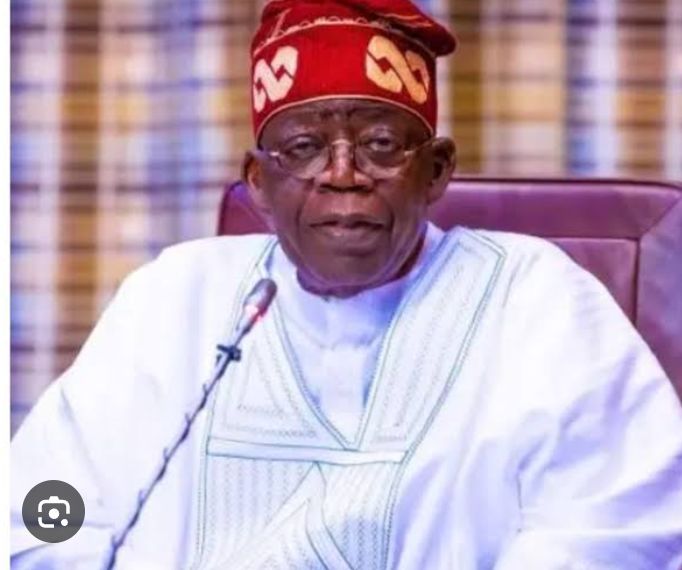
President Bola Tinubu has declared that protecting the lives and property of Nigerians remains non-negotiable, stressing that national security is essential to achieving the country’s economic ambitions and sustainable prosperity.
Tinubu made the declaration on Friday at the graduation ceremony of participants of the National Defence College Course 34 in Abuja.
The President, who was represented at the ceremony by Vice President Kashim Shettima, said economic growth could not be achieved without creating a secure environment where citizens and businesses could operate freely.
A statement issued by the Senior Special Assistant to the President on Media and Communications in the Office of the Vice President, Stanley Nkwocha, disclosed this in Abuja.
According to Tinubu, the government recognises that securing Nigerians is a fundamental responsibility that must go hand in hand with its economic reform agenda.
“Our economic ambitions accompany the duty to secure our people,” the President said.
He noted that the Armed Forces and other security agencies were continuing to confront terrorism, banditry, kidnapping, piracy and organised criminality across the country.
Tinubu assured security personnel of the Federal Government’s continued support through the provision of equipment, training, resources and institutional backing needed to effectively discharge their constitutional responsibilities.
He further stressed the connection between peace, security and economic opportunity, noting that communities could only experience meaningful development when they were safe enough for residents to work, trade, learn and invest.
“Peace creates room for enterprise, and enterprise enlarges the citizen’s stake in peace. When communities recover security, opportunity must follow, because stability grows where people can work, trade, learn and hope,” he said.
The President also linked Africa’s long-term security to economic transformation, noting that the continent must develop productive economies, regional value chains and industries capable of providing employment opportunities for its growing youthful population.
He said industrialisation, supported by the African Continental Free Trade Area, would be critical to achieving inclusive economic growth, reducing structural vulnerabilities and strengthening Africa’s bargaining power globally.
Tinubu reaffirmed Nigeria’s commitment to building a peaceful, prosperous and economically integrated Africa.
On domestic economic reforms, the President highlighted initiatives under the Renewed Hope Agenda aimed at creating a more productive and diversified Nigerian economy.
He said the administration was improving the business environment, encouraging private investment, promoting local value addition and investing in critical infrastructure, including roads, railways, ports, energy and digital connectivity.
According to him, such investments would help reduce production and transportation costs, connect markets and strengthen national integration.
Tinubu also listed agriculture, solid minerals, manufacturing, technology and the defence industry among the sectors where the government was building national capacity.
“Sovereignty acquires substance when a nation can absorb shocks, meet essential needs and defend its interests,” he said.
Addressing the graduands, the President described the National Defence College course as an important platform for developing the broad strategic understanding required in modern statecraft.
He noted that the programme brought together participants from the Armed Forces, Police, public institutions and friendly countries, creating opportunities for deeper cooperation and understanding.
Tinubu urged the graduands to use the networks and knowledge acquired during the programme to promote peace, development and stronger cooperation across Africa and beyond.
He also charged them to uphold the values of excellence, courage, patriotism and integrity associated with the National Defence College.
The President commended the Commandant, faculty and staff of the institution for sustaining what he described as Nigeria’s foremost centre for strategic education, policy-oriented research and leadership development.
Earlier, the Commandant of the National Defence College, Rear Admiral Abdullahi Ahmed, said the President’s representation by the Vice President demonstrated the administration’s commitment to strategic leadership and national security.
Ahmed said the participants underwent 47 weeks of intensive training involving research, field tours and seminar presentations on contemporary security and developmental challenges, as well as high-level defence management.
He said the knowledge acquired by the participants was expected to translate into practical solutions capable of contributing to different sectors of the Nigerian economy.
The ceremony ended with the presentation of certificates to 103 participants.
The graduands comprised 33 Nigerian Army officers, 20 Nigerian Navy officers, nine Nigerian Air Force officers, four Police officers, 17 officials from ministries, departments and agencies, and 20 international participants.
Awards were also presented to outstanding participants at the ceremony.








The coalition said it would return to the media when its demands had been addressed and peace restored to the affected estates.
Adron Homes yet to respond to allegations
When contacted on Monday, the Executive Director, Public Affairs and International Relations of Adron Homes and Properties Limited, Oluwakemi Osude-Laniyan, asked PUNCH Metro to send its enquiries through WhatsApp.
However, she did not respond to the message.
When contacted again on Tuesday morning, Osude-Laniyan said she was awaiting a detailed response from the appropriate department.
The company had yet to provide its response as of Tuesday night when the report was filed.

Nigeria and France are seeking to deepen investment and cooperation in the energy sector, with stakeholders calling for increased capital inflows, technology transfer, local content development and improved infrastructure to unlock Nigeria’s oil and gas potential.
The call was made at an energy roundtable organised as part of the 2026 French Week by the Franco-Nigerian Chamber of Commerce and Industry.
Participants drawn from the energy industry, government and diplomatic community identified gas development, energy transition, decarbonisation and regulatory stability as priority areas for expanding economic cooperation between both countries.
The Managing Director and Chief Executive Officer of TotalEnergies Nigeria, Matthieu Bouyer, said the energy sector presented significant opportunities to strengthen the longstanding relationship between Nigeria and France.
Bouyer noted that TotalEnergies, which has operated in Nigeria for 70 years, remained committed to developing local capacity, supporting Nigerian contractors and building sustainable partnerships.
“We see Nigeria not just as a market, but as a long-term investment destination where we continue to develop people, work with local contractors and build partnerships,” he said.
He disclosed that more than 100 French companies operate in Nigeria across sectors such as energy, infrastructure, logistics, technology, agriculture and consumer goods, providing thousands of jobs.
According to him, bilateral trade between Nigeria and France reached approximately $4.7bn in 2025, highlighting the potential for stronger commercial engagement.
Bouyer identified energy transition and decarbonisation, gas infrastructure and domestic utilisation, as well as technology transfer and local content development as three critical areas requiring increased collaboration.
He stressed that Nigeria’s energy transition must reflect its development priorities, particularly the need to expand energy supply while gradually reducing carbon emissions.
He added that improved gas recovery, methane reduction and energy efficiency could deliver environmental and economic benefits.
On gas development, Bouyer described Nigeria’s natural gas resources as a major opportunity for electricity generation, manufacturing, exports and industrial expansion.
However, he maintained that adequate infrastructure and a stable investment environment were essential to attracting the capital needed to develop the sector.
He also called for partnerships that would equip Nigerian companies with the technical expertise required to participate in more complex energy projects.
The Managing Director of Nigeria LNG Limited, Adeleye Falade, also highlighted the importance of natural gas to Nigeria’s industrialisation and economic diversification.
Falade disclosed that Nigeria had approximately 215 trillion cubic feet of proven gas reserves, while estimates of its wider gas resources stood at about 600 trillion cubic feet.
He argued that gas should be considered not merely a transitional fuel but a foundation for industrial development, clean cooking, export earnings and broader economic growth.
“Nigeria’s energy transition must be just, realistic and investable,” he said, noting that Africa’s energy development challenges differed from those of Europe, particularly regarding access to reliable electricity.
Falade cited NLNG’s Train 7 expansion project as an example of how international partnerships could promote domestic industrial development and increase the country’s gas production capacity.
He disclosed that engineering work on the project was 99.5 per cent complete, procurement was 99.8 per cent complete, while construction had reached approximately 94 per cent.
The project, expected to commence operations towards the end of 2027, will increase NLNG’s production capacity from 22 million tonnes per annum to approximately 30 million tonnes per annum.
According to him, the expansion has also created significant opportunities for Nigerian contractors and manufacturers, with local content accounting for about 95 per cent of the project.
He said approximately 16,000 people, largely young Nigerians, were engaged during construction, while wider project activities supported an estimated 40,000 jobs.
Falade added that Nigerian companies had manufactured several components, including pressure vessels, cables and valves, demonstrating the growing capacity of local manufacturers to participate in major energy projects.
He said the skills and facilities developed through Train 7 would support future industrial projects and strengthen the competitiveness of Nigerian engineering companies.
On NLNG’s economic contributions, Falade disclosed that the company had generated approximately $149.6bn in revenue since commencing operations, paid $47.9bn in dividends and remitted about $10.5bn in taxes.
He maintained that further expansion of production would increase government earnings through taxes, dividends and other payments.
The stakeholders called for sustained cooperation between Nigeria and France, stressing that stronger investment, technology transfer and infrastructure development would be critical to maximising Nigeria’s energy resources and driving long-term economic growth.

Four African universities have joined forces to establish a consortium aimed at expanding access to education for nomadic pastoralists and other marginalised communities across the continent.
The initiative seeks to improve school enrolment, retention and completion rates among children in underserved communities through inclusive and flexible learning opportunities.
The partnership brings together Maryam Abacha American University of Nigeria (MAAUN), Kano; the Catholic University of Eastern Africa, Kenya; Capital University, Somalia; and the University of Namibia.
The announcement was made on Tuesday at a three-day international conference in Kano themed, “Strengthening Inclusive and Flexible Education Pathways for Nomadic Pastoralists and Marginalised Learners in Africa.”
In his welcome address, MAAUN President, Prof. Mohammad Israr, described education as a fundamental human right and a vital instrument for societal transformation.
He, however, noted that nomadic pastoralists and marginalised communities across Africa continued to face significant barriers to accessing quality education.
“Our responsibility as universities and educational institutions is to develop inclusive, flexible and innovative educational approaches that ensure no learner is left behind,” he said.
Israr explained that the conference provided a platform for stakeholders to exchange knowledge, share experiences and develop practical strategies for improving educational access among underserved populations.
In her keynote address, the Minister of State for Education, Prof. Suwaiba Sa’id-Ahmad, said the conference addressed both a national responsibility and a shared continental aspiration to guarantee quality education for every child.
The minister, who was represented by the Vice-Chancellor of the Federal University of Education, Zaria, Prof. Yahaya Bunkure, said the challenges facing nomadic children extended beyond securing admission into schools.
“For many of these children, the challenge is not only gaining admission into schools, but remaining in education, completing the learning cycle and acquiring competencies relevant to their lives,” she said.
She described access to education for nomadic and underserved children as an issue of equity, social justice, human dignity and national development.
According to her, Nigeria and other African countries must develop education systems that recognise the diverse circumstances of their populations and provide learning opportunities for children regardless of their location.
“Our responsibility is to build an education system that responds to the diversity of our people, reaches children wherever they are and provides learning opportunities that enable them to participate productively in society,” she said.
The minister urged universities across Nigeria and other African countries to intensify research into the factors affecting access, participation, retention and learning outcomes among nomadic and underserved children.
Also speaking, the founder of MAAUN Group of Universities, Prof. Adamu Abubakar-Gwarzo, called for the development of curricula tailored to the educational needs and lifestyles of nomadic and pastoralist communities.
He said such an approach would equip children in the communities with relevant knowledge and skills to contribute meaningfully to the development of their countries.
The Vice-Chancellors of the Catholic University of Eastern Africa and Capital University also participated virtually.
Prof. Elias Opngo of the Catholic University of Eastern Africa and Dr Ahmed Ga’al of Capital University, in separate remarks, emphasised the need to guarantee equal educational opportunities for children irrespective of their geographical locations, family occupations or personal circumstances.
They also advocated stronger cooperation among African countries, noting that the challenges associated with nomadic education required collective continental action.
The consortium is expected to strengthen collaboration among the participating institutions in developing inclusive educational approaches that address the barriers preventing nomadic and marginalised children from accessing and completing formal education.
-

 Security4 months ago
NDLEA Declares Alleged Drug Kingpin, Three Associates Wanted, Freezes ₦9.8bn Linked to Syndicate
-
 National Affairs3 months ago
ICPC Uncovers 908 Suspected Ghost Workers Across 50 Federal MDAs, Recovers ₦942 Million
-

 Business/Finance3 months ago
How to Apply for Tunde Onakoya’s ₦250 Million Scholarship Programme and Free Laptop Offer
-

 Judiciary | Public Safety3 months ago
INEC Tells Court Voter Information Is Not Confidential in Emeka Ike’s ₦10bn Lawsuit
-
 Politics3 months ago
Atiku Challenges Tinubu to Reveal Details of ₦15.13bn SUV Procurement in 2026 Budget
-
 Judiciary | Public Safety3 months ago
Court to Rule Friday on NDLEA’s Bid to Destroy ₦480bn Meth Lab in Ogun
-
 Security3 months ago
Family Paid ₦50 Million Ransom to Secure Release of Abducted Kebbi Judge
-
 News3 months ago
2026 Budget: FG Earmarks ₦962.83bn for SUVs, Empowerment Projects Amid Debt Concerns