
National Affairs
Ebola: Virologists Urge Nigerians to Embrace Hygiene as Bundibugyo Strain Has No Approved Vaccine

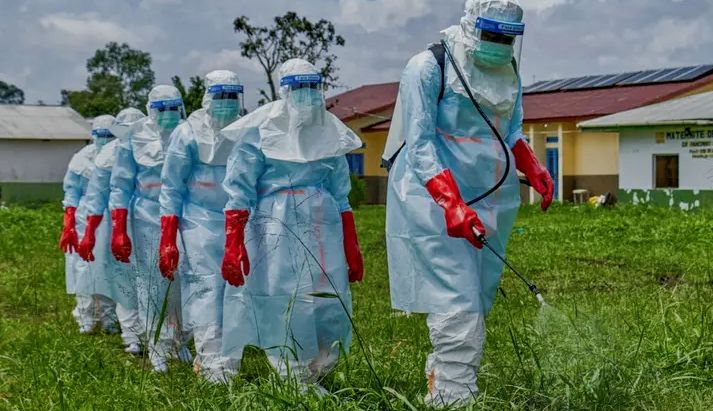
Renowned virologists have urged Nigerians to strengthen hygiene practices, improve disease surveillance and comply with public health guidelines following the confirmation of an imported case of Bundibugyo Ebola virus disease in the country.
The experts warned that the strain currently under consideration has no approved vaccine or specific treatment, stressing the need for early detection, prompt isolation of suspected cases, contact tracing and adequate protection for healthcare workers.
They also urged the Federal Government to strengthen preparedness and provide medical personnel with sufficient personal protective equipment (PPE) to prevent further transmission.
Speaking in exclusive interviews with PUNCH Healthwise, the virologists advised Nigerians against dismissing the outbreak for political reasons or giving in to panic, urging members of the public to follow official health guidance and seek prompt medical attention if they develop symptoms after possible exposure.
Symptoms of concern include sudden fever, severe headache, sore throat, muscle pain and diarrhoea, particularly among people who have recently travelled to an affected area or had contact with a suspected or confirmed case.
The experts explained that Ebola spreads primarily through direct contact with the blood and other body fluids of infected people or deceased victims. They emphasised regular handwashing and other infection prevention measures to reduce the risk of transmission.
According to the report, Nigeria has confirmed one imported case of Bundibugyo Ebola virus disease in the Federal Capital Territory, making it the fifth country to detect the virus since the outbreak was declared in the Democratic Republic of the Congo on May 15, 2026.
The Nigeria Centre for Disease Control and Prevention has activated its incident management system to coordinate the national response, while the Federal Government has placed high-risk contacts in designated quarantine facilities and commenced efforts to trace potential exposures.
The World Health Organisation describes Bundibugyo virus disease as a severe and potentially fatal form of Ebola disease caused by the Bundibugyo virus.
The WHO puts the average case fatality rate for Ebola virus disease at approximately 50 per cent, although historical rates have ranged from 25 to 90 per cent, depending on the virus strain, patients’ health and access to medical care.
The Bundibugyo ebolavirus has an estimated case fatality rate of 32.8 per cent.
Protect Healthcare Workers, Tomori Urges Government
A Professor of Virology and former President of the Nigerian Academy of Science, Oyewale Tomori, called for targeted surveillance and adequate support for hospitals in areas where cases or potential exposures had been identified.
Tomori advised against imposing indiscriminate restrictions across the country, stressing that control measures should be guided by surveillance findings and the identification of people who may have been exposed.
He said protecting frontline healthcare workers must be a priority because they face considerable risks when attending to suspected or confirmed Ebola patients.
“The first group of people to be exposed to this are the health workers. So, we need to protect them. Provide them with PPE, and they too should be very cautious, particularly at this time,” he said.
The virologist, who previously served as Regional Virologist for the WHO Africa Region, reiterated that there was no approved vaccine or specific treatment for the Bundibugyo strain under discussion.
He urged Nigerians to take the outbreak seriously and follow public health advice rather than dismissing official warnings on political grounds.
Tomori said ignoring preventive measures could have serious consequences, emphasising that the public should prioritise personal safety and cooperate with health authorities.
“I think the next thing we should tell our people is to believe what the government has said for your own sake and take all the precautions,” he said.
He added that identifying and monitoring people who had close contact with the confirmed case would be crucial to determining whether the virus had spread further.
According to him, contact tracing should include individuals who interacted closely with the infected person, including those who might have been exposed during hospital admission.
However, Tomori urged Nigerians not to panic, noting that the outcome of contact tracing would provide important information about the extent of possible transmission.
“No need to panic. The government is doing its best to contain it. Let us keep our fingers crossed until we have results of the contact tracing,” he said.
No Licensed Vaccine for Bundibugyo Strain — Omilabu
Also speaking, the Director of the Centre for Human and Zoonotic Virology at the Lagos University Teaching Hospital, Professor Sunday Omilabu, explained that a vaccine had been developed for the Zaire strain of Ebola but was not licensed for the Bundibugyo strain.
He said researchers were working towards developing a vaccine for the strain, adding that available doses of the Zaire vaccine were being administered to health officials attending to patients.
Omilabu stressed that the absence of a specific treatment for Bundibugyo Ebola meant that infected patients were currently being managed through supportive care and treatment directed at their symptoms and complications.
He explained that medical personnel could provide appropriate care for symptoms such as diarrhoea and sore throat, adding that early medical attention and proper management could improve patients’ chances of survival.
“The treatment will follow the symptoms. So, they treat them based on the symptoms. And they have management for different symptoms.
If it is diarrhoea, they have management for diarrhoea. Those who develop a sore throat, they have management for that. So, they treat based on symptoms for now,” he said.
Drawing from Nigeria’s experience during the 2014 Ebola outbreak, the virologist noted that early treatment had helped some patients survive.
He advised people who had contact with an infected person to monitor themselves for symptoms and seek medical attention promptly if they became unwell.
Omilabu added that healthcare workers needed to establish whom suspected cases had interacted with after symptoms began to identify additional contacts and limit further transmission.
Laboratory Tests Needed to Confirm Infection
The virologist emphasised the importance of laboratory testing in confirming suspected Ebola infections, warning against declaring anyone positive without appropriate diagnostic evidence.
He explained that suspected cases should undergo medical assessment and laboratory investigations to establish whether they had contracted the virus.
“The lab must confirm the presence of viral material in their sample before they can pronounce them positive,” Omilabu said.
He advised anyone who felt unwell after possible exposure to contact a hospital promptly so healthcare professionals could assess their symptoms and exposure history.
The expert also urged Nigerians to maintain regular handwashing, particularly after touching potentially contaminated surfaces, handling money or returning from public places.
He stressed that hand hygiene should be practised before eating and before touching the face, noting that contaminated surfaces could contribute to transmission when people come into contact with infected body fluids.
“Now that we have a confirmed case, we have to go back to our usual hand washing. After touching money, surfaces, or going outdoors, we need to wash our hands. Wash your hands before you eat or rub your face,” he said.
Omilabu explained that surfaces such as door handles, tables and bedding used by infected patients could become contaminated, making appropriate hygiene and infection prevention practices essential.
He urged Nigerians to make handwashing a regular habit as part of efforts to reduce exposure risks.
Virologist Calls for Incentives for Healthcare Workers
Omilabu also raised concerns about Nigeria’s shortage of healthcare personnel, warning that the outbreak could place additional pressure on an already stretched workforce.
He called on authorities to introduce incentives that would encourage more healthcare workers to accept assignments at treatment and isolation centres.
The virologist cited Lagos State’s provision of special allowances for medical personnel managing cases as an example of how financial incentives could encourage workers to take up such responsibilities.
“They need to encourage the healthcare givers.
Just as they did in Lagos State, you know, they give them special allowances to motivate them to come to the centres where they are managing the cases. With this additional allowance, it will attract more people to attend to cases,” he said.
The experts maintained that effective surveillance, laboratory confirmation, contact tracing, public awareness and adequate protection for healthcare workers would be essential to containing the outbreak.
They urged Nigerians to remain vigilant without panicking, comply with public health guidance and seek prompt medical assessment whenever symptoms develop following a possible exposure.









The Oyo State Road Traffic Management Authority (OYRTMA) has launched its 2026 ember months road safety campaign, targeting zero road fatalities through intensified enforcement, public enlightenment and improved emergency response during the festive season.
The campaign, themed “Safe Road, Safe Life: Drive Responsibly,” was unveiled by the OYRTMA Chairman, Maj. Adekoya Adesagba (retd.), during a media briefing at the state Secretariat in Ibadan on Thursday.
Adesagba said the initiative would focus on five strategic areas: advocacy, enforcement, emergency response, inter-agency collaboration, and monitoring and evaluation.
He explained that the agency would intensify enforcement activities and strengthen emergency response mechanisms through improved collaboration with relevant agencies, alongside a more effective referral and monitoring system.
The chairman identified over-speeding, driving against traffic, drunk driving, overloading and the use of mobile phones while driving as major causes of road crashes during the ember months.
According to him, these dangerous driving practices often contribute to the seasonal increase in road traffic accidents, making stricter compliance with traffic regulations essential to protecting lives.
Adesagba also disclosed that OYRTMA would engage religious leaders across the state to promote road safety, with awareness messages incorporated into sermons and other activities in places of worship.
He announced that the statewide campaign would commence on Monday, November 2, 2026, with a road walk and continue until January 2027 through sustained sensitisation and public enlightenment programmes.
The chairman said extending the campaign beyond the festive season was necessary because of the volume of return traffic passing through Oyo State, particularly from northern parts of the country.
He added that the agency would collaborate with the Park Management System, the Nigeria Police Force, Vehicle Inspection Officers and other law enforcement agencies to coordinate traffic management and improve road safety during the period.
As part of efforts to strengthen emergency response, Adesagba announced the activation of the state’s emergency traffic lines, 615 and 0912 888 8878.
He urged residents and other road users to use the numbers to report traffic emergencies, road obstructions and related incidents requiring urgent attention.
The OYRTMA chairman called on commercial drivers, private motorists and other road users to take responsibility for their safety and that of other road users by obeying traffic regulations and avoiding risky driving practices.
He also urged relevant stakeholders to work together to ensure that the ember months were characterised by safe journeys and peaceful festive celebrations rather than preventable road crashes and fatalities.
Speaking on behalf of the state chairman of the Park Management System, the deputy chairman, Jimoh Tajudeen, urged motorists, transport operators and passengers to support the initiative by complying with traffic regulations and adopting safe road practices.
Tajudeen stressed that collective commitment to traffic rules and safety measures was essential to reducing road crashes and ensuring safer journeys during the festive period.
The ember months, traditionally associated with increased travel towards the end of the year, often witness heavier traffic as Nigerians travel to reunite with family members and participate in festive activities.
The increase in vehicular movement during the period makes responsible driving, regular vehicle maintenance and strict compliance with traffic regulations critica
l to preventing road crashes and loss of life.
Through the campaign, OYRTMA is seeking to strengthen public awareness, improve traffic enforcement and encourage safer driving habits across Oyo State as residents prepare for the festive season.

Oyo State Governor, Seyi Makinde, has reaffirmed his administration’s commitment to supporting entrepreneurs and private sector investment, declaring that natural resources alone cannot guarantee economic prosperity without innovation, skills, knowledge and increased production.
Makinde stated this on Wednesday at the 10th anniversary celebration and commissioning of the global headquarters of CapitalSage Holdings in Ibadan, the Oyo State capital.
The governor’s position was contained in a statement issued by his Special Adviser on Media, Dr Sulaimon Olanrewaju, and made available to journalists in Ibadan.
He congratulated the management of CapitalSage Holdings on its growth into a diversified business conglomerate, describing the establishment of its global headquarters in Ibadan as a significant milestone for the state’s investment and economic development drive.
According to Makinde, Nigeria’s abundant natural resources must be complemented by entrepreneurial initiatives, risk-taking, innovation and investment to translate the country’s economic potential into sustainable prosperity.
“Nigeria is a wealthy country in terms of natural resources, but natural resources alone cannot lead to economic prosperity.
Prosperity must be driven by entrepreneurship, skills, knowledge and intensive production,” he said.
The governor stressed that the government had a responsibility to create an enabling environment for businesses to operate, expand and contribute to economic growth.
He assured investors that his administration would continue to support private enterprises through improved security, investment facilitation, infrastructure development and other legitimate interventions aimed at promoting business expansion.
Makinde also said his administration had worked to ensure that economic activities could continue beyond traditional working hours by providing the infrastructure, stability and security required for businesses to thrive.
He described the commissioning of CapitalSage Holdings’ headquarters as evidence that Ibadan could accommodate major business organisations and compete with Lagos in attracting investments.
“For many years, people viewed Oyo State as playing second fiddle to Lagos in terms of business and investment. Today, we are proving that Oyo State can stand shoulder to shoulder with any state in the federation in attracting investment and supporting enterprise,” he said.
Makinde reiterated his administration’s readiness to partner with CapitalSage Holdings and other investors, particularly businesses that create employment opportunities, strengthen local industries and contribute to the state’s economy.
He cited the brown sugar and sorbitol factories among industrial projects that had received government support because of their contributions to employment generation and economic development.
The governor said CapitalSage Holdings would receive similar support, adding that his administration remained committed to policies that encourage businesses to establish, grow and expand within the state.
“This occasion is particularly significant because CapitalSage is demonstrating that Ibadan can host the headquarters of major business organisations,” he said.
Makinde congratulated the company on its 10th anniversary, expressing optimism that it would record greater achievements in the coming years.
CapitalSage Commends Oyo Government
In his welcome address, the Founder and Group Managing Director of CapitalSage Holdings, John Alamu, commended the Makinde.
administration for providing an environment that enabled the company to grow from a small enterprise in Oyo State into a diversified business conglomerate headquartered in Ibadan.
Alamu reaffirmed the group’s commitment to building stronger businesses, developing its workforce, deepening strategic partnerships and delivering greater value to its customers.
CapitalSage Holdings has grown into a conglomerate comprising about 20 companies, according to the governor, with its global headquarters expected to further strengthen Ibadan’s profile as a business and investment destination.
The anniversary celebration and commissioning attracted traditional rulers, financial partners, local and international investors, and other prominent figures in the business community.
Among those present were the Olubadan of Ibadanland and former Oyo State governor, Oba Rashidi Adewolu Ladoja; the Ooni of Ife, Oba Adeyeye Enitan Ogunwusi; the Soun of Ogbomosoland, Oba Ghandi Afolabi Olaoye; and the Deji of Akure, Oba Aladetoyinbo Ogunlade Aladelusi.
Members of the Oyo State Government delegation included the Secretary to the State Government, Prof. Musibau Babatunde; Deputy Chief of Staff, Kazeem Adeniyi; Commissioner for Investment, Trade, Cooperatives and Industry, Prof. Salihu Adelabu; and Director-General of the Oyo State Investment and Public-Private Partnership Agency, Tilewa Folami.
Other officials at the event included commissioners, local government representatives, the Babaloja-General of Oyo State, Yekini Abass, and other government functionaries.
The state government said its continued engagement with private investors formed part of its broader strategy to expand economic opportunities, attract businesses and promote employment generation across Oyo State.

Akwa Ibom State Government has disclosed that electronic ticket sales to tricycle and minibus operators generate about ₦14 million weekly, boosting the state’s Internally Generated Revenue (IGR).
The Commissioner for Transport, Dr Anthony Luke, disclosed this on Saturday while speaking with journalists in Uyo, the state capital, describing the revenue increase as one of the achievements of Governor Umo Eno’s administration in the transport sector over the past three years.
According to Luke, the state records about ₦2 million daily from the electronic ticketing system, which requires tricycle, popularly known as keke, and minibus operators to purchase daily tickets before commencing operations.
He explained that the ministry sells 100,946 electronic tickets daily to transport operators at rates of ₦200 for tricycle riders and ₦300 for minibus drivers, with collections expected before 9 am.
“Now we record ₦2m daily and receive ₦14m in a week. We have recruited 143 enforcers for sales of the e-tickets to the transport operators.
The money is sent straight to government coffers under the present Single Treasury Account. This increases Akwa Ibom Internal Generated Revenue (IGR) daily,” Luke said.
The commissioner noted that the introduction of electronic ticketing had helped the government identify revenue leakages in the transport sector, particularly among operators who previously failed to pay their daily ticket fees.
He recalled that the ministry’s records showed that 5,794 tricycle operators had been registered, but the electronic ticketing system revealed that many were not complying with the daily payment requirement.
Luke said the transition to electronic payments had improved accountability and enabled the government to collect revenue directly from transport operators.
He added that the initiative had contributed to a 109 per cent increase in the state’s internally generated revenue, although he did not provide the baseline figures or period used to calculate the increase.
The commissioner attributed the success of the system to collaboration between the Ministry of Transport and the Ministry of Science and Digital Economy, headed by Ekpenyong Udo Ekpenyong, which provided the technical support required to implement the electronic ticketing platform.
Cameras Deployed to Monitor Transport Operators
Providing further details, Ekpenyong described the electronic ticketing initiative as an unprecedented development in the state’s transport sector under Governor Eno’s Arise Agenda.
He said surveillance cameras had been installed at strategic locations across Uyo metropolis to monitor the activities of tricycle and minibus operators.
According to him, the surveillance system is intended to strengthen compliance with ticket payments, improve passenger safety and support security agencies in tracking suspects involved in criminal activities.
“With cameras installed around the city, no keke operator would escape from paying for the ticket,” Ekpenyong said.
He added that the cameras would make it more difficult for criminals to use tricycles to commit offences, as surveillance footage could help investigators identify and trace suspected offenders.
The commissioner said the security information obtained through the system would assist relevant agencies in their investigations and efforts to maintain public safety.
The state government’s electronic ticketing initiative combines digital revenue collection with surveillance and monitoring of commercial transport operations within Uyo.
The development comes as state governments increasingly explore digital systems to improve revenue collection, reduce leakages and strengthen accountability in public finance.
However, the long-term impact of the initiative will depend on sustained compliance by transport operators, transparent revenue reporting and the effective use of surveillance technology to improve passenger safety and security.
-
 Security4 months ago
NDLEA Declares Alleged Drug Kingpin, Three Associates Wanted, Freezes ₦9.8bn Linked to Syndicate
-

 Business/Finance3 months ago
How to Apply for Tunde Onakoya’s ₦250 Million Scholarship Programme and Free Laptop Offer
-
 National Affairs3 months ago
ICPC Uncovers 908 Suspected Ghost Workers Across 50 Federal MDAs, Recovers ₦942 Million
-

 Judiciary | Public Safety3 months ago
INEC Tells Court Voter Information Is Not Confidential in Emeka Ike’s ₦10bn Lawsuit
-
 Politics3 months ago
Atiku Challenges Tinubu to Reveal Details of ₦15.13bn SUV Procurement in 2026 Budget
-
 Judiciary | Public Safety3 months ago
Court to Rule Friday on NDLEA’s Bid to Destroy ₦480bn Meth Lab in Ogun
-
 Security3 months ago
Family Paid ₦50 Million Ransom to Secure Release of Abducted Kebbi Judge
-

 News3 months ago
2026 Budget: FG Earmarks ₦962.83bn for SUVs, Empowerment Projects Amid Debt Concerns