
Politics
Peter Obi at 65: The Journey, Influence and Debate Surrounding Nigeria’s Former Presidential Candidate

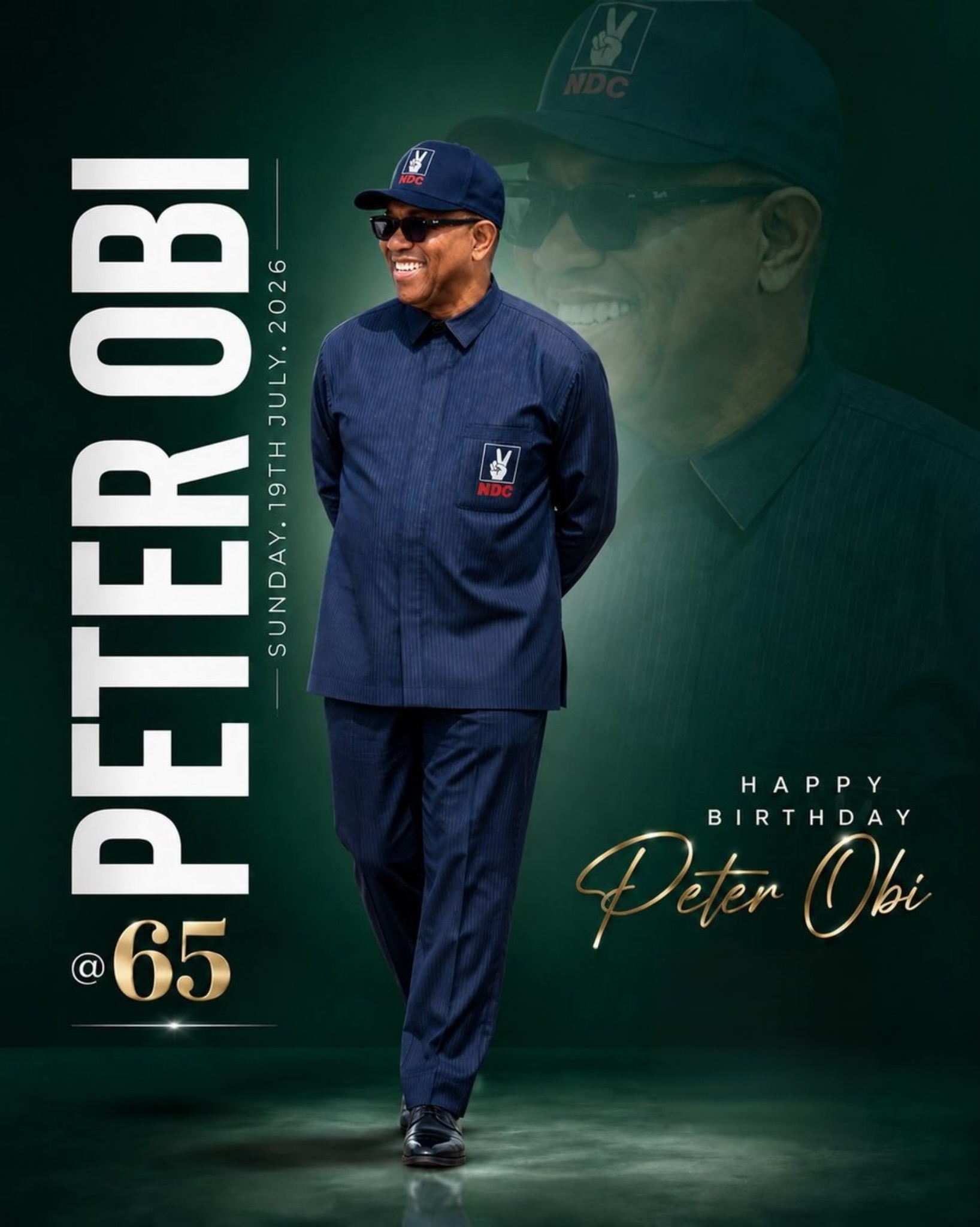
As supporters, political associates and well-wishers celebrate the birthday of Peter Obi, the former Anambra State governor and 2023 presidential candidate of the Labour Party, attention has once again turned to the journey, ideas and public image of one of Nigeria’s most discussed political figures in recent years.
Popularly called “Okwute”, a title meaning “the rock” in Igbo — Obi has built a reputation around themes of prudent leadership, economic management, accountability and public service.
His political journey, however, has also attracted debates, criticism and differing opinions, reflecting the diverse views Nigerians hold about his leadership style and political ambitions.
Born on 19 July 1961 in Onitsha, Anambra State, Peter Gregory Obi began his career in the private sector before transitioning into politics.
Before entering government, Obi established himself as a businessman and investor, gaining experience in financial management and corporate administration.
His background in business later became a central part of his political identity, with supporters often highlighting his focus on economic discipline and resource management.
Peter Obi became Governor of Anambra State in 2006 after a legal battle over the outcome of the 2003 governorship election.
His first tenure was marked by efforts to improve public finances, attract investments and strengthen institutions within the state.
During his administration, Obi frequently emphasised savings, fiscal responsibility and partnerships with development organisations.
Supporters credit his administration with improvements in areas such as education, healthcare and infrastructure, while critics have questioned some aspects of his governance record.
One of the defining features of Peter Obi’s political brand has been his emphasis on simplicity, personal discipline and financial accountability.
His supporters often point to his public appearances, where he frequently presents himself as a leader focused on reducing waste and prioritising government efficiency.
This image became particularly influential among young Nigerians, many of whom connected with his message of economic reform and improved governance.
The 2023 Presidential Election and the Rise of the “Obidient Movement”
Peter Obi’s decision to contest the 2023 presidential election under the Labour Party significantly changed Nigeria’s political landscape.
His campaign attracted a large movement of supporters popularly known as the “Obidient Movement,” which gained strong momentum, especially among young voters and Nigerians in urban centres.
The movement represented calls for:
- Better governance.
- Economic opportunities.
- Reduced corruption.
- Greater accountability from political leaders.
Although Obi did not win the election, his performance reshaped political conversations around youth participation and alternative political platforms in Nigeria.
Few Nigerian politicians have generated as much discussion in recent years as Peter Obi.
To his supporters, he represents a new approach to leadership and a demand for greater accountability.
To his critics, questions remain about policy implementation, political strategy and some of his positions on national issues.
Regardless of differing opinions, his influence on Nigeria’s political conversation remains significant.
Away from political debates, Peter Obi has also maintained a public identity centred around education, entrepreneurship and humanitarian interests.
He has supported initiatives involving schools, healthcare and community development, while encouraging young Nigerians to focus on productivity and economic empowerment.
As Nigeria approaches another election cycle, Peter Obi remains one of the country’s most closely watched political figures.
Whether he continues seeking elective office or plays another role in public life, his impact on Nigeria’s political discussions has already become part of the nation’s evolving democratic story.
Birthday celebrations for public figures often provide an opportunity to reflect beyond political loyalty and examine the journeys, achievements, controversies and influence of individuals who shape national conversations.
Peter Obi’s story represents one of the most significant political developments in Nigeria’s recent history, a journey that continues to inspire supporters, attract criticism and generate debate about the future direction of Nigerian leadership.





Kwara State Governor, AbdulRahman AbdulRazaq, has appointed a former member of the House of Representatives and chieftain of the Peoples Democratic Party, Mashood Mustapha, as the Ameerul Hajj for the state’s 2027 Muslim pilgrimage to Saudi Arabia.
Mustapha, the Wakili of the Ilorin Emirate, is expected to lead and coordinate Kwara’s delegation for the pilgrimage and work with relevant government agencies and statutory bodies involved in organising and administering the annual Hajj exercise.
The appointment was announced in a statement issued on Thursday by the governor’s Deputy Chief Press Secretary, Mashood Agboola, in Ilorin.
According to the statement, the appointment is part of the state government’s preparations for the 2027 Hajj exercise.
“The Ameerul Hajj will coordinate the state’s 2027 Hajj exercise along with other statutory bodies at various levels of government,” the statement said.
The state government described Mustapha as a seasoned entrepreneur, public servant and community leader. He is also the Chairman of Crystal Group of Companies.
The government noted that Mustapha had previously served as a member of the Kwara State Executive Council before his election to the National Assembly.
He represented the Ilorin West/Asa Federal Constituency in the House of Representatives between 2011 and 2015.
Beyond his political career, Mustapha, popularly known as MM, has remained active in business and community leadership.
His appointment also comes against the backdrop of his involvement in Kwara politics.
Mustapha is a chieftain of the PDP and had sought the party’s ticket to contest the Kwara Central Senatorial District seat in the 2027 general election.
However, following the emergence of the incumbent Senator, Saliu Mustapha, as the PDP candidate, Mustapha accepted the outcome and pledged his support for the senator.
The state government said his experience in public service, business and community leadership would be relevant to his new responsibility as Ameerul Hajj.
In the role, Mustapha is expected to coordinate with the various statutory institutions responsible for the pilgrimage and facilitate the smooth administration of the state’s participation in the 2027 Hajj.
Mustapha’s educational background includes studies at Kwara State Polytechnic, Lagos State University and Rome Business School in Italy.
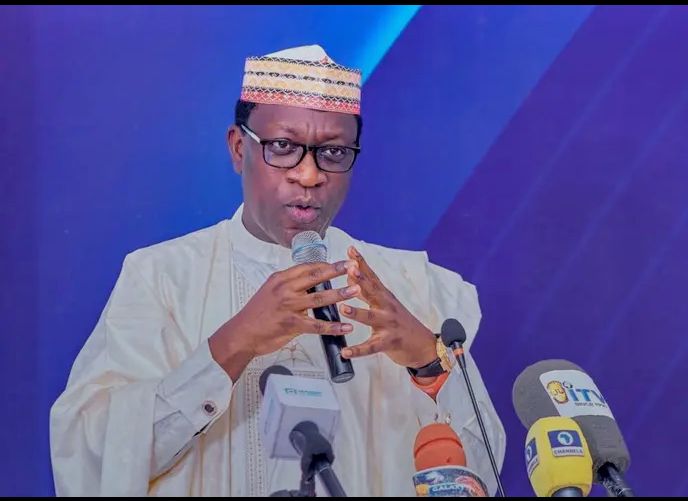
A chieftain of the All Progressives Congress (APC) and federal lawmaker, Abdulmumin Jibrin, has described the Minister of the Federal Capital Territory (FCT), Nyesom Wike, as an asset to the ruling party, urging APC leaders to refrain from publicly embarrassing him over his continued membership of the Peoples Democratic Party (PDP).
Jibrin made the remarks on Wednesday night while appearing on Channels Television’s Politics Today, where he defended Wike amid criticisms from some APC governors over his political affiliation and support for President Bola Ahmed Tinubu’s second-term bid.
The Kano lawmaker argued that Wike’s contributions to the emergence of the Tinubu administration and the APC’s political fortunes should be recognised, rather than subjected to public criticism.
“There is no APC member in Nigeria today that has not directly or indirectly benefited from the efforts of Wike, so long as delivering the President, also managing the government, also performing his work, there is nobody,” Jibrin said.
He added that Wike remained an important figure in the administration and should not be publicly attacked by members of the ruling party.
“Wike is an asset to the APC. I don’t think Wike should be embarrassed at this moment with public statements,” he said.
According to Jibrin, Wike had made significant political sacrifices in support of Tinubu and the APC despite remaining a member of the opposition PDP.
“Wike is an asset to APC; he has sacrificed so much for the President and the APC,” he added.
‘I’m Not Holding Brief for Wike’
Jibrin said his intervention was not motivated by a personal relationship with the FCT minister, explaining that he had only met Wike twice by accident.
He said his concern was primarily about protecting what he described as the stability of the political efforts aimed at securing Tinubu’s second-term bid.
“As I talk to you, before only God I worship, I don’t know Wike, but he knows me from afar, and I know him from afar, if I see him I know he is Wike, and if he sees me he will know I’m Honourable Jibrin, I have met him just twice accidentally, so I’m not holding any brief for Wike,” he explained.
Jibrin added that he considered it necessary to speak whenever political disagreements could affect the broader coalition supporting the President.
He also cited Wike’s political activities in Rivers State and the FCT as evidence of his contribution to the APC-led administration.
Wike ‘Handed Over Rivers to APC’
The former Chairman of the House Committee on Appropriation said Wike had played a role in the political realignment that strengthened the APC in Rivers State.
“I believe that Wike has sacrificed; he handed over Rivers to APC, Wike had candidates [in the] FCT election but asked them to step down for APC. Wike came into this government as [part of the] government of national unity. In reality, we should be fair to him; he has done far more than that,” Jibrin said.
He further argued that Wike’s continued membership of the PDP should not automatically disqualify him from supporting Tinubu, noting that politicians from other parties were also involved in the broader political coalition backing the President.
According to him, some politicians outside the APC had also expressed concern about the criticism directed at Wike.
“There are people who are in other parties, who are working with us in the NDC, in the ADC. Some of them called me yesterday, saying, ‘Look at what they are saying about Wike,’” he stated.
Jibrin Urges APC Governors to Engage Wike Privately
Jibrin also appealed to APC governors who have disagreements with Wike to resolve their differences through private discussions instead of public criticism.
“For the governors, they should take Wike as part of them,” he said.
He referred to Wike and Osun State Governor Ademola Adeleke as political figures whose activities, in his view, were contributing to the broader coalition supporting Tinubu.
“You call Wike the number 32 governor and Adeleke the number 33 governor of the APC; if there is a problem at the state level, the entire coalition that he is doing is for the President,” Jibrin said.
He maintained that where state-level political disagreements arise, the affected parties should engage Wike directly rather than make public statements against him.
“If anybody at the subnational level feels it may work against him or his interest, they should discuss with Wike, but I do not think Wike should be embarrassed by statements,” he added.
Criticism Amid 2027 Political Realignment
Jibrin’s comments come amid criticism from some APC governors over Wike’s continued membership of the PDP while openly supporting Tinubu’s bid for a second term in 2027.
Among those who have publicly questioned the arrangement are Kwara State Governor AbdulRahman AbdulRazaq and Imo State Governor Hope Uzodimma.
Wike has been associated with the “Rainbow Coalition”, a political alignment involving politicians across party lines that has expressed support for Tinubu’s 2027 re-election.
Jibrin, however, maintained that Wike’s political support for the President had contributed to electoral gains for the ruling party.
He pointed to the outcome of the recently concluded FCT Area Council elections, where the APC won five of the six councils, as part of the political gains he associated with the broader coalition.
The debate over Wike’s political affiliation and his role in the APC-led administration is expected to remain part of the wider political realignment ahead of the 2027 general elections.

Afrobeats superstar David Adeleke, popularly known as Davido, has thrown his weight behind the 2027 House of Representatives ambition of human rights lawyer and political campaigner, Pelumi Olajengbesi.
Davido expressed his support for Olajengbesi in an Instagram Story on Tuesday, describing the politician as “My other project” and endorsing him as a “100% winning ticket.”
Olajengbesi is seeking to represent the Oriade/Obokun Federal Constituency of Osun State in the House of Representatives in the 2027 general elections on the platform of the Accord Party.
The endorsement comes weeks after the August 15, 2026, Osun State governorship election, in which Governor Ademola Adeleke secured victory for a second term.
Olajengbesi played a prominent role in Adeleke’s re-election campaign, serving as the convener of the Imole Grassroots Mobilisation Network and campaign spokesman for the governor’s campaign.
Following Adeleke’s victory at the polls, Davido also took to X to appreciate Olajengbesi for his contribution to the campaign.
The latest endorsement by the music star is therefore being seen as a further indication of his support for Olajengbesi’s political ambition ahead of the 2027 elections.
Olajengbesi, a lawyer and human rights advocate, will be seeking to unseat the incumbent member of the House of Representatives for the constituency, Wole Oke of the All Progressives Congress.
Oke has represented the Oriade/Obokun Federal Constituency in the House of Representatives for 24 years, making the 2027 contest potentially significant for the constituency.
With Olajengbesi now receiving public backing from Davido, the race for the federal constituency is expected to attract increased political attention as parties and candidates begin preparations for the 2027 general elections.
Davido, who has remained publicly engaged with political developments in Osun State, has previously shown support for Governor Adeleke, who is his uncle.
The endorsement of Olajengbesi adds another dimension to the emerging political contest in the state, particularly as aspirants position themselves ahead of the 2027 legislative elections.
The House of Representatives election will form part of the wider 2027 general elections, with candidates across the country expected to campaign on issues including representation, development, employment, infrastructure and the welfare of their constituents.
-
 Security2 months ago
NDLEA Declares Alleged Drug Kingpin, Three Associates Wanted, Freezes ₦9.8bn Linked to Syndicate
-
 National Affairs2 months ago
ICPC Uncovers 908 Suspected Ghost Workers Across 50 Federal MDAs, Recovers ₦942 Million
-

 Business/Finance2 months ago
How to Apply for Tunde Onakoya’s ₦250 Million Scholarship Programme and Free Laptop Offer
-
 Politics2 months ago
Atiku Challenges Tinubu to Reveal Details of ₦15.13bn SUV Procurement in 2026 Budget
-
 Judiciary | Public Safety2 months ago
INEC Tells Court Voter Information Is Not Confidential in Emeka Ike’s ₦10bn Lawsuit
-
 Judiciary | Public Safety2 months ago
Court to Rule Friday on NDLEA’s Bid to Destroy ₦480bn Meth Lab in Ogun
-
 Security2 months ago
Family Paid ₦50 Million Ransom to Secure Release of Abducted Kebbi Judge
-

 Breaking News2 months ago
Girl Dies in Uyo House Fire After Allegedly Accompanying Man Home from Nightclub