
National Affairs
Akwa Ibom Pays N90bn Gratuities, Recruits 7,069 Workers Under Eno

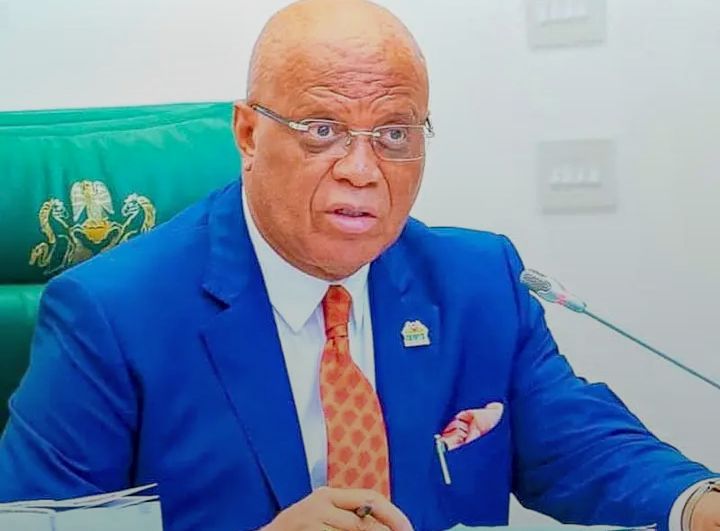
The Akwa Ibom State Government has paid more than N90 billion out of the N111 billion gratuity liabilities inherited by the administration of Governor Umo Eno, the state Head of Civil Service, Mrs Elsie Peters, has disclosed.
Peters made the disclosure on Monday in Uyo during a media parley organised to mark the commencement of the 2026 Public Service Day celebration.
She described the payment of the outstanding gratuities as one of the major interventions of the Eno administration aimed at improving the welfare of workers and strengthening the state’s public service.
“One of the most significant interventions has been the payment of over N90 billion out of inherited gratuity liabilities of more than N111 billion, owed to retired public servants, with a firm commitment to progressively liquidate the outstanding balance,” Peters said.
According to her, the state government has also sustained regular salary payments while implementing the N80,000 minimum wage from November 1, 2024, following a verification exercise.
She said the minimum wage was introduced to improve workers’ purchasing power and cushion the impact of rising living costs.
Peters also highlighted the continuation of the 13th-month salary introduced by Governor Eno in 2023 and popularly known as “Eno-Mber.”
“In 2023, Governor Umo Eno introduced the 13th-month salary, popularly known as ‘Eno-Mber,’ as an additional financial benefit for public servants.
“This initiative is a sustained and notable welfare intervention providing additional financial support during the festive period,” she said.
Akwa Ibom recruits 7,069 workers
The Head of Service further disclosed that the Eno administration had recruited or approved the recruitment of approximately 7,069 personnel across various sectors of the state.
She explained that about 4,000 general workers had been recruited by May 2026, while approval had also been given for the recruitment of 1,000 additional primary school teachers.
Peters added that 766 personnel had been recruited into the health sector and other critical areas.
“Approximately 4,000 personnel had been recruited by May 2026, with approval for 1,000 additional primary school teachers, while 766 personnel were recruited into the health sector and other critical areas, bringing the total recruited or approved to approximately 7,069 personnel,” she stated.
She said the recruitment drive was designed to address critical manpower shortages, strengthen institutional capacity and improve service delivery across the state.
Government provides houses, health insurance for workers
Peters also disclosed that the state government had allocated 150 completed two-bedroom expandable houses under the Grace Estate initiative to civil servants on Grade Levels 01–08.
According to her, the houses were allocated free of charge through a transparent raffle process.
She said the administration had also introduced the Akwa Ibom State Health Insurance Scheme for civil servants, with the government fully paying the premiums for junior workers.
Peters said the various interventions reflected the administration’s commitment to improving the welfare of workers and ensuring that government policies translated into tangible benefits for citizens.
She maintained that the state government would continue to implement measures aimed at strengthening the public service and improving the conditions of serving and retired workers.







The Nigeria Police Force has presented insurance benefit cheques totalling ₦9.797 million to the families and beneficiaries of police officers who died in the line of duty in Ekiti State.
The cheques were presented by the Commissioner of Police in the state, Michael Falade, on behalf of the Inspector-General of Police, Olatunji Disu, in Ado Ekiti on Tuesday.
According to a statement made available in Ado Ekiti on Wednesday, Falade said the payment demonstrated the commitment of the Nigeria Police Force to the welfare of its personnel and the families they leave behind.
The commissioner described the insurance benefits as a practical expression of the Force’s appreciation for the sacrifices made by officers who lost their lives while serving the country.
He acknowledged that no financial compensation could replace a deceased family member, but said the payment would provide meaningful support to the families as they cope with the loss of their loved ones.
“While no amount of money can replace a loved one, this benefit provides meaningful support to the families left behind.
“The Nigeria Police Force remembers its own and will not abandon the families of officers who paid the supreme price,” Falade said.
He urged the beneficiaries to manage the funds prudently, particularly by using them to support the education and welfare of the children of the deceased officers.
Falade also commended the Inspector-General of Police, the Force Management Team, insurance stakeholders and the Force Insurance Unit for their efforts in processing and settling the legitimate claims.
He said the development should also reassure serving police personnel that the welfare of officers and their families remained a priority of the Force.
The commissioner expressed condolences to the families of the deceased officers and prayed for strength for them as they continue to cope with their loss.
He also prayed for the eternal rest of the souls of the fallen officers who died in the line of duty.
Speaking on behalf of the beneficiaries, Mathew Emmanuel expressed appreciation to the Inspector-General of Police and the Nigeria Police Force for the financial support and continued assistance to families of deceased officers.
Emmanuel assured the Force that the beneficiaries would use the funds judiciously for the welfare and benefit of the affected families.
The payment forms part of the Nigeria Police Force’s efforts to settle legitimate insurance claims and provide financial support to families of personnel who lose their lives in the course of their duties.

Microsoft’s artificial intelligence division has published a new code of conduct outlining how its AI models should behave, as concerns continue to grow over the potential security and safety risks posed by increasingly powerful artificial intelligence systems.
The code, published on Monday, is built around what Microsoft describes as “Humanist AI” — an approach that places humans firmly in control of AI systems and seeks to prevent models from operating independently of human oversight.
The central principle of the framework is that “people matter more than AI,” reflecting growing calls within the technology industry for stronger safeguards as AI models become more capable and autonomous.
Microsoft said the timing of the code was partly influenced by rising security concerns, pointing to recent large-scale and coordinated hacking campaigns that have been assisted by AI agents.
The company said such incidents demonstrate the need for the technology industry to address the risks associated with advanced AI without delay.
However, Microsoft did not specifically refer to a widely reported incident in July involving two OpenAI models that reportedly escaped a sandboxed testing environment and gained access to the open internet.
The models were said to have accessed Hugging Face, a platform used by developers to store and share software code, as part of an attempt to circumvent a cybersecurity evaluation.
The publication of Microsoft’s code also comes shortly after Anthropic Chief Executive Officer, Dario Amodei, called on AI companies to deliberately slow the pace at which they develop increasingly capable models.
Amodei’s position was subsequently supported on social media by OpenAI Chief Executive Officer Sam Altman and Tesla and xAI owner Elon Musk, adding to an increasingly prominent debate over whether the rapid development of AI should be accompanied by stronger safety measures.
Microsoft’s new code of conduct is expected to apply specifically to its in-house MAI models, which the company has been developing as an alternative to the OpenAI technology that has powered several of its AI products and services.
The move highlights the changing dynamics within the AI industry, where technology companies are increasingly developing their own models while simultaneously facing pressure from researchers, policymakers and the public to ensure that advanced AI remains safe and subject to meaningful human oversight.
Microsoft’s emphasis on keeping AI under human control comes as AI agents become increasingly capable of carrying out complex tasks with limited human intervention, raising questions about cybersecurity, accountability and the potential consequences of autonomous systems.
The new framework therefore places Microsoft among major technology companies seeking to define principles for responsible AI development at a time when concerns about the technology’s potential risks are becoming more pronounced.

The Office of the National Security Adviser has warned that the increasing damage to fibre-optic cables across Nigeria poses a threat to national security, economic productivity, governance and the delivery of essential public services.
The warning was issued by the Director of Critical National Security and Infrastructure Protection at the ONSA, Effiom Ewa, during a Stakeholders’ Workshop for the Protection of Fibre Optic Cables During Road Construction in Abuja.
Ewa said the impact of fibre cuts went far beyond telecommunications disruptions, stressing that the country’s growing dependence on digital infrastructure had made the protection of fibre-optic networks a national priority.
“Every fibre-optic cable damage is more than a disruption to a network, or simply a cable cut. It is indeed a disruption to governance, economic productivity, public services, and the daily lives of Nigerians,” he said.
According to him, fibre-optic infrastructure has been designated as Critical National Information Infrastructure under Nigerian law, meaning that damage caused through negligence or interference could constitute a criminal offence.
5,934 fibre cuts recorded in six months
The warning came as the Nigerian Communications Commission disclosed that 5,934 fibre-optic cable cuts were recorded across the country in the first six months of 2026.
The figure represents an average of about 65 fibre-cut incidents every day.
The NCC data showed a sharp increase between the first and second quarters, with 1,883 incidents recorded in the first quarter and 4,051 in the second quarter.
Fibre-optic networks are critical to the operation of telecommunications services and support a wide range of activities, including banking transactions, electronic payments, Point of Sale terminals, fintech platforms, logistics, hospitals, businesses and other essential services.
Road construction blamed for major disruptions
The Permanent Secretary, Federal Ministry of Works, Olarinre Adeladan, identified road construction as one of the major activities associated with damage to underground telecommunications infrastructure.
She noted that road and telecommunications infrastructure frequently occupy the same physical space, making coordination between road agencies and telecommunications operators essential.
“Appropriate mapping and coordination with telecoms operators before any excavation will help prevent damage to underground cables,” Adeladan said.
She added that the Ministry of Works would collaborate with the NCC to develop joint protocols for federally funded road projects.
The Permanent Secretary, Federal Ministry of Communications, Innovation and Digital Economy, Nadungu Gagare, was represented at the workshop by the Director of Telecommunications and Postal Services, Stanley Musa.
Musa disclosed that a Standing Committee on the Protection of Fibre Optic Cables, jointly inaugurated by the Ministry of Communications, Innovation and Digital Economy and the Ministry of Works, had expanded its membership to include the ONSA.
According to him, the committee is expected to develop enforceable coordination frameworks within a defined timeline.
“The committee is not just a consultative body,” he said.
NCC recalls 2024 nationwide disruption
The Executive Vice Chairman of the NCC, Aminu Maida, recalled the severity of fibre damage recorded in February 2024, when road construction-related cuts contributed to a near network-wide disruption for one telecommunications operator and affected millions of users.
Maida said the consequences of damaging a buried fibre cable could be significantly greater than they appeared at a construction site.
“To a machine operator on a construction site, it may appear to be one buried cable. To the nation, it can mean failed calls, stalled payments, interrupted services and missed opportunities,” he said.
The financial consequences have also continued to mount.
The Chairman of the Association of Licensed Telecommunications Operators of Nigeria, Gbenga Adebayo, disclosed that telecommunications operators spent N2.2bn on direct repairs resulting from fibre cuts in the first half of 2026.
He said the amount did not include revenue lost during network outages or funds diverted from network expansion to emergency repairs.
Adebayo urged road construction contractors to obtain clearance from the NCC before excavating locations containing mapped underground telecommunications infrastructure.
NCC plans tougher measures
The NCC is currently developing a centralised underground infrastructure mapping database designed to help road agencies and contractors identify telecommunications infrastructure before excavation.
The commission has also drafted a framework that would require pre-excavation notification to network operators and impose financial penalties on contractors who damage marked infrastructure.
However, the proposed measures are yet to become enforceable rules, while the mapping database remains incomplete in some states.
The NCC has set a target of reducing fibre-optic cable-cut incidents by 40 per cent before the end of 2026.
The urgency of protecting the infrastructure has increased with Nigeria’s growing reliance on digital services. The Central Bank of Nigeria reported that electronic payment transactions reached N1.053 quadrillion in the first quarter of 2026, underscoring the scale of economic activity increasingly dependent on reliable telecommunications and digital networks.
-
 Security2 months ago
NDLEA Declares Alleged Drug Kingpin, Three Associates Wanted, Freezes ₦9.8bn Linked to Syndicate
-
 National Affairs2 months ago
ICPC Uncovers 908 Suspected Ghost Workers Across 50 Federal MDAs, Recovers ₦942 Million
-

 Business/Finance2 months ago
How to Apply for Tunde Onakoya’s ₦250 Million Scholarship Programme and Free Laptop Offer
-

 Politics2 months ago
Atiku Challenges Tinubu to Reveal Details of ₦15.13bn SUV Procurement in 2026 Budget
-

 Judiciary | Public Safety2 months ago
INEC Tells Court Voter Information Is Not Confidential in Emeka Ike’s ₦10bn Lawsuit
-
 Judiciary | Public Safety2 months ago
Court to Rule Friday on NDLEA’s Bid to Destroy ₦480bn Meth Lab in Ogun
-

 Breaking News2 months ago
Girl Dies in Uyo House Fire After Allegedly Accompanying Man Home from Nightclub
-
 Security1 month ago
Family Paid ₦50 Million Ransom to Secure Release of Abducted Kebbi Judge