
Politics
Davido Backs Adeleke Campaign Spokesman Olajengbesi for Osun Reps Seat


Afrobeats superstar David Adeleke, popularly known as Davido, has thrown his weight behind the 2027 House of Representatives ambition of human rights lawyer and political campaigner, Pelumi Olajengbesi.
Davido expressed his support for Olajengbesi in an Instagram Story on Tuesday, describing the politician as “My other project” and endorsing him as a “100% winning ticket.”
Olajengbesi is seeking to represent the Oriade/Obokun Federal Constituency of Osun State in the House of Representatives in the 2027 general elections on the platform of the Accord Party.
The endorsement comes weeks after the August 15, 2026, Osun State governorship election, in which Governor Ademola Adeleke secured victory for a second term.
Olajengbesi played a prominent role in Adeleke’s re-election campaign, serving as the convener of the Imole Grassroots Mobilisation Network and campaign spokesman for the governor’s campaign.
Following Adeleke’s victory at the polls, Davido also took to X to appreciate Olajengbesi for his contribution to the campaign.
The latest endorsement by the music star is therefore being seen as a further indication of his support for Olajengbesi’s political ambition ahead of the 2027 elections.
Olajengbesi, a lawyer and human rights advocate, will be seeking to unseat the incumbent member of the House of Representatives for the constituency, Wole Oke of the All Progressives Congress.
Oke has represented the Oriade/Obokun Federal Constituency in the House of Representatives for 24 years, making the 2027 contest potentially significant for the constituency.
With Olajengbesi now receiving public backing from Davido, the race for the federal constituency is expected to attract increased political attention as parties and candidates begin preparations for the 2027 general elections.
Davido, who has remained publicly engaged with political developments in Osun State, has previously shown support for Governor Adeleke, who is his uncle.
The endorsement of Olajengbesi adds another dimension to the emerging political contest in the state, particularly as aspirants position themselves ahead of the 2027 legislative elections.
The House of Representatives election will form part of the wider 2027 general elections, with candidates across the country expected to campaign on issues including representation, development, employment, infrastructure and the welfare of their constituents.


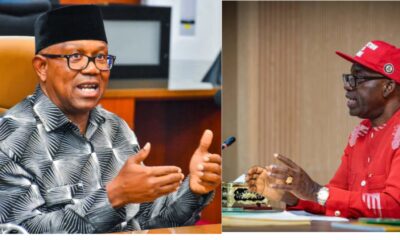





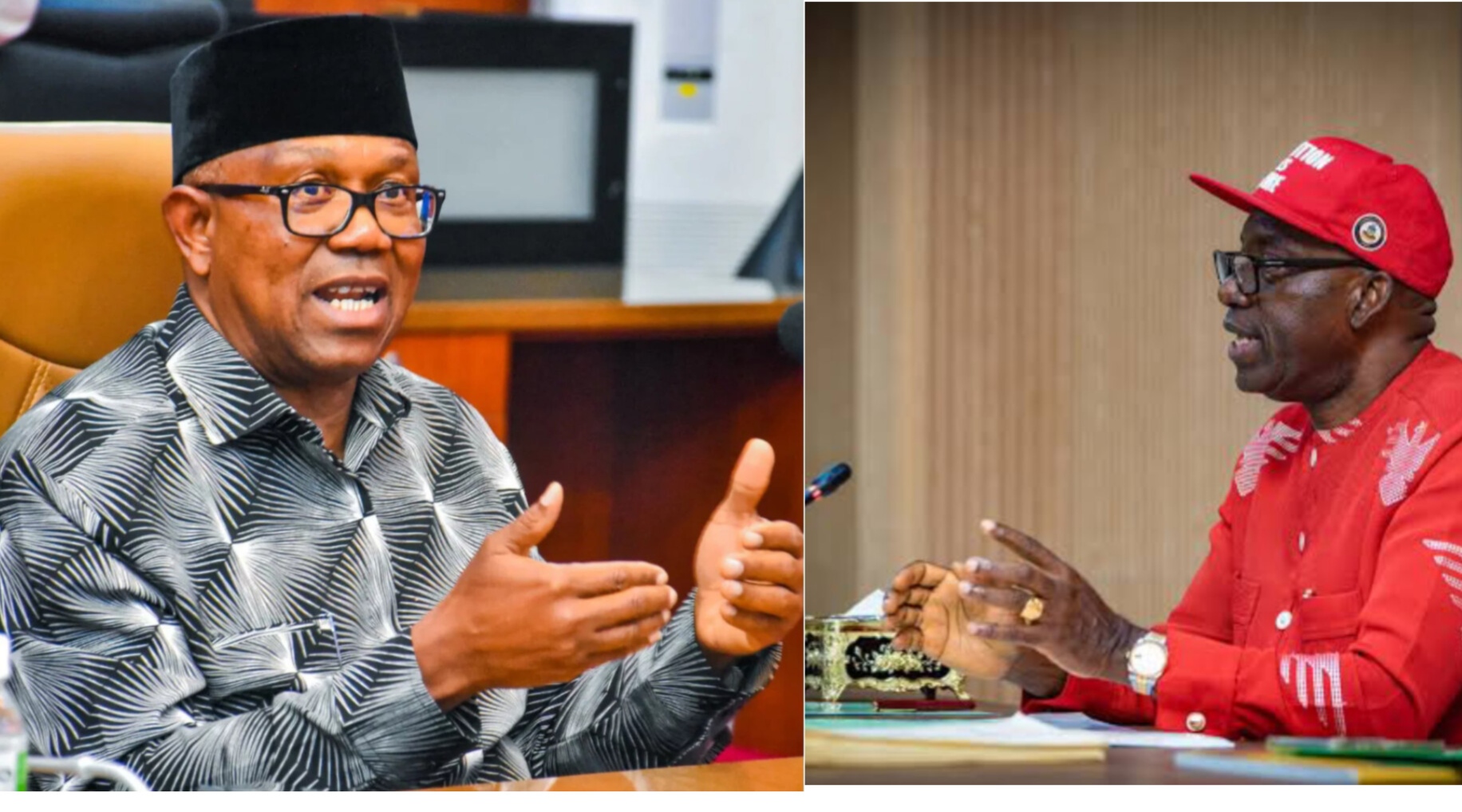
The 2027 presidential campaign has taken a fresh turn after former Anambra State Governor and Nigeria Democratic Congress (NDC) presidential candidate Peter Obi challenged the Anambra State Government to produce evidence that he left behind unpaid financial obligations when he handed over power.
Obi said he would end his 2027 presidential campaign if the state government could establish that he left even one unpaid salary, pension, gratuity, contractor, supplier or other obligation owed by the Anambra State Government at the end of his tenure.
The challenge followed fresh comments by Anambra State Commissioner for Finance, Izuchukwu Okafor, who said the administration of Governor Chukwuma Soludo was still servicing loans inherited from previous governments, including the administrations of Obi and former governor Willie Obiano.
In a video circulating online, Obi disputed the suggestion that he left Anambra with unpaid obligations.
He said he left office nearly 13 years ago without owing salaries, pensions, gratuities, contractors or suppliers.
“If you find even one person I owed, I will end my 2027 campaign today,” Obi said, according to the video and reports on his response.
The former governor’s challenge raises a distinction that is central to the dispute: whether Anambra is still servicing loans associated with previous administrations is not necessarily the same question as whether Obi personally left the state with unpaid bills or whether his administration borrowed money.
That distinction will likely become increasingly important as both sides present financial records ahead of the 2027 presidential election.
What the Anambra Finance Commissioner said
Okafor made the original claim during a Ndi Anambra podcast published by the Anambra State Government’s New Media team.
He maintained that the Soludo administration had not borrowed from any commercial bank since assuming office but continued to make deductions from the state’s Federation Account Allocation Committee (FAAC) revenue to service loans contracted by previous administrations.
According to Okafor, some of those loans dated to the administrations of Obi and Obiano.
“Every month during our FAC meetings … you will notice there were substantial, significant deductions from our own FAC because of loans previously borrowed by previous administrations,” he said.
He further claimed that Soludo’s administration had reduced the state’s debt burden by more than 83 per cent and had cleared several inherited domestic obligations, including unpaid contracts, gratuity arrears and pension arrears.
The commissioner also said Anambra’s domestic debt was now at a near-zero balance, while some external obligations continued to be repaid through deductions from the state’s federal allocations.
The latest dispute is not the first time Obi has defended his financial record as governor.
During his 2022 presidential campaign, Obi repeatedly maintained that he did not borrow from financial institutions while serving as Anambra governor.
He also said he left substantial funds for the state in bank accounts when he handed over power.
Premium Times reported that Obi had previously said he left $50 million each in Access Bank, the defunct Diamond Bank and Fidelity Bank, a combined $150 million, when he left office.
Those earlier claims, together with the latest statements from the Anambra government, have revived questions over the precise composition, origin and timing of the state’s outstanding obligations.
The latest exchange does not, on its own, settle the question of who contracted which loans or what liabilities existed at different points in Anambra’s political history.
The Anambra government says some loans being serviced were obtained during the Obi and Obiano administrations.
Obi, meanwhile, is challenging the government to demonstrate that he left behind unpaid obligations when he left office.
Those are related but distinct claims.
To conclusively resolve the dispute, the relevant evidence would include loan agreements, debt-service schedules, FAAC deduction records, audited financial statements, the state’s debt register and handover-era financial records showing when each obligation was contracted and which administration was responsible for it.
Anambra’s official financial records could therefore become central to the political argument. The state has published Accountant-General reports covering its finances, including reports bearing Okafor’s name as Commissioner for Finance.
Why the dispute matters in 2027
The confrontation comes at a politically sensitive moment.
Obi is preparing to contest the 2027 presidential election under the NDC, while Soludo remains a prominent political figure in Anambra and the South-East.
Obi’s record as governor has long been an important part of his political narrative, particularly his claims about fiscal discipline, savings and infrastructure investment.
For his political opponents, however, questions about Anambra’s historical finances provide an opportunity to challenge that narrative.
The latest exchange could therefore develop beyond a disagreement between Obi and the Soludo administration into a broader debate over how governments should account for inherited debt, savings, contracts and other financial obligations when administrations change hands.
For voters, the most useful outcome would be the publication of the underlying records rather than competing political claims.
If the relevant financial documents establish that loans were contracted during specific administrations, that should be stated clearly. If they show that particular obligations arose from other arrangements, that should equally be made public.
The political stakes are high, but the question itself is ultimately documentary: what did Anambra owe, who incurred each obligation, and what did Peter Obi’s administration actually leave behind when it handed over power?
SEO Package
SEO Title:
2027: ‘Prove I Left Anambra With Debts and I’ll Stop My Campaign,’ Obi Challenges Soludo
Meta Description:
Peter Obi challenges the Anambra government to prove he left unpaid debts or obligations, saying he will stop his 2027 campaign if evidence emerges.
Focus Keyword:
Peter Obi Anambra debts
Secondary Keywords:
Peter Obi 2027 campaign
Obi challenges Soludo
Anambra debt controversy
Izuchukwu Okafor
Soludo inherited debts
Peter Obi Anambra finances
NDC 2027 presidential candidate
Anambra loans
Obi and Soludo
URL Slug:
peter-obi-anambra-debts-soludo-2027-campaign
Category:
Politics
Tags:
Peter Obi, Charles Soludo, Anambra State, NDC, 2027 Elections, Izuchukwu Okafor, Nigeria Politics, Anambra Debt, Peter Obi Campaign
Facebook/X headline:
“Prove I Left Anambra With Debts and I’ll Stop My 2027 Campaign” — Obi Challenges Soludo
Social caption:
Peter Obi has challenged the Anambra State Government to produce evidence that he left unpaid financial obligations when he handed over power as governor.
The challenge follows claims by Finance Commissioner Izuchukwu Okafor that the state is still servicing loans inherited from previous administrations, including those of Obi and Willie Obiano.
Obi says the government should produce evidence of anyone he owed when he left office — and has attached a dramatic political consequence to the challenge.
**The question now is simple: what do Anambra’s financial records show?**
2027 Elections
2027: APC Governors Reject Parallel Structures as Wike’s Rainbow Coalition Tests Tinubu’s Political Alliance

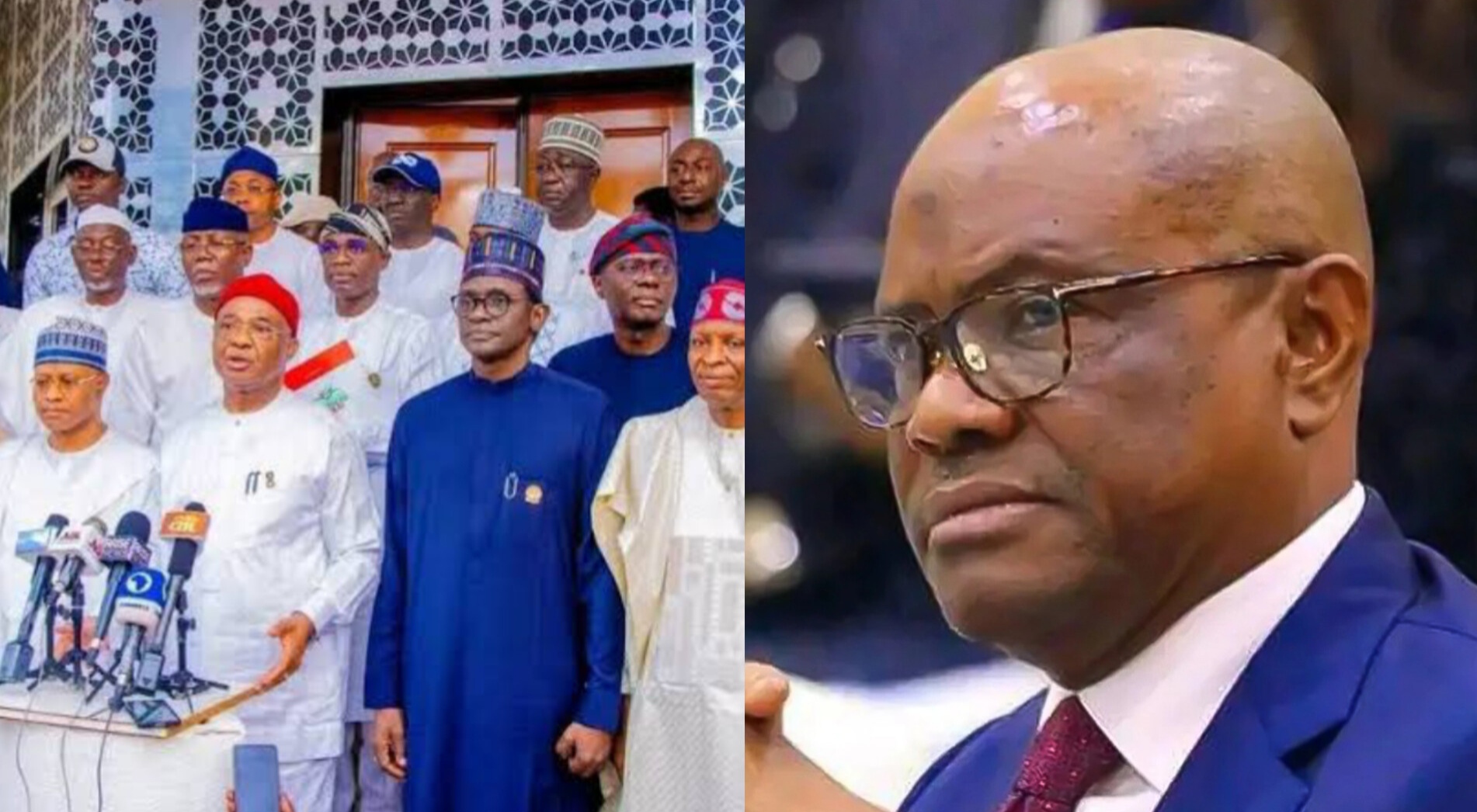
The All Progressives Congress (APC) Governors’ Forum has rejected political alliances and parallel structures that could weaken the ruling party or undermine President Bola Ahmed Tinubu’s re-election bid in the 2027 general elections.
The governors said they would not support candidates outside the APC or participate in political arrangements capable of creating divided loyalty within the party.
The position was reached at a closed-door meeting of APC governors in Abuja on Monday night and announced by the Chairman of the Progressive Governors Forum and Imo State Governor, Hope Uzodimma.
The declaration comes amid growing political tension surrounding the Rainbow Coalition associated with Minister of the Federal Capital Territory, Nyesom Wike, who remains a member of the Peoples Democratic Party (PDP) while serving in the APC-led Federal Government.
Wike has maintained that his political coalition is primarily designed to support Tinubu’s re-election in 2027.
However, the emergence of candidates and political interests operating across different party platforms has generated concern among APC governors that the arrangement could weaken the party’s candidates in governorship, National Assembly and state assembly contests.
Reading the communiqué after the meeting, Uzodimma said APC governors would remain committed to candidates officially sponsored by the party.
“The APC Governors Forum unanimously resolved that its members will not participate in, support or endorse any alliance or political arrangement capable of undermining the re-election of Mr President, weakening the APC or adversely affecting any candidate of the party at all levels,” he said.
The Imo governor added that the governors had no intention of supporting candidates who were not running on the APC platform.
He said the governors’ campaign commitment would be exclusively directed towards APC candidates, with the party’s campaign structure expected to align with Tinubu’s re-election strategy and the broader objectives of the APC.
The declaration effectively establishes a position that APC governors will not treat support for Tinubu at the presidential level as a licence to support rival candidates in other elections.
The development places Wike’s political project at the centre of an increasingly complicated calculation within the ruling party.
Wike has promoted a broad political coalition bringing together politicians across party lines while maintaining support for Tinubu’s presidential ambition.
That strategy creates a potential distinction between support for Tinubu and support for APC candidates.
For the APC governors, the concern is that a political structure capable of mobilising voters for Tinubu while simultaneously supporting candidates from other parties could weaken the ruling party’s candidates in the same election cycle.
Reports have identified growing political tensions associated with the coalition in states including Rivers, Kwara, Gombe and Cross River.
The governors’ objection is therefore not simply about whether Wike supports Tinubu. It is also about who controls the political machinery through which votes are mobilised and which candidates ultimately benefit from that machinery.
The split-ticket voting concern
At the heart of the disagreement is the possibility of split-ticket voting.
Under such an arrangement, a voter could support Tinubu for president while voting for a candidate from another party in a governorship or legislative contest.
For Wike and his allies, such an arrangement can be presented as a way of building a broad coalition around the presidency without requiring every participant to join the APC.
For APC governors, however, it creates a direct threat to the party’s candidates.
The governors’ latest resolution suggests that they want the 2027 campaign architecture to operate as a unified structure, rather than one in which different political blocs mobilise voters for different candidates.
Wike and APC governors already at odds
The latest development also follows increasingly public disagreements between Wike and some APC governors.
Wike recently alleged that Uzodimma and Kwara State Governor AbdulRahman AbdulRazaq were behind political opposition to his activities.
According to reports, Wike linked the resistance to the expansion of his Rainbow Coalition and its growing influence among politicians seeking electoral opportunities outside the APC.
The governors’ latest resolution did not name Wike or the Rainbow Coalition directly. Nevertheless, the timing and content of the declaration have been widely interpreted as a response to the political arrangement associated with the FCT minister.
A test of Tinubu’s 2027 coalition strategy
The disagreement presents an important political challenge for the Tinubu camp.
The President’s re-election strategy could benefit from support beyond the formal APC structure, particularly from influential politicians who remain members of opposition parties but are willing to support his presidential bid.
At the same time, APC governors have their own electoral interests. Their political survival depends not only on the President’s performance at the presidential level but also on the success of APC candidates seeking governorship, Senate, House of Representatives and state assembly seats.
That creates a potentially delicate balance between Tinubu’s national coalition-building strategy and the APC’s institutional interest in protecting its candidates at every level.
For Wike, the challenge is equally significant. His continued influence within the Tinubu administration gives him access to national political space, but his decision to remain in the PDP while promoting a cross-party coalition places him outside the formal structure of the ruling party.
The governors’ resolution shows that they are increasingly unwilling to allow that distinction to translate into competing political structures within states controlled by the APC.
The immediate question is whether the governors’ position will remain a political warning or develop into a broader confrontation over the structure of the 2027 campaign.
Wike has consistently argued that his political activities are intended to strengthen Tinubu’s chances. The APC governors, however, are insisting that support for the President must not come at the expense of the party’s candidates.
That difference could become increasingly important as the 2027 election approaches and parties begin finalising candidates, alliances and campaign structures.
For now, the APC governors have made their position clear: Tinubu’s re-election and the electoral fortunes of APC candidates must not be separated in a way that creates competing political loyalties within the ruling party.
The emerging contest, therefore, may be less about whether Wike supports Tinubu and more about who controls the political machinery that will determine how that support translates into votes in 2027.

The Labour Party has distanced itself from its former National Publicity Secretary, Abayomi Arabambi, following his legal action seeking access to the academic and service records of Peter Obi, the presidential candidate of the National Democratic Congress (NDC).
The party said Arabambi is no longer a member of the Labour Party and therefore has no mandate to institute the suits or represent the party in any capacity.
In a statement issued on Monday, the Labour Party’s National Publicity Secretary, Ken Asogwa, said Arabambi was among 25 members suspended by the party’s National Executive Council in March 2026 over alleged anti-party activities.
According to Asogwa, the suspension was later ratified by the party’s National Convention on April 28, 2026, after which the affected members ceased to be members of the party.
The clarification followed reports describing Arabambi as an LP chieftain who had approached the Federal High Court in Abuja over Obi’s academic and National Youth Service Corps records.
“While the Labour Party wishes to refrain from commenting on the substance or otherwise of the litigant’s case before the court, particularly as Mr Peter Obi is not a member of the Party, we wish to notify the general public that Abayomi Arabambi is not a member of the Labour Party,” Asogwa said.
He added that no organ of the party had revisited or reversed the decision taken against the suspended and subsequently expelled members.
“Since the decision to suspend and subsequently expel the affected members, no organ of the Party has sat to revisit or reverse the decision concerning the expelled members,” the spokesman said.
The Labour Party also warned that any attempt by Arabambi to present himself as a chieftain or representative of the party was unauthorised.
“If Arabambi has presented himself to the public as a chieftain or representative of the Labour Party, the general public is hereby notified that such representation is entirely unauthorised and, prima facie, amounts to impersonation,” Asogwa said.
He disclosed that the party’s legal team was reviewing the matter to determine possible legal action, including the filing of a petition with law enforcement authorities.
Arabambi files three suits
The Labour Party’s clarification came barely 24 hours after the NDC dismissed the suits instituted by Arabambi and challenged him to provide evidence that raised questions about the authenticity of Obi’s academic credentials.
Arabambi filed three separate suits at the Federal High Court in Abuja against the West African Examinations Council (WAEC), the University of Nigeria, Nsukka (UNN), and the National Youth Service Corps (NYSC).
The suits were filed under the Freedom of Information Act and seek orders compelling the institutions to release official records concerning certificates allegedly issued to Obi.
Arabambi, however, has maintained that he is not asking the court to determine whether the certificates Obi submitted to the Independent National Electoral Commission (INEC) for the 2027 presidential election are genuine or forged.
Rather, he said his objective is to obtain existing records from the relevant institutions so that the status and particulars of the certificates can be established.
NDC defends Obi’s academic record
Reacting to the legal action, the NDC National Publicity Secretary, Osa Director, dismissed the suits and insisted that Obi has a verifiable academic pedigree.
Director, in an exclusive interview with PUNCH Online, questioned the basis of Arabambi’s demand for the records, particularly because the litigant had reportedly acknowledged that he was not challenging the genuineness of Obi’s certificates.
The development adds another layer to the growing political and legal controversies surrounding the credentials of political figures ahead of the 2027 general elections.
The Labour Party, however, has made it clear that Arabambi’s action should not be interpreted as a position of the party and that he does not currently have the authority to speak or act on its behalf.
-
 Security2 months ago
NDLEA Declares Alleged Drug Kingpin, Three Associates Wanted, Freezes ₦9.8bn Linked to Syndicate
-

 National Affairs2 months ago
ICPC Uncovers 908 Suspected Ghost Workers Across 50 Federal MDAs, Recovers ₦942 Million
-

 Business/Finance2 months ago
How to Apply for Tunde Onakoya’s ₦250 Million Scholarship Programme and Free Laptop Offer
-
 Politics2 months ago
Atiku Challenges Tinubu to Reveal Details of ₦15.13bn SUV Procurement in 2026 Budget
-

 Judiciary | Public Safety2 months ago
INEC Tells Court Voter Information Is Not Confidential in Emeka Ike’s ₦10bn Lawsuit
-
 Judiciary | Public Safety2 months ago
Court to Rule Friday on NDLEA’s Bid to Destroy ₦480bn Meth Lab in Ogun
-

 Breaking News2 months ago
Girl Dies in Uyo House Fire After Allegedly Accompanying Man Home from Nightclub
-
 Security1 month ago
Family Paid ₦50 Million Ransom to Secure Release of Abducted Kebbi Judge