
Business/Finance
Nobel Prize Money Rises to $1.27m for 2026 Laureates


The Nobel Foundation has increased the prize money for the 2026 Nobel Prize laureates to 12 million Swedish kronor, equivalent to about $1.27 million, for each prize category.
The foundation announced the increase on Friday, raising the award from the 11 million kronor paid to laureates in 2025.
The latest increase represents an additional one million kronor, or approximately $106,000, for each prize category.
However, where a prize is awarded to more than one laureate, the 12 million-kroner prize sum will be shared among the recipients.
The Nobel Foundation Director, Hanna Stjarne, said the increase was particularly significant as the Nobel Prize celebrates its 125th anniversary this year.
“This year, we are celebrating the 125th anniversary of the Nobel Prize, and in connection with this, we are pleased to be able to increase the prize amount by one million (kroner),” Stjarne said in a statement.
She explained that the adjustment was intended to preserve the long-term value and significance of the prestigious awards.
“By increasing the prize amount, we uphold the long-term significance of the Nobel Prize and ensure that the financial part of the prize retains its value over time,” she added.
The Nobel Prizes were first awarded in 1901, with the original prize amount standing at 150,782 kronor per discipline.
Over the decades, the monetary value attached to the awards has changed in response to economic conditions and decisions by the Nobel Foundation.
The 2026 Nobel Prize announcements will take place between October 5 and October 12, with six prize categories scheduled for recognition.
The Nobel week will begin on October 5 with the announcement of the Nobel Prize in Physiology or Medicine.
The Physics Prize will follow on October 6, while the Chemistry Prize will be announced on October 7.
The Nobel Prize in Literature is scheduled for October 8, followed by the Nobel Peace Prize on October 9.
The economics prize, officially known as the Sveriges Riksbank Prize in Economic Sciences in Memory of Alfred Nobel, will bring the 2026 announcements to a close on October 12.
The Nobel Prizes recognise individuals and organisations whose work is judged to have conferred the greatest benefit to humanity in fields established in accordance with Alfred Nobel’s will.
The awards have become among the world’s most prestigious honours, attracting global attention each year across science, literature, peace and economics.


The Economic and Financial Crimes Commission has warned Point of Sale operators across Nigeria against aiding fraudsters, money launderers and other criminals in perpetrating financial crimes.
The EFCC Chairman, Ola Olukoyede, issued the warning on Thursday when a delegation of the Association of Mobile Money and Bank Agents in Nigeria, led by its National President, Oti Obioha, visited the Commission’s headquarters.
Olukoyede, who spoke through his Chief of Staff, Commander of the EFCC, Michael Nzekwe, said POS operators were increasingly being linked to transactions involving money laundering, terrorist financing and ransom payments.
He urged AMMBAN to strengthen its regulatory structure and establish a comprehensive framework for monitoring its members and maintaining accurate records.
“We have realized that the issues of money laundering, terrorist financing, and even ransom payments are made mostly from POS machines,” Nzekwe quoted Olukoyede as saying.
According to the EFCC chairman, proper records of POS operators and their transactions would assist law enforcement agencies in tracing suspicious funds and identifying individuals involved in financial crimes.
“Your association needs to do more, by coming up with a structure and a comprehensive framework that will have records of all your operators, so that during the course of investigation, we will be able to trace, monitor and have records that can aid us,” he said.
Olukoyede also questioned the level of supervision, training and record-keeping within the POS sector, asking the association to demonstrate the measures it had put in place to ensure compliance among its members.
“My question is, what is the impact of your association on the members? Do you train your members? Do you have records of the address of your members?” he asked.
The EFCC boss further raised concerns over the alleged involvement of some POS operators in fraudulent activities, saying some operators could knowingly or unknowingly facilitate criminal transactions.
“There are even some POS operators who are actually fraudsters; they aid, conspire, give out information and abet fraudsters,” he said.
He noted that inadequate transaction records often create difficulties for investigators attempting to trace funds transferred through POS outlets.
“Most times, in the course of investigation, when you find out that money was laundered through a POS operator, by the time you bring them in, they won’t even know the person who sent the money and who withdrew it — no records of the transactions — and no one is asking questions,” Olukoyede said.
He therefore urged AMMBAN to ensure that its members maintain proper financial records for every transaction and keep reliable information on their operators across the country.
The EFCC chairman also expressed the Commission’s readiness to collaborate with the association on training, public awareness and information sharing to strengthen efforts against financial crimes within the POS sector.
Responding, AMMBAN National President, Oti Obioha, thanked the EFCC for receiving the delegation and acknowledged the need for stronger cooperation between the association and the anti-graft agency.
“We deem it fit to present ourselves to help and work with the EFCC in preventing money laundering and other kinds of fraud,” Obioha said.
He explained that POS operators have a strong presence at the grassroots and could therefore play a significant role in preventing and detecting financial crimes.
“We are at the grassroots, and we observe that your institution is always inviting our members, so we wish we could have a partnership that can see to the training of our members on some of the issues like financial thresholds and the risks involved in some of our operations,” he said.
Obioha said the association was prepared to work with the EFCC to reduce fraudulent activities within the sector, particularly through improved training and awareness.
“We want to collaborate in the areas of training, because most of our agents don’t know the rules of our operations. So, we need to partner in creating awareness,” he said.
The proposed collaboration is expected to focus on improving compliance, strengthening transaction monitoring and educating POS operators on the risks associated with handling suspicious funds and transactions.
With POS services now widely used for cash withdrawals, transfers and other financial transactions, the EFCC’s warning underscores the importance of proper record-keeping and greater oversight within the sector.
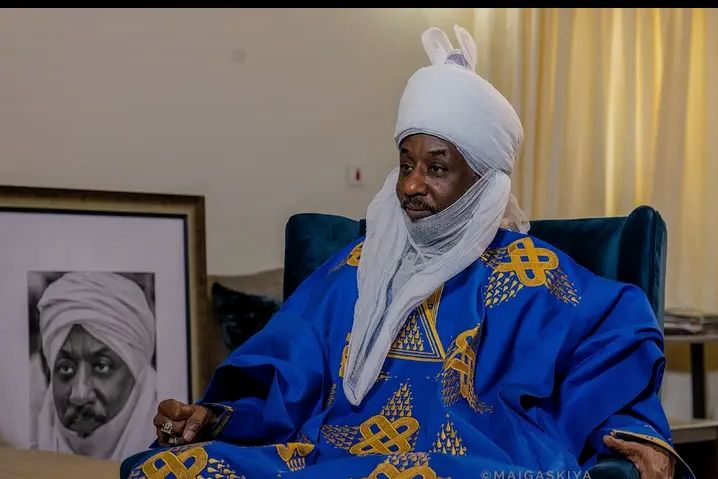
Former Governor of the Central Bank of Nigeria (CBN) and Emir of Kano, Muhammadu Sanusi II, has admitted that his decision to delay the entry of telecommunications companies into Nigeria’s financial services sector while he was at the apex bank was a mistake that slowed the country’s financial inclusion efforts.
Sanusi made the admission on Wednesday during a fireside chat at the official launch of the Access to Financial Services in Nigeria 2026 Survey Report in Abuja.
The discussion was moderated by the Dean of Lagos Business School, Prof. Olayinka David-West.
Reflecting on some of the policy decisions taken during his tenure as CBN governor between 2009 and 2014, Sanusi said he was responsible for delaying the participation of telecommunications companies in financial services.
“I’m responsible for delaying the entry of telcos into this space,” he said.
The former CBN governor explained that his decision was influenced by concerns over the safety of depositors’ funds, particularly because Nigeria had just emerged from a banking crisis.
He said he was uncomfortable with allowing companies that were not primarily regulated by the CBN to gain access to large pools of customers’ funds.
“Part of the challenge, of course, was that we had just come out of a banking crisis where we were worried about depositors’ funds.
And I wasn’t comfortable allowing companies that I was not a primary regulator of to have access to a huge pool of funds,” Sanusi said.
However, he acknowledged that the decision, despite being motivated by concerns about financial stability, ultimately slowed the expansion of financial services to underserved Nigerians.
“So again, this is one case where you have a good intention, but you take a wrong decision,” he said.
Sanusi recalled that he resisted pressure from various institutions and stakeholders, including the World Bank, to open up the financial services space to telecommunications companies more quickly.
“I fought the World Bank. I fought everybody,” he said.
According to him, allowing telecommunications companies and technology firms to participate earlier could have accelerated Nigeria’s efforts to bring millions of financially excluded citizens into the formal financial system.
“I do think if I had allowed that to happen, it would have been much more progress,” he added.
Banks lack sufficient reach
Sanusi said developments in digital finance in recent years had demonstrated the limitations of relying mainly on traditional banks to achieve widespread financial inclusion.
He noted that banks lacked the physical reach required to serve large sections of the Nigerian population, particularly people operating outside the formal economy.
“I think we made more progress in the last few years than we did in the first one, because the banks simply don’t have the boots on the ground. They don’t have the footprint,” he said.
His comments came as the 2026 Access to Financial Services survey recorded further improvement in Nigeria’s financial inclusion indicators.
According to the survey, overall financial inclusion increased to 79 per cent in 2026, while the proportion of financially excluded Nigerians declined to 21 per cent.
Formal financial inclusion also increased to 73 per cent, compared with 64 per cent recorded in 2023.
While acknowledging the progress, Sanusi stressed that access to financial services should not automatically be interpreted as an improvement in people’s incomes or living standards.
He said opening bank accounts and facilitating digital transactions were important, but did not necessarily mean that Nigerians were earning more or becoming less poor.
“Opening an account, moving money, is not the same as earning money. It’s not the same as talking about poverty,” he said.
Sanusi seeks stronger link between finance and real economy
The former CBN governor argued that financial services should be more closely connected to productive economic activities such as agriculture, manufacturing and trade.
He said the growth of fintech companies and other digital financial service providers could provide an opportunity to connect financial transactions with the movement of goods and services, from farmers and producers to markets and manufacturers.
Sanusi also called for Nigeria’s digital payment infrastructure to be used to expand access to savings, pensions and insurance.
He suggested that digital financial service providers could develop products that enable Nigerians, particularly informal-sector workers, to accumulate small amounts of money from their regular transactions.
According to him, such systems could help people build savings, pension contributions and insurance protection without requiring them to make large periodic payments.
Sanusi said that if he were leading the CBN today, he would bring major digital financial service providers together and challenge them to develop savings and pension products using the transaction data and networks already available to them.
Inflation remains threat to savings
The former CBN governor also urged the apex bank to maintain its focus on price stability, describing inflation as a major threat to household savings and wealth.
“There is no enemy to savings, no enemy to wealth that is bigger than inflation,” he said.
Sanusi warned against abandoning tight monetary policy prematurely, arguing that sustainable savings and stronger household financial resilience would depend partly on bringing inflation under control.
He said maintaining price stability should remain an important priority for monetary authorities as Nigeria seeks to deepen financial inclusion.
Unified identity system
Sanusi also reflected on the development of a unified identification framework for bank customers, describing it as part of the infrastructure needed to expand financial services.
He recalled the resistance that greeted efforts to establish a single identification system across the banking industry instead of allowing individual banks to operate separate identification systems.
According to him, Nigeria now has financial infrastructure that can support the expansion of credit, insurance, pensions and other financial products.
However, he stressed that the focus should shift towards ensuring that financial access translates into meaningful economic opportunities for Nigerians.
Sanusi warns against fragmented consumer protection
The former CBN governor further warned that fragmented consumer protection regulation could undermine confidence in the financial system.
He argued that overlapping responsibilities among the CBN, the Federal Competition and Consumer Protection Commission and other regulators could create confusion for consumers seeking to resolve complaints.
Sanusi said clearly defined responsibilities were necessary to ensure that consumers know where to turn when they experience problems with financial institutions.
“Consumer protection is so critical to financial inclusion that once you begin to fragment and there isn’t one point of call, there is an issue,” he said.
Sanusi’s remarks underline the changing nature of Nigeria’s financial inclusion landscape, with telecommunications companies, fintech firms and digital payment platforms increasingly playing a role alongside traditional banks.
The 2026 survey figures indicate continued expansion in access to formal financial services, while the former CBN governor’s reflections highlight the need to ensure that greater financial access is accompanied by improved savings, investment opportunities and participation in productive economic activities.

The Debt Management Office (DMO) has opened subscription for two Federal Government of Nigeria (FGN) bonds valued at a combined N1 trillion, with investors required to subscribe to a minimum of N50 million.
The offer, which opened on Monday, September 14, 2026, comprises a new 10-year FGN bond worth N400 billion and a N600 billion reopening of a previously issued 15-year FGN bond.
According to the DMO, both securities are being offered at N1,000 per unit, while investors can subscribe in multiples of N1,000 after meeting the minimum subscription requirement.
The new 10-year FGN bond is valued at N400 billion and is scheduled to mature in September 2036.
The second offer is a N600 billion reopening of a 15-year FGN bond due in 2038. The bond carries a coupon rate of 15.45 per cent per annum.
The DMO, in a statement issued on Monday, said the subscription would close according to the terms of the offer, with settlement scheduled for September 16, 2026.
“The FGN bonds are offered at N1,000 per unit subject to a minimum subscription of N50 million and in multiples of N1,000 thereafter,” the debt office said.
The DMO explained that for reopened bonds whose coupon rates had already been determined, successful bidders would pay a price corresponding to the yield-to-maturity bid that clears the volume being auctioned, alongside any accrued interest.
The office further stated that interest on the bonds would be paid twice a year, while the principal would be repaid in a single payment on the respective maturity dates.
“The interest is payable semi-annually, while bullet repayment is on the maturity date,” the DMO said.
The debt office said the bonds, like other Federal Government securities, were backed by the full faith and credit of the Federal Government of Nigeria and charged upon the general assets of the country.
It added that the securities qualified as investments for trustees under the Trustee Investment Act.
According to the DMO, the bonds also qualify as government securities under the Company Income Tax Act and Personal Income Tax Act for relevant tax exemptions.
The bonds are listed on the Nigerian Exchange Limited and the FMDQ OTC Securities Exchange, providing investors with avenues for trading the securities.
The DMO also said the FGN bonds qualified as liquid assets for the purpose of calculating liquidity ratios for banks.
FGN bonds are fixed-income debt securities issued by the DMO on behalf of the Federal Government. Through the instruments, investors lend funds to the government in return for interest payments and repayment of the principal at maturity.
The proceeds from government borrowing through such securities are used to finance government expenditure, including infrastructure development and other public projects.
The latest N1 trillion offer provides investors with another opportunity to participate in Federal Government securities while giving the government access to long-term domestic financing.
-
 Security2 months ago
NDLEA Declares Alleged Drug Kingpin, Three Associates Wanted, Freezes ₦9.8bn Linked to Syndicate
-
 National Affairs2 months ago
ICPC Uncovers 908 Suspected Ghost Workers Across 50 Federal MDAs, Recovers ₦942 Million
-

 Business/Finance2 months ago
How to Apply for Tunde Onakoya’s ₦250 Million Scholarship Programme and Free Laptop Offer
-
 Politics2 months ago
Atiku Challenges Tinubu to Reveal Details of ₦15.13bn SUV Procurement in 2026 Budget
-

 Judiciary | Public Safety2 months ago
INEC Tells Court Voter Information Is Not Confidential in Emeka Ike’s ₦10bn Lawsuit
-

 Judiciary | Public Safety2 months ago
Court to Rule Friday on NDLEA’s Bid to Destroy ₦480bn Meth Lab in Ogun
-
 Security2 months ago
Family Paid ₦50 Million Ransom to Secure Release of Abducted Kebbi Judge
-

 Breaking News2 months ago
Girl Dies in Uyo House Fire After Allegedly Accompanying Man Home from Nightclub