
News
Kano Tailor Begins 120-Hour Sewing Marathon in Guinness World Record Bid


A Kano-based Nigerian tailor, Abdulkadir Hassanul Basari, has embarked on a 120-hour continuous sewing marathon in an attempt to set a new Guinness World Record for the longest sewing marathon by an individual.
Basari, Chief Executive Officer of Basari Apparels and Textiles Nigeria Limited, commenced the five-day challenge on Wednesday, October 7, 2026, and is expected to conclude the exercise on Monday night, October 12.
The record attempt, tagged Sew for the Nation, is taking place at the sports complex of Maryam Abacha American University of Nigeria in Kano State.
Beyond the ambition of setting a new world record, Basari said the initiative is designed to support education by producing school uniforms for pupils from disadvantaged backgrounds attending public schools.
In a video released on October 1 to announce the project across his social media platforms, the tailor explained that the challenge was intended to combine his professional skills with a charitable cause.
“My name is Abdulkadir Hassanul Basari, I’m the CEO of Basari Apparels and Textiles Nigeria Limited. I am here to announce Sew for the Nation, a Guinness World Record attempt,” he said.
Explaining the humanitarian objective of the exercise, Basari said he planned to sew school uniforms for children from less privileged backgrounds.
“Because I’ll be sewing school uniforms to support the less privileged pupils at the public schools,” he added.
The tailor said the project was designed to demonstrate how creativity, determination and vocational skills could contribute to education and community development.
According to him, the initiative represents an opportunity to inspire young Nigerians, particularly artisans and aspiring entrepreneurs, to pursue their ambitions while making a positive impact on society.
“This is more than a record, this is for every dreamer, every artisan and every young Nigerian with a vision,” Basari said as he called on members of the public to support the initiative.
Basari Targets 120 Hours to Break Existing Record
Basari is targeting 120 hours of continuous sewing, which would surpass the existing record of 106 hours, 55 minutes and 20 seconds reportedly achieved by fellow Nigerian tailor Oluwaseun Kuforiji in January 2025.
If successful, the Kano-based tailor would extend Nigeria’s presence in record-breaking challenges while drawing attention to the country’s tailoring and fashion industry.
However, the outcome of the attempt will depend on compliance with the applicable Guinness World Records guidelines and the organisation’s subsequent verification of the evidence submitted.
A completed attempt does not automatically translate into official recognition, as Guinness World Records must assess the relevant documentation before confirming a new record.
Sewing Marathon Promotes Education and Community Support
Through Sew for the Nation, Basari is seeking to use his tailoring expertise to address a practical need among disadvantaged schoolchildren.
The planned production of school uniforms could provide support to pupils whose families face financial difficulties in meeting basic educational expenses.
The initiative also highlights the potential of vocational skills to support charitable projects, promote entrepreneurship and encourage young people to contribute to their communities.
As the challenge progresses towards its scheduled conclusion, attention will remain on Basari’s ability to complete the 120-hour target and whether Guinness World Records will officially recognise the attempt.
The project combines an ambitious endurance challenge with a social cause, placing education and support for vulnerable pupils at the centre of the tailor’s record-breaking bid.






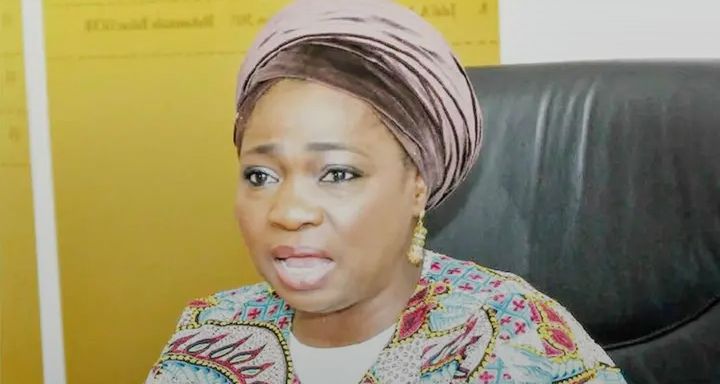
The Nigerians in Diaspora Commission (NiDCOM) has raised concerns that 57 Nigerian professionals working in four Nigerian-owned banks in The Gambia risk losing their jobs following a directive by the country’s central bank ordering the replacement of certain foreign employees with Gambian nationals.
NiDCOM Chairman, Abike Dabiri-Erewa, described the directive as “deeply worrisome” in a statement shared on her X handle on Tuesday.
The concerns followed a circular issued by the Central Bank of The Gambia on September 16, 2026, directing commercial banks operating in the country to replace non-Gambian employees who are not covered by approved expatriate quotas with qualified Gambian nationals on or before December 31, 2026.
The directive affects all commercial banks operating in the country, including Nigerian-origin financial institutions such as Access Bank, FirstBank, Guaranty Trust Bank and Zenith Bank.
Dabiri-Erewa said the affected Nigerian professionals reportedly possess valid residency and work permits and have made significant contributions to the Gambian banking industry.
While acknowledging The Gambia’s right to promote local employment and strengthen its workforce, she stressed that such policies should be implemented fairly, with due consideration for existing employment arrangements and legitimate work authorisations.
She also called for the protection of African solidarity and regional integration, warning against measures that could undermine cooperation between African countries.
Highlighting the economic contributions of the affected banks, the NiDCOM chairman said the four institutions collectively account for approximately 37.2 per cent of total deposits in The Gambia’s banking industry, valued at 35.3 billion Gambian dalasis.
According to her, they also account for 32.6 per cent of the sector’s loans, worth 7.67 billion dalasis, and 37 per cent of total banking assets, valued at 44.78 billion dalasis.
She added that the banks account for approximately 34.5 per cent of investments in Central Bank bonds and reportedly provide 90 per cent of the funding supporting the operations of the National Water and Electricity Company.
Dabiri-Erewa argued that the directive could undermine efforts to promote African investment, regional economic cooperation and the free movement of people across the continent.
“It is contradictory to encourage African investment, regional economic cooperation and the free movement of people while adopting employment measures that could lead to the indiscriminate displacement of qualified African professionals,” she said.
She consequently called on the Central Bank of The Gambia to immediately reconsider and reverse what she described as a blanket replacement directive.
The NiDCOM chairman also urged the Gambian regulator to engage the Nigerian High Commission in Banjul, the affected financial institutions and other relevant stakeholders to find an equitable resolution.
She further appealed to the Gambian authorities to uphold the principles of ECOWAS integration and the longstanding cordial relationship between Nigeria and The Gambia, urging constructive diplomatic engagement to resolve the dispute.
The Central Bank of The Gambia had earlier said the directive followed an industry-wide review which identified a relatively high number of foreign employees working in commercial banks outside the formally recognised expatriate quota.
The regulator cited the country’s Labour Act 2023 and Guideline 9, which governs expatriate employment in the banking industry, as the legal basis for its decision.
The December 31 deadline gives affected commercial banks until the end of 2026 to comply with the directive.

The United States and Nigeria have intensified cooperation to combat sextortion, romance scams and other transnational cybercrimes, with plans to strengthen intelligence sharing, joint investigations and prosecution of offenders.
The renewed commitment followed a visit to Abuja by the US Deputy Assistant Secretary of State for International Narcotics and Law Enforcement Affairs, Michael Gonzales, who held meetings with senior officials of the Economic and Financial Crimes Commission (EFCC), the Office of the National Security Adviser, the National Drug Law Enforcement Agency and the Nigeria Police Force.
In a statement issued by the US Embassy in Abuja on Monday, the embassy said the discussions coincided with Nigeria’s Cybercrime Awareness Week and focused on expanding joint operations against financially motivated sextortion, romance scams and other cyber-enabled crimes.
Gonzales stressed the importance of international cooperation in tackling cybercriminals whose activities frequently cross national borders.
He said recent extraditions demonstrated that offenders could not rely on international boundaries to escape justice when countries combined their investigative, diplomatic and law enforcement capabilities.
The statement disclosed that Nigeria extradited two alleged cybercriminals to the United States in August. The suspects face charges in separate financially motivated sextortion cases involving American minors who died by suicide.
It added that the Federal Bureau of Investigation’s Legal Attaché Office at the US Embassy in Abuja had worked with the EFCC on 41 extraditions since 2022, including five completed in 2026.
The figure represents a significant increase compared with the period between 2012 and 2021, when the two countries recorded four arrests and five extraditions.
Gonzales commended the EFCC, the Federal Ministry of Justice and the Office of the Attorney General of the Federation for their support in investigations and extradition proceedings involving suspects wanted in the United States.
He also emphasised the need for swift and visible law enforcement action to hold offenders accountable and discourage others from targeting victims.
Highlighting the impact of financially motivated sextortion on young people and their families, the embassy said the US-based National Center for Missing and Exploited Children received more than 50,000 reports of the crime in 2025.
According to the statement, this translates to approximately 137 reports daily.
The statement added that the FBI had identified Nigeria and other parts of West Africa, alongside Southeast Asia, as locations where some of the most prevalent sextortion networks had operated.
Through Operation Artemis and related initiatives, the FBI works with Nigerian authorities to identify and disrupt criminal networks targeting Americans.
The two countries are also strengthening efforts to tackle romance scams, which exploit victims’ trust and emotional relationships to defraud them of their savings and retirement funds.
In a related development, the Nigeria Police Force’s National Cybercrime Centre launched a nationwide online safety and cyber-hygiene campaign in March to educate Nigerians about romance scams, sextortion, phishing, identity theft and business email compromise.
The campaign is part of broader efforts to improve public awareness and help individuals recognise and report online threats.
During his meeting with the EFCC, Gonzales described the commission as one of Africa’s most recognised economic crime enforcement agencies, citing its record of high-profile prosecutions, asset recovery and public engagement.
He also identified the EFCC’s partnership with the FBI as an example of effective international law enforcement cooperation.
According to the statement, the partnership has involved intelligence sharing, suspect identification, arrests and complex extradition proceedings, with some investigations requiring years of joint efforts.
However, Gonzales called for the process to become faster, more routine and proactive, with greater emphasis on dismantling entire criminal networks rather than pursuing individual suspects.
The embassy said both countries intended to expand efforts to target the financial infrastructure and facilitators behind cybercrime networks before more victims were harmed.
The next phase of cooperation is expected to prioritise stronger information sharing between US and Nigerian agencies, faster conversion of cyber and financial intelligence into investigations, wider public awareness of sextortion and romance scams, and improvements in Nigeria’s investigative, prosecutorial and cybercrime-reporting capabilities.
US authorities also stressed that the success of the partnership would not be measured solely by the number of programmes funded but by tangible outcomes, including victim protection, disruption of criminal networks, successful investigations and convictions, and stronger Nigerian institutions.
The statement added that the ultimate objective was to build sustainable law enforcement capacity that would protect the interests of both Nigerians and Americans.
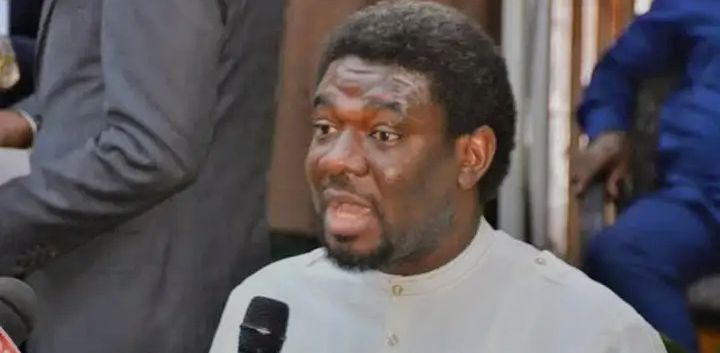
The President of the Trade Union Congress (TUC), Festus Osifo, has faulted the Nigerian Labour Congress (NLC) over its handling of negotiations with the Federal Government, insisting that the TUC must be involved in discussions on salaries and allowances affecting Nigerian workers.
Osifo described the agreement on the N70,000 transport allowance recently approved by President Bola Tinubu as an aberration, arguing that the NLC lacked the authority to negotiate on behalf of the TUC without its participation or consultation.
The TUC president made the position known on Monday while appearing on Channels Television’s The Morning Brief, amid the disagreement between the two labour centres over negotiations with the Federal Government.
He criticised the NLC President, Joe Ajaero, questioning his understanding of the labour movement’s responsibilities and the relationship between the two unions.
“I went to his office and told him that, ‘Ajaero, this is wrong!’ What you used JNC to do is fundamentally wrong!” he said.
The disagreement comes amid tensions between the two labour centres over the N70,000 transport allowance approved by the Federal Government for public servants, further highlighting differences over representation and collective bargaining within Nigeria’s organised labour movement.
-
 Security4 months ago
NDLEA Declares Alleged Drug Kingpin, Three Associates Wanted, Freezes ₦9.8bn Linked to Syndicate
-

 Business/Finance3 months ago
How to Apply for Tunde Onakoya’s ₦250 Million Scholarship Programme and Free Laptop Offer
-
 National Affairs3 months ago
ICPC Uncovers 908 Suspected Ghost Workers Across 50 Federal MDAs, Recovers ₦942 Million
-

 Judiciary | Public Safety3 months ago
INEC Tells Court Voter Information Is Not Confidential in Emeka Ike’s ₦10bn Lawsuit
-
 Politics3 months ago
Atiku Challenges Tinubu to Reveal Details of ₦15.13bn SUV Procurement in 2026 Budget
-
 Judiciary | Public Safety3 months ago
Court to Rule Friday on NDLEA’s Bid to Destroy ₦480bn Meth Lab in Ogun
-
 Security3 months ago
Family Paid ₦50 Million Ransom to Secure Release of Abducted Kebbi Judge
-

 News3 months ago
2026 Budget: FG Earmarks ₦962.83bn for SUVs, Empowerment Projects Amid Debt Concerns