
News
Tinubu: Federal Government Will Not Negotiate With Criminals

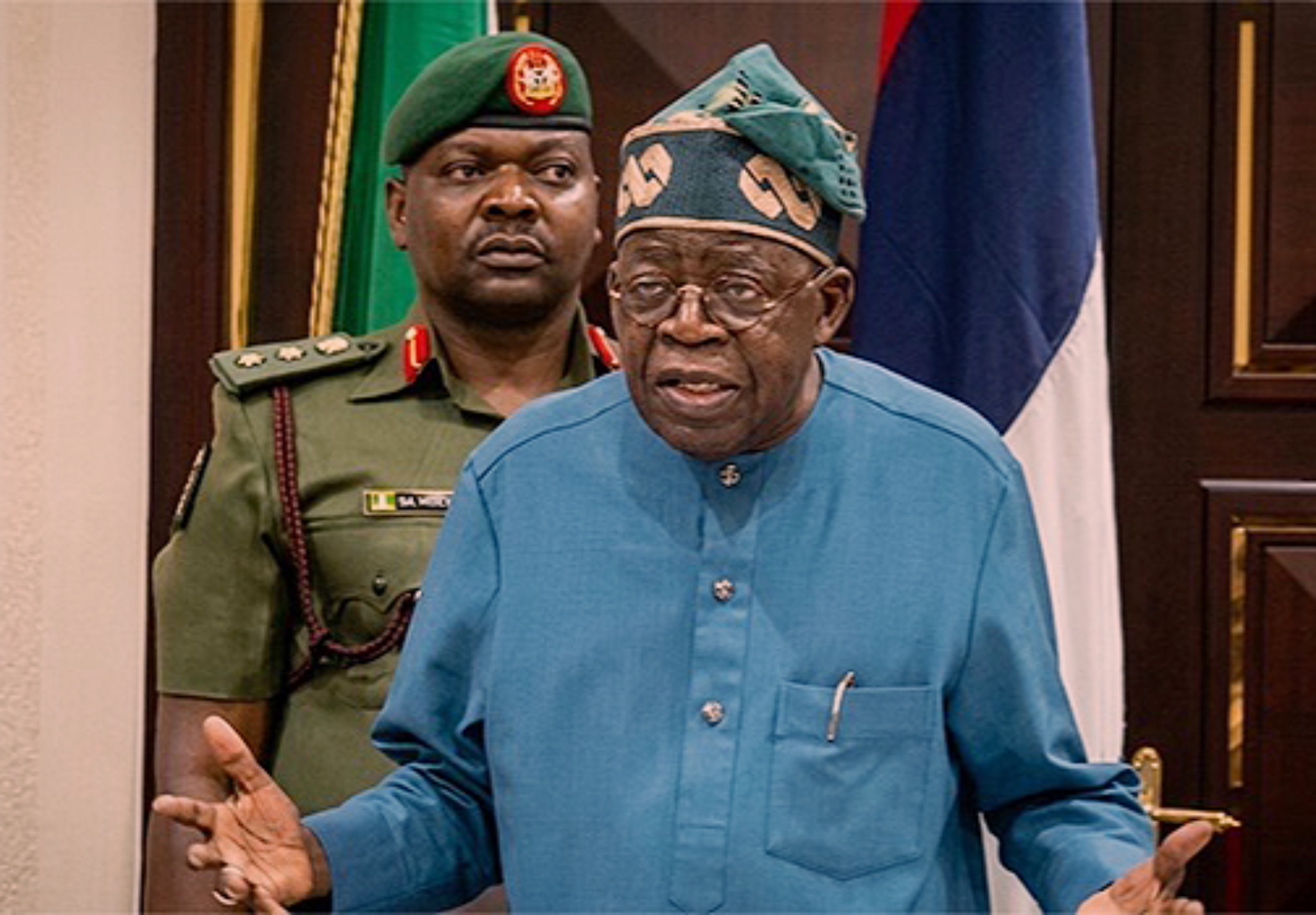
President Bola Ahmed Tinubu has reaffirmed that the Federal Government will not negotiate with criminals or pay ransom to secure the release of kidnap victims, insisting that his administration will continue to intensify intelligence-led security operations to combat terrorism, banditry, kidnapping, and other violent crimes across the country.
The President made the declaration on Thursday while receiving traditional rulers from Oyo State, led by the Olubadan of Ibadanland, Oba Rashidi Ladoja, at the Presidential Villa in Abuja.
Addressing the delegation, Tinubu commended the Nigerian Armed Forces for what he described as their commendable performance in recent rescue operations and acknowledged the contributions of traditional rulers in supporting community security and intelligence gathering.
“I agree with you that we should commend the men and women of the armed forces for their excellent performance. On behalf of them, I accept your message, and I will forward the same message to them,” the President said.
Tinubu noted that recent security incidents, including the abduction of pupils in Oyo State, had prompted the Federal Government to reassess Nigeria’s security architecture and operational strategies.
“That event teaches us new methods, opens our eyes and challenges us to examine and re-examine our security architecture, strategy, map and operations,” he stated.
As part of efforts to strengthen national security, the President disclosed that the Federal Government had approved the expansion of the Nigerian Army from eight divisions to twelve divisions, a move aimed at reducing response times and improving operational effectiveness against criminal groups.
“From eight divisions, we are now moving to 12 divisions to shorten the response time and give that response the teeth that is needed for us to defeat terrorism and banditry,” Tinubu said.
Reiterating his administration’s policy on hostage situations, the President said the government rejected demands by kidnappers to release detained members of their criminal gangs in exchange for abducted victims.
“We refuse to negotiate for ransom. These criminals wanted us to release from detention members of their criminal gangs that were already arrested. That was one of their conditions outside the money they were looking for, and we said no deal. We are not going to negotiate with criminals.”
According to him, many members of these criminal groups are responsible for murder, kidnapping, and other serious offences and must be brought to justice rather than rewarded through negotiations.
Tinubu also linked Nigeria’s security challenges to instability in neighbouring Mali, Burkina Faso, and Niger Republic, noting that cross-border insecurity has complicated efforts to tackle armed groups operating within Nigeria.
To strengthen internal security, the President reiterated his administration’s support for the establishment of state police, while assuring Nigerians that adequate constitutional safeguards would be put in place to prevent abuse of the system.
“There will be state police, and that state police will have guardrails against abuses. We will protect it from abuses, and you traditional rulers too will have a role to play more.”
He further disclosed that the Federal Government was enhancing the capacity of forest guards, explaining that they would be properly trained and equipped to confront criminal elements hiding in forest reserves across the country.
“They are not just to chase antelopes and animals. We are going to have them chase the criminals and deal with them in various forests.”
The President stressed the importance of community-based intelligence, urging traditional rulers to encourage residents to remain vigilant and promptly report suspicious activities within their communities.
He also appealed to state governors to channel increased federal allocations into infrastructure development and security-related projects that would enhance public safety.
Expressing optimism about the country’s security outlook, Tinubu maintained that ongoing reforms were beginning to yield positive results.
“The security challenge is getting better. We are getting a hang of it much better. Any time you come across some of our soldiers and police officers, please pat them on the back and say thank you. They are doing a good job.”
Earlier, the Olubadan of Ibadanland, Oba Rashidi Ladoja, praised President Tinubu’s handling of the recent abduction incident in Oyo State, particularly the administration’s decision not to pay ransom to kidnappers.
“The fact that you did not pay ransom, the fact that you stood your ground shows that we now have a government that knows what is to be done. We cannot thank you enough for that feat,” the monarch said.
He also urged the Federal Government to sustain security operations in forest reserves and accelerate ongoing infrastructure projects across Oyo State.
The meeting comes as Nigeria continues to confront persistent security threats, with the Federal Government pursuing a combination of military operations, intelligence gathering, community engagement, and institutional reforms aimed at restoring peace in affected regions.





Here is the full Nigeria Insight-style report, with the SEO package included.
Writing
2027: SDP Pledges to Rebuild, Transform Nigeria If Elected
The Social Democratic Party (SDP) has pledged to rebuild and transform Nigeria if elected into power in the 2027 general elections.
The party said it would prioritise the welfare and security of Nigerians while addressing the country’s socio-economic challenges and insecurity.
The National Chairman of the SDP, Prof. Sadiq Gombe, made the commitment on Friday when he received a delegation of the Confederation of West Africa Youth at the party’s national secretariat in Abuja.
Gombe, who was represented by the Deputy National Chairman of the party, Senator Ugochukwu Uba, said the SDP’s ideology was rooted in Chapter II of the 1999 Constitution, which outlines the fundamental objectives of government, including the welfare and security of citizens.
He said the increasing interest of young Nigerians in the SDP suggested that the party’s political message was gaining attention ahead of the 2027 elections.
According to him, Nigeria had reached a stage where comprehensive efforts were required to address the challenges facing the country.
“The SDP is a party that has its ideology threaded. This ideology is based on Chapter 2 of the Constitution of the Federal Republic of Nigeria, which talks about provision for the welfare and security of Nigerians. That is what guides the policies of this party,” he said.
Gombe said the party’s recently unveiled manifesto contained what he described as a comprehensive programme for transforming the country.
“So I find it interesting that many Nigerian youths are taking interest in the party. It means that the message we are sending is getting through to the people.
“This country has derailed to a situation where we need to rebuild. And if you look at our message and the manifesto that was presented to the public last week, you will see a comprehensive programme for the transformation of this country.
“We cannot continue drifting. The SDP wants to put this country back on track,” he added.
He also expressed confidence in the party’s presidential candidate, Prince Adewole Adebayo, describing him as determined and prepared to lead the country.
“Fortunately, we have a presidential candidate who knows his onions, determined, young and ready to turn things around. So, we want to do something different that will lead to the liberation of this country if we come to power,” Gombe said.
Adebayo Tasks SDP Supporters On Grassroots Mobilisation
Also speaking during the meeting, the SDP presidential candidate, Prince Adewole Adebayo, urged party members and supporters to intensify grassroots mobilisation ahead of the 2027 general elections.
Adebayo said political influence was ultimately determined at the community level, stressing that national visibility and public speaking skills would not necessarily translate into electoral support without effective engagement with voters.
He noted that Nigeria had 176,846 polling units and urged SDP members to focus their efforts on reaching voters in their respective communities.
“Politics is done in the neighbourhoods. We have 176,846 polling units across the country. Any amount of command of English you have that does not convince your neighbour about how they are going to vote is wasted,” Adebayo said.
He further argued that political influence outside a candidate’s immediate community would have limited electoral impact if it could not translate into support at the local level.
“Any influence you have from Timbuktu to Accra that cannot influence how people vote in the community where you come from, that influence is academic. So we must go back,” he said.
According to Adebayo, political participation requires commitment to the country and a clear vision for the future.
“Politics is not a game of the mouth. It’s a game of the heart because the burden of politics is not easy. It is the love of your country and the vision of the future that will make you last long in politics,” he added.
Youth Group Calls For New Political Direction
The Regional President of the Confederation of West Africa Youth, Israel Akinola, also called for a new political direction ahead of the 2027 elections.
Akinola said Nigerians needed to critically consider the country’s development trajectory and work towards a political system capable of delivering sustainable development.
He also urged stakeholders in both the public and private sectors to collaborate through public-private partnerships to accelerate development.
The youth leader further criticised the practice of celebrating governments for providing basic public services, arguing that such services should be regarded as fundamental rights of citizens.
The engagement comes as political parties and aspirants intensify preparations, mobilisation and policy messaging ahead of Nigeria’s 2027 general elections.
SEO package
SEO Title: 2027: SDP Pledges to Rebuild, Transform Nigeria If Elected
Meta Description: The Social Democratic Party has pledged to rebuild and transform Nigeria if elected in 2027, while urging supporters to intensify grassroots mobilisation.
Focus Keyphrase: SDP 2027 elections
Keywords/Tags: SDP, Social Democratic Party, SDP 2027, Adewole Adebayo, Sadiq Gombe, 2027 elections, Nigeria politics, Nigerian youths, grassroots mobilisation, Nigeria transformation
Social Caption: The Social Democratic Party has pledged to rebuild and transform Nigeria if elected in the 2027 general elections, while presidential candidate Adewole Adebayo urged supporters to focus on grassroots mobilisation.

The Akwa Ibom State Police Command has rescued two people after a speedboat sank along the Ibaka waterways in Mbo Local Government Area of the state.
The incident occurred at about 1:30 p.m. on Thursday when a blue W23 speedboat marked “LET’S PRAY” sank while travelling from Oron to Cameroon with goods onboard.
The Police Public Relations Officer in the state, DSP Timfon John, disclosed this in a statement issued on Friday in Uyo.
According to the police, preliminary investigations indicated that the boat driver, identified as Mr Daniel, was attempting to adjust the vessel’s seacock to drain accumulated water when the situation escalated.
John said waves generated by a passing boat reportedly destabilised the vessel, causing it to take in more water before it eventually sank.
The driver and his conductor, identified as Mr Kani, were rescued by personnel of the Marine Police Operational and Surveillance Patrol Team, who were conducting patrol operations along the waterways at the time of the incident.
The prompt intervention of the marine officers prevented what could have resulted in loss of lives, according to the police command.
The Commissioner of Police in Akwa Ibom State, CP Baba Mohammed Azare, commended the Marine Police personnel for their swift response and dedication to protecting lives and property on the state’s waterways.
Azare also urged boat operators and passengers to observe basic safety measures while travelling on the waterways.
He advised operators to ensure that their vessels are seaworthy before embarking on trips and warned against overloading boats.
The police commissioner further stressed the importance of providing and wearing life jackets for all passengers and crew members onboard.
He also urged maritime users to exercise greater caution when navigating areas with heavy marine traffic, noting that the movement of other vessels can create waves capable of destabilising smaller boats.
The Akwa Ibom Police Command said it would continue to strengthen patrols and surveillance operations across the state’s waterways in collaboration with other security agencies.
The command said the measures were aimed at enhancing the safety of maritime users and protecting lives and property.
The incident comes amid concerns over boat accidents in different parts of Nigeria, particularly in communities where waterways are an important means of transportation.
In August, several residents of Gorau community in Goronyo Local Government Area of Sokoto State reportedly lost their lives in a boat accident.
A preliminary account from a resident indicated that the Sokoto incident occurred when a boat carrying about 40 passengers, including men, women and children, capsized.
The latest incident in Akwa Ibom, however, ended without reported fatalities after the Marine Police patrol team reached the affected vessel and rescued the two occupants.

The Federal Government has announced plans to convene the National Youth Confab in October 2026, nearly two years after President Bola Tinubu first pledged to organise the gathering.
The Minister of Youth Development, Ayodele Olawande, disclosed this on Thursday while addressing State House correspondents during the ‘Meet the Press’ session organised by the Presidential Communications Team at the Aso Rock Villa, Abuja.
Olawande said the conference would provide a platform for young Nigerians to participate actively in discussions on the country’s future and develop practical solutions to national challenges.
According to him, the Federal Government, through the Federal Ministry of Youth Development, in collaboration with youth networks and other stakeholders, will convene the conference under the theme, “Next Gen Nigeria: Crafting Solutions, Owning the Future.”
He explained that the theme was designed to move young Nigerians beyond participation in national conversations to taking an active role in developing solutions and shaping the country’s future.
“It is not another youth conference where speeches are delivered, reports are produced, and nothing changes,” Olawande said, stressing that the initiative would focus on moving from discussions to concrete action.
The minister said the Confab would last two weeks and consist of a virtual consultation phase followed by a physical conference in Abuja.
He disclosed that the physical gathering would bring together one delegate from each of the 360 federal constituencies, alongside six delegates representing Nigerians in the diaspora.
The discussions, he added, would be structured around six key pillars covering governance, the economy, education, technology, climate and security.
FG outlines plan to implement recommendations
Olawande said the government had designed an implementation framework to prevent the recommendations of the youth confab from suffering the fate of those produced by the 2014 National Conference.
The 2014 conference produced more than 600 recommendations, many of which were not implemented after a change in administration in 2015.
Addressing concerns about a possible repeat of that experience, Olawande said members of the current administration who participated in the 2014 conference understood the shortcomings of the previous process.
He said the recommendations from the 2026 Confab would be divided according to the responsibilities of the three arms of government.
“We have the executive. We have the legislative… After the conference, we are going to sit down, have our task force, and put everything into three sections: what should be handled by the judiciary, what by the executive, and what by the legislature,” he said.
The minister said the government would seek Federal Executive Council resolutions on recommendations within the executive’s jurisdiction, while proposals requiring legislative action would be forwarded to the National Assembly.
He added that the judiciary would also be expected to act on recommendations falling within its constitutional responsibilities.
Olawande said the implementation process would begin from November, insisting that the government was determined to move beyond producing reports.
“Enough of documentation. We are not going back to filing reports,” he added.
Government addresses concerns over delay
The announcement comes about two years after Tinubu first pledged the initiative during his October 2024 Independence Day broadcast.
The delay has raised questions about the timing of the conference, particularly with the 2027 general elections approaching.
Special Assistant to the President on Social Media, Segun Dada, defended the period spent preparing for the initiative, saying the government had studied previous conferences to identify shortcomings and develop a more effective framework.
“What we did was look at the past confabs, the mistakes that were made, and how to ensure we don’t repeat them,” Dada said.
He also pointed to the involvement of young people in the current administration and the President’s appointment of a young Minister of Youth Development as part of the government’s approach.
The Senior Special Assistant to the President on Digital and New Media, Otega Ogra, similarly defended the timeline, saying several youth-focused programmes had been implemented while preparations for the Confab were ongoing.
Ogra cited the revamp of the National Youth Service Corps, increased participation in the Nigeria Education Loan Fund, employment initiatives through MSME centres, the Technical and Vocational Education and Training programme, and the 3 Million Technical Talent programme.
Delegate selection
Olawande also addressed concerns that the selection of delegates could be influenced by political interests ahead of the 2027 elections.
He maintained that the structure of the Confab was designed to minimise monetary and political influence in the selection process.
The government said the broad representation from the 360 federal constituencies was intended to ensure that young Nigerians from different parts of the country participate in shaping the conference’s agenda and recommendations.
The latest announcement follows an earlier attempt to organise the exercise in 2025.
On June 16, 2025, Olawande launched a Youth Confab registration portal under the same theme, with plans to accommodate 36,000 participants from the 360 federal constituencies.
The registration deadline was subsequently extended from June 30 to July 14, 2025, to allow for wider grassroots participation.
With the new October 2026 timeline, the Federal Government is now expected to commence the final stages of mobilisation, consultation and delegate selection ahead of the physical conference in Abuja.
-
 Security2 months ago
NDLEA Declares Alleged Drug Kingpin, Three Associates Wanted, Freezes ₦9.8bn Linked to Syndicate
-
 National Affairs2 months ago
ICPC Uncovers 908 Suspected Ghost Workers Across 50 Federal MDAs, Recovers ₦942 Million
-

 Business/Finance2 months ago
How to Apply for Tunde Onakoya’s ₦250 Million Scholarship Programme and Free Laptop Offer
-
 Politics2 months ago
Atiku Challenges Tinubu to Reveal Details of ₦15.13bn SUV Procurement in 2026 Budget
-
 Judiciary | Public Safety2 months ago
INEC Tells Court Voter Information Is Not Confidential in Emeka Ike’s ₦10bn Lawsuit
-
 Judiciary | Public Safety2 months ago
Court to Rule Friday on NDLEA’s Bid to Destroy ₦480bn Meth Lab in Ogun
-
 Security2 months ago
Family Paid ₦50 Million Ransom to Secure Release of Abducted Kebbi Judge
-

 Breaking News2 months ago
Girl Dies in Uyo House Fire After Allegedly Accompanying Man Home from Nightclub