
Politics
2027 Elections: IGP Disu Warns Politicians Against Recruiting Nigerian Youths for Violence

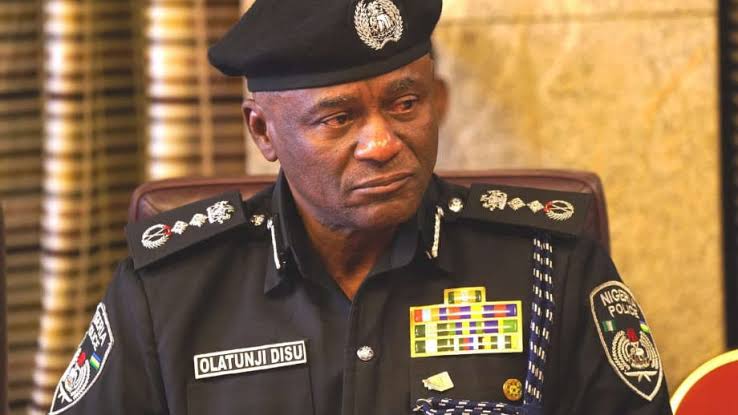
The Inspector-General of Police, Olatunji Rilwan Disu, has issued a strong warning to politicians and other political actors against recruiting, arming or financing young Nigerians to attack opponents ahead of the 2027 general elections.
Disu said the Nigeria Police Force would not tolerate the use of youths as instruments of political violence, voter intimidation, destruction of property or other criminal activities before, during or after the elections.
The IGP delivered the warning on Thursday, August 20, at the National Youth Leadership and Security Dialogue in Abuja, organised by the Nigeria Police Force as part of activities marking the 2026 International Youth Day.
The three-day programme is focused on youth leadership, security, peacebuilding and responsible civic participation.
His intervention comes as Nigeria enters an increasingly intense political period ahead of the 2027 elections, with political parties already building structures, mobilising supporters and positioning candidates for the presidential, governorship and legislative contests.
It also comes against the backdrop of violence recorded before and around the recently concluded Osun State governorship election, where killings, political clashes, allegations of thuggery and competing accusations between the major political parties heightened concerns about the vulnerability of young people to political manipulation.
‘Do not recruit our young people to fight your political battles’
Disu’s message was directed primarily at political leaders who may seek to exploit Nigeria’s large youth population for electoral advantage.
He warned politicians not to turn young Nigerians into foot soldiers for political conflicts that ultimately serve the interests of those contesting for office.
“We will protect the integrity of the electoral environment. But let me be equally clear, we will not protect violence. We will not tolerate the recruitment or mobilisation of young Nigerians for political violence.”
The IGP went further, appealing directly to political actors across the country’s political spectrum.
“Do not recruit our young people to fight your political battles. Do not arm them. Do not finance violence. Do not incite them against their fellow citizens.”
He also warned politicians against promising protection to young people after encouraging them to commit crimes.
“Do not encourage them to commit crimes today and promise to protect them tomorrow.”
Disu said Nigeria could not build a secure and prosperous society by sacrificing the generation expected to inherit the country.
His warning effectively places political sponsors of violence on notice as the 2027 electoral cycle approaches.
Police draw line between political participation and violence
The IGP made clear that the police would not prevent young Nigerians from participating in politics.
Young people, he said, have the right to join political parties, support candidates, campaign, express political opinions and participate in democratic processes.
The responsibility of the police, according to Disu, is to ensure that those rights can be exercised safely and within the law.
The distinction is significant because Nigeria’s young population represents a major force in the country’s electoral politics. Young Nigerians constitute a substantial portion of the electorate and are increasingly influential not only through physical campaign mobilisation but also through social media and digital political communication.
Disu’s concern is that the same energy that can strengthen democratic participation can also be manipulated into violence.
The police chief therefore urged youths to reject offers of money, weapons or political protection in exchange for attacking opponents or disrupting electoral activities.
The force has previously taken similar positions in Osun, where Disu warned political actors and their supporters that political contests should not be treated as warfare. In July, he directed security personnel to arrest and prosecute political thugs and sponsors of violence in the state.
Political violence has moved beyond the streets
One of the most significant aspects of Disu’s latest warning was his emphasis on digital political violence.
He said political violence no longer begins and ends with physical clashes between rival groups.
Increasingly, he said, violence can begin on a smartphone.
Disu identified misinformation, disinformation, hate speech, cyberbullying, impersonation, deepfakes, online intimidation and coordinated digital attacks as emerging threats to Nigeria’s electoral environment.
According to him, such activities can damage reputations, inflame communities, provoke real-world violence and undermine confidence in democratic institutions.
This warning is particularly relevant as Nigeria heads towards an election cycle in which artificial intelligence and increasingly sophisticated digital tools are expected to play a greater role in political communication.
The ability to create convincing manipulated photographs, videos and audio recordings means false political claims can potentially travel much faster than traditional fact-checking mechanisms can respond.
A fabricated statement attributed to a candidate, for example, can trigger outrage before the person concerned has an opportunity to deny it.
For the police, therefore, electoral security is no longer exclusively a matter of deploying officers to polling units.
It increasingly involves monitoring the circumstances that can transform digital misinformation into physical confrontation.
Disu tells youths: Verify before you share
The IGP urged Nigerian youths to take greater responsibility for the information they distribute online.
He appealed to young Nigerians to verify claims before forwarding them and establish facts before publishing allegations against other people.
“Before you forward a message, verify it. Before you publish an allegation, establish the facts.”
He also warned against online attacks, reminding youths that the people being targeted on social media are real human beings.
“Before you attack someone online, remember that there is a human being behind the screen.”
The IGP urged young Nigerians to ask themselves a fundamental question before sharing inflammatory material:
“Will this build Nigeria or burn Nigeria?”
The police have increasingly incorporated digital threats into their broader security concerns as social media becomes a major arena for political mobilisation.
Osun election provides immediate warning
Disu’s intervention comes only days after Nigeria’s attention was focused on the violence and political tension surrounding the August 15 Osun governorship election.
The election was eventually won by Governor Ademola Adeleke of the Accord Party, who defeated APC candidate Bola Oyebamiji.
But the electoral contest was preceded by a series of violent incidents and allegations involving supporters of the major parties.
Among the deaths reported shortly before the election was that of Dele Ayegbo, a nephew of APC Governorship Campaign Director-General Wole Oke.
Ayegbo was reportedly shot dead in Esa-Oke shortly before the election, with the APC alleging that the killing was politically motivated.
The circumstances surrounding such incidents have, however, been contested.
The police have at various points attributed some of the violence in Osun to cult-related activities rather than political rivalry, highlighting the difficulty of establishing the precise motivation behind individual attacks in a highly charged electoral environment.
Earlier in the election cycle, the Osun Police Command also arrested suspected cultists and political thugs and recovered items including an axe, a live cartridge and a cap bearing an Eiye Confraternity logo.
These developments demonstrate the complicated relationship between organised criminal groups, cult networks and political mobilisation.
Where criminal groups are recruited or tolerated by political actors, distinguishing ordinary criminality from politically sponsored violence can become increasingly difficult.
‘Politicians reconcile, victims carry the scars’
At the heart of Disu’s message was a warning about who ultimately bears the consequences of electoral violence.
Political candidates may compete fiercely during campaigns and later reconcile after an election.
Young people who are recruited to fight, however, may not have the opportunity to return to normal life.
That reality was also highlighted in reports on the IGP’s address, with Disu warning that politicians can reconcile after elections while young people who lose their lives in political violence cannot return home.
This makes political violence fundamentally different from ordinary political competition.
A candidate can lose an election and contest again.
A political party can lose power and rebuild.
A politician can change alliances.
But a young person killed during an election-related clash has no opportunity to recover from the consequences.
2027 security challenge is bigger than election day
The warning also reflects a broader shift in the way electoral security is being viewed by Nigerian authorities.
Election security cannot begin on polling day.
It begins months earlier, when parties conduct primaries, candidates emerge, political defections occur and rival political structures begin competing for influence.
Nigeria’s experience has repeatedly shown that violence can develop gradually through threats, inflammatory rhetoric, political intimidation and misinformation before eventually becoming physical.
The National Peace Committee similarly warned during the signing of the 2027 National Peace Accord this week that political violence often has a history before the actual violent incident occurs.
The committee said political disputes, defections, factionalisation, litigation, misinformation, threats, vote inducement and attacks on campaign activities should be treated as early warning signs rather than dismissed until violence occurs.
That makes Disu’s warning particularly significant: preventing political violence requires confronting its sponsors and organisers, not merely arresting young people recruited to carry it out.
Political sponsors may face greater scrutiny
Disu’s language also suggests that the police intend to focus attention beyond the immediate perpetrators of electoral violence.
For years, public criticism of election-related violence in Nigeria has often centred on the youths who carry weapons, attack opponents or disrupt voting.
But the more difficult question is frequently: Who recruited them? Who paid them? Who supplied the weapons? Who promised them protection?
Disu’s warning explicitly addresses those questions.
His appeal against arming, financing and mobilising young people means that political sponsors could increasingly become targets of police investigations where evidence establishes their involvement.
That could represent an important shift in Nigeria’s approach to electoral violence.
Arresting a young man at the scene of a political clash may temporarily remove one participant from the streets. Identifying and prosecuting the person who financed and organised the operation could have a far greater deterrent effect.
What the warning means for 2027
The 2027 elections are expected to generate intense political competition across Nigeria.
With presidential, governorship and legislative contests taking shape, political parties are already building grassroots structures and mobilising supporters.
The challenge for security agencies will be ensuring that political competition does not evolve into organised violence.
For Nigerian youths, Disu’s message is equally a warning about the long-term consequences of political mobilisation.
A political party may offer money for a campaign rally today, but the consequences of an arrest, criminal prosecution, injury or death can last far beyond election day.
The IGP therefore wants young Nigerians to see themselves not merely as voters or campaign foot soldiers but as stakeholders with a future beyond the immediate election.
That is ultimately the central question Nigeria faces before 2027:
Will young Nigerians be used as weapons in political contests, or will they become active participants in building a more peaceful democratic system?
The answer will depend not only on the youths themselves but also on whether political parties, candidates and security agencies are prepared to hold those who sponsor violence accountable.


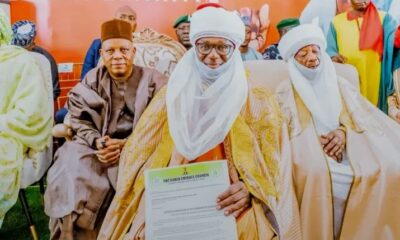


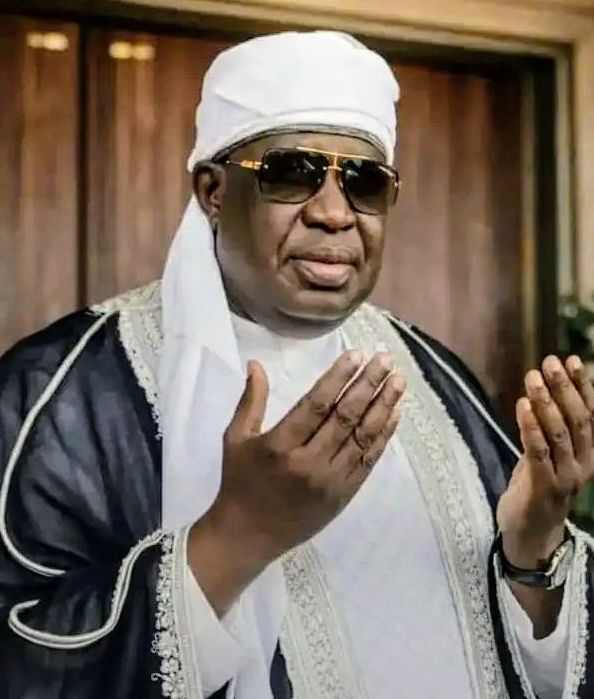
Kwara State Governor, AbdulRahman AbdulRazaq, has appointed a former member of the House of Representatives and chieftain of the Peoples Democratic Party, Mashood Mustapha, as the Ameerul Hajj for the state’s 2027 Muslim pilgrimage to Saudi Arabia.
Mustapha, the Wakili of the Ilorin Emirate, is expected to lead and coordinate Kwara’s delegation for the pilgrimage and work with relevant government agencies and statutory bodies involved in organising and administering the annual Hajj exercise.
The appointment was announced in a statement issued on Thursday by the governor’s Deputy Chief Press Secretary, Mashood Agboola, in Ilorin.
According to the statement, the appointment is part of the state government’s preparations for the 2027 Hajj exercise.
“The Ameerul Hajj will coordinate the state’s 2027 Hajj exercise along with other statutory bodies at various levels of government,” the statement said.
The state government described Mustapha as a seasoned entrepreneur, public servant and community leader. He is also the Chairman of Crystal Group of Companies.
The government noted that Mustapha had previously served as a member of the Kwara State Executive Council before his election to the National Assembly.
He represented the Ilorin West/Asa Federal Constituency in the House of Representatives between 2011 and 2015.
Beyond his political career, Mustapha, popularly known as MM, has remained active in business and community leadership.
His appointment also comes against the backdrop of his involvement in Kwara politics.
Mustapha is a chieftain of the PDP and had sought the party’s ticket to contest the Kwara Central Senatorial District seat in the 2027 general election.
However, following the emergence of the incumbent Senator, Saliu Mustapha, as the PDP candidate, Mustapha accepted the outcome and pledged his support for the senator.
The state government said his experience in public service, business and community leadership would be relevant to his new responsibility as Ameerul Hajj.
In the role, Mustapha is expected to coordinate with the various statutory institutions responsible for the pilgrimage and facilitate the smooth administration of the state’s participation in the 2027 Hajj.
Mustapha’s educational background includes studies at Kwara State Polytechnic, Lagos State University and Rome Business School in Italy.
A chieftain of the All Progressives Congress (APC) and federal lawmaker, Abdulmumin Jibrin, has described the Minister of the Federal Capital Territory (FCT), Nyesom Wike, as an asset to the ruling party, urging APC leaders to refrain from publicly embarrassing him over his continued membership of the Peoples Democratic Party (PDP).
Jibrin made the remarks on Wednesday night while appearing on Channels Television’s Politics Today, where he defended Wike amid criticisms from some APC governors over his political affiliation and support for President Bola Ahmed Tinubu’s second-term bid.
The Kano lawmaker argued that Wike’s contributions to the emergence of the Tinubu administration and the APC’s political fortunes should be recognised, rather than subjected to public criticism.
“There is no APC member in Nigeria today that has not directly or indirectly benefited from the efforts of Wike, so long as delivering the President, also managing the government, also performing his work, there is nobody,” Jibrin said.
He added that Wike remained an important figure in the administration and should not be publicly attacked by members of the ruling party.
“Wike is an asset to the APC. I don’t think Wike should be embarrassed at this moment with public statements,” he said.
According to Jibrin, Wike had made significant political sacrifices in support of Tinubu and the APC despite remaining a member of the opposition PDP.
“Wike is an asset to APC; he has sacrificed so much for the President and the APC,” he added.
‘I’m Not Holding Brief for Wike’
Jibrin said his intervention was not motivated by a personal relationship with the FCT minister, explaining that he had only met Wike twice by accident.
He said his concern was primarily about protecting what he described as the stability of the political efforts aimed at securing Tinubu’s second-term bid.
“As I talk to you, before only God I worship, I don’t know Wike, but he knows me from afar, and I know him from afar, if I see him I know he is Wike, and if he sees me he will know I’m Honourable Jibrin, I have met him just twice accidentally, so I’m not holding any brief for Wike,” he explained.
Jibrin added that he considered it necessary to speak whenever political disagreements could affect the broader coalition supporting the President.
He also cited Wike’s political activities in Rivers State and the FCT as evidence of his contribution to the APC-led administration.
Wike ‘Handed Over Rivers to APC’
The former Chairman of the House Committee on Appropriation said Wike had played a role in the political realignment that strengthened the APC in Rivers State.
“I believe that Wike has sacrificed; he handed over Rivers to APC, Wike had candidates [in the] FCT election but asked them to step down for APC. Wike came into this government as [part of the] government of national unity. In reality, we should be fair to him; he has done far more than that,” Jibrin said.
He further argued that Wike’s continued membership of the PDP should not automatically disqualify him from supporting Tinubu, noting that politicians from other parties were also involved in the broader political coalition backing the President.
According to him, some politicians outside the APC had also expressed concern about the criticism directed at Wike.
“There are people who are in other parties, who are working with us in the NDC, in the ADC. Some of them called me yesterday, saying, ‘Look at what they are saying about Wike,’” he stated.
Jibrin Urges APC Governors to Engage Wike Privately
Jibrin also appealed to APC governors who have disagreements with Wike to resolve their differences through private discussions instead of public criticism.
“For the governors, they should take Wike as part of them,” he said.
He referred to Wike and Osun State Governor Ademola Adeleke as political figures whose activities, in his view, were contributing to the broader coalition supporting Tinubu.
“You call Wike the number 32 governor and Adeleke the number 33 governor of the APC; if there is a problem at the state level, the entire coalition that he is doing is for the President,” Jibrin said.
He maintained that where state-level political disagreements arise, the affected parties should engage Wike directly rather than make public statements against him.
“If anybody at the subnational level feels it may work against him or his interest, they should discuss with Wike, but I do not think Wike should be embarrassed by statements,” he added.
Criticism Amid 2027 Political Realignment
Jibrin’s comments come amid criticism from some APC governors over Wike’s continued membership of the PDP while openly supporting Tinubu’s bid for a second term in 2027.
Among those who have publicly questioned the arrangement are Kwara State Governor AbdulRahman AbdulRazaq and Imo State Governor Hope Uzodimma.
Wike has been associated with the “Rainbow Coalition”, a political alignment involving politicians across party lines that has expressed support for Tinubu’s 2027 re-election.
Jibrin, however, maintained that Wike’s political support for the President had contributed to electoral gains for the ruling party.
He pointed to the outcome of the recently concluded FCT Area Council elections, where the APC won five of the six councils, as part of the political gains he associated with the broader coalition.
The debate over Wike’s political affiliation and his role in the APC-led administration is expected to remain part of the wider political realignment ahead of the 2027 general elections.

Afrobeats superstar David Adeleke, popularly known as Davido, has thrown his weight behind the 2027 House of Representatives ambition of human rights lawyer and political campaigner, Pelumi Olajengbesi.
Davido expressed his support for Olajengbesi in an Instagram Story on Tuesday, describing the politician as “My other project” and endorsing him as a “100% winning ticket.”
Olajengbesi is seeking to represent the Oriade/Obokun Federal Constituency of Osun State in the House of Representatives in the 2027 general elections on the platform of the Accord Party.
The endorsement comes weeks after the August 15, 2026, Osun State governorship election, in which Governor Ademola Adeleke secured victory for a second term.
Olajengbesi played a prominent role in Adeleke’s re-election campaign, serving as the convener of the Imole Grassroots Mobilisation Network and campaign spokesman for the governor’s campaign.
Following Adeleke’s victory at the polls, Davido also took to X to appreciate Olajengbesi for his contribution to the campaign.
The latest endorsement by the music star is therefore being seen as a further indication of his support for Olajengbesi’s political ambition ahead of the 2027 elections.
Olajengbesi, a lawyer and human rights advocate, will be seeking to unseat the incumbent member of the House of Representatives for the constituency, Wole Oke of the All Progressives Congress.
Oke has represented the Oriade/Obokun Federal Constituency in the House of Representatives for 24 years, making the 2027 contest potentially significant for the constituency.
With Olajengbesi now receiving public backing from Davido, the race for the federal constituency is expected to attract increased political attention as parties and candidates begin preparations for the 2027 general elections.
Davido, who has remained publicly engaged with political developments in Osun State, has previously shown support for Governor Adeleke, who is his uncle.
The endorsement of Olajengbesi adds another dimension to the emerging political contest in the state, particularly as aspirants position themselves ahead of the 2027 legislative elections.
The House of Representatives election will form part of the wider 2027 general elections, with candidates across the country expected to campaign on issues including representation, development, employment, infrastructure and the welfare of their constituents.
-
 Security2 months ago
NDLEA Declares Alleged Drug Kingpin, Three Associates Wanted, Freezes ₦9.8bn Linked to Syndicate
-
 National Affairs2 months ago
ICPC Uncovers 908 Suspected Ghost Workers Across 50 Federal MDAs, Recovers ₦942 Million
-

 Business/Finance2 months ago
How to Apply for Tunde Onakoya’s ₦250 Million Scholarship Programme and Free Laptop Offer
-
 Politics2 months ago
Atiku Challenges Tinubu to Reveal Details of ₦15.13bn SUV Procurement in 2026 Budget
-
 Judiciary | Public Safety2 months ago
INEC Tells Court Voter Information Is Not Confidential in Emeka Ike’s ₦10bn Lawsuit
-
 Judiciary | Public Safety2 months ago
Court to Rule Friday on NDLEA’s Bid to Destroy ₦480bn Meth Lab in Ogun
-
 Security2 months ago
Family Paid ₦50 Million Ransom to Secure Release of Abducted Kebbi Judge
-
 Breaking News2 months ago
Girl Dies in Uyo House Fire After Allegedly Accompanying Man Home from Nightclub