
Politics
ADC Challenges APC to Produce Corruption Conviction Against Atiku

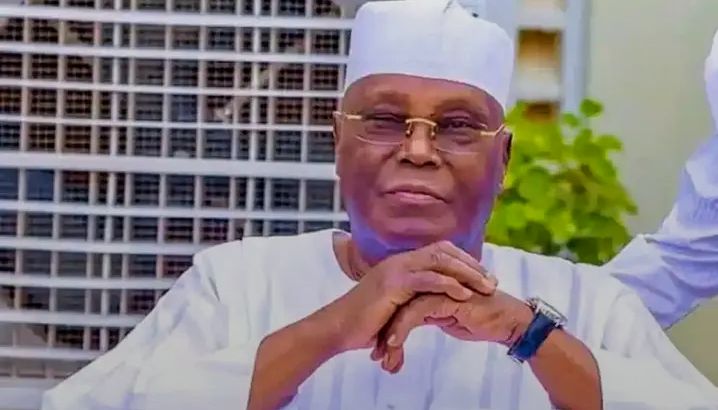
The African Democratic Congress (ADC) Presidential Campaign Council has challenged the All Progressives Congress (APC) to produce any court judgment convicting its presidential candidate, Atiku Abubakar, of corruption.
The challenge followed recent comments by APC National Publicity Secretary, Felix Morka, who questioned Atiku’s record and warned Nigerians against entrusting the country’s treasury to the former vice-president ahead of the 2027 presidential election.
Responding on behalf of the ADC campaign, Phrank Shaibu, Director of Strategic Communications, accused the APC spokesperson of presenting a collection of investigations, allegations and disputed financial transactions as though they amounted to established criminal convictions.
Morka had referenced controversies surrounding the Mambilla Hydroelectric Power Project, the Siemens bribery investigation, the case involving former United States Congressman William Jefferson, the Petroleum Technology Development Fund (PTDF) controversy and a 2010 report by the U.S. Senate Permanent Subcommittee on Investigations.
Shaibu said the APC should identify the court that convicted Atiku and publish the judgment if it maintains that the former vice-president has been convicted of corruption.
“If he claims there is a conviction, let him identify the court and publish the judgment.”
The ADC spokesperson argued that political criticism should not erase the distinction between an allegation, an investigative report, an arbitral finding and a criminal judgment.
Mambilla Payment at Centre of Dispute
The most recent point of contention concerns a $500,000 payment made by Leno Adesanya, promoter of Sunrise Power and Transmission Company Limited, to Jennifer Douglas, Atiku’s then-wife, in January 2003.
The payment was examined during arbitration proceedings before an International Chamber of Commerce tribunal in Paris concerning the long-running dispute over the Mambilla Hydroelectric Power Project.
The ICC tribunal ultimately rejected Sunrise Power’s claims against Nigeria. However, its final award also examined the circumstances surrounding the $500,000 transfer and raised concerns about the explanation given for the transaction.
According to the tribunal record, Adesanya acknowledged transferring the money through China Castle Investments Limited. He described it as a foreign-exchange transaction carried out for Atiku.
The tribunal found that Adesanya had not provided documentary evidence supporting that explanation, including records showing the underlying naira payment, exchange rate, instructions from Atiku or his aides, correspondence or other documentation establishing the commercial purpose of the transaction.
The tribunal also noted the timing of the payment: it was made on January 30, 2003, less than four months before Sunrise was purportedly awarded a build-operate-transfer contract relating to the Mambilla project.
It said it could not accept Adesanya’s explanation as a bona fide foreign-exchange transaction and that the circumstances created significant concerns.
However, the tribunal also stated that there was no evidence in the arbitration record that Atiku actually exercised his duties as a government official in a manner that fostered the award of the contract to Sunrise. It said it could not exclude a possible connection between the payment and Atiku’s governmental role in the Mambilla project, but it did not make a definitive finding that Atiku received a bribe or corruptly influenced the contract.
That distinction has become central to the current political dispute.
Shaibu argued that the tribunal’s concerns cannot properly be converted into a criminal conviction against Atiku.
“Adesanya’s explanation about the said payment may have called for further probe by the tribunal, but it does not give Morka permission to write a corruption verdict the tribunal never delivered,” he said.
What the U.S. Senate Report Said
Shaibu also disputed the APC’s interpretation of a 2010 report by the U.S. Senate Permanent Subcommittee on Investigations.
The Senate report examined the movement of what it described as suspect funds into the United States through accounts associated with Jennifer Douglas, who was Atiku’s then-wife.
The report said Douglas helped move more than $40 million into the United States between 2000 and 2008, including funds that the report connected to offshore companies and alleged Siemens bribe payments. It also discussed allegations concerning Atiku and the Petroleum Technology Development Fund.
The Senate committee’s report is an investigative document, not a criminal judgment against Atiku.
The committee described its work as a case study involving foreign corruption and financial flows, while discussing allegations and suspicious transactions associated with Douglas and other individuals.
Its findings therefore need to be distinguished from a criminal conviction by a court.
Siemens Controversy
The Siemens issue also forms part of the political argument.
The U.S. Senate report cited a 2008 U.S. Securities and Exchange Commission complaint alleging that Siemens made millions of dollars in bribe payments as part of a scheme involving Nigerian officials. The report said $2.8 million was transferred to a U.S. bank account belonging to Douglas.
The existence of the Siemens bribery case is documented. What remains politically contested is how responsibility for those transactions should be attributed to Atiku personally.
That distinction is important because evidence concerning money entering an account belonging to a person’s spouse does not, by itself, establish that the person personally received a bribe or was criminally convicted.
William Jefferson Case
The William Jefferson case presents another distinction.
Jefferson, a former U.S. congressman, was prosecuted in the United States on bribery, racketeering, money-laundering and related charges. U.S. Justice Department records document the prosecution and subsequent proceedings against Jefferson.
The case involved business dealings in Nigeria and other African countries and allegations concerning Nigerian officials.
However, the fact that Atiku’s name appeared in discussions surrounding the case is not equivalent to a criminal conviction of Atiku.
The ADC’s argument is that references to the Jefferson case must therefore be presented with the relevant legal distinctions rather than as proof that Atiku himself was convicted.
PTDF Controversy Also Predates the Current Campaign
Morka also cited controversies involving the Petroleum Technology Development Fund, an issue that dates back to the political disputes surrounding the administration of former President Olusegun Obasanjo and Atiku’s tenure as vice-president.
A PTDF publication itself acknowledged that the fund had been subjected to an EFCC and Senate probe and that the controversy shaped public perceptions of its management.
Again, the existence of a parliamentary or investigative controversy should not automatically be described as a criminal conviction.
This distinction is particularly relevant in an election campaign, where political parties routinely revisit unresolved or contested issues from the records of opponents.
ADC Also Challenges APC’s Tinubu Reserves Claim
Shaibu also disputed another claim attributed to Morka concerning President Bola Tinubu’s handling of Nigeria’s foreign reserves.
He questioned an APC comparison suggesting that Tinubu inherited reserves of about $3 billion and subsequently raised them above $54 billion.
The Central Bank of Nigeria’s May 2023 Economic Report, however, recorded Nigeria’s external reserves at $34.39 billion at the end of May 2023, shortly before the change of administration.
That figure provides an important factual reference point when assessing competing political claims about the reserves inherited by the Tinubu administration.
It does not, by itself, settle the broader question of how Nigeria’s reserves subsequently changed, since reserve levels fluctuate because of foreign-exchange inflows, obligations, valuation changes, interventions and other factors.
Shaibu nevertheless accused the APC of selectively presenting the reserve figures to strengthen its political argument.
The Fuel Subsidy Argument Returns
The ADC campaign council also defended Atiku’s proposal for a targeted petroleum subsidy.
Atiku has proposed a system under which subsidy support would apply to petroleum products refined in Nigeria and sold to Nigerian consumers, rather than providing a blanket subsidy for imported petroleum products.
The proposal has become part of the wider 2027 debate over how Nigeria should balance petrol affordability, domestic refining, government revenue and fiscal sustainability.
The issue is politically significant because the Tinubu administration removed the petrol subsidy in 2023, while Atiku has subsequently argued for a more targeted mechanism.
The two positions therefore represent different approaches to managing the cost of petroleum products and the fiscal consequences of government intervention.
What the Dispute Establishes and What It Does Not
The latest exchange illustrates how corruption allegations are likely to feature prominently in the 2027 presidential campaign.
The APC has pointed to historical investigations, financial transactions and controversies involving Atiku and people associated with him as grounds for questioning his suitability for the presidency.
The ADC, in turn, argues that those matters should not be presented as criminal convictions where courts or tribunals did not make such findings.
The recently released ICC award makes the distinction particularly important.
The tribunal did examine the $500,000 payment, rejected the explanation offered for it and described circumstances surrounding the transaction as raising serious concerns.
At the same time, the tribunal did not find that Atiku personally used his public office to secure the Mambilla contract for Sunrise, nor did it issue a criminal conviction against him.
Similarly, the U.S. Senate report contains serious investigative findings and allegations concerning financial transactions, while the William Jefferson case resulted in proceedings against Jefferson, not a criminal conviction of Atiku.
For voters, the distinction matters: an allegation, an investigative report, an arbitral finding and a criminal conviction are different categories of evidence and legal determination.
The latest APC-ADC exchange is therefore less about whether the controversies exist, they are documented in various records and more about how those records should be interpreted and presented during the 2027 campaign.






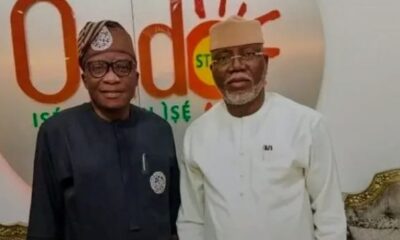



Yobe State Deputy Governor, Idi Barde Gubana, has commended the Yobe State Independent Electoral Commission (SIEC) for conducting a peaceful local government election across the state.
Gubana gave the commendation on Saturday after casting his vote at Polling Unit 008, Dogon Kuka Ward, in Fune Local Government Area.
The deputy governor also expressed satisfaction with the turnout of voters in his area, describing the participation as a demonstration of citizens’ acceptance of democratic governance.
“This is an indication that democracy has come to stay, and is accepted as the best form of government,” Gubana said.
He stressed the need for sustained voter education and sensitisation across the state to encourage greater participation in future elections.
According to him, the government would continue to support efforts aimed at strengthening the democratic process and ensuring that citizens are adequately informed about their civic responsibilities.
“Voter education and sensitisation across the state would be given much emphasis, going forward, so as to foster a more robust democratic process and participation,” he added.
Gubana was accompanied to the polling unit by the Special Adviser to Governor Mai Mala Buni on Security Matters, retired Brigadier-General Dahiru Abdulsalam;
the All Progressives Congress (APC) chairman in Fune Local Government Area, Yusuf Sinkin, among other officials and party members.
Meanwhile, the Chairman of the Yobe State Independent Electoral Commission, Dr Ibrahim Yabani, said the commission had deployed adequate sensitive and non-sensitive electoral materials to polling units across the state.
Yabani said the materials were distributed to polling units in the state’s 178 wards to facilitate the smooth conduct of the election.
He, however, disclosed that some polling units identified as flashpoints had been clustered and relocated to safer locations as part of measures to safeguard voters and electoral officials.
According to him, the adjustment was intended to enable eligible voters in affected communities to participate in the election while minimising security risks.
The local government election is being conducted across Yobe State’s 17 local government areas, with residents voting to elect representatives at the grassroots level.
The exercise is expected to provide an avenue for citizens to participate directly in choosing leaders responsible for governance and development at the local government level.

The Enugu State Local Government Election recorded low voter turnout on Saturday, with residents in parts of the state attributing the poor participation to voter apathy, inadequate awareness and concerns over previous election experiences.
The election, conducted by the Enugu State Independent Electoral Commission (ENSIEC) across the 17 local government areas of the state, was also characterised by the late arrival of electoral materials at some polling units.
The News Agency of Nigeria (NAN) reported that only a few voters were seen casting their ballots at some polling units in Trans-Ekulu and parts of New Haven in the Enugu metropolis.
At polling units in Achara Layout and Awkunanaw, electoral materials arrived late, leaving security personnel and a small number of voters waiting for the commencement of voting.
At Igbariam Primary School, some youths who had gathered at the polling unit were seen playing football while waiting for electoral materials to arrive.
The low turnout was recorded despite campaigns by political parties and appeals from ENSIEC and the Enugu State Government urging eligible voters to participate in the local government election.
Some residents who spoke during the exercise expressed doubts about the significance of their votes and the credibility of the electoral process.
A resident, Raphael Nnamani, said he deliberately stayed away from the election because he believed the outcome had already been determined.
“Everybody knows the situation; whether you vote or not, the results have been written, so why should I waste my time?” he said.
Another resident, Margaret Ozioko, said she was not aware that the local government election was taking place.
“I don’t have anything to do with election in Nigeria because after voting, the vote will not count,” she said.
A civil servant, Peter Eze, attributed the low turnout to inadequate voter awareness, previous election experiences and concerns about the relevance of local government elections to residents.
“Of what essence is the election when we know that the ruling party will win everything? For me, it is completely a waste of time and energy,” Eze said.
Another resident, Fabian Ugwu, described the exercise as an “affirmation of selected candidates.”
The concerns expressed by residents highlighted the challenges facing participation in local government elections, particularly where voters perceive the process as lacking competitiveness or where they have limited information about the exercise.
Residents who participated in the election, however, urged political leaders and electoral authorities to intensify voter education and awareness campaigns ahead of future local government elections.
They also called for measures to improve the timely distribution of electoral materials and strengthen public confidence in the electoral process.
The election was held across the 17 local government areas and 260 electoral wards in Enugu State.
As of Saturday afternoon, the results were yet to be fully announced, with collation continuing across the electoral wards.
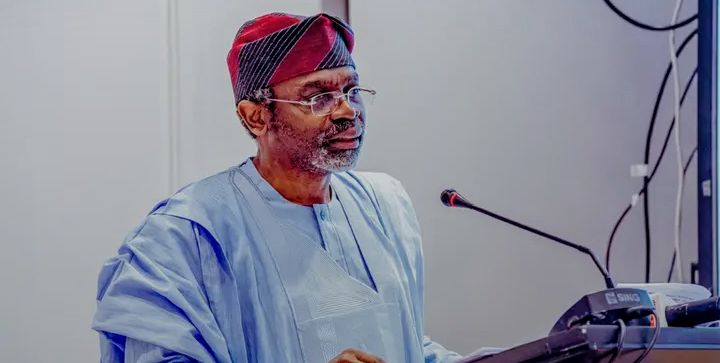
Chief of Staff to President Bola Tinubu, Femi Gbajabiamila, has said investigations by the Nigerian Police, Department of State Services (DSS) and Independent Corrupt Practices and Other Related Offences Commission (ICPC) cleared him of allegations surrounding his office.
Gbajabiamila made the disclosure on Saturday at the 2026 Gbaja Mega Empowerment programme in Lagos, where residents of his Surulere constituency received cash grants, electric vehicles, minibuses, tricycles, laptops and other forms of support.
Reflecting on the allegations against him, the former Speaker of the House of Representatives said the period of scrutiny had tested him personally but that he remained grateful to those who supported him.
“The past few months have tested me in ways I never expected. Stories were written, strange accusations were made, lies were told, and my integrity was questioned,” he said.
Gbajabiamila said investigations by the relevant security and anti-corruption agencies eventually found no wrongdoing on his part.
“At the end of all the investigations, the Nigerian Police, the DSS, the ICPC cleared me of any wrongdoing, and the investigative reports are in the public domain,” he said.
The allegations followed investigations into the activities of a purported Presidential Foreign Investment Promotion Council (PFIPC), an organisation that had been linked to claims involving Gbajabiamila’s office.
Gbajabiamila appeared before the ICPC in July 2026 as part of the investigation. The commission subsequently reported that it found no evidence linking the Chief of Staff or his office to the purported organisation or the appointment of its alleged Director-General.
According to Gbajabiamila, the experience highlighted some of the challenges associated with public service, particularly for individuals aspiring to occupy high political offices.
“For those who seek high office, especially our young ones, sometimes this is the high price you have to pay and sacrifice you have to make. Do not be discouraged,” he said.
He also commended President Tinubu for allowing the investigations to run their course rather than acting on the allegations before the relevant agencies completed their inquiries.
“I must thank my principal, President Bola Tinubu. Many people wanted him to rush to judgment and give a verdict before the investigation. He refused and insisted on due process,” Gbajabiamila said.
The Chief of Staff maintained that the allegations would not distract him from carrying out his responsibilities in the administration.
“No amount of money, no amount of blackmail or lies, whether sponsored from within or outside, will detract me from my work and the work Mr. President has given me to do,” he said.
Gbajabiamila also warned individuals allegedly using his name to defraud members of the public.
“And to anyone using my name to defraud people or misrepresent me, know that the law will always catch up with you,” he said.
Gbajabiamila unveils N1.15bn empowerment programme
At the Surulere event, Gbajabiamila announced an empowerment package estimated at N1.15 billion for about 5,000 beneficiaries in the constituency.
The initiative included cash grants, vehicles, equipment and other forms of assistance intended to support businesses and improve the livelihoods of residents.
Gbajabiamila said the programme, which was initially scheduled for June, was postponed to allow organisers to properly verify the submissions received from wards, community-based associations and trade groups.
“In June, earlier this year, we shifted this event. It was not an easy decision, but I wanted to ensure everything sent in by wards, and trade associations were properly checked,” he said.
“I did not want anyone to collect what was meant for another person.”
According to him, about 5,000 people benefited from the initiative, which he described as a “Mega Empowerment” programme.
“Let me say again, there are about 5,000 beneficiaries in one day.
That is why we call it Mega Empowerment. This is not a token gesture,” he said.
The former Speaker said 3,905 beneficiaries received N250,000 each, while another 348 people received N500,000 each.
The package also included 61 electric vehicles, 50 electric tricycles, 60 minibuses and 100 laptops.
Other items distributed included four Toyota HiAce 18-seater buses, two security patrol vehicles, one medical ambulance and two additional vehicles.
Gbajabiamila said the programme involved N1.15 billion in cash support and 279 vehicles powered by electric and conventional energy sources.
Focus on electric transportation
The Chief of Staff also highlighted the continued operation of the Gajarai transportation service, which he said provides free transportation for students and discounted services for elderly residents.
He said the provision of electric vehicles for e-hailing businesses was deliberate and aligned with efforts to promote cleaner transportation.
“This was deliberate. Step by step, this administration is keeping to the commitment to renewable and clean energy,” he said.
Gbajabiamila also announced plans to install electric vehicle charging stations as part of efforts to expand the use of electric vehicles and create additional economic opportunities for residents.
He said the broader strategy was intended to reduce transportation and operating costs while improving access to cleaner forms of mobility.
“Today, some Nigerian automobile companies are producing and assembling electric and CNG-powered vehicles globally.
That means more jobs for our people, cheaper transport and better air quality,” he said.
Hamzat speaks on APC grassroots engagement
Speaking at the event, Lagos State Deputy Governor, Obafemi Hamzat, said the All Progressives Congress (APC) remained focused on connecting with citizens and addressing their needs at the grassroots.
Hamzat attributed the party’s continued engagement with communities to the efforts of elected representatives to maintain close contact with their constituents.
“That is why our party is the party of the people,” he said.
He said political engagement should extend beyond elections and involve sustained relationships between elected officials and citizens.
“It’s not about that. It’s about relating with our citizens,” Hamzat said.
The deputy governor added that the APC understood its responsibility to the people and was committed to delivering benefits through its programmes and activities.
“So our party understands that our political party was formed just to take care of our people. And that’s what we are doing,” he said.
-
 Security2 months ago
NDLEA Declares Alleged Drug Kingpin, Three Associates Wanted, Freezes ₦9.8bn Linked to Syndicate
-
 National Affairs2 months ago
ICPC Uncovers 908 Suspected Ghost Workers Across 50 Federal MDAs, Recovers ₦942 Million
-

 Business/Finance2 months ago
How to Apply for Tunde Onakoya’s ₦250 Million Scholarship Programme and Free Laptop Offer
-
 Politics2 months ago
Atiku Challenges Tinubu to Reveal Details of ₦15.13bn SUV Procurement in 2026 Budget
-

 Judiciary | Public Safety2 months ago
INEC Tells Court Voter Information Is Not Confidential in Emeka Ike’s ₦10bn Lawsuit
-
 Judiciary | Public Safety2 months ago
Court to Rule Friday on NDLEA’s Bid to Destroy ₦480bn Meth Lab in Ogun
-
 Security2 months ago
Family Paid ₦50 Million Ransom to Secure Release of Abducted Kebbi Judge
-
 News2 months ago
2026 Budget: FG Earmarks ₦962.83bn for SUVs, Empowerment Projects Amid Debt Concerns