
Business/Finance
CBN Tightens Surveillance on Banks Over Terrorism Financing Risks


The Central Bank of Nigeria has intensified its supervision of banks and other financial institutions over risks associated with terrorism financing, warning against the misuse of the country’s financial system by illicit actors.
The apex bank said terrorism financing supervision had now been elevated to a current supervisory priority as part of efforts to strengthen the integrity and security of Nigeria’s financial sector.
The CBN disclosed this in a statement issued on Tuesday and signed by the Acting Director, Corporate Communications and Investor Relations Department, Hakama Sidi-Ali.
According to the regulator, increased attention would be placed on terrorism financing risk management, transaction monitoring, suspicious transaction reporting and compliance with targeted financial sanctions.
“The Central Bank of Nigeria has elevated terrorism financing supervision to a current supervisory priority, as part of its ongoing commitment to protecting the Nigerian financial system from abuse by illicit actors,” the bank said.
The move is expected to result in greater regulatory scrutiny of the systems and controls operated by banks and other regulated financial institutions to detect and manage transactions potentially linked to terrorism financing.
The CBN said its supervisory focus would cover four key areas: terrorism financing risk management, transaction monitoring, implementation of targeted financial sanctions and the reporting of suspicious transactions associated with terrorism financing.
Consequently, financial institutions are expected to maintain effective systems for detecting unusual transactions and ensuring compliance with existing anti-money laundering and counter-terrorism financing regulations.
The apex bank added that it would continue to adopt a risk-based approach to supervision, combining on-site examinations with off-site monitoring of financial institutions.
“The Bank will continue to apply a risk-based supervisory approach, including on-site and off-site engagement, to support effective AML/CFT/CPF controls across the financial sector in line with existing legal and regulatory obligations,” the statement said.
AML/CFT/CPF refers to measures against money laundering, terrorism financing and proliferation financing.
Under a risk-based supervisory framework, regulatory attention is concentrated on institutions, customers, transactions and activities considered to present higher financial crime risks.
The CBN’s latest focus also places emphasis on targeted financial sanctions, which are designed to prevent designated individuals and organisations from accessing or moving funds through the formal financial system.
Suspicious transaction reporting remains another important component of the regulatory framework. Banks and other financial institutions are required to monitor customer activities and report transactions that raise concerns about possible financial crimes.
The CBN said the heightened supervision was also consistent with Nigeria’s wider domestic and international efforts to combat terrorism financing, proliferation financing and other threats to financial integrity.
“This supervisory focus also supports Nigeria’s ongoing domestic and international cooperation on counter-terrorism financing, counter-proliferation financing, financial integrity, and the protection of the financial system,” the bank stated.
The regulator added that further supervisory engagements would be carried out where necessary.
The development follows an earlier CBN directive requiring banks and other financial institutions to immediately freeze the accounts and assets of individuals and companies designated for terrorism and terrorism financing.
The directive was contained in a circular dated June 24, 2026, issued by the CBN Compliance Department and addressed to banks, Payment Service Banks and other financial institutions regulated under the Banks and Other Financial Institutions Act 2020.
According to the circular, the action followed sanctions designations by the Nigeria Sanctions Committee and the United States Department of the Treasury’s Office of Foreign Assets Control under Executive Order 13224, as amended, relating to terrorism and terrorism financing.
The latest supervisory measures underscore the CBN’s efforts to strengthen financial institutions’ controls and prevent Nigeria’s formal financial system from being exploited to fund illicit activities.




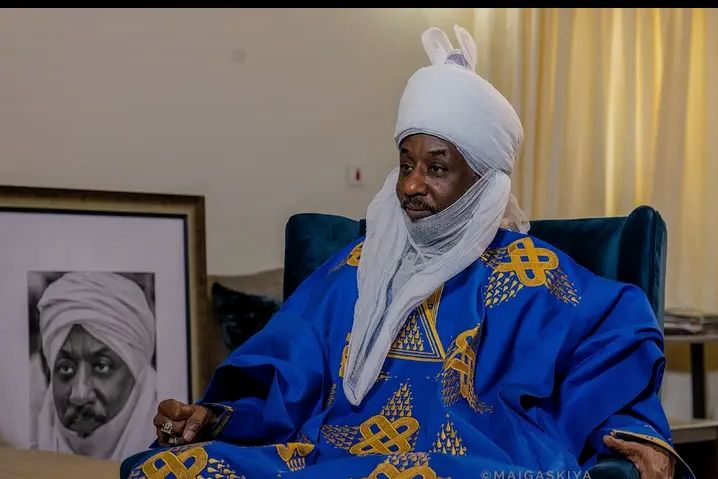
Former Governor of the Central Bank of Nigeria (CBN) and Emir of Kano, Muhammadu Sanusi II, has admitted that his decision to delay the entry of telecommunications companies into Nigeria’s financial services sector while he was at the apex bank was a mistake that slowed the country’s financial inclusion efforts.
Sanusi made the admission on Wednesday during a fireside chat at the official launch of the Access to Financial Services in Nigeria 2026 Survey Report in Abuja.
The discussion was moderated by the Dean of Lagos Business School, Prof. Olayinka David-West.
Reflecting on some of the policy decisions taken during his tenure as CBN governor between 2009 and 2014, Sanusi said he was responsible for delaying the participation of telecommunications companies in financial services.
“I’m responsible for delaying the entry of telcos into this space,” he said.
The former CBN governor explained that his decision was influenced by concerns over the safety of depositors’ funds, particularly because Nigeria had just emerged from a banking crisis.
He said he was uncomfortable with allowing companies that were not primarily regulated by the CBN to gain access to large pools of customers’ funds.
“Part of the challenge, of course, was that we had just come out of a banking crisis where we were worried about depositors’ funds.
And I wasn’t comfortable allowing companies that I was not a primary regulator of to have access to a huge pool of funds,” Sanusi said.
However, he acknowledged that the decision, despite being motivated by concerns about financial stability, ultimately slowed the expansion of financial services to underserved Nigerians.
“So again, this is one case where you have a good intention, but you take a wrong decision,” he said.
Sanusi recalled that he resisted pressure from various institutions and stakeholders, including the World Bank, to open up the financial services space to telecommunications companies more quickly.
“I fought the World Bank. I fought everybody,” he said.
According to him, allowing telecommunications companies and technology firms to participate earlier could have accelerated Nigeria’s efforts to bring millions of financially excluded citizens into the formal financial system.
“I do think if I had allowed that to happen, it would have been much more progress,” he added.
Banks lack sufficient reach
Sanusi said developments in digital finance in recent years had demonstrated the limitations of relying mainly on traditional banks to achieve widespread financial inclusion.
He noted that banks lacked the physical reach required to serve large sections of the Nigerian population, particularly people operating outside the formal economy.
“I think we made more progress in the last few years than we did in the first one, because the banks simply don’t have the boots on the ground. They don’t have the footprint,” he said.
His comments came as the 2026 Access to Financial Services survey recorded further improvement in Nigeria’s financial inclusion indicators.
According to the survey, overall financial inclusion increased to 79 per cent in 2026, while the proportion of financially excluded Nigerians declined to 21 per cent.
Formal financial inclusion also increased to 73 per cent, compared with 64 per cent recorded in 2023.
While acknowledging the progress, Sanusi stressed that access to financial services should not automatically be interpreted as an improvement in people’s incomes or living standards.
He said opening bank accounts and facilitating digital transactions were important, but did not necessarily mean that Nigerians were earning more or becoming less poor.
“Opening an account, moving money, is not the same as earning money. It’s not the same as talking about poverty,” he said.
Sanusi seeks stronger link between finance and real economy
The former CBN governor argued that financial services should be more closely connected to productive economic activities such as agriculture, manufacturing and trade.
He said the growth of fintech companies and other digital financial service providers could provide an opportunity to connect financial transactions with the movement of goods and services, from farmers and producers to markets and manufacturers.
Sanusi also called for Nigeria’s digital payment infrastructure to be used to expand access to savings, pensions and insurance.
He suggested that digital financial service providers could develop products that enable Nigerians, particularly informal-sector workers, to accumulate small amounts of money from their regular transactions.
According to him, such systems could help people build savings, pension contributions and insurance protection without requiring them to make large periodic payments.
Sanusi said that if he were leading the CBN today, he would bring major digital financial service providers together and challenge them to develop savings and pension products using the transaction data and networks already available to them.
Inflation remains threat to savings
The former CBN governor also urged the apex bank to maintain its focus on price stability, describing inflation as a major threat to household savings and wealth.
“There is no enemy to savings, no enemy to wealth that is bigger than inflation,” he said.
Sanusi warned against abandoning tight monetary policy prematurely, arguing that sustainable savings and stronger household financial resilience would depend partly on bringing inflation under control.
He said maintaining price stability should remain an important priority for monetary authorities as Nigeria seeks to deepen financial inclusion.
Unified identity system
Sanusi also reflected on the development of a unified identification framework for bank customers, describing it as part of the infrastructure needed to expand financial services.
He recalled the resistance that greeted efforts to establish a single identification system across the banking industry instead of allowing individual banks to operate separate identification systems.
According to him, Nigeria now has financial infrastructure that can support the expansion of credit, insurance, pensions and other financial products.
However, he stressed that the focus should shift towards ensuring that financial access translates into meaningful economic opportunities for Nigerians.
Sanusi warns against fragmented consumer protection
The former CBN governor further warned that fragmented consumer protection regulation could undermine confidence in the financial system.
He argued that overlapping responsibilities among the CBN, the Federal Competition and Consumer Protection Commission and other regulators could create confusion for consumers seeking to resolve complaints.
Sanusi said clearly defined responsibilities were necessary to ensure that consumers know where to turn when they experience problems with financial institutions.
“Consumer protection is so critical to financial inclusion that once you begin to fragment and there isn’t one point of call, there is an issue,” he said.
Sanusi’s remarks underline the changing nature of Nigeria’s financial inclusion landscape, with telecommunications companies, fintech firms and digital payment platforms increasingly playing a role alongside traditional banks.
The 2026 survey figures indicate continued expansion in access to formal financial services, while the former CBN governor’s reflections highlight the need to ensure that greater financial access is accompanied by improved savings, investment opportunities and participation in productive economic activities.

The Debt Management Office (DMO) has opened subscription for two Federal Government of Nigeria (FGN) bonds valued at a combined N1 trillion, with investors required to subscribe to a minimum of N50 million.
The offer, which opened on Monday, September 14, 2026, comprises a new 10-year FGN bond worth N400 billion and a N600 billion reopening of a previously issued 15-year FGN bond.
According to the DMO, both securities are being offered at N1,000 per unit, while investors can subscribe in multiples of N1,000 after meeting the minimum subscription requirement.
The new 10-year FGN bond is valued at N400 billion and is scheduled to mature in September 2036.
The second offer is a N600 billion reopening of a 15-year FGN bond due in 2038. The bond carries a coupon rate of 15.45 per cent per annum.
The DMO, in a statement issued on Monday, said the subscription would close according to the terms of the offer, with settlement scheduled for September 16, 2026.
“The FGN bonds are offered at N1,000 per unit subject to a minimum subscription of N50 million and in multiples of N1,000 thereafter,” the debt office said.
The DMO explained that for reopened bonds whose coupon rates had already been determined, successful bidders would pay a price corresponding to the yield-to-maturity bid that clears the volume being auctioned, alongside any accrued interest.
The office further stated that interest on the bonds would be paid twice a year, while the principal would be repaid in a single payment on the respective maturity dates.
“The interest is payable semi-annually, while bullet repayment is on the maturity date,” the DMO said.
The debt office said the bonds, like other Federal Government securities, were backed by the full faith and credit of the Federal Government of Nigeria and charged upon the general assets of the country.
It added that the securities qualified as investments for trustees under the Trustee Investment Act.
According to the DMO, the bonds also qualify as government securities under the Company Income Tax Act and Personal Income Tax Act for relevant tax exemptions.
The bonds are listed on the Nigerian Exchange Limited and the FMDQ OTC Securities Exchange, providing investors with avenues for trading the securities.
The DMO also said the FGN bonds qualified as liquid assets for the purpose of calculating liquidity ratios for banks.
FGN bonds are fixed-income debt securities issued by the DMO on behalf of the Federal Government. Through the instruments, investors lend funds to the government in return for interest payments and repayment of the principal at maturity.
The proceeds from government borrowing through such securities are used to finance government expenditure, including infrastructure development and other public projects.
The latest N1 trillion offer provides investors with another opportunity to participate in Federal Government securities while giving the government access to long-term domestic financing.
Business/Finance
Lagos Public Hospitals Record Surge as Patients Double in Six Months — Commissioner


Lagos State’s public hospitals are witnessing a sharp rise in patient attendance, with outpatient patronage doubling over the past six months amid growing pressure on healthcare workers and an ongoing shortage of medical professionals.
The state Commissioner for Health, Prof.
Akin Abayomi, disclosed this during an interview with ARISE NEWS on Friday, September 11, 2026, attributing the surge partly to the rising cost of healthcare and the migration of medical professionals from the country.
Abayomi said major public health facilities, including the Lagos State University Teaching Hospital, LASUTH, and hospitals in Ikorodu and Lagos Island, were recording significantly higher patient numbers.
“In the last six months, our outpatient patronage has doubled in our public health facilities, LASUTH, Ikorodu, Lagos Island.
“I’ve seen thousands of patients a day. Now, you can’t imagine that kind of patronage in a private hospital.”
According to the commissioner, the increasing cost of medical treatment is making it increasingly difficult for many residents to afford services at private hospitals.
He said while healthcare costs continued to rise, residents’ purchasing power had not increased at the same pace, forcing many to seek cheaper alternatives.
“While the cost of care is going up, the ability to buy that care is relatively stagnant,” he said.
Abayomi explained that the development was creating a shift in healthcare patronage, with some residents moving from private hospitals to government-owned facilities because of their relatively lower costs.
He, however, warned that some people were moving further from formal healthcare facilities to informal providers, including pharmacies and drug hawkers.
“So the public are shifting from the private sector to the public sector and from the public sector to the informal sector, where they can walk into a pharmacist or stop the hawker on the road and tell them, ‘I have a headache or I have a fever,’ and they get access to medication without going through the orthodox system,” he said.
Brain Drain Puts Workers Under Pressure
The commissioner said the increase in patient numbers was compounding the pressure on doctors, nurses and other healthcare professionals already affected by brain drain.
He said the migration of medical personnel had reduced the workforce available to attend to the growing number of patients in public hospitals.
“Our doctors and our healthcare professionals are under a lot of stress. You can imagine with the brain drain, with this influx of patients,” Abayomi said.
He compared the workload in medical facilities to working extremely long shifts, stressing that sustained pressure could be damaging to healthcare workers.
Against the backdrop of increasing demand, the Lagos Government is preparing to intensify enforcement of compulsory health insurance in the state.
Abayomi said the government was restructuring the state’s health insurance system and would soon move from awareness and advocacy to stronger enforcement.
“Now we’re moving into enforcement. So very soon, it’s just like if you have a car.
You need three things. You need a licence, you need an MOT, and you need insurance. If you don’t have it, somewhere along the line, someone will enforce it,” he said.
The commissioner said Lagos had domesticated the National Health Insurance Authority Act through an executive order issued in July 2024, making health insurance compulsory for people living and working in the state.
He said the state was now restructuring the scheme, increasing public awareness and educating residents on the importance of health insurance.
“We’re restructuring. We’re doing a lot of enforcement. We’re doing a lot of public health awareness. We’re doing a lot of educating the public around the need for insurance,” he added.
According to Abayomi, the government wants every resident to have access to a basic social health insurance package, while people with private insurance would also be integrated into the broader system.
“So everybody should have at least a social health insurance basic minimum service package cover. And then in the private sector, we’re incorporating them into that narrative so that if you have private insurance, you at least have the basic minimum package,” he said.
He added that the state had restructured the various tiers of the insurance system to ensure cleaner and more effective operations.
Abayomi said the challenges facing the healthcare sector could not be separated from healthcare financing.
He argued that stronger demand-side financing would increase the funds available for healthcare providers, improve service delivery and create better conditions for retaining medical professionals.
“It all boils down to healthcare financing. It boils down to demand financing, the ability to finance the purchase of your care,” he said.
He explained that insurance could distribute the cost of healthcare across a larger population through risk-sharing and social solidarity, thereby reducing the financial burden on government.
“Health insurance does many things. It reduces the risk. It causes a cross-subsidy and social solidarity. It takes a lot of the burden away from government so that the private sector can flourish in a health system,” Abayomi said.
He also linked improved healthcare purchasing power to efforts to tackle the migration of health professionals.
“Now when that happens, it will start to slow down brain drain because brain drain is an economic narrative,” he said.
“If we fix the demand-side financing, then funds will flow. If the public, if the business people in Lagos suddenly see that Lagosians have purchasing power for healthcare, they will fix the supply-side.”
The commissioner also defended government investment in public healthcare, saying residents benefit from substantial subsidies in state-owned hospitals.
“The public health service is extremely subsidised. We build the hospitals.
We pay 20,000 staff. We’re the biggest ministry in Lagos State Government. We repair facilities.
We buy equipment. We’re constantly paying for training. We’re paying for administration, overheads, power,” he said.
He said the subsidy enables public hospitals to charge substantially less than private facilities.
According to him, charges in government hospitals are generally less than half of what patients would pay for comparable services in private hospitals.
“So they generally charge a range of something less than 50 per cent of what the private sector charges. Health is doing actually quite well,” he said.
Abayomi also disclosed that the health sector had achieved more than 90 per cent budget implementation.
“On budget implementation, we’re above 90 percent,” he said.
The commissioner further addressed complaints concerning payment procedures at public hospitals, including allegations that some patients were required to provide cash before receiving treatment.
He said the government had outsourced payment gateways to private companies in an effort to separate financial transactions from clinical activities.
“We’ve now outsourced the payment gateways to the private sector so that it doesn’t mess up with clinical activities,” he said.
According to him, payment collectors now operate across the state’s health facilities and are responsible for collecting approved charges from patients.
“We engage payment collectors, and they are in all our facilities, and they collect the due charges that the patients have experienced within the facilities,” he added.
He said multiple companies were currently operating the payment gateways across the state.
The commissioner’s comments come as Lagos continues to face the dual challenge of rising demand for affordable healthcare and shortages of skilled medical personnel, with the state government betting on expanded health insurance coverage and improved healthcare financing to ease pressure on its public hospitals.
-
 Security2 months ago
NDLEA Declares Alleged Drug Kingpin, Three Associates Wanted, Freezes ₦9.8bn Linked to Syndicate
-
 National Affairs2 months ago
ICPC Uncovers 908 Suspected Ghost Workers Across 50 Federal MDAs, Recovers ₦942 Million
-

 Business/Finance2 months ago
How to Apply for Tunde Onakoya’s ₦250 Million Scholarship Programme and Free Laptop Offer
-
 Politics2 months ago
Atiku Challenges Tinubu to Reveal Details of ₦15.13bn SUV Procurement in 2026 Budget
-

 Judiciary | Public Safety2 months ago
INEC Tells Court Voter Information Is Not Confidential in Emeka Ike’s ₦10bn Lawsuit
-

 Judiciary | Public Safety2 months ago
Court to Rule Friday on NDLEA’s Bid to Destroy ₦480bn Meth Lab in Ogun
-

 Breaking News2 months ago
Girl Dies in Uyo House Fire After Allegedly Accompanying Man Home from Nightclub
-
 Security1 month ago
Family Paid ₦50 Million Ransom to Secure Release of Abducted Kebbi Judge