
National Affairs
FG Urges Nigerian Universities to Adopt AI, Tighten Regulatory Compliance

The Federal Government has urged Nigerian universities to embrace artificial intelligence (AI) and digital technologies while strengthening regulatory compliance, governance and accountability to improve the quality and global competitiveness of higher education.
The Minister of State for Education, Prof. Suwaiba Ahmad, made the call on Tuesday while declaring open the 2026 retreat of the National Universities Commission (NUC) and vice-chancellors of Nigerian universities in Abuja.
Ahmad said the rapid transformation of higher education globally, driven by artificial intelligence, digital learning, data analytics and changing research and funding models, required Nigerian universities to review their policies and operational practices to remain relevant and competitive.
She, however, stressed that the adoption of AI must be accompanied by appropriate safeguards to protect academic integrity, uphold ethical standards, ensure data protection and promote responsible use of emerging technologies.
The minister urged university authorities to develop clear institutional policies to guide the integration of artificial intelligence into teaching, research, administration and other academic activities.
“In modern times, university systems all over the world are greatly being influenced by artificial intelligence, digital learning, data analytics, virtual laboratories, online academic resources, quality assurance agencies’ review, changing funding models, innovation, research and development, workforce productivity, graduate employability, and international competitiveness, amongst others,” she said.
The retreat, scheduled for October 13 and 14 at the NUC headquarters in Abuja, is themed, “Enhancing Regulatory Compliance, Governance, Leadership, and Partnership in the Nigerian University System.”
Ahmad described the meeting as timely, noting that the challenges facing Nigerian universities could not be resolved through isolated institutional efforts or regulatory directives alone.
She said stronger collaboration between the NUC and university managements was necessary to ensure effective policy implementation, adherence to established standards and improved institutional performance.
According to her, universities must move beyond their traditional role of awarding degrees to become centres of knowledge creation, research, innovation, character development and industrial transformation.
She added that the quality of university education directly influences the country’s human capital development, economic productivity, national prosperity and stability.
The minister also urged vice-chancellors to strengthen transparency and accountability in financial management, procurement, recruitment, promotion, admissions and examinations.
She said university leaders must establish clear institutional visions, set measurable performance targets and create environments that promote academic excellence.
Ahmad further called for regular consultations between the NUC and university managements to encourage policy dialogue, experience-sharing and collective problem-solving.
She expressed the hope that the retreat would produce practical recommendations capable of addressing longstanding and emerging challenges in the university system.
According to her, the proposed communiqué and post-retreat monitoring mechanism should provide a roadmap for measurable improvements rather than allow the meeting to end with discussions alone.
NUC Strengthens Regulatory Oversight
In his address, the Executive Secretary of the NUC, Prof. Abdullahi Ribadu, said the commission was strengthening its regulatory and quality assurance mechanisms to improve the relevance, standards and overall performance of university education in Nigeria.
Ribadu, who assumed office on December 23, 2024, disclosed that the commission had introduced new regulatory measures, including guidelines governing the award and use of honorary doctorate degrees.
He said the guidelines were backed by sanctions for universities that violated the established rules.
The NUC boss also announced the introduction of post-matriculation monitoring and carrying-capacity visits to universities as part of efforts to improve admission processes and ensure that institutions operated within approved limits.
He added that the commission was preparing to introduce post-accreditation monitoring visits to strengthen oversight of academic programmes after accreditation exercises.
The initiative, he said, would enable the commission to monitor universities more effectively and ensure that accredited programmes continued to meet the required academic standards.
Ribadu further disclosed that the NUC Policy Development Strategy Committee had completed a comprehensive review of the university system, producing Blueprint 2.0 for the rapid revitalisation of Nigerian university education.
He said the commission was also developing a strategic plan suited to the demands of the 21st century.
As part of efforts to improve institutional performance, the NUC is transitioning from the Annual Performance Evaluation system to a Performance Monitoring System pioneered by the Office of the Head of the Civil Service of the Federation.
Ribadu urged university authorities to strengthen institutional strategic planning and ensure that research conducted by academics translated into practical solutions to national development challenges.
FG Targets AI-Driven Research, Digital Transformation
On artificial intelligence, Ribadu revealed that the NUC was developing a National AI Roadmap and Policy Framework for the Nigerian University System.
The framework is expected to guide the integration of artificial intelligence into university operations while providing a policy direction for institutions navigating the opportunities and challenges associated with emerging technologies.
He said the commission was also working to strengthen research commercialisation through the establishment of a dedicated division.
According to him, the NUC was exploring opportunities for selected vice-chancellors to study research commercialisation practices in universities across Europe and Asia.
The initiative is aimed at exposing university leaders to approaches that could help Nigerian institutions translate academic discoveries and innovations into practical applications and economic value.
Ribadu also announced that the commission had developed and deployed e-NUC, a digital platform designed to automate its entire workflow.
He said the NUC was developing accreditation software to improve transparency, data management and quality assurance across Nigerian universities.
However, the executive secretary cautioned that digital transformation involved more than acquiring equipment and software.
He stressed that universities needed adequate institutional preparedness, appropriate policies, capacity building and effective cybersecurity measures to achieve the desired results.
His remarks underscored the importance of ensuring that investments in digital technologies were supported by the necessary infrastructure, technical expertise and institutional safeguards.
NUC Promotes Research Collaboration
Ribadu said stronger partnerships between universities, government, industry and other stakeholders were essential to addressing challenges in agriculture, healthcare, education, technology, manufacturing and environmental management.
He disclosed that the commission had launched the ACE Alliance platform to bring together all 20 African Centres of Excellence in Nigeria to promote collaboration on research relevant to national development.
He also announced the unveiling of a four-volume compendium documenting research outputs from the centres.
The initiative is expected to promote knowledge-sharing and improve the visibility of research conducted by Nigerian institutions.
The NUC executive secretary further said the Tertiary Education Research and Application Services platform of the Tertiary Education Trust Fund had been integrated with the Nigerian Research and Education Network to encourage research collaboration.
He urged universities to strengthen links with industry and other stakeholders to ensure that academic research addressed practical problems and contributed to economic growth.
According to him, stronger collaboration would help bridge the gap between research findings and their application in productive sectors of the economy.
Funding Remains a Major Challenge
Addressing the financial challenges confronting the university system, Ribadu acknowledged that inadequate resources remained a major constraint on institutional development.
He urged universities to explore alternative funding sources through partnerships with the private sector, alumni associations and development partners.
However, he cautioned that such arrangements must align with institutional objectives and comply with relevant regulatory requirements.
The executive secretary disclosed that the commission had established partnerships with organisations, including the World Bank, the Agence Française de Développement and the African Development Bank, to attract additional support for the university system.
The call comes amid broader efforts to improve the quality, sustainability and competitiveness of Nigerian higher education.
NUC Retreat Targets Practical Solutions
Earlier, the Chairman of the Local Organising Committee and Director of Research, Innovation and Information Technology at the NUC, L.M. Faruk, said the retreat was designed to strengthen the relationship between the commission and universities through strategic engagement with vice-chancellors.
Faruk said discussions would focus on regulatory compliance and quality assurance, transformational leadership and governance, as well as strategic partnerships for the development of university education.
He expressed optimism that the deliberations would produce actionable recommendations for addressing persistent and emerging challenges in the sector.
The retreat brings together vice-chancellors of federal, state and private universities, alongside education officials, university union leaders and other stakeholders.
The participants are expected to deliberate on measures to strengthen institutional governance, improve regulatory compliance, promote innovation and research, and position Nigerian universities to respond more effectively to changing global education trends.
With artificial intelligence, digital transformation, research commercialisation and funding diversification featuring prominently on the agenda, the outcome of the meeting could help shape future policy directions for Nigeria’s university system.
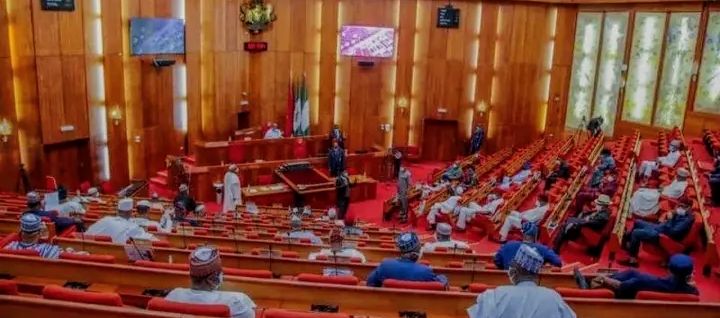
The Nigerian Senate has passed the Agricultural Revolution Bill, 2026, sponsored by Deputy President of the Senate, Senator Barau I. Jibrin, for second reading, paving the way for further legislative consideration of proposed reforms in the country’s agricultural sector.
The bill, identified as SB. 1082, seeks to establish a comprehensive legal framework for transforming and modernising Nigeria’s agricultural sector through improved food security, mechanisation, irrigation, agricultural financing, agro-industrialisation and climate-resilient farming.
The bill was considered during Wednesday’s plenary presided over by the President of the Senate, Senator Godswill Akpabio, days after it was stepped down over concerns about its drafting, scope and circulation to lawmakers.
Leading the debate, Barau said the proposed legislation was designed to review the agricultural sector, introduce necessary reforms and reposition Nigeria for an agricultural revolution.
The referral marks the next stage in the legislative process as lawmakers consider the proposed measures aimed at strengthening agricultural production, improving food security and promoting economic diversification.

African countries have adopted different approaches to dual citizenship, with some maintaining laws that restrict or prohibit their citizens from holding the nationality of another country.
While dual citizenship allows individuals to enjoy certain rights and opportunities in more than one country, including travel, employment and access to public services, some African governments maintain strict nationality laws based on national allegiance and citizenship regulations.
The restrictions vary across the continent. While some countries generally prohibit dual citizenship, others impose conditions on citizens who voluntarily acquire foreign nationality or restrict access to certain public offices.
Important editorial clarification: The headline’s description of all 10 countries as restricting dual citizenship needs qualification. Botswana has introduced measures recognising dual.
citizenship, while Mauritania legalised dual nationality in 2021, subject to restrictions on certain public offices. They should not be presented as outright prohibition countries.
National Affairs
Sola Sobowale Opens Care Home for Older Adults in Ibadan as Makinde Inaugurates Facility
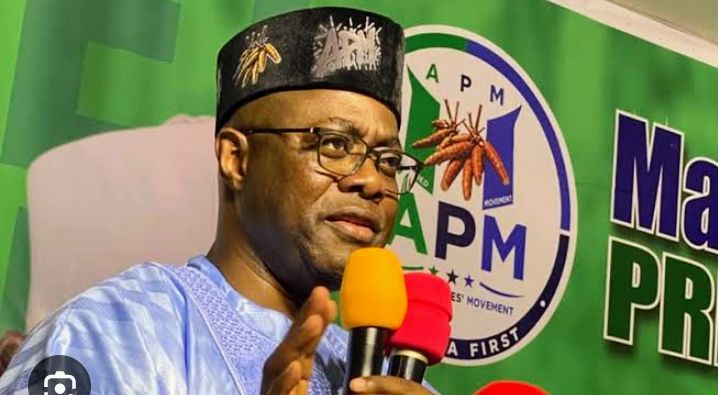
Oyo State Governor, Seyi Makinde, has inaugurated a residential care home for older adults established by veteran Nollywood actress, Sola Sobowale, in Ibadan, the state capital.
The facility, known as Joseph & Esther Homes, is located in the Akobo area of Ibadan and is designed to provide older adults with a safe, comfortable and supportive environment.
The inauguration ceremony, held on Tuesday, also featured the launch of Sobowale’s book, Built From the Break.
The event attracted several dignitaries and prominent Nollywood personalities, including veteran actors Adebayo Salami, Ibrahim Chatta, Femi Adebayo and filmmaker Kunle Afolayan.
The ceremony was also streamed live on Sobowale’s Instagram page, allowing her followers and admirers to participate virtually.
Joseph & Esther Homes is designed to enable older adults to maintain their independence while benefiting from professional care, assistance and a supportive living environment.
Operating under the tagline, “Live Well, Age Well, Thrive Together,” the facility describes itself as “A Place to Call Home”.
One of the notable moments at the event was an emotional tribute celebrating Sobowale’s vision, resilience and caring nature.
A video from the ceremony showed the actress becoming emotional during the tribute, with her daughter seen consoling her.
The establishment of Joseph & Esther Homes adds to Sobowale’s activities beyond the entertainment industry, as the veteran actress ventures into providing residential care and support for older adults.
-

 Security4 months ago
NDLEA Declares Alleged Drug Kingpin, Three Associates Wanted, Freezes ₦9.8bn Linked to Syndicate
-

 Business/Finance3 months ago
How to Apply for Tunde Onakoya’s ₦250 Million Scholarship Programme and Free Laptop Offer
-
 National Affairs3 months ago
ICPC Uncovers 908 Suspected Ghost Workers Across 50 Federal MDAs, Recovers ₦942 Million
-

 Judiciary | Public Safety4 months ago
INEC Tells Court Voter Information Is Not Confidential in Emeka Ike’s ₦10bn Lawsuit
-
 Politics3 months ago
Atiku Challenges Tinubu to Reveal Details of ₦15.13bn SUV Procurement in 2026 Budget
-
 Judiciary | Public Safety3 months ago
Court to Rule Friday on NDLEA’s Bid to Destroy ₦480bn Meth Lab in Ogun
-
 Security3 months ago
Family Paid ₦50 Million Ransom to Secure Release of Abducted Kebbi Judge
-

 News3 months ago
2026 Budget: FG Earmarks ₦962.83bn for SUVs, Empowerment Projects Amid Debt Concerns