
Business/Finance
Fubara Woos Investors at UNGA 81, Pitches Rivers as Nigeria’s Investment Hub

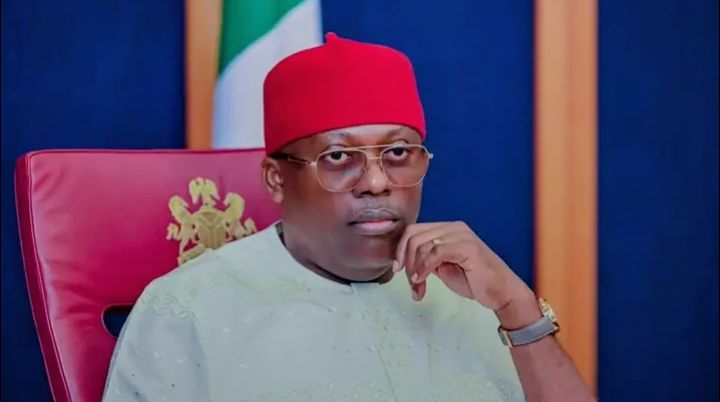
Rivers State Governor, Siminalayi Fubara, has used the 81st United Nations General Assembly (UNGA) in New York to showcase the state’s investment opportunities and woo local and international investors.
Fubara said his participation at the global gathering was aimed at giving greater visibility to Rivers State and positioning it as a leading investment destination in Nigeria, particularly in the oil and gas sector and other critical areas of the economy.
The governor made this known while speaking with journalists on the sidelines of the conference in New York.
In a statement issued on Tuesday by his Chief Press Secretary, Onwuka Nzeshi, Fubara said the UNGA platform provided an important opportunity for Rivers State to market its economic potential before an international audience.
He said his administration was determined to use the conference and its side meetings to open up new business, financing and investment opportunities for the state.
“The issue is very simple. We’re trying to give visibility to the state and also showcase the areas where God has really endowed us in the oil and gas sector and other aspects of the state,” Fubara said.
According to him, the engagements at UNGA 81 could lead to concrete investment opportunities as prospective investors become more familiar with Rivers State’s economic potential.
“I strongly believe that at the end of this conference and other side meetings, business opportunities will be made open and presented to interested investors who might have very serious and immediate needs to come to our dear state, knowing full well the position of Rivers State in the oil and gas industry,” he said.
Fubara also expressed optimism that the investment engagements would create opportunities for the state to access financing and attract additional capital for economic development.
“I also strongly believe that we are also going to make some inroads into financing and investment opportunities for our dear state,” the governor added.
Investment agency to drive opportunities
The governor explained that the investment drive at the UNGA was part of his administration’s broader economic reforms designed to make Rivers State more attractive to investors.
He specifically highlighted the establishment of the Rivers State Investment Promotion Agency, which he described as a one-stop platform for facilitating and protecting investments in the state.
“This is not different from what we have already done before in establishing what we call the Rivers State Investment Promotion Agency. What we are doing here will also aid the programme of that agency,” Fubara stated.
The governor said the agency would complement the state’s efforts to identify investors, facilitate business opportunities and provide an enabling environment for investments.
Rivers open for business, Fubara says
Fubara assured prospective investors that Rivers State remained peaceful, stable and open for business.
He said the state offered opportunities across several sectors, including oil and gas, agriculture, the blue economy, manufacturing and renewable energy.
The governor expressed confidence that the engagements at the global gathering would translate into new investments and economic opportunities for Rivers State.
“Overall, I will say that Rivers State will be visible and prominent in this conference, and we will come home with some good investments for our dear state,” he said.
Rivers State is among the Nigerian sub-national governments participating in activities surrounding the 81st United Nations General Assembly in New York.
The state is expected to engage with development finance institutions, multinational corporations and members of the Nigerian diaspora as part of efforts to attract investment and strengthen economic partnerships.
The investment-focused engagements come as state governments increasingly seek international partnerships and private-sector capital to support economic development, infrastructure and job creation.








The Democratic Republic of Congo (DRC) has commenced a study tour of Nigeria’s local content framework as part of efforts to strengthen indigenous participation in its oil and gas industry.
The delegation, led by DRC Minister of Hydrocarbons, Simplice Stev Onanga, arrived in Nigeria to understudy the policies, institutions and strategies that have helped deepen local participation in the country’s petroleum sector.
The development was disclosed in a statement issued on Tuesday by the General Manager, Corporate Communications Division of the Nigerian Content Development and Monitoring Board (NCDMB), Dr Obinna Ezeobi.
Receiving the delegation in Abuja on Monday, the Minister of State for Petroleum Resources (Oil), Senator Heineken Lokpobiri, said Nigeria was willing to share its experience with other African oil-producing countries.
Lokpobiri said Nigeria had achieved 61 per cent local content capacity since the enactment of the Nigerian Oil and Gas Industry Content Development Act 16 years ago.
He attributed the progress to deliberate government policies, regulatory institutions and the growing participation of indigenous companies in oil and gas operations.
According to him, the divestment of onshore assets by international oil companies has also created opportunities for Nigerian firms to acquire and operate petroleum assets.
He cited Renaissance Africa Energy Company, Seplat Energy and Oando Energy Resources among indigenous operators that have taken advantage of the changing ownership structure in the sector.
“The solution to Africa’s energy challenges lies within Africa,” the minister said.
Lokpobiri added that Nigeria was currently producing more than 1.8 million barrels of crude oil daily, noting that indigenous operators had increasingly assumed control of land and shallow-water assets.
He also highlighted the role of the Nigerian Content Development Fund in building local capacity in the industry.
The minister explained that the fund is financed through a one per cent levy on awarded upstream oil and gas contracts, describing it as an industry-funded mechanism for developing indigenous capacity.
Also speaking, the Executive Secretary of the NCDMB, Felix Omatsola Ogbe, represented by the Director of Corporate Services, Dr Abdulmalik Halilu, said the board was prepared to support the DRC in developing a sustainable local content regime.
Halilu said Nigeria’s local content framework was supported by institutional structures, regulatory collaboration and strategic planning.
He said the NCDMB’s 10-year strategic roadmap was targeting 70 per cent in-country value retention and more than 300,000 direct jobs by 2027.
The DRC minister, Onanga, said the delegation was in Nigeria to learn from the country’s experience and adapt relevant aspects of the Nigerian model to the DRC’s petroleum industry.
“We are proud to be in Nigeria to witness what has been accomplished,” he said.
The study tour is expected to continue until Friday, with the delegation scheduled to visit several oil and gas institutions and facilities.
The programme includes a visit to the NCDMB headquarters in Bayelsa State, fabrication facilities at the Onne Free Zone, a Nigeria LNG supplier session and the University of Port Harcourt Gas Centre.
The delegation is also expected to engage with operators at the LADOL/Nigerdock yards and visit other strategic oil and gas facilities.
The study tour highlights Nigeria’s growing role in sharing its local content experience with other African petroleum-producing countries seeking to increase indigenous participation, develop domestic capacity and retain more value within their economies.
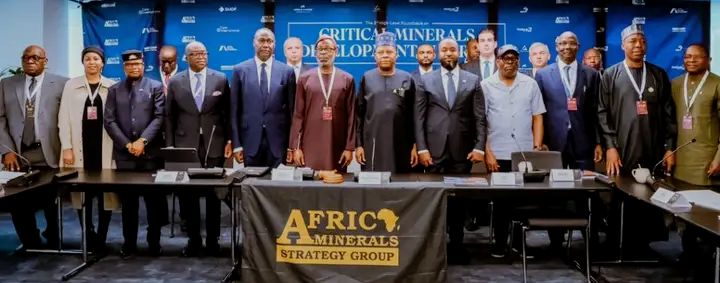
President Bola Tinubu has called on African countries to unite in ending the export of raw minerals and transform the continent into a global hub for mineral processing, manufacturing and value addition.
Tinubu made the call on Monday at the third Africa Minerals Strategy Group (AMSG) High-Level Roundtable on Critical Minerals Development in Africa, held on the sidelines of the ongoing 81st Session of the United Nations General Assembly in New York.
The roundtable, convened and chaired by Tinubu alongside the Chairman of AMSG and Minister of Solid Minerals Development, Dr Dele Alake, was held under the theme, “From Resources to Wealth:
Continental Cooperation for Mineral Value Addition, Data Sovereignty, Innovative Financing and Critical Minerals Security.”
The Nigerian President, represented at the event by Vice President Kashim Shettima, said Africa must move away from its longstanding position as a supplier of raw materials to developed economies and instead build industries capable of processing its mineral resources locally.
He argued that the continent could not continue to claim mineral wealth while communities where the resources are extracted remain deprived of jobs, infrastructure and economic opportunities.
“For generations, Africa has furnished the materials of prosperity elsewhere.
Our duty is to ensure that the future being fashioned from African minerals has room for African ambition,” Tinubu said.
The President noted that growing global demand for critical minerals, driven by clean energy technologies, artificial intelligence and advanced manufacturing, had made Africa’s mineral resources increasingly important to global supply chains and economic security.
According to him, the response to Africa’s mineral wealth should include local processing, refining, battery production, component manufacturing, technology development and skills acquisition.
“The worth of a mine must be counted in the lives it improves. Jobs, industries, infrastructure, technology transfer, African enterprise participation and prosperity retained across generations must measure our progress from resources to wealth,” he said.
Tinubu seeks stronger continental cooperation
Tinubu warned that individual African countries would struggle to achieve meaningful transformation if they continued to compete against one another by offering lower royalties, weaker local-content requirements and excessive concessions to investors.
He said fragmented approaches would leave African countries exporting raw materials and importing finished products at significantly higher costs.
“Fragmentation leaves us exporting raw materials and buying finished goods at a premium. Cooperation gives our markets scale, our industries integration, our financing reach and our negotiations authority,” he said.
The President urged AMSG member countries to speak with one voice in negotiations and develop common strategies for attracting investment while protecting Africa’s long-term interests.
He said partnerships with international investors must be based on mutual benefit, sovereign equality, technology transfer and the development of African capabilities.
“Reliability must never mean dependency, and partnership must never demand inequality,” Tinubu said.
He also called for the implementation of the Continental Integration and Economic Assurance Declaration adopted at the roundtable.
According to him, the declaration should go beyond a ceremonial agreement and establish a binding programme with clear timelines, financing mechanisms, implementation structures and public accountability for Africa’s Strategic Mineral Corridors.
He urged African countries to clearly define their national and regional contributions, while calling on development finance institutions and sovereign investors to develop appropriate financing platforms.
Nigeria records rise in mining revenue
Tinubu highlighted reforms in Nigeria’s solid minerals sector, saying the country was strengthening its policies to ensure that mineral resources extracted within Nigeria contribute directly to domestic industries, employment, skills development and community prosperity.
He said mining revenue increased from approximately N6 billion in 2023 to more than N38 billion in 2024, before rising to between N68.1 billion and N70 billion in 2025.
The President also cited major foreign investment commitments and the development and commissioning of large-scale lithium processing capacity in Nasarawa State as examples of the opportunities available in the sector.
He said Nigeria’s mining policy direction requires greater local value addition and that new mining licences should support domestic processing and industrial development.
Tinubu further listed stronger geological data and investor access, the organisation of artisanal miners into cooperatives, the fight against illegal mining and improved regulatory accountability among the areas requiring continued attention.
He said the reforms demonstrated that “firm terms can attract serious capital.”
The President maintained that Africa’s mineral resources could contribute significantly to global prosperity, the energy transition and secure supply chains if African countries developed the necessary industrial capacity.
“Africa’s power resides in its people, markets and ingenuity. No outsider will organise our continent or place our industrial interests above their own,” he said.
“We must integrate our markets, mobilise African capital and negotiate with one voice wherever our interests converge.”
Tinubu added that mineral resources alone could not guarantee prosperity, stressing that investment, industrialisation and political commitment were necessary to translate the continent’s mineral wealth into sustainable economic development.
Alake proposes continental framework
Earlier, Alake said the AMSG was proposing the Continental Integration and Economic Assurance Declaration as a framework for establishing a unified architecture for Africa’s critical and solid minerals value chains.
He said the strength of the gathering reflected the progress made by the AMSG and the broader development of Africa’s solid minerals sector.
Also speaking, Kenya’s Minister of Blue Economy and Maritime Affairs, Hassan Ali-Joho, emphasised the importance of domestic resource mobilisation in accelerating solid mineral development across Africa.
Joho said AMSG members must remain transparent and competitive while working towards greater alignment of licensing procedures to achieve broader transformation of the continent’s mineral sector.
The discussions at the roundtable centred on strengthening continental cooperation, attracting sustainable investment, improving mineral value chains and ensuring that a greater share of the wealth generated from Africa’s strategic minerals remains within the continent.

Business leaders and economists have called on the Federal Government to restrict foreign nationals from engaging in last-mile retail trading in Nigeria, warning that the growing involvement of Chinese traders in the retail market could threaten the survival of local small businesses.
The call followed protests by local traders at the Lagos Trade Fair Complex along the Lagos-Badagry Expressway over the alleged involvement of Chinese nationals in retail trading.
The protesters reportedly carried placards opposing the retail activities of Chinese nationals, with traders particularly objecting to foreign vendors selling directly to Nigerian consumers rather than concentrating on wholesale operations.
According to reports, some Chinese traders initially entered the Nigerian market as wholesalers but have increasingly moved into direct retailing.
Local traders argue that the development gives foreign operators an advantage because of their direct relationships with manufacturers and suppliers in China, allowing them to source products at prices that Nigerian retailers may struggle to match.
The issue has also generated debate on social media, with some Nigerians arguing that local traders need to embrace innovation and adapt to changing market conditions, while others see the development as part of the wider expansion of global e-commerce and platforms such as Temu and Sinomart.
However, organised private sector leaders say the issue goes beyond competition and could have serious implications for employment and the survival of micro, small and medium-sized enterprises.
ASBON seeks restriction on foreign retail operations
The President of the Association of Small Business Owners of Nigeria, Dr Femi Egbesola, said the government must not allow trade liberalisation to undermine Nigerian-owned businesses.
Egbesola argued that while foreigners could participate in Nigeria’s economy, clear boundaries should be established to protect local enterprises.
He said the government had a responsibility to protect small businesses and should not allow foreign operators to dominate the retail segment at the expense of Nigerian entrepreneurs.
According to him, foreign nationals, whether Chinese or from other countries, should not be allowed to participate in last-mile retail trading.
He also alleged that some foreign traders were operating without completing the required legal and regulatory processes.
Egbesola cited business permits issued by state governments as one of the requirements that should be fulfilled before businesses commence operations.
He warned that failure by the government to regulate the situation could result in the collapse of businesses operating in affected markets.
The ASBON president stressed that small businesses play a significant role in employment and economic activity, arguing that any disruption to the sector could have wider consequences for the Nigerian economy.
He therefore called for clearly defined rules determining the areas of business in which foreign investors can participate and those that should be reserved for local operators.
CPPE calls for protection of local retailers
The Chief Executive Officer of the Centre for the Promotion of Private Enterprise, Dr Muda Yusuf, also backed restrictions on foreign participation in small-scale retail trading.
Yusuf argued that Nigeria does not lack capacity in retail and that the segment should largely remain available to Nigerian citizens.
He said foreign investors should ideally focus on areas where Nigeria has limited capacity rather than competing directly with local retailers.
According to him, allowing foreign manufacturers or wholesalers to enter the same markets occupied by their Nigerian distributors creates an unfair competitive situation.
Yusuf compared the situation to a major manufacturer supplying distributors while simultaneously establishing outlets beside those distributors to compete for the same customers.
He said foreign operators interested in retail should be allowed to operate at the level of major supermarkets and organised retail outlets rather than competing directly with small market traders.
The CPPE chief also stressed the importance of protecting retailers because trading is one of Nigeria’s largest sources of employment.
He urged the government to intervene before the growing competition further worsens the challenges already confronting local traders.
Nigeria-China trade expert calls for local manufacturing
However, the President of the Nigeria-China Investment Club, Dr Chidi Uleli, offered a different perspective.
Uleli attributed the increasing presence of Chinese traders to the broader process of globalisation and the growing volume of trade between Nigeria and China.
He said Chinese imports account for a significant share of Nigeria’s imports and argued that Nigerian traders should view the changing market as an opportunity to move higher up the value chain.
According to him, Chinese suppliers noticed the significant difference between the prices of goods in China and their selling prices in Nigerian markets and subsequently began seeking to capture more of the margins.
While acknowledging the concerns of Nigerian traders, Uleli urged them to organise themselves into cooperatives and establish cottage industries capable of producing some of the goods they currently import.
He cited countries such as South Korea, Hong Kong, Taiwan and Thailand as examples of economies that developed competitive industries despite operating near larger economies.
Uleli said Nigerian traders could pool resources to acquire machinery and establish local production facilities rather than relying entirely on imports.
He also argued that poor electricity supply should not completely prevent local production, pointing to alternative energy sources such as gas and solar power.
The investment club president opposed efforts to drive Chinese traders out of Nigeria, saying the increasing integration of global markets made such an approach difficult to sustain.
LCCI urges dialogue
The Lagos Chamber of Commerce and Industry called for dialogue among the affected stakeholders, while urging relevant regulatory agencies to protect consumers and prevent market abuse.
The President of the LCCI, Leye Kupoluyi, said the Federal Competition and Consumer Protection Commission and other relevant agencies should examine the situation to ensure that no participant gains excessive control of the market.
He stressed that consumer interests must remain central to the debate.
Kupoluyi also advised traders against street protests, arguing that protests could disrupt traffic and negatively affect the same communities and businesses the traders were seeking to protect.
He said the LCCI was prepared to intervene and help bring the affected parties together for discussions.
According to him, the chamber has an interest in ensuring harmony because some of the affected traders may be members of the organisation.
Expert calls for national retail policy
Professor Uchenna Uzo, Director of the African Retail Academy at Lagos Business School, said the dispute reflected a conflict between manufacturers, wholesalers, distributors and retailers.
Uzo argued that foreign manufacturers moving directly into retail could create unhealthy competition with the distributors through whom they previously sold their products.
He advised market associations to engage the manufacturers and negotiate clearer boundaries around distribution and retail practices.
However, he cautioned against viewing foreign competition itself as a problem.
According to Uzo, the entry of international businesses can also be a feature of a growing and increasingly open economy, provided competition takes place under appropriate rules.
He identified the absence of a national retail policy framework as one of the major underlying issues.
Uzo said Nigeria needed a framework that would standardise retail practices, define the roles of different participants in the value chain and reduce conflicts between manufacturers, wholesalers, distributors and retailers.
He also noted that the Federal Competition and Consumer Protection Commission had a role to play where the dispute affected consumers.
LBS professor blames weak business environment
Professor Franklin Ngwu, Director of the Lagos Business School Public Sector Initiative, said the concerns of Nigerian retailers were understandable but argued that the deeper problem was the country’s business environment.
Ngwu said Nigerian traders traditionally purchased goods from Chinese manufacturers and wholesalers, who did not compete directly with them at the retail level.
The situation, he said, had changed as some Chinese businesses increasingly participated in manufacturing, wholesale and retail simultaneously.
He argued that this development could put Nigerian retailers under significant pressure.
However, Ngwu said the fundamental challenge was the difficulty of producing competitively in Nigeria.
He cited high borrowing costs, inadequate electricity, regulatory challenges, poor infrastructure, supply-chain difficulties and limited market access as some of the factors affecting Nigerian businesses.
According to him, Nigerian entrepreneurs often face significantly higher operating costs than businesses in countries such as China.
He warned that the country’s millions of micro, small and medium enterprises could be severely affected if the competitiveness gap remained unresolved.
Ngwu therefore called for the Federal Government, state governments and local authorities to establish industrial clusters based on the comparative advantages of different geopolitical zones.
He said such clusters should have reliable electricity, efficient infrastructure, clear regulations, access to affordable financing and reduced bureaucratic obstacles.
He also called for greater investment in skills development, innovation and manufacturing.
Competing approaches to foreign retail
The debate over Chinese participation in Nigeria’s retail sector therefore reflects two broad approaches.
Business groups representing local traders are calling for clearer restrictions on foreign participation in last-mile retail, arguing that local retailers need protection from competitors with stronger access to international supply chains.
Other experts, however, argue that restricting foreign businesses alone will not solve the problem and that Nigerian companies must become more productive and competitive.
The disagreement also highlights the need for clearer rules governing the relationship between manufacturers, wholesalers, distributors and retailers.
For Nigeria’s millions of small businesses, the outcome of the debate could have implications for market access, employment and the structure of the country’s retail sector.
The Federal Government is therefore under pressure to balance the benefits of international trade and foreign investment with measures that strengthen the ability of Nigerian-owned businesses to compete.
Rather than focusing only on the nationality of market participants, economists and business leaders have also urged policymakers to address the structural challenges—including financing, electricity, infrastructure, regulation and manufacturing capacity—that affect the competitiveness of Nigerian enterprises.
-

 Security2 months ago
NDLEA Declares Alleged Drug Kingpin, Three Associates Wanted, Freezes ₦9.8bn Linked to Syndicate
-
 National Affairs2 months ago
ICPC Uncovers 908 Suspected Ghost Workers Across 50 Federal MDAs, Recovers ₦942 Million
-

 Business/Finance2 months ago
How to Apply for Tunde Onakoya’s ₦250 Million Scholarship Programme and Free Laptop Offer
-
 Politics2 months ago
Atiku Challenges Tinubu to Reveal Details of ₦15.13bn SUV Procurement in 2026 Budget
-

 Judiciary | Public Safety2 months ago
INEC Tells Court Voter Information Is Not Confidential in Emeka Ike’s ₦10bn Lawsuit
-
 Judiciary | Public Safety2 months ago
Court to Rule Friday on NDLEA’s Bid to Destroy ₦480bn Meth Lab in Ogun
-
 Security2 months ago
Family Paid ₦50 Million Ransom to Secure Release of Abducted Kebbi Judge
-
 News2 months ago
2026 Budget: FG Earmarks ₦962.83bn for SUVs, Empowerment Projects Amid Debt Concerns