
National Affairs
Amnesty Demands Reversal of Madonna University Nursing Students’ Expulsion, Suspension

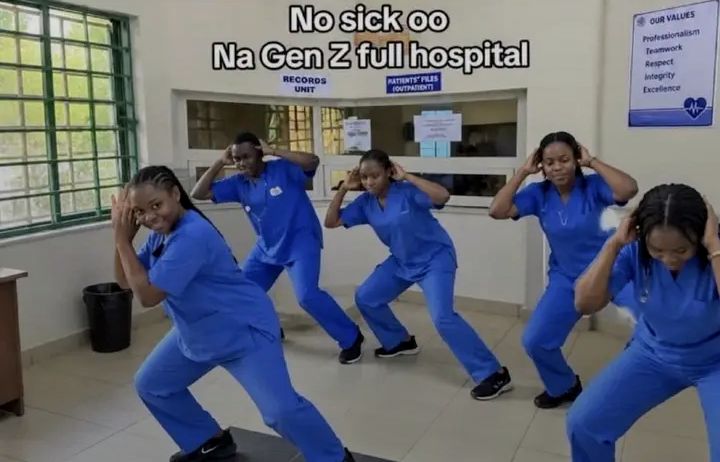
Amnesty International has called on the management of Madonna University, Elele Campus, Rivers State, to reverse the expulsion of a final-year nursing student and the suspension of 14 other 500-level nursing students over a viral TikTok video.
The human rights organisation made the call on Thursday in a post on its X account, describing the disciplinary measures as disproportionate and urging the university to resolve the matter through dialogue and mediation.
“Amnesty International urges the authorities of Madonna University Elele Campus, Rivers State, to rescind the expulsion [of] a final-year nursing student, and the suspension [of] 14 other 500-level students over a viral TikTok video,” the organisation said.
It added, “The expulsion and suspension are disproportionate. The university should prioritise dialogue and mediation.”
The controversy followed the circulation of a short video recorded at the university’s Elele campus. The video was reportedly part of a social media trend known as the “Gen Z nurses” challenge.
A 15-second version of the video published by Yabaleftonline on September 1 reportedly attracted more than 1.7 million views on X.
Amnesty International expressed concern that the sanctions could disrupt the academic progress of the affected students, particularly the final-year student who was expelled.
The organisation argued that the students were entitled to freedom of expression, academic freedom and education, stressing that disciplinary measures should take those rights into consideration.
“The students have the rights to freedom of expression, academic freedom and education. The expulsion and suspension are harsh and would create a chilling effect on the enjoyment of these rights,” Amnesty said.
The rights group also urged Madonna University to ensure that its disciplinary policies and procedures comply with international human rights standards.
“Also, the university must uphold the rights of everyone, including the rights to freedom of expression, education and academic freedom,” it added.
The development has also attracted appeals from student bodies, including the Nigerian Universities Nursing Students’ Association and the National Association of Nigerian Students.
NUNSA said it had commenced discussions with relevant stakeholders in an effort to secure a review of the university’s decision.
Similarly, NANS appealed to the institution to show clemency, arguing that the expulsion of a final-year student and suspension of the other students could have lasting consequences for their academic and professional futures.
The university has yet to publicly announce a reversal of the disciplinary measures.
Its Director of Communications and Public Affairs, Chima Achu, had earlier told Sunday PUNCH that the institution would issue an official statement on the matter.
The university’s expected response is likely to provide further details on the circumstances surrounding the disciplinary action and the specific provisions of its rules relied upon in reaching the decision.









The Jigawa State Police Command has called for stronger collaboration with residents and critical stakeholders as it seeks to identify gaps in policing and improve public trust in the state.
The call was made during a stakeholder engagement organised as part of activities marking the 2026 Customers’ Week.
The strategic meeting, held on Wednesday at the Dutse Area Command Headquarters, brought together representatives of various community groups and institutions within the Dutse metropolis.
The engagement was convened under the leadership of the Commissioner of Police, CP Tijjani Murtala, through the command’s SERVICOM Office, with the objective of strengthening community participation and promoting a more responsive policing system.
Representing the Commissioner at the event, ACP Malum Garba said sustainable peace and effective crime prevention could only be achieved through cooperation between the police and members of the public.
He identified community leaders, transport unions, civil society organisations and citizens as important partners in maintaining security and preventing crime.
“Sustainable peace and effective crime prevention require the collective efforts of law enforcement agencies, community leaders, transport unions, civil society groups and citizens,” Garba quoted the Commissioner as saying.
The police boss urged stakeholders to remain dependable partners of the command by providing credible information and supporting initiatives aimed at protecting lives and property across the state.
He also reaffirmed the command’s commitment to professionalism, transparency, accountability and respect for the rights and dignity of members of the public.
According to him, continuous engagement with stakeholders remains important because feedback from communities helps the police identify shortcomings, address legitimate concerns and improve the effectiveness of their operations.
“The importance of continuous dialogue with stakeholders cannot be overemphasised, because constructive feedback from the community remains indispensable to identifying gaps, addressing legitimate concerns and improving overall effectiveness of policing operations,” he said.
Garba further assured stakeholders that the command would continue to engage relevant groups regularly as part of its community policing strategy.
He noted that citizens have an important role to play in preventing crime, sharing intelligence and promoting peaceful coexistence.
“Effective policing is strengthened when citizens are actively involved in crime prevention, intelligence sharing and promotion of peaceful coexistence,” he added.
Speaking after the meeting, the Jigawa State Police Public Relations Officer, SP Shi’isu Adam, said the engagement provided an opportunity for the command and community partners to identify challenges affecting effective policing in the state.
Adam said the meeting also created room for frank discussions on security concerns, police-community relations and complaints from members of the public.
“It provided an opportunity for candid interaction between the police and members of the public on matters relating to community safety, public complaints, police-community relations and the challenges confronting effective policing at the grassroots,” the PPRO said.
He explained that participants were encouraged to freely communicate their concerns and make use of established police channels for complaints and redress.
“Stakeholders were encouraged to offer constructive observations, communicate security concerns and make appropriate use of established channels for complaints and redress,” Adam added.
The engagement brought together representatives of the Police Community Relations Committee, religious leaders, traditional rulers, civil society organisations, the National Association of Transport Owners, the National Union of Road Transport Workers, commercial motorcycle operators, Hisbah, vigilante groups, Miyetti Allah, Community Neighbourhood Watch and other relevant groups within the Dutse metropolis.
Also in attendance were the Area Commander, Metro, Dutse Area Command; all Divisional Police Officers serving under the Area Command; the Officer-in-Charge of the SERVICOM Office; and other senior police officers.
The command said the continued engagement with stakeholders would remain an important part of its efforts to strengthen community policing, improve communication with residents and build greater confidence in policing services across Jigawa State.

Former Director-General of the National Council for Arts and Culture, Otunba Olusegun Runsewe, has warned Nigerians against the growing misuse of Artificial Intelligence on social media, saying the technology could be exploited to spread misinformation, disinformation and fabricated narratives capable of threatening societal peace.
Runsewe gave the warning on Wednesday while speaking on the increasing circulation of AI-generated images, cloned voices and other fabricated content on social media platforms.
He stressed that Artificial Intelligence was not inherently harmful, noting that the technology could be useful in communication, research, content creation and solving complex problems when deployed responsibly.
However, he cautioned that its unguided use could become a major liability, particularly when individuals deliberately use AI to create and circulate false information.
According to him, fabricated images, videos and voices could cause significant damage to families, institutions and government while creating unnecessary tension in society.
“Fake AI images and voices are capable of tearing families apart, creating social tension, fuelling inter-religious and inter-ethnic strife and even discrediting and destabilising government,” Runsewe said.
He urged Nigerians to exercise greater caution when consuming information on social media and to verify the authenticity of claims before accepting or sharing them.
Runsewe cited the circulation of AI-generated voices and cloned images of prominent political figures and other public personalities as examples of how the technology could be used to mislead the public.
He also raised concerns about the growing dependence on AI among students in higher institutions, particularly for assignments, research and other academic activities.
The former NCAC boss said excessive reliance on AI could encourage plagiarism, intellectual laziness and a lack of originality, potentially leaving graduates without adequate knowledge and practical skills.
With Nigeria approaching the 2027 general elections, Runsewe also warned that AI-generated content could be deliberately deployed to heat up the political environment, spread false narratives and create social tension.
He called on stakeholders in the electoral process to develop proactive information-management strategies capable of countering false narratives and ensuring that credible information reaches the public promptly.
Runsewe further advocated greater use of conventional media platforms to provide timely and verified information, arguing that this would help reduce the influence of rumours, fake news and sensational reports circulating online.
He urged members of the public to scrutinise information obtained from social media and cross-check sensitive claims with relevant government agencies and other credible sources before sharing them.
“Members of the public should scrutinise every piece of information from social media and cross-check with relevant government agencies rather than swallowing it hook, line and sinker,” he said.
Runsewe added that Artificial Intelligence, despite its potential as an innovative technology in the global information and communication system, could become counterproductive if Nigerians consumed social media content without proper scrutiny.
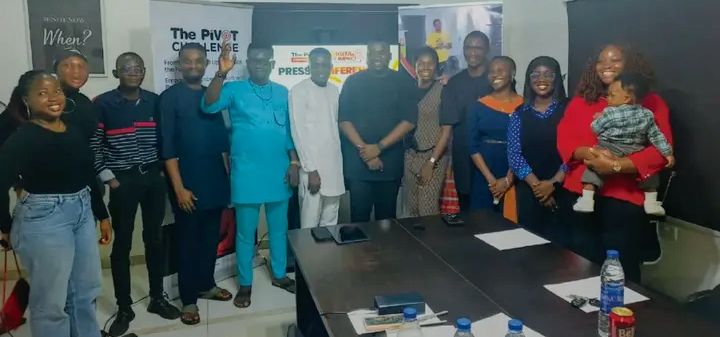
The South-East needs to embrace digital transformation and innovation to unlock its economic potential and strengthen the region’s position as a major commercial hub in Nigeria, organisers of the forthcoming Pivot Conference 4.0 have said.
The conference, organised by The Pivot Africa, is expected to bring together thousands of stakeholders to discuss ways technology and digital tools can be deployed to accelerate business growth, entrepreneurship and shared prosperity across the region.
Speaking during an interactive session with journalists at Kodex Africa in Awka, Anambra State, over the weekend, Executive Director of The Pivot Africa, Ifedi Ralph Eze, said the initiative was designed to help people in the region define their digital and economic future.
Eze said the South-East was lagging behind other geopolitical zones in digital awareness and adoption despite its reputation as one of Nigeria’s major centres of commerce.
According to him, technology is increasingly disrupting traditional business models, making it important for traders, entrepreneurs, students, professionals and other stakeholders to understand and adopt digital platforms.
He said digital platforms could increasingly enable people to access products, services and markets without depending solely on traditional forms of importation and physical transactions.
Eze urged residents of the region to take advantage of emerging digital opportunities, stressing that access to knowledge, networks and technology would be critical to turning business ideas into sustainable enterprises.
“The Pivot Conference is for digital transformation, shared growth and prosperity for all. Digital transformation is no longer a conversation reserved for technology companies.
“Across our communities, there are people building businesses, developing skills, creating solutions, leading organisations and solving problems. There are young people with enormous potential, women building remarkable enterprises, professionals creating value, and businesses looking for the right connections and opportunities to grow.
“But potential alone is not enough. People need access. They need knowledge. They need networks. They need platforms. And sometimes, they simply need someone to open the right door,” he said.
Conference to connect businesses with opportunities
Eze explained that The Pivot Africa had continued to create different platforms and experiences throughout the year to connect people with knowledge, mentorship, business opportunities and professional networks.
He identified the Pivot Challenge Bootcamp as one of the initiatives designed to encourage participants to develop practical solutions while gaining exposure to entrepreneurship, technology and innovation.
The bootcamp, he said, would challenge participants to think creatively, build solutions and explore ways technology could be applied to address real-world problems.
The journalists’ engagement also featured selected speakers and digital economy advocates who discussed the role of digitisation in business development and community transformation.
Participants shared experiences and practical perspectives on how businesses, community leaders and women in technology could use digital tools to improve productivity, expand their markets and connect with new opportunities.
5,000 participants expected in Awka
The organisers said no fewer than 5,000 participants are expected at Pivot Conference 4.0, scheduled to hold at the Stanel Dome in Awka later in October.
Expected participants include policy leaders, investors, entrepreneurs, educators, women in technology, grassroots innovators and students.
The conference is expected to provide a platform for participants to exchange ideas, establish networks, access mentorship and explore opportunities within the digital economy.
One of the speakers, Favour Ogidi, who spoke on women in power, said women were increasingly being empowered to contribute to transformation through the digital revolution.
The organisers said the broader objective of the conference was to close digital gaps in the region and create an environment where technology, entrepreneurship and innovation could contribute to inclusive economic growth.
For the South-East, the discussions come amid growing attention on how digital adoption can complement the region’s established commercial and entrepreneurial culture by opening access to wider markets, financing, skills and business networks.
-

 Security3 months ago
NDLEA Declares Alleged Drug Kingpin, Three Associates Wanted, Freezes ₦9.8bn Linked to Syndicate
-

 Business/Finance3 months ago
How to Apply for Tunde Onakoya’s ₦250 Million Scholarship Programme and Free Laptop Offer
-
 National Affairs3 months ago
ICPC Uncovers 908 Suspected Ghost Workers Across 50 Federal MDAs, Recovers ₦942 Million
-

 Judiciary | Public Safety3 months ago
INEC Tells Court Voter Information Is Not Confidential in Emeka Ike’s ₦10bn Lawsuit
-

 Politics2 months ago
Atiku Challenges Tinubu to Reveal Details of ₦15.13bn SUV Procurement in 2026 Budget
-

 Judiciary | Public Safety3 months ago
Court to Rule Friday on NDLEA’s Bid to Destroy ₦480bn Meth Lab in Ogun
-

 Security2 months ago
Family Paid ₦50 Million Ransom to Secure Release of Abducted Kebbi Judge
-

 News2 months ago
2026 Budget: FG Earmarks ₦962.83bn for SUVs, Empowerment Projects Amid Debt Concerns