
News
Kwara Launches Cattle Insemination Scheme to Boost Milk, Meat Production

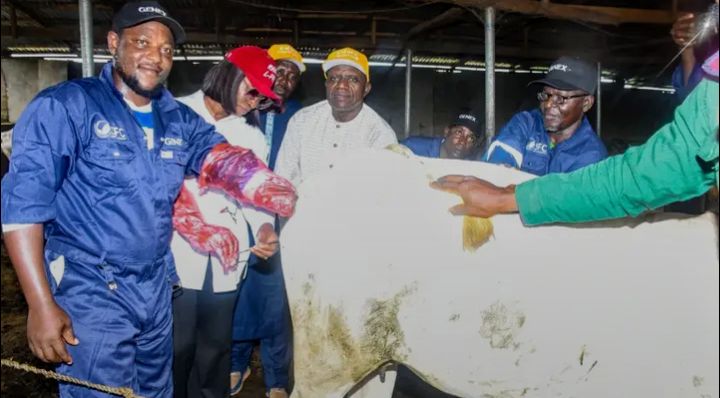
The Kwara State Government has commenced a statewide cattle artificial insemination programme aimed at improving livestock breeds and increasing milk, dairy and meat production across the state.
The initiative, being implemented in partnership with Genex URUS American International Animal Breeding Company, commenced with 500 cattle in September, with the government targeting about 1,000 animals by the end of the year.
The Commissioner for Livestock Development, Oloruntoyosi Thomas, disclosed this on Sunday during the flag-off of the exercise at TGB Farms in Ganiki, Ilorin South Local Government Area of Kwara State.
Thomas said the programme was part of the government’s broader strategy to transform the livestock sector by giving farmers access to improved cattle breeds and modern breeding techniques.
According to her, artificial insemination would enable livestock farmers to improve the genetic quality of their animals while increasing their potential for milk and meat production.
“One of the ways to improve breeds is through artificial insemination. We are going to inseminate thousands of cattle across the state,” she said.
She explained that the programme had started with 500 cattle in September, while the state government was working towards reaching about 1,000 cattle before the end of the year.
“In terms of numbers, we are going to inseminate thousands. We are starting with 500 this month of September, but by the end of the year, we are hoping to reach maybe a thousand, and then we keep going. It’s a long process, but we are just starting,” Thomas said.
The commissioner disclosed that the animals had undergone synchronisation ahead of the insemination exercise, describing the process as necessary to improve the efficiency of the breeding programme.
She added that the initiative would continue beyond the initial phase as the government seeks to expand modern livestock breeding practices across the state.
Thomas also revealed plans to establish an artificial insemination centre in the Malete area of Kwara State.
She said similar facilities would subsequently be established in other identified communities to make artificial insemination services more accessible to livestock farmers.
The commissioner said the state government was also investing in human capacity development by involving students of Animal Production and youths from pastoralist communities in the programme.
“We need to ensure that we have our well-trained technicians—artificial insemination technicians—and that’s why we are involving our students from the University of Ilorin, the various tertiary institutions in the state,” she said.
Thomas explained that developing a pool of trained artificial insemination technicians within the state would help reduce the cost of the service, improve the synchronisation process and increase the chances of successful insemination.
The Director of Livestock in the Ministry of Livestock Development, Ahmed Umar, stressed the importance of cooperation among farmers, government agencies, technical experts and other stakeholders for the success of the initiative.
Umar expressed optimism that the programme could achieve an 85 per cent success rate, while urging livestock owners and other stakeholders to support the intervention.
“We want to develop this sector the way it should be developed by having improved breeds. This cannot be done alone. All stakeholders must come together to ensure success,” he said.
Also speaking, the Team Lead of Genex URUS American International Animal Breeding Company, Saka Shittu, said the programme was designed to improve the quality of cattle through the use of carefully selected semen.
Shittu explained that the immediate focus was on cattle, particularly with the objective of increasing dairy production, while the intervention could later be extended to other livestock.
“For now, the programme focuses on cattle; it will later be extended to other livestock. The essence of the programme is that animals are being inseminated with improved semen selected to boost dairy production,” he said.
He encouraged cattle owners, including pastoralists and smallholder dairy farmers, to participate in the scheme and take advantage of the free service being provided under the programme.
According to him, each farmer is entitled to have two cattle inseminated at no cost.
The intervention also provided practical training and exposure for students studying Animal Production, with participants drawn from the University of Ilorin, Kwara State University, Malete, and Usmanu Danfodiyo University, Sokoto.
The delegation at the flag-off included the Permanent Secretary of the Ministry of Livestock Development, Muhammed Yahaya;
principal officers of the ministry; officials of the Special Agro-Industrial Processing Zones (SAPZ) and Livestock Productivity and Resilience Support Project (L-PRES), as well as students and youths from pastoralist communities.
The Director of TGB Farms, Ishola Peace, commended the Kwara State Government for selecting the farm to participate in the programme.
Peace said the intervention would give the farm an opportunity to benefit from the state’s livestock development efforts while contributing to the broader objective of improving livestock production in Kwara.
The state government’s artificial insemination initiative is expected to strengthen access to improved cattle genetics, support dairy farmers and contribute to the development of the livestock value chain as the programme expands across Kwara.








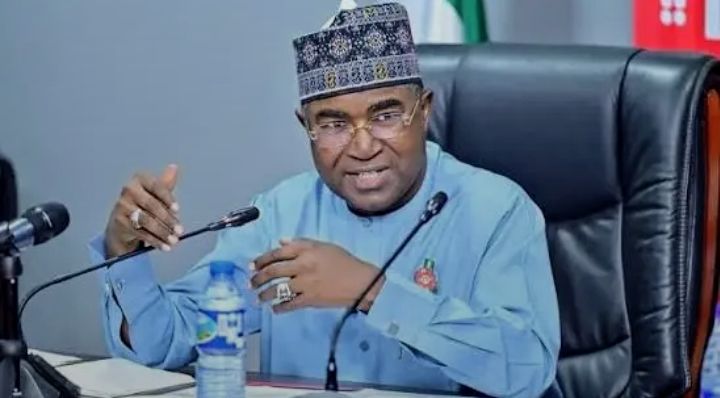
The Chairman and Chief Executive Officer of the National Drug Law Enforcement Agency (NDLEA), Brig. Gen. Mohamed Buba Marwa (retd.), has declared a renewed war against drug abuse and trafficking in Edo State, calling for stronger collaboration among security agencies, religious organisations, parents and community leaders.
Marwa made the declaration on Thursday during an interactive stakeholder engagement in Benin, where he urged residents and relevant institutions to join forces with the agency to tackle the growing challenge of illicit drug use and trafficking.
The engagement, themed ‘Addressing the Drug Problem in Edo State’, attracted representatives of the Nigerian Army, Nigeria Police Force, Nigerian Air Force, National Youth Service Corps, civil society organisations, non-governmental organisations and community leaders, among others.
Speaking at the event, the NDLEA boss stressed that the fight against illicit drugs required a collective effort, noting that the agency could not effectively address the problem without the support of other stakeholders.
“I am here personally to declare war against drug abuse and trafficking in Edo State. Even though the NDLEA is the lead agency in the country for the enforcement of drug laws, we cannot do it alone,” he said.
He urged stakeholders to collaborate in tackling the menace, insisting that religious institutions, families, schools and community organisations all had important roles to play.
Marwa particularly called on parents and guardians to lead by example, monitor their children and intervene early whenever they notice signs of drug-related problems.
He also encouraged families to seek professional assistance for children already involved in drug abuse, stressing that there should be no stigma attached to seeking help.
“We must, as parents, engage early and seek help for our children. There is no shame in it. This is very important for our children and for the future of our country. Each of us must play our part,” he added.
The NDLEA chairman further linked illicit drug use to several criminal activities, warning that addressing substance abuse was essential to improving public safety and protecting communities.
As part of efforts to strengthen public awareness, Marwa disclosed that he would meet with the Christian Association of Nigeria (CAN) and the Islamic Council in Benin to secure their support in educating worshippers and communities about the dangers of drug abuse.
He said religious leaders could use their platforms to discourage illicit drug consumption and encourage community participation in prevention efforts.
The NDLEA boss also called on schools across the state to establish drug-free and counselling clubs to educate students and provide support for those facing drug-related challenges.
He urged students to report to their teachers and school authorities whenever anyone offered them illicit substances.
In addition, Marwa disclosed that he had directed members of the National Union of Road Transport Workers (NURTW) to stop the sale of drugs and alcohol in motor parks across Edo State.
According to him, the union members had agreed to comply with the directive as part of efforts to prevent motor parks from becoming centres for illicit drug activities.
Earlier, the Edo State NDLEA Commander, Mitchell Ofoyeju, emphasised the importance of cooperation among security agencies in tackling drug abuse and trafficking.
Ofoyeju said the agency could not win the fight in isolation, noting that sustained collaboration was necessary to strengthen enforcement operations across the state.
He appreciated the Nigerian Army, Nigeria Police Force and other security agencies for their continued support, adding that the arrests and seizures recorded by the NDLEA over the years would not have been possible without their cooperation.
The engagement forms part of efforts to strengthen stakeholder participation in preventing drug abuse, disrupting trafficking networks and building safer communities in Edo State.
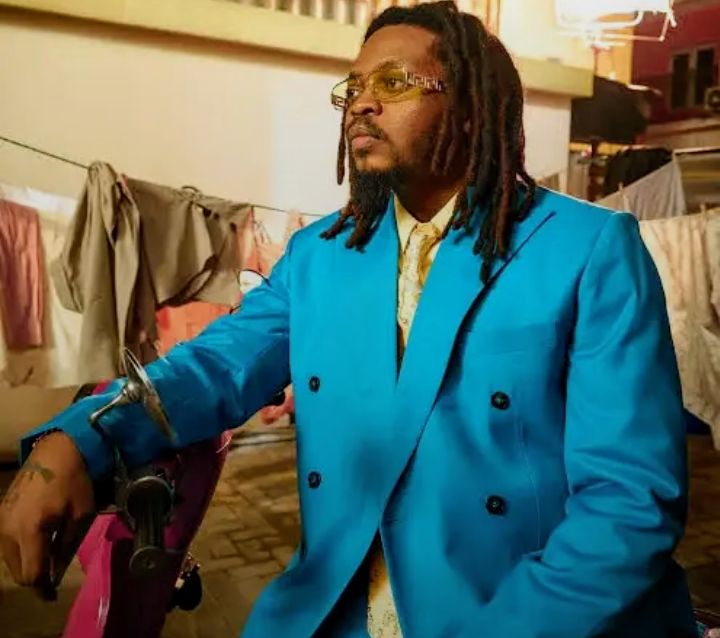
Nigerian rapper and YBNL record label boss, Olamide Adedeji, popularly known as Badoo, has urged Nigerians to embrace their cultural heritage, insisting that African traditions should not be demonised or treated as something to be ashamed of.
The music star made the remarks while expressing pride in his Yoruba roots and calling for greater appreciation of Nigerian culture, traditions and indigenous practices.
Speaking at an event on Tuesday, November 3, at The Pod by Nile Luxury Cinemas, Olamide said African cultural practices should not automatically be associated with evil or superstition.
“Our culture and tradition are not diabolical, and they are not to be demonised. We’re proud of who we are, where we’re coming from and everything about our heritage, tradition and culture,” he said.
Switching to Yoruba, the rapper used black soap, locally known as ose dudu, to illustrate his point about cultural identity and acceptance.
“I’m a Yoruba boy,” he said. “If you give me black soap, I’ll gladly collect it and use it.”
Dressed in a colourful adire outfit, Olamide spoke about the need for Africans to appreciate their cultural backgrounds rather than allow negative perceptions to shape how they view their traditions.
A video of his remarks was shared on Sotayo’s Instagram page on Wednesday, drawing attention to his comments on the relationship between African identity, traditional practices and spirituality.
Olamide has consistently incorporated Yoruba language, expressions and indigenous sounds into his music, blending traditional storytelling with contemporary hip-hop and Afrobeats.
Through his music and influence in the Nigerian entertainment industry, the rapper has contributed to the visibility of indigenous-language music among younger audiences.
Other Nigerian entertainers associated with his YBNL music label, including Adekunle Gold, Lil Kesh and Asake, have also incorporated indigenous languages, traditional sounds and cultural expressions into their musical styles.
His remarks have further highlighted broader conversations about how African traditions are perceived, particularly where indigenous cultural practices are sometimes viewed through the lens of superstition or spirituality.
Black soap, known among the Yoruba as ose dudu, is a traditional skincare product commonly made from ingredients such as plantain skins, cocoa pods and palm kernel oil.
Although widely used for skincare, the product is also associated with certain traditional beliefs and practices in some communities.
Olamide’s comments underscore the importance of cultural identity and the need to appreciate indigenous heritage without automatically attaching negative meanings to traditional African practices.
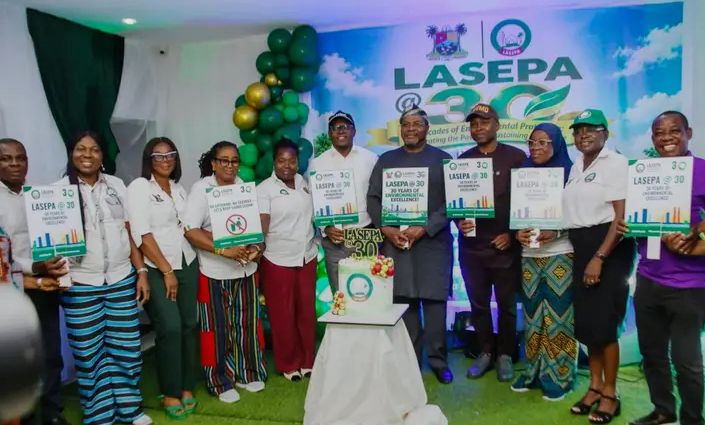
The Lagos State Environmental Protection Agency (LASEPA) has reaffirmed its commitment to environmental protection, pollution control and sustainable environmental management as it marks 30 years of promoting a cleaner, safer and healthier environment across the state.
The agency said the anniversary provides an opportunity to reflect on its achievements over the past three decades and strengthen efforts to address emerging environmental challenges associated with Lagos State’s rapid urbanisation and growing population.
In a post shared on its X handle on Thursday, the Permanent Secretary, Office of Environmental Services, Dr Omobolaji Tajudeen-Gaji, stated this during a press conference organised to commemorate the agency’s 30th anniversary.
Tajudeen-Gaji commended LASEPA for its contributions to combating environmental pollution, particularly noise and air pollution, noting that the agency had played a significant role in improving environmental standards across Lagos State.
The agency’s anniversary comes as Lagos continues to face environmental challenges associated with rapid urbanisation, industrial activities, waste generation, air pollution and noise pollution, making effective environmental regulation and public participation increasingly important.
-
 Security4 months ago
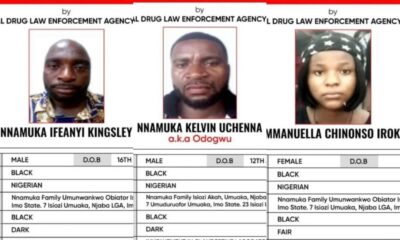
NDLEA Declares Alleged Drug Kingpin, Three Associates Wanted, Freezes ₦9.8bn Linked to Syndicate
-
 National Affairs3 months ago
ICPC Uncovers 908 Suspected Ghost Workers Across 50 Federal MDAs, Recovers ₦942 Million
-

 Business/Finance3 months ago
How to Apply for Tunde Onakoya’s ₦250 Million Scholarship Programme and Free Laptop Offer
-
 Judiciary | Public Safety4 months ago
INEC Tells Court Voter Information Is Not Confidential in Emeka Ike’s ₦10bn Lawsuit
-
 Politics3 months ago
Atiku Challenges Tinubu to Reveal Details of ₦15.13bn SUV Procurement in 2026 Budget
-
 Judiciary | Public Safety4 months ago
Court to Rule Friday on NDLEA’s Bid to Destroy ₦480bn Meth Lab in Ogun
-
 Security3 months ago
Family Paid ₦50 Million Ransom to Secure Release of Abducted Kebbi Judge
-
 News3 months ago
2026 Budget: FG Earmarks ₦962.83bn for SUVs, Empowerment Projects Amid Debt Concerns