
2027 Elections
Makinde, APM Sue Abia Gov Over N200m Campaign Billboard Fee

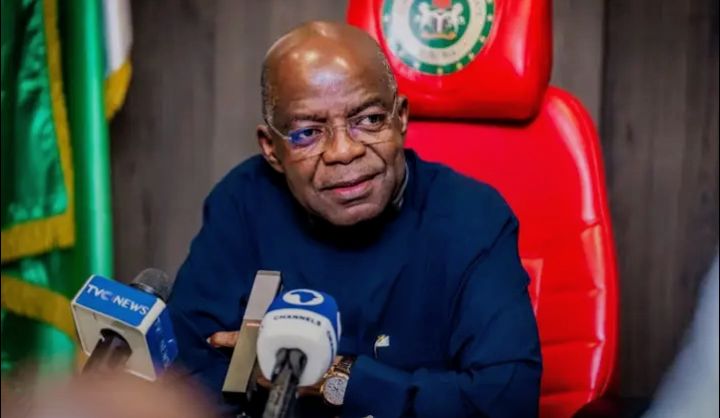
Oyo State Governor and presidential candidate of the Allied Peoples Movement (APM), Seyi Makinde, alongside his party, has dragged Abia State Governor, Alex Otti, before the state High Court over an alleged N200 million campaign fee imposed on presidential candidates seeking to display campaign materials in the state.
The suit, marked HU/214/2026, was filed at the Abia State High Court, Umuahia Judicial Division, on September 17, 2026.
The plaintiffs are challenging the legality of the fee reportedly imposed by the Abia State Signage and Advertisement Agency (ABSAA) for political campaign billboards and outdoor advertisements.
Joined as defendants in the suit are the Abia State Attorney-General, ABSAA and the Abia State House of Assembly.
Makinde and the APM are asking the court to declare the N200 million fee unconstitutional and inconsistent with the provisions of the Electoral Act 2026 and other relevant federal laws.
The plaintiffs’ legal team, led by Musibau Adetunbi, SAN, includes Ire Egert-Olusesi, Ridwan Azeez, Oluwabusola Oluwaniyi and Joseph Lukman of Musibau Adetunbi, SAN & Co., Ibadan.
They have asked the court to set aside regulations made by ABSAA relating to political campaigns, including the N200 million fee imposed on presidential candidates or any similar amount.
The claimants are also seeking a perpetual injunction restraining the defendants, their agents and representatives from enforcing the disputed fee.
They further want the court to stop the defendants from removing, defacing, destroying or obstructing their campaign billboards and outdoor advertisements within Abia State on account of non-payment of the fee.
Makinde, APM challenge legality of fee
In their claims, Makinde and the APM argued that the N200 million charge amounted to an unconstitutional restriction on political campaigning and could undermine equal participation in the electoral process.
They are asking the court to declare the fee null and void from inception on the grounds that it conflicts with the Constitution, the Electoral Act 2026 and other federal legislation.
The plaintiffs specifically relied on Section 99(2) of the Electoral Act, which they said prohibits the use of state apparatus or regulatory bodies to confer an advantage or disadvantage on a political party or candidate.
According to the claimants, the imposition of the fee effectively places non-incumbent presidential candidates at a disadvantage by making public campaign visibility prohibitively expensive.
They argued that a state regulatory agency should not be used in a manner that could limit the ability of candidates to communicate their political messages to voters.
Campaign spending limit cited
The plaintiffs also based their argument on Section 92 of the Electoral Act, which sets the total campaign expenditure limit for a presidential election at N10 billion nationwide.
They contended that if similar billboard and outdoor advertising charges were imposed across multiple states, such fees could consume a substantial portion of the statutory campaign expenditure ceiling.
According to the claimants, cumulative billboard charges could potentially account for more than 80 per cent of the N10 billion ceiling if replicated across states, even before other campaign expenses are considered.
They listed expenses such as transportation, media advertising, venue rentals, security arrangements and payments to agents across the country’s more than 176,974 polling units as additional costs candidates must bear during a nationwide campaign.
The plaintiffs therefore argued that the disputed fee should be considered within the wider framework of federal electoral regulation and campaign expenditure limits.
Federal law versus state signage regulation
While acknowledging the authority of states to regulate outdoor advertising and signage within their jurisdictions, Makinde and the APM argued that such powers must be exercised within the limits of the Constitution and applicable federal electoral laws.
They relied on Sections 1(3) and 4(5) of the Constitution in arguing that valid federal legislation takes precedence where there is an inconsistency between federal and state laws.
The plaintiffs maintained that state signage regulations should not be applied in a manner that frustrates provisions governing federal elections or prevents candidates from exercising their constitutional political rights.
Nationwide campaign tour
In a supporting affidavit filed alongside the suit, Aisha Abdullahi Abubakar, identified as the APM’s National Welfare Officer, said the plaintiffs became aware of the disputed fee while preparing for a nationwide campaign tour.
The campaign tour is expected to cover all 36 states of the federation and the Federal Capital Territory.
The claimants argued that enforcing the N200 million fee could have serious financial and operational implications for their campaign activities in Abia State.
They further told the court that unless it intervened, they could suffer irreparable harm to their constitutional right to seek public office.
The plaintiffs also argued that enforcement of the fee could undermine the principle of a level playing field among candidates contesting the 2027 presidential election.
The case is now before the Abia State High Court, where Makinde and the APM are seeking judicial determination on the legality of the disputed campaigns.

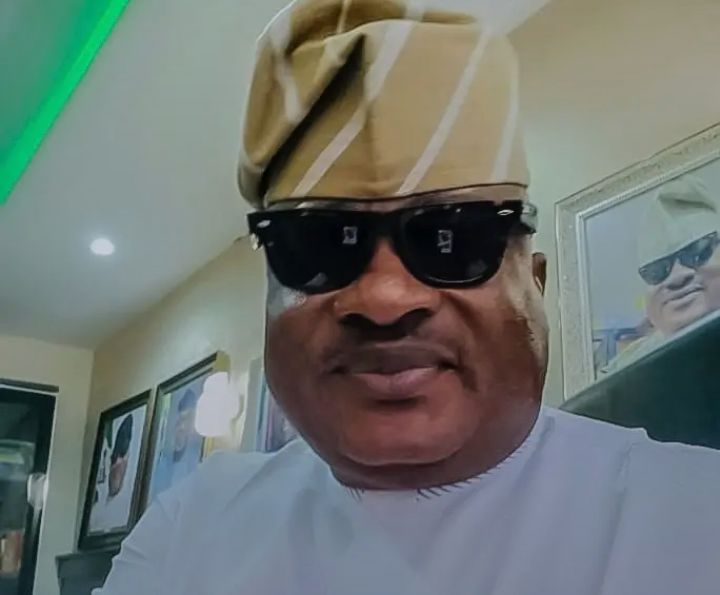
The All Progressives Congress National Leader for Persons with Disabilities, Tolu Bankole, has urged the Independent National Electoral Commission to review how it presents figures for Persons with Disabilities captured on Nigeria’s national voters’ register.
Bankole made the call in a statement issued in Abuja on Sunday titled, “Misreporting PWD Numbers in Nigeria’s Voter Register: Why INEC’s Captured Figures Do Not Reflect the Full Historical Reality.”
He argued that the figure of 137,487 Persons with Disabilities being circulated by INEC should not be interpreted as representing the total number of registered voters with disabilities across the country.
According to him, the figure largely reflects voters who indicated their disability status after INEC introduced a dedicated disability field into its Continuous Voter Registration process in 2021.
Bankole explained that voters with disabilities who registered before 2021 were not adequately represented in the disability-disaggregated figures because previous voter registration systems did not consistently provide disability status as a separate data field.
He said the figure should therefore be understood within the period and methodology used to collect the data.
“The 137,487 (or derivative) figure is therefore a flow measure of indicated disability from the 2021–present window, not a stock measure of all PWDs in the full historical register.
You cannot count what you never measured,” Bankole said.
The APC chieftain called on INEC to publicly and consistently qualify its PWD statistics by explaining the temporal and methodological limitations surrounding the figures.
He also urged the electoral commission to intensify targeted sensitisation campaigns to ensure that eligible voters with disabilities who are registering or updating their voter information understand the importance of accurately indicating their disability status.
The 137,487 figure cited by Bankole comprises 13,080 visually impaired persons, 9,299 hearing-impaired persons, 30,561 persons with albinism, 19,430 persons with physical impairment and 54,941 persons under other categories.
However, Bankole said the figures could still represent an undercount even for registrations conducted from 2021, noting that some persons with disabilities may have registered without indicating their status.
“As I have consistently stated is that many PWDs indeed registered without indicating their PWD status,” he said.
He attributed the failure by some voters to self-identify to factors including inadequate awareness, stigma and the perception that declaring a disability during voter registration was unnecessary.
Bankole further urged INEC to explore, within existing legal and privacy safeguards, mechanisms that could improve the historical visibility of Persons with Disabilities already captured on the voters’ register.
He also called for stronger collaboration between the electoral commission and disability organisations ahead of the 2027 general elections and subsequent electoral cycles.
The APC National Leader for Persons with Disabilities stressed that clearer and more comprehensive data would help provide a better understanding of the participation of Persons with Disabilities in Nigeria’s electoral process.
He said improved data collection, public awareness and collaboration with PWD structures would contribute to more effective planning for inclusive elections.
The call comes as stakeholders continue to push for greater participation and accessibility for Persons with Disabilities in Nigeria’s electoral process, including better representation in voter registration data and improved access to voting facilities.

The Independent National Electoral Commission (INEC) has distributed sensitive electoral materials to the three local government areas that make up the Gombe/Kwami/Funakaye Federal Constituency ahead of Saturday’s by-election.
The materials were distributed on Friday at the Central Bank of Nigeria (CBN) premises in Gombe State in the presence of political party agents, security personnel, officials of the Inter-Agency Consultative Committee on Election Security, CBN representatives and journalists.
The by-election is scheduled to hold on Saturday, September 19, 2026, with 495,851 registered voters expected to participate across the constituency.
Speaking with journalists after the distribution exercise, the Resident Electoral Commissioner (REC) in Gombe State, Alhaji Umar Muktar Gajiram, said the sensitive materials had been delivered to the relevant local government areas for onward deployment to polling units.
Gajiram said the exercise was carried out openly in the presence of relevant stakeholders as part of efforts to promote transparency and build confidence in the electoral process.
“The sensitive materials have been distributed to the respective local government areas. From there, they will be deployed to the various polling units ahead of tomorrow’s election,” he said.
The REC explained that INEC deliberately conducted the distribution in the presence of political party representatives, security agencies and other stakeholders to ensure transparency.
“We have ensured that the process is done in the presence of all the relevant stakeholders, including political party agents, security agencies and other members of the Inter-Agency Consultative Committee on Election Security,” he added.
Gajiram also explained the importance of the endorsements and signatures placed on the sensitive electoral materials, saying they were part of INEC’s authentication process.
According to him, the procedure was designed to ensure that only materials duly approved and certified by the commission were deployed for the election.
“The endorsement and signatures by the commission are part of the authentication process. They establish that these are the materials approved and certified by INEC for this election,” he said.
The REC further appealed to political parties, candidates and their supporters to respect the Peace Accord signed at the Gombe State Police Command ahead of the election.
He urged all stakeholders to avoid actions capable of disrupting the poll and to work towards ensuring a peaceful and orderly electoral process.
“I want to appeal to all political parties, candidates and their supporters to abide by the Peace Accord they signed.
“We expect everyone to maintain peace and ensure that the election is conducted in an orderly, peaceful and credible manner,” Gajiram said.
The INEC official stressed that maintaining peace during the election was a collective responsibility and not one that rested solely on the electoral commission.
He expressed optimism that the participating political parties, candidates and their supporters would honour the commitments they made under the Peace Accord.
“We hope that all the political parties and their candidates will respect the commitments they made under the Peace Accord.
The responsibility for a peaceful election does not rest on INEC alone; it is a collective responsibility,” he added.
The Gombe/Kwami/Funakaye Federal Constituency by-election follows the vacancy in the constituency and is expected to be conducted across the designated polling units in the three local government areas on Saturday.
With the distribution of sensitive materials completed, attention now shifts to the deployment of the materials to polling units and the conduct of the election on September 19.


The Obi-Kwankwaso Movement has unveiled a 59-member Presidential Campaign Council as part of its preparations to mobilise support for the proposed joint presidential ticket of Peter Obi and Rabiu Kwankwaso ahead of the 2027 general elections.
The campaign council, announced on Thursday, comprises zonal and state coordinators as well as directors overseeing mobilisation, women affairs, strategy and planning, security and intelligence, legal affairs, information technology, administration and other areas.
The Director-General of the movement, John Ughulu, was named Director-General of the campaign, while the National Secretary, Saadatu Sani, is also part of the campaign leadership.
The structure covers Nigeria’s six geopolitical zones and the Federal Capital Territory, with coordinators appointed for the 36 states.
In a message congratulating the newly appointed members, Sani described their appointments as a call to duty and urged them to take the message and political agenda of the movement to Nigerians across the country.
She said the council had been entrusted with the responsibility of communicating the vision and aspirations of the movement’s principals to Nigerians from the cities to grassroots communities, including local government areas and wards.
“Your selection is not merely an appointment; it is a call to duty, sacrifice, leadership and service to Nigeria. At this critical moment in our nation’s history, the responsibility before the Presidential Campaign Council is enormous,” Sani said.
She added that the movement’s campaign would focus on what it described as a broader national vision rather than individuals seeking personal recognition.
According to her, the movement aims to mobilise Nigerians around the possibility of a more prosperous, united and functional country.
Sani urged members of the council to approach their responsibilities with discipline, loyalty, humility and commitment to the collective objectives of the movement.
“The road ahead will require hard work. It will require strategic thinking, grassroots mobilisation, effective communication and, above all, the ability to work together as one formidable political family,” she said.
She further stated that the immediate responsibility of the campaign council was to ensure that the message of Obi and Kwankwaso reached voters across the country.
Zonal coordinators named
The movement appointed Suleiman Abubakar as North-Central coordinator, Hashimu Dungurawa as North-West coordinator, and Amadu Gwambe as North-East coordinator.
Dr Adebayo Adefolaseye was named South-West coordinator, Christopher Ighodaro was appointed South-South coordinator, while El-Shaddai Ikeh will coordinate activities in the South-East.
State coordinators were also appointed for the 36 states and the Federal Capital Territory.
Other members of the campaign council include Rev. Mike Agbon, Director of Inter-Ethnic Group in Northern Nigeria;
Sabo Gashua, Director of Grassroots Mobilisation; Glory Adayi, Director of Women Affairs; and Kabir Yahaya, Director of Contact and Engagement.
Abdumumini Tijjani was appointed Director of Mobilisation, Yusuf Mani as Director of Special Duties, Peace Daful as Director of Procurement, Prof. Charles Nwekeaku as Director of South Eastern Town Hall, and Sunmisola Adebayo as Director of Information Technology.
Kingdom Okere was appointed Director of Legal Affairs, Abiodun Dabiri as Director of Strategy and Planning, Richard Enemona, a retired Chief Superintendent of Police, as Director of Security and Intelligence, while Aisha Abdulrahaman was named Director of Administration.
The unveiling of the council is the latest move by the group to establish its campaign structure ahead of the 2027 elections.
Last month, the Obi-Kwankwaso Movement reaffirmed its decision to maintain an independent organisational structure rather than merge with another political organisation.
It also backed Ughulu as its founder and Director-General.
The movement had also recently condemned what it described as the disruption of Obi’s convoy during his visit to Benue State.
The group called for an impartial investigation into the incident and said its security personnel exercised restraint to prevent the situation from escalating.
The 59-member campaign council is expected to coordinate the movement’s mobilisation and engagement activities across the country as political activities ahead of the 2027 general elections continue to intensify.
-
 Security2 months ago
NDLEA Declares Alleged Drug Kingpin, Three Associates Wanted, Freezes ₦9.8bn Linked to Syndicate
-
 National Affairs2 months ago
ICPC Uncovers 908 Suspected Ghost Workers Across 50 Federal MDAs, Recovers ₦942 Million
-

 Business/Finance2 months ago
How to Apply for Tunde Onakoya’s ₦250 Million Scholarship Programme and Free Laptop Offer
-
 Politics2 months ago
Atiku Challenges Tinubu to Reveal Details of ₦15.13bn SUV Procurement in 2026 Budget
-

 Judiciary | Public Safety2 months ago
INEC Tells Court Voter Information Is Not Confidential in Emeka Ike’s ₦10bn Lawsuit
-
 Judiciary | Public Safety2 months ago
Court to Rule Friday on NDLEA’s Bid to Destroy ₦480bn Meth Lab in Ogun
-
 Security2 months ago
Family Paid ₦50 Million Ransom to Secure Release of Abducted Kebbi Judge
-
 News2 months ago
2026 Budget: FG Earmarks ₦962.83bn for SUVs, Empowerment Projects Amid Debt Concerns