
News
Oyebanji Celebrates Segun Oni at 72, Hails His Contributions to Ekiti

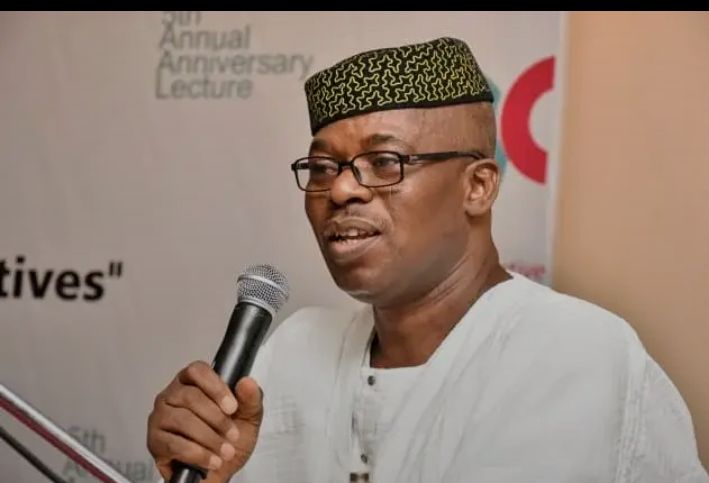
Biodun Oyebanji, has congratulated former governor of the state, Chief Segun Oni, on his 72nd birthday, describing him as a distinguished statesman whose contributions to Ekiti and Nigeria remain remarkable.
Oyebanji, in a birthday message issued by his Special Adviser on Media, Yinka Oyebode, in Ado Ekiti on Saturday, praised Oni for his years of service to the state, the country and humanity.
The governor described the former governor as a man of honour, patriot, community leader and politician whose values have continued to influence governance and public service beyond his years in office.
According to Oyebanji, Oni has demonstrated humility, selflessness and an unwavering commitment to the welfare of the people, particularly through his concern for ordinary citizens and his dedication to the development of Ekiti State.
He also commended the former governor for the people-oriented and welfare-driven policies implemented during his administration, saying several of the initiatives had endured and continued to benefit residents.
Oyebanji noted that Oni’s administration played an important role in Ekiti’s development across several sectors, including workers’ welfare, infrastructure, healthcare and economic development.
The governor said Oni’s contributions had secured him a respected position in the history and development of Ekiti State, adding that the former governor remained relevant to the collective efforts to build a more prosperous state and a stronger Nigeria.
“Chief Oni’s contributions have earned him a lasting place in the positive trajectory of Ekiti’s development. He remains relevant in the ongoing quest for a more prosperous Ekiti and a greater Nigeria,” Oyebanji said.
He prayed for God to grant the former governor long life, sound health and many more productive years in service to Ekiti State, Nigeria and humanity.
“On behalf of the government and good people of Ekiti State, I felicitate our dear distinguished leader and statesman, Chief Segun Oni, and pray that God blesses his new age with good health and happiness,” Oyebanji said.
Oni, who served as governor of Ekiti State, remains an influential figure in the state’s political landscape and has continued to participate in public discourse on governance and development.
The birthday message highlights the cordial recognition of the former governor’s contributions to Ekiti’s political and socio-economic development as he marks his 72nd year.




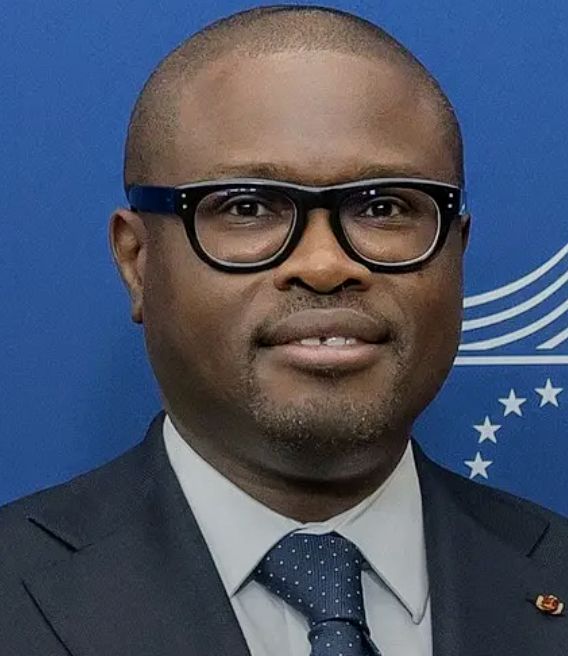
Benin’s President, Romuald Wadagni, has reshuffled the country’s military leadership, nearly a year after a failed coup attempt and amid growing security threats in the West African nation.
Wadagni announced the changes on Wednesday, appointing new heads for the army, air force and navy as his administration intensifies efforts to address security challenges facing the country.
The reshuffle comes months after Beninese soldiers loyal to the government foiled an attempt by some military officers to overthrow former President Patrice Talon in December 2025.
France and Nigeria reportedly supported efforts to prevent the coup.
Following the failed plot, Talon had declared that the situation in the country was “completely under control”, crediting loyalist soldiers with helping to protect his administration.
Wadagni, who served as economy minister under Talon for 10 years, succeeded him as president in April 2026.
Under the latest changes, General Abou Issa has been appointed to replace General Fructeux Gbaguidi as Chief of Army Staff.
Gbaguidi will now serve as the permanent secretary of the National Defence and Security Council.
Wadagni also appointed Colonel Andre Dokoui Fofo as head of the land-based military, while Colonel Herve Setondji Allotchenou will lead the air force.
Captain Dossa Hounkpatin was named the new head of the navy.
The military shake-up comes as Benin faces an increasingly difficult security situation, particularly in its northern regions, where jihadist groups affiliated with Al-Qaeda and the Islamic State have intensified activities across the borders with Burkina Faso and Niger.
The worsening security situation is among the major challenges confronting Wadagni, who assumed office in April after spending a decade overseeing the country’s economy.
His administration is also facing diplomatic challenges arising from strained relations with neighbouring Sahel countries, which are currently governed by military juntas.
The juntas have expressed distrust towards Benin over its close relations with France, a development that has complicated regional security cooperation.
The latest military appointments are expected to form part of the government’s efforts to strengthen the country’s defence structure and respond to emerging security threats.
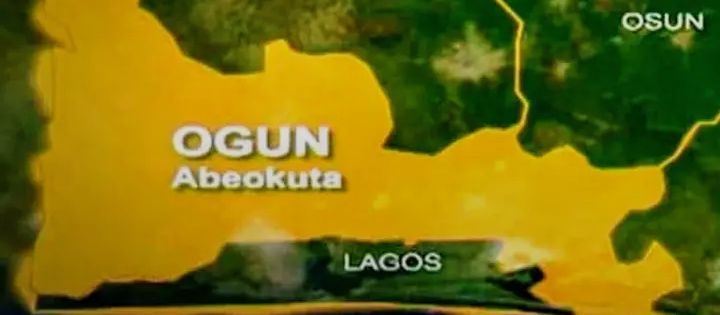
The coalition said it would return to the media when its demands had been addressed and peace restored to the affected estates.
Adron Homes yet to respond to allegations
When contacted on Monday, the Executive Director, Public Affairs and International Relations of Adron Homes and Properties Limited, Oluwakemi Osude-Laniyan, asked PUNCH Metro to send its enquiries through WhatsApp.
However, she did not respond to the message.
When contacted again on Tuesday morning, Osude-Laniyan said she was awaiting a detailed response from the appropriate department.
The company had yet to provide its response as of Tuesday night when the report was filed.
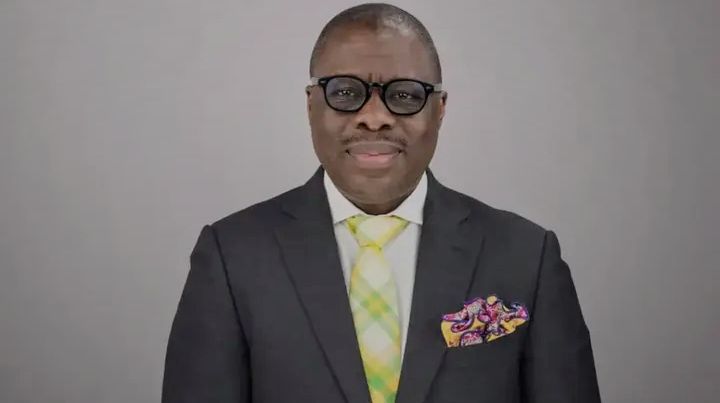
Nigeria and France are seeking to deepen investment and cooperation in the energy sector, with stakeholders calling for increased capital inflows, technology transfer, local content development and improved infrastructure to unlock Nigeria’s oil and gas potential.
The call was made at an energy roundtable organised as part of the 2026 French Week by the Franco-Nigerian Chamber of Commerce and Industry.
Participants drawn from the energy industry, government and diplomatic community identified gas development, energy transition, decarbonisation and regulatory stability as priority areas for expanding economic cooperation between both countries.
The Managing Director and Chief Executive Officer of TotalEnergies Nigeria, Matthieu Bouyer, said the energy sector presented significant opportunities to strengthen the longstanding relationship between Nigeria and France.
Bouyer noted that TotalEnergies, which has operated in Nigeria for 70 years, remained committed to developing local capacity, supporting Nigerian contractors and building sustainable partnerships.
“We see Nigeria not just as a market, but as a long-term investment destination where we continue to develop people, work with local contractors and build partnerships,” he said.
He disclosed that more than 100 French companies operate in Nigeria across sectors such as energy, infrastructure, logistics, technology, agriculture and consumer goods, providing thousands of jobs.
According to him, bilateral trade between Nigeria and France reached approximately $4.7bn in 2025, highlighting the potential for stronger commercial engagement.
Bouyer identified energy transition and decarbonisation, gas infrastructure and domestic utilisation, as well as technology transfer and local content development as three critical areas requiring increased collaboration.
He stressed that Nigeria’s energy transition must reflect its development priorities, particularly the need to expand energy supply while gradually reducing carbon emissions.
He added that improved gas recovery, methane reduction and energy efficiency could deliver environmental and economic benefits.
On gas development, Bouyer described Nigeria’s natural gas resources as a major opportunity for electricity generation, manufacturing, exports and industrial expansion.
However, he maintained that adequate infrastructure and a stable investment environment were essential to attracting the capital needed to develop the sector.
He also called for partnerships that would equip Nigerian companies with the technical expertise required to participate in more complex energy projects.
The Managing Director of Nigeria LNG Limited, Adeleye Falade, also highlighted the importance of natural gas to Nigeria’s industrialisation and economic diversification.
Falade disclosed that Nigeria had approximately 215 trillion cubic feet of proven gas reserves, while estimates of its wider gas resources stood at about 600 trillion cubic feet.
He argued that gas should be considered not merely a transitional fuel but a foundation for industrial development, clean cooking, export earnings and broader economic growth.
“Nigeria’s energy transition must be just, realistic and investable,” he said, noting that Africa’s energy development challenges differed from those of Europe, particularly regarding access to reliable electricity.
Falade cited NLNG’s Train 7 expansion project as an example of how international partnerships could promote domestic industrial development and increase the country’s gas production capacity.
He disclosed that engineering work on the project was 99.5 per cent complete, procurement was 99.8 per cent complete, while construction had reached approximately 94 per cent.
The project, expected to commence operations towards the end of 2027, will increase NLNG’s production capacity from 22 million tonnes per annum to approximately 30 million tonnes per annum.
According to him, the expansion has also created significant opportunities for Nigerian contractors and manufacturers, with local content accounting for about 95 per cent of the project.
He said approximately 16,000 people, largely young Nigerians, were engaged during construction, while wider project activities supported an estimated 40,000 jobs.
Falade added that Nigerian companies had manufactured several components, including pressure vessels, cables and valves, demonstrating the growing capacity of local manufacturers to participate in major energy projects.
He said the skills and facilities developed through Train 7 would support future industrial projects and strengthen the competitiveness of Nigerian engineering companies.
On NLNG’s economic contributions, Falade disclosed that the company had generated approximately $149.6bn in revenue since commencing operations, paid $47.9bn in dividends and remitted about $10.5bn in taxes.
He maintained that further expansion of production would increase government earnings through taxes, dividends and other payments.
The stakeholders called for sustained cooperation between Nigeria and France, stressing that stronger investment, technology transfer and infrastructure development would be critical to maximising Nigeria’s energy resources and driving long-term economic growth.
-

 Security4 months ago
NDLEA Declares Alleged Drug Kingpin, Three Associates Wanted, Freezes ₦9.8bn Linked to Syndicate
-
 National Affairs3 months ago
ICPC Uncovers 908 Suspected Ghost Workers Across 50 Federal MDAs, Recovers ₦942 Million
-

 Business/Finance3 months ago
How to Apply for Tunde Onakoya’s ₦250 Million Scholarship Programme and Free Laptop Offer
-

 Judiciary | Public Safety4 months ago
INEC Tells Court Voter Information Is Not Confidential in Emeka Ike’s ₦10bn Lawsuit
-
 Politics3 months ago
Atiku Challenges Tinubu to Reveal Details of ₦15.13bn SUV Procurement in 2026 Budget
-
 Judiciary | Public Safety3 months ago
Court to Rule Friday on NDLEA’s Bid to Destroy ₦480bn Meth Lab in Ogun
-
 Security3 months ago
Family Paid ₦50 Million Ransom to Secure Release of Abducted Kebbi Judge
-
 News3 months ago
2026 Budget: FG Earmarks ₦962.83bn for SUVs, Empowerment Projects Amid Debt Concerns