
Politics
2027: I’ll Resign If Nigerians See No Improvement Under Atiku – Amaechi

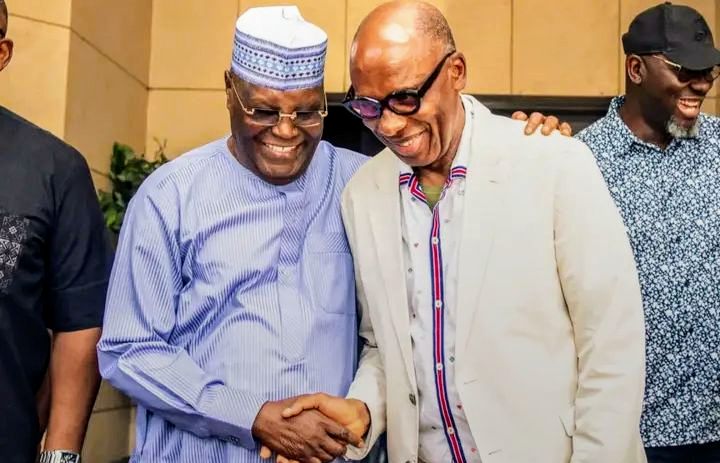
Former Rivers State Governor and African Democratic Congress (ADC) vice-presidential candidate, Rotimi Amaechi, has vowed to resign if Nigerians do not begin to experience meaningful improvements in the country within one year of an Atiku Abubakar-led administration.
Amaechi made the declaration during an interview on NewsCentral TV on Friday, where he discussed the ADC’s proposed economic policies and its plans ahead of the 2027 general election.
He said he was prepared to leave government if he failed to deliver on his responsibilities as vice-president, stressing that his decision would reflect his commitment to accountability and good governance.
“I’m sure the president knows my character, the presidential candidate (Atiku Abubakar) knows my character, that if I’m not performing, I may likely leave government,” he said.
When asked specifically whether he would resign as vice-president if he failed to perform under an Atiku-Amaechi administration, the former governor responded emphatically.
“Of course. I’m not joking,” he added.
Amaechi, however, expressed confidence that an ADC-led government would make a significant difference in the lives of Nigerians within its first year in office.
According to him, Atiku’s leadership would earn widespread public support, with Nigerians appreciating his administration and potentially regretting their earlier decision not to vote for him.
“But the way the situation is and the way I know Atiku, our first year in office, he will be hailed as a hero,” Amaechi said.
“Atiku will be hailed as a hero. Nigerians will regret not voting for him earlier,” he added.
ADC proposes production subsidy to reduce petrol prices
Speaking on the party’s economic agenda, Amaechi disclosed that an ADC administration would introduce a production subsidy designed to reduce petrol prices by making crude oil available to local refiners below the international market rate.
He explained that the arrangement would require participating refiners to transfer the benefits of the reduced crude oil cost to consumers through lower pump prices.
According to him, refiners who fail to reduce their prices would lose access to the subsidy and be required to purchase crude oil at the prevailing international market rate.
“What we’re introducing is what we’ll call a production subsidy.
“If you don’t bring down the price, because the subsidy is aimed at bringing down the price, if you don’t do that, then you don’t get the subsidy.
“You either get the subsidy and bring down the price, or you buy at the international market rate,” he stated.
Amaechi maintained that the proposed policy would ensure government support benefits ordinary Nigerians rather than simply increasing the profit margins of private refining companies.
Amaechi promises agricultural reforms
On agriculture, the ADC vice-presidential candidate said the party would review existing agricultural policies, encourage local farmers and reduce Nigeria’s dependence on imported food.
He argued that strengthening domestic food production would create employment, generate wealth and contribute to addressing insecurity across the country.
“We must review the agricultural policy,” he said.
“We must encourage Nigerian farmers. We will not be importing food.”
He further explained that increased agricultural activities would provide employment opportunities for Nigerians, particularly young people, while improving economic stability.
“Agriculture will create wealth, will create employment. Employment will reduce insecurity,” he added.
Amaechi also reiterated that Nigerians should expect measurable improvements within 12 months of an ADC administration, although he acknowledged that not all the country’s challenges could be resolved within that period.
ADC insists on continuing campaigns despite court ruling
Meanwhile, Amaechi said the ADC would not suspend its political activities or preparations for the 2027 general election despite the court ruling affecting the party’s leadership structure.
We are not stopping,” he said, maintaining that the party would continue its plans while pursuing the legal process.
The ADC leadership crisis followed the resignation of its former National Chairman, Ralph Nwosu, and the emergence of former Senate President David Mark as head of the party’s caretaker leadership.
However, the transition was challenged by Nafiu Bala Gombe, a former ADC Deputy National Chairman for the North-East, who argued that he was constitutionally entitled to succeed Nwosu.
In a judgment delivered on Thursday, Justice Peter Lifu of the Federal High Court in Abuja ruled in Gombe’s favour, declaring the Mark-led caretaker committee illegal and nullifying its decisions.
The ruling also affected the process through which former Vice-President Atiku Abubakar emerged as the ADC’s presidential candidate for the 2027 election, as well as other party nominations.
The ADC rejected the judgment and vowed to challenge the decision.
On Friday, the party announced that it had filed an appeal and an application for a stay of execution, urging the Independent National Electoral Commission (INEC) not to take further action pending the determination of its legal challenge.
Despite the development, the party maintained that its campaign activities and preparations for the 2027 general election would continue.
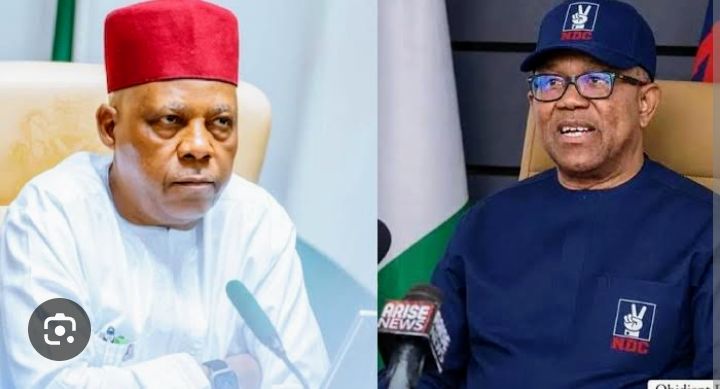
Vice-President Kashim Shettima has criticised former Labour Party presidential candidate Peter Obi, claiming that he has squandered the goodwill he once enjoyed among Nigerians.
Shettima accused Obi of making what he described as “lies and bogus statistics”, arguing that the former Anambra State governor had lost the public support and enthusiasm that previously surrounded his political activities.
The Vice-President made the remarks on Friday during the All Progressives Congress (APC) presidential campaign rally in Uyo, Akwa Ibom State. The rally was attended by President Bola Tinubu, Akwa Ibom State Governor Umo Eno and other party leaders.
Speaking about Obi’s political activities and his recent return to Nigeria, Shettima said the opposition politician no longer generated the excitement he once commanded.
“Peter Obi has clearly messed up and squandered away his goodwill. He no longer excites. When he speaks these days, he only draws suspicions. Too bad for him,” he said.
Shettima further alleged that Obi had damaged his presidential ambition through statements he described as misleading and the use of questionable statistics.
“I hear my friend Peter Obi is back in the country after sneaking out to have a rest. He might have avoided Lagos and Abuja on arrival, but clearly this gentleman has run himself out of this race with his lies and bogus statistics,” the Vice-President added.
Shettima Questions Atiku’s Experience
The Vice-President also turned his attention to former Vice-President Atiku Abubakar, questioning his claim to having the experience required to lead Nigeria.
Shettima argued that the number of years spent in public office should not be the only measure of a politician’s leadership experience, insisting that Nigerians should consider actual achievements, institutional contributions and the development of future leaders.
“Whenever Vice President Atiku Abubakar speaks about his experience and record of public service, I wonder whether he believes Nigerians have lost their memories,” he said.
While acknowledging Atiku’s career in the Nigeria Customs Service and his eight years as Vice-President between 1999 and 2007, Shettima maintained that occupying prominent public positions did not automatically establish an impressive leadership record.
“Nobody disputes that Mr Atiku attended the School of Hygiene in Kano and subsequently joined the Nigeria Customs Service and became the Vice President of Nigeria for eight years, from 1999 to 2007.
“These are facts, but the experience cannot be established by counting the years spent in public service.
“The more important questions are what one accomplished, which institutions one strengthened, and which leaders one prepared to carry forward a common vision,” he stated.
Compares Atiku’s Record With Tinubu’s
Shettima subsequently contrasted Atiku’s political and professional background with that of President Tinubu, highlighting the President’s education, professional career, political involvement and experience in public office.
He said Nigerians had the right to examine the achievements and shortcomings of both political figures rather than relying solely on their years in government.
The Vice-President also questioned Atiku’s administrative, business and political record, suggesting that his experience should be assessed based on demonstrable accomplishments.
“And now, how about we move beyond qualifications and put into context Atiku’s administrative, business and political sagacity, that is, if it has any. Charity, they say, begins at home,” Shettima said.
The comments come amid political developments surrounding the 2027 presidential race, including Atiku’s reported ambition to contest the presidency and the leadership crisis within the African Democratic Congress (ADC).
Obi and Atiku have both remained prominent figures in Nigeria’s opposition politics following the 2023 presidential election.
The reported donation of seven brand-new Toyota Prado Sports Utility Vehicles (SUVs) to selected youth leaders of the All Progressives Congress (APC) has sparked questions about political spending, campaign financing and transparency amid widespread economic hardship in Nigeria.
The vehicles, reportedly worth more than N1 billion, were presented to selected APC youth leaders to support election mobilisation ahead of the 2027 general elections.
The party’s National Youth Leader, Dayo Israel, shared a video of the presentation on social media, thanking the First Lady, Oluremi Tinubu, for her support.
However, the video, which was later deleted, generated public reactions, with critics questioning the propriety of distributing expensive luxury vehicles while millions of Nigerians continue to grapple with rising living costs, food prices and transportation expenses.
Each Toyota Prado was estimated to cost approximately N150 million, although the reported total value and source of funding for the vehicles have not been independently established.
The controversy comes against the backdrop of worsening concerns about poverty and living conditions, despite the Federal Government’s claims of improvements in key macroeconomic indicators.
According to the National Bureau of Statistics’ November 2021 to February 2022 survey, 133 million Nigerians, representing 63 per cent of the population at the time, were living in multidimensional poverty.
Similarly, the World Bank’s April 2026 Nigeria Development Update estimated that approximately 140 million Nigerians were living below the poverty line.
The report also indicated that 33 per cent of Nigerians were ultra-poor and food-insecure, while 79 per cent were either poor or vulnerable to falling into poverty.
PwC Nigeria’s Economic Outlook 2026 projected that about 141 million people, representing 62 per cent of the population, would be living in poverty this year.
The International Monetary Fund’s 2026 Article IV assessment also reported that 27 million Nigerians were experiencing severe food insecurity, driven by high transportation costs, rising food prices and supply-chain disruptions.
While the administration has recorded some improvements in foreign reserves, government revenue, crude oil production and infrastructure development, concerns remain over the extent to which these gains have translated into improved living conditions for ordinary Nigerians.
The burden of debt servicing, increasing public borrowing and the high cost of essential goods continue to weigh heavily on households.
Against this background, the reported distribution of luxury vehicles to party officials has intensified scrutiny of political spending as parties begin preparations for the 2027 elections.
Across the political landscape, support groups and political stakeholders have increasingly announced donations of vehicles, buses and other resources to strengthen party structures and mobilisation activities.
These developments have raised questions about the sources of political funding, the declaration of donations and the enforcement of existing electoral regulations.
Under the Electoral Act, political parties are required to comply with financial disclosure and contribution limits.
In particular, donations in kind, including vehicles, buses and other valuable assets, should be properly assessed and declared to ensure that political contributions are not concealed through non-cash arrangements.
The Independent National Electoral Commission, the Economic and Financial Crimes Commission and the Independent Corrupt Practices and Other Related Offences Commission have also been urged to pay closer attention to political financing and investigate possible breaches of relevant laws.
Their responsibility includes ensuring that political donations are traceable and that electoral regulations are enforced without favour.
Ultimately, the controversy surrounding the seven Toyota Prado SUVs raises a broader question about the relationship between political spending and public accountability.
While political parties are entitled to mobilise resources for their activities, such contributions must comply with the law and be subjected to appropriate transparency requirements.
As Nigeria approaches another election cycle, the sources of campaign funds, the value of political donations and the financial activities of political parties will remain important issues for public scrutiny.
The reported SUV donations may strengthen the mobilisation capacity of selected APC officials, but they have also renewed debate about political privilege, economic hardship and the need for greater accountability in Nigeria’s democratic process.
The Inter-Party Advisory Council (IPAC) in Yobe State has removed its Chairman, Umaru Jajere, and Secretary, Mustapha Gado, over allegations of mismanagement, lack of transparency and unilateral decision-making.
The council announced their removal in a statement signed by its Acting Secretary, Habiba Umaru, following an emergency meeting held on Thursday at its secretariat along Potiskum Road, Damaturu.
According to the statement, the decision followed a vote of no confidence in the two officials, who were accused of failing to consult member political parties on key decisions and neglecting regular meetings of the council’s executive committee and general assembly.
IPAC also accused the former leadership of allegedly using the council’s name to receive quarterly palliatives from the North-East Development Commission (NEDC), as well as other government and non-governmental organisations, without the knowledge or involvement of member parties.
Similarly, Umaru assured members that the council would work closely with the Independent National Electoral Commission (INEC), Yobe State Government, security agencies and the media to promote peaceful political activities and credible elections.
IPAC also called on its national secretariat, INEC, the state government, security agencies and the NEDC to recognise the newly appointed acting leadership.
The council further urged stakeholders to disregard anyone claiming to occupy the positions of chairman and secretary of the Yobe State chapter outside the newly constituted leadership.
-
 Security4 months ago
NDLEA Declares Alleged Drug Kingpin, Three Associates Wanted, Freezes ₦9.8bn Linked to Syndicate
-
 National Affairs4 months ago
ICPC Uncovers 908 Suspected Ghost Workers Across 50 Federal MDAs, Recovers ₦942 Million
-

 Business/Finance4 months ago
How to Apply for Tunde Onakoya’s ₦250 Million Scholarship Programme and Free Laptop Offer
-
 Judiciary | Public Safety4 months ago
INEC Tells Court Voter Information Is Not Confidential in Emeka Ike’s ₦10bn Lawsuit
-
 Politics3 months ago
Atiku Challenges Tinubu to Reveal Details of ₦15.13bn SUV Procurement in 2026 Budget
-
 Judiciary | Public Safety4 months ago
Court to Rule Friday on NDLEA’s Bid to Destroy ₦480bn Meth Lab in Ogun
-
 Security3 months ago
Family Paid ₦50 Million Ransom to Secure Release of Abducted Kebbi Judge
-
 News3 months ago
2026 Budget: FG Earmarks ₦962.83bn for SUVs, Empowerment Projects Amid Debt Concerns