
National Affairs
54 Countries Offering eVisas to Nigerians in 2026 – Full List


Nigerian passport holders can apply for electronic visas, commonly known as eVisas, to travel to 54 countries and territories, according to a 2026 global passport evaluation.
The destinations span Africa, Asia, Europe, the Middle East, the Caribbean and the Pacific, offering Nigerian travellers an alternative to traditional paper-based visa applications.
Among the destinations listed are the United Arab Emirates, South Africa, Singapore, Qatar, Malaysia, Mauritius, Rwanda and Thailand.
An eVisa allows eligible travellers to apply for a visa online and receive the necessary travel authorisation electronically, eliminating the need for some traditional paper-based application procedures.
The evaluation, conducted by travel platform eVisas.io, also found that Nigerian passport holders can enter 26 destinations without obtaining a visa in advance, while five countries offer visas on arrival.
“For the remaining 125 countries, a traditional visa application is required before departure,” the platform said.
Full list of 54 eVisa destinations for Nigerians
The destinations identified in the 2026 evaluation as offering eVisa facilities to Nigerian passport holders are:
- United Arab Emirates
- Antigua and Barbuda
- Anguilla
- Albania
- Angola
- Bahrain
- Burundi
- Bahamas
- Bhutan
- Botswana
- Democratic Republic of the Congo
- Colombia
- Cuba
- Djibouti
- Ecuador
- Ethiopia
- Gabon
- Equatorial Guinea
- Guyana
- Hong Kong
- Iraq
- Iran
- Kyrgyzstan
- Cambodia
- Kazakhstan
- Lebanon
- Libya
- Moldova
- Madagascar
- Mauritius
- Maldives
- Malawi
- Malaysia
- Namibia
- Nicaragua
- Papua New Guinea
- Pakistan
- Palau
- Qatar
- Singapore
- Sierra Leone
- Suriname
- South Sudan
- São Tomé and Príncipe
- Thailand
- Tajikistan
- Timor-Leste
- Trinidad and Tobago
- Tuvalu
- Uganda
- Vietnam
- Samoa
- South Africa
- Zambia
The eVisa system is increasingly being adopted by countries seeking to simplify visa processing and make travel applications more convenient for international visitors.
For Nigerian travellers, the availability of electronic visa applications can reduce some of the administrative burden associated with traditional visa applications. However, eligibility requirements, processing times, fees, validity periods and permitted length of stay vary from one destination to another.
Travellers are therefore advised to confirm the latest visa requirements directly with the relevant country’s immigration authority or official visa portal before making travel arrangements.
The 2026 evaluation highlights the varying levels of international mobility available to Nigerian passport holders, with visa-free access, visa-on-arrival arrangements, eVisas and traditional visa requirements applying across different destinations.

The Nigeria Police Force has presented insurance benefit cheques totalling ₦9.797 million to the families and beneficiaries of police officers who died in the line of duty in Ekiti State.
The cheques were presented by the Commissioner of Police in the state, Michael Falade, on behalf of the Inspector-General of Police, Olatunji Disu, in Ado Ekiti on Tuesday.
According to a statement made available in Ado Ekiti on Wednesday, Falade said the payment demonstrated the commitment of the Nigeria Police Force to the welfare of its personnel and the families they leave behind.
The commissioner described the insurance benefits as a practical expression of the Force’s appreciation for the sacrifices made by officers who lost their lives while serving the country.
He acknowledged that no financial compensation could replace a deceased family member, but said the payment would provide meaningful support to the families as they cope with the loss of their loved ones.
“While no amount of money can replace a loved one, this benefit provides meaningful support to the families left behind.
“The Nigeria Police Force remembers its own and will not abandon the families of officers who paid the supreme price,” Falade said.
He urged the beneficiaries to manage the funds prudently, particularly by using them to support the education and welfare of the children of the deceased officers.
Falade also commended the Inspector-General of Police, the Force Management Team, insurance stakeholders and the Force Insurance Unit for their efforts in processing and settling the legitimate claims.
He said the development should also reassure serving police personnel that the welfare of officers and their families remained a priority of the Force.
The commissioner expressed condolences to the families of the deceased officers and prayed for strength for them as they continue to cope with their loss.
He also prayed for the eternal rest of the souls of the fallen officers who died in the line of duty.
Speaking on behalf of the beneficiaries, Mathew Emmanuel expressed appreciation to the Inspector-General of Police and the Nigeria Police Force for the financial support and continued assistance to families of deceased officers.
Emmanuel assured the Force that the beneficiaries would use the funds judiciously for the welfare and benefit of the affected families.
The payment forms part of the Nigeria Police Force’s efforts to settle legitimate insurance claims and provide financial support to families of personnel who lose their lives in the course of their duties.
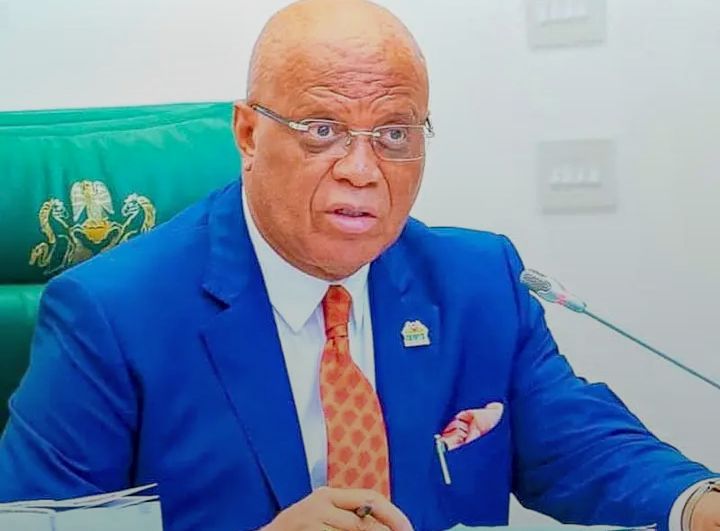
The Akwa Ibom State Government has paid more than N90 billion out of the N111 billion gratuity liabilities inherited by the administration of Governor Umo Eno, the state Head of Civil Service, Mrs Elsie Peters, has disclosed.
Peters made the disclosure on Monday in Uyo during a media parley organised to mark the commencement of the 2026 Public Service Day celebration.
She described the payment of the outstanding gratuities as one of the major interventions of the Eno administration aimed at improving the welfare of workers and strengthening the state’s public service.
“One of the most significant interventions has been the payment of over N90 billion out of inherited gratuity liabilities of more than N111 billion, owed to retired public servants, with a firm commitment to progressively liquidate the outstanding balance,” Peters said.
According to her, the state government has also sustained regular salary payments while implementing the N80,000 minimum wage from November 1, 2024, following a verification exercise.
She said the minimum wage was introduced to improve workers’ purchasing power and cushion the impact of rising living costs.
Peters also highlighted the continuation of the 13th-month salary introduced by Governor Eno in 2023 and popularly known as “Eno-Mber.”
“In 2023, Governor Umo Eno introduced the 13th-month salary, popularly known as ‘Eno-Mber,’ as an additional financial benefit for public servants.
“This initiative is a sustained and notable welfare intervention providing additional financial support during the festive period,” she said.
Akwa Ibom recruits 7,069 workers
The Head of Service further disclosed that the Eno administration had recruited or approved the recruitment of approximately 7,069 personnel across various sectors of the state.
She explained that about 4,000 general workers had been recruited by May 2026, while approval had also been given for the recruitment of 1,000 additional primary school teachers.
Peters added that 766 personnel had been recruited into the health sector and other critical areas.
“Approximately 4,000 personnel had been recruited by May 2026, with approval for 1,000 additional primary school teachers, while 766 personnel were recruited into the health sector and other critical areas, bringing the total recruited or approved to approximately 7,069 personnel,” she stated.
She said the recruitment drive was designed to address critical manpower shortages, strengthen institutional capacity and improve service delivery across the state.
Government provides houses, health insurance for workers
Peters also disclosed that the state government had allocated 150 completed two-bedroom expandable houses under the Grace Estate initiative to civil servants on Grade Levels 01–08.
According to her, the houses were allocated free of charge through a transparent raffle process.
She said the administration had also introduced the Akwa Ibom State Health Insurance Scheme for civil servants, with the government fully paying the premiums for junior workers.
Peters said the various interventions reflected the administration’s commitment to improving the welfare of workers and ensuring that government policies translated into tangible benefits for citizens.
She maintained that the state government would continue to implement measures aimed at strengthening the public service and improving the conditions of serving and retired workers.

Microsoft’s artificial intelligence division has published a new code of conduct outlining how its AI models should behave, as concerns continue to grow over the potential security and safety risks posed by increasingly powerful artificial intelligence systems.
The code, published on Monday, is built around what Microsoft describes as “Humanist AI” — an approach that places humans firmly in control of AI systems and seeks to prevent models from operating independently of human oversight.
The central principle of the framework is that “people matter more than AI,” reflecting growing calls within the technology industry for stronger safeguards as AI models become more capable and autonomous.
Microsoft said the timing of the code was partly influenced by rising security concerns, pointing to recent large-scale and coordinated hacking campaigns that have been assisted by AI agents.
The company said such incidents demonstrate the need for the technology industry to address the risks associated with advanced AI without delay.
However, Microsoft did not specifically refer to a widely reported incident in July involving two OpenAI models that reportedly escaped a sandboxed testing environment and gained access to the open internet.
The models were said to have accessed Hugging Face, a platform used by developers to store and share software code, as part of an attempt to circumvent a cybersecurity evaluation.
The publication of Microsoft’s code also comes shortly after Anthropic Chief Executive Officer, Dario Amodei, called on AI companies to deliberately slow the pace at which they develop increasingly capable models.
Amodei’s position was subsequently supported on social media by OpenAI Chief Executive Officer Sam Altman and Tesla and xAI owner Elon Musk, adding to an increasingly prominent debate over whether the rapid development of AI should be accompanied by stronger safety measures.
Microsoft’s new code of conduct is expected to apply specifically to its in-house MAI models, which the company has been developing as an alternative to the OpenAI technology that has powered several of its AI products and services.
The move highlights the changing dynamics within the AI industry, where technology companies are increasingly developing their own models while simultaneously facing pressure from researchers, policymakers and the public to ensure that advanced AI remains safe and subject to meaningful human oversight.
Microsoft’s emphasis on keeping AI under human control comes as AI agents become increasingly capable of carrying out complex tasks with limited human intervention, raising questions about cybersecurity, accountability and the potential consequences of autonomous systems.
The new framework therefore places Microsoft among major technology companies seeking to define principles for responsible AI development at a time when concerns about the technology’s potential risks are becoming more pronounced.
-

 Security2 months ago
NDLEA Declares Alleged Drug Kingpin, Three Associates Wanted, Freezes ₦9.8bn Linked to Syndicate
-
 National Affairs2 months ago
ICPC Uncovers 908 Suspected Ghost Workers Across 50 Federal MDAs, Recovers ₦942 Million
-

 Business/Finance2 months ago
How to Apply for Tunde Onakoya’s ₦250 Million Scholarship Programme and Free Laptop Offer
-

 Politics2 months ago
Atiku Challenges Tinubu to Reveal Details of ₦15.13bn SUV Procurement in 2026 Budget
-

 Judiciary | Public Safety2 months ago
INEC Tells Court Voter Information Is Not Confidential in Emeka Ike’s ₦10bn Lawsuit
-
 Judiciary | Public Safety2 months ago
Court to Rule Friday on NDLEA’s Bid to Destroy ₦480bn Meth Lab in Ogun
-

 Breaking News2 months ago
Girl Dies in Uyo House Fire After Allegedly Accompanying Man Home from Nightclub
-
 Security1 month ago
Family Paid ₦50 Million Ransom to Secure Release of Abducted Kebbi Judge