
Politics
Nigeria’s Borders Already Open, Presidency Tackles Atiku


The Presidency has criticised former Vice President Atiku Abubakar over his promise to reopen Nigeria’s land borders if elected president, insisting that most of the country’s borders are already open.
The reaction followed Atiku’s recent pledge to reopen the nation’s land borders, which he said had affected cross-border trade and economic activities.
In a statement issued on Friday and signed by the Special Adviser to President Bola Tinubu on Media and Public Communication, Sunday Dare, the Presidency said Atiku’s proposal was based on a misconception of the current state of Nigeria’s borders.
The statement, titled “Atiku and the Borders: Nigerians Deserve Facts, Not Campaign Slogans,” said the Federal Government reopened most of Nigeria’s land borders on March 14, 2024, and had not reversed the decision.
“The facts are straightforward: Nigeria’s land borders are already open,” the Presidency stated.
It also pointed to President Tinubu’s opening of the Kamba border in Kebbi State on February 14, 2026, describing the development as one that produced economic and diplomatic benefits.
The Presidency challenged Atiku to clarify what he meant by reopening the borders if he was referring to further relaxing existing controls.
According to Dare, Nigerians deserve to know which controls Atiku intends to remove, why such measures are necessary and what safeguards would be introduced to prevent terrorism, arms trafficking, smuggling, human trafficking and other forms of transnational crime.
The Presidency stressed that an open border should not be confused with an uncontrolled border.
It explained that modern border management is designed to allow legitimate movement, trade and economic activities while preventing criminals and terrorist groups from exploiting international routes.
It said effective border management requires immigration checks, customs administration, intelligence sharing, surveillance technology and coordinated security operations.
The Presidency also linked Nigeria’s border policy to the country’s wider security situation, particularly developments in the Sahel and Lake Chad Basin.
It noted that Nigeria shares borders with Niger, Chad and Cameroon, stressing that terrorism, violent extremism and organised crime in the region could easily have cross-border implications.
Citing the Global Terrorism Index 2026, the Presidency said about 41 per cent of terrorist attacks occur within 50 kilometres of an international border, while approximately 64 per cent take place within 100 kilometres.
It argued that the figures demonstrate why border security remains critical to Nigeria’s national security strategy.
The statement further clarified that military and security operations along the Northeast and Northwest corridors should not be interpreted as evidence that Nigeria’s borders are closed.
Rather, it described the deployment of security personnel and other measures in the areas as part of responsible border management.
The Presidency urged Atiku, as a former vice president and presidential aspirant, to present a detailed alternative policy instead of relying on what it described as campaign slogans.
It said Nigerians should expect concrete proposals on improving border surveillance, strengthening intelligence sharing with neighbouring countries, modernising customs and immigration operations, deploying technology, protecting border communities and expanding regional security cooperation.
Dare maintained that the Tinubu administration was open to scrutiny and should be assessed based on measurable results in security, economic recovery, border management and citizens’ welfare.
However, he insisted that political criticism should be founded on facts.
The Presidency concluded by saying Nigeria’s borders should remain open to legitimate commerce and movement while being secured against terrorists and criminal networks.
It also questioned what new policy direction Atiku intended to offer Nigerians, accusing the former vice president of increasingly promising to reverse or reopen initiatives already being implemented by the Tinubu administration.








A coalition of Ogoni youth groups has called on President Bola Tinubu and the Federal Government to implement the recommendations of the Ogoni Dialogue Committee, insisting that the creation of Bori State must be given priority in the process.
The Coalition of Ogoni Youth Groups (COYOG) made the demand in a statement jointly signed by 17 youth leaders, including Chief Kpakol Kpakol of the Ogoni National Youth Congress and Gen. Ikeh Albert Jnr of the Khana Youth Assembly, on Saturday.
The coalition warned against attempts by politicians and other vested interests to hijack the dialogue process for personal or political gains, stressing that its outcomes must reflect the collective aspirations of the Ogoni people.
It described the dialogue as a collective struggle for justice, environmental restoration, political inclusion, resource control and sustainable development.
On the leadership of the Ogoni Dialogue Committee, COYOG clarified that Professor Don Baridam remains its substantive leader, warning against attempts by individuals to assume authority outside the established structure.
Reaffirming its commitment to peaceful advocacy, the coalition insisted that the dialogue process must remain inclusive and accountable, adding that its recommendations should translate into measurable benefits for the Ogoni people.
“The Ogoni dialogue belongs to the Ogoni people. Its outcomes must serve the Ogoni people. Its implementation must be transparent, inclusive and measurable,” the statement added.
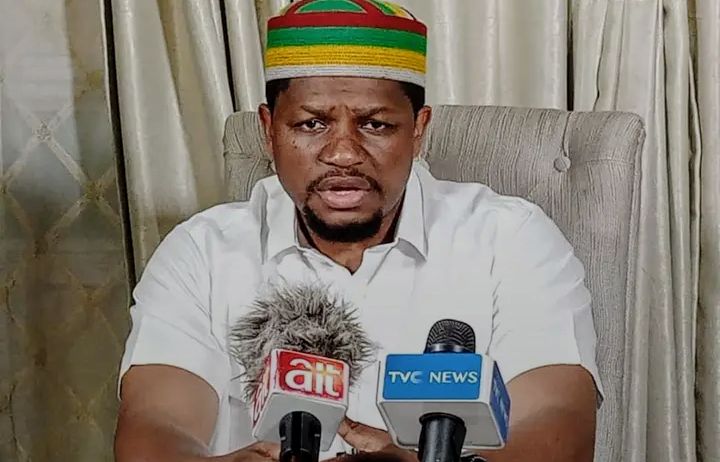
Former member of the House of Representatives, Dachung Bagos, has won the All Progressives Congress (APC) rerun primary election for the Jos South/Jos East Federal Constituency of Plateau State.
Bagos defeated his challenger, Esther Simi Dusu, in the rerun exercise conducted across 11 wards on Wednesday, following a court order nullifying the previous primary election over alleged irregularities.
The Chairman of the APC Rerun Electoral Committee, Simon Elisha, announced the results on Thursday at the party’s state secretariat, Kalwa House, in Jos.
According to the results, Bagos polled 12,181 votes to defeat Dusu, who secured 2,495 votes.
Elisha said the rerun election was conducted in compliance with the court order and in accordance with the party’s guidelines.
“The rerun was conducted in compliance with the court order and in line with the party’s guidelines to ensure transparency and fairness,” he said.
The rerun followed a decision by the High Court in Jos to nullify the earlier primary election over alleged irregularities in 11 wards within the federal constituency.
The affected wards are Du, Shen, Zawan ‘B’, Turu, Fobur ‘A’, Fobur ‘B’, Jarawan Kogi, Maijuju/Doss, Federe, Shere East and Shere West.
The court-ordered exercise was organised to address the irregularities identified in the previous primary election and determine the party’s candidate for the constituency.
With his victory, Bagos is set to represent the APC in the contest for the Jos South/Jos East Federal Constituency seat in the 2027 general election.
Bagos previously represented the constituency in the House of Representatives.
His emergence as the party’s candidate places him in contention for another term in the Green Chamber, subject to the outcome of the 2027 general election.


The presidential candidate of the Nigeria Democratic Congress (NDC), Peter Obi, has warned individuals he accused of terrorising Nigerians, declaring that his party would confront insecurity and intimidation if elected in 2027.
“Those who think they can terrorize this country, wait, we’re coming,” Obi said during the opening of the NDC’s national secretariat in Jabi, Abuja, on Monday, October 26, 2026.
The remark came as the party formally opened its national headquarters and intensified preparations for the 2027 general elections. The event brought together Obi, his running mate Rabiu Musa Kwankwaso, NDC leaders and other party members.
Obi Puts Insecurity at the Centre of His Message
Obi’s statement signals that security is expected to feature prominently in the NDC’s campaign messaging ahead of the next presidential election.
Nigeria continues to face multiple security challenges, including insurgency, kidnapping, armed attacks and communal violence in different parts of the country. These problems have affected communities, disrupted economic activities and generated demands for stronger protection of lives and property.
At the Abuja event, Obi presented his political project as an effort to change how government responds to the country’s challenges. Reports of his remarks also highlighted commitments to address corruption, poverty, unemployment and insecurity.
However, the brief statement quoted above did not identify a particular group or individual as the target of his warning. It would therefore be premature to attribute the remark to a specific organisation or political opponent without further evidence.
NDC Opens National Headquarters Ahead of 2027
The secretariat opening marked another organisational step for the NDC as it builds its structures ahead of the elections.
The ceremony followed the party’s National Executive Committee meeting and formed part of a wider programme that included unveiling its National Campaign Council and presenting Certificates of Return to candidates contesting different offices.
Kwankwaso, the party’s vice-presidential candidate, attended alongside National Leader Seriake Dickson, National Chairman Moses Cleopas and other party figures.
The new facility is expected to serve as the party’s administrative headquarters and a centre for coordinating its national political activities.
Security and Accountability in the 2027 Campaign
Obi’s warning comes as political parties begin defining their messages for the 2027 election, with security, economic hardship and public accountability among the issues likely to feature prominently.
For voters, the significance of security promises will depend not only on campaign statements but also on the policies, resources and implementation plans candidates present.
Measures to improve security can involve intelligence gathering, police and military capacity, coordination between federal and state authorities, criminal investigations, justice delivery and support for communities affected by violence.
Obi’s statement did not set out specific measures in the quoted passage. Further policy details would be needed to assess how the NDC proposes to address the different forms of insecurity affecting the country.
The remark nevertheless makes clear that the party intends to present security and protection from intimidation as part of its campaign message.
As the 2027 election approaches, the challenge for all political parties will be to explain how their proposals would be implemented and how progress would be measured.
-
 Security4 months ago
NDLEA Declares Alleged Drug Kingpin, Three Associates Wanted, Freezes ₦9.8bn Linked to Syndicate
-

 Business/Finance3 months ago
How to Apply for Tunde Onakoya’s ₦250 Million Scholarship Programme and Free Laptop Offer
-
 National Affairs3 months ago
ICPC Uncovers 908 Suspected Ghost Workers Across 50 Federal MDAs, Recovers ₦942 Million
-

 Judiciary | Public Safety3 months ago
INEC Tells Court Voter Information Is Not Confidential in Emeka Ike’s ₦10bn Lawsuit
-
 Politics3 months ago
Atiku Challenges Tinubu to Reveal Details of ₦15.13bn SUV Procurement in 2026 Budget
-
 Judiciary | Public Safety3 months ago
Court to Rule Friday on NDLEA’s Bid to Destroy ₦480bn Meth Lab in Ogun
-
 Security3 months ago
Family Paid ₦50 Million Ransom to Secure Release of Abducted Kebbi Judge
-
 News3 months ago
2026 Budget: FG Earmarks ₦962.83bn for SUVs, Empowerment Projects Amid Debt Concerns