
Breaking News
Tinubu Mourns Kamene Okonjo, Mother of WTO Chief Ngozi Okonjo-Iweala

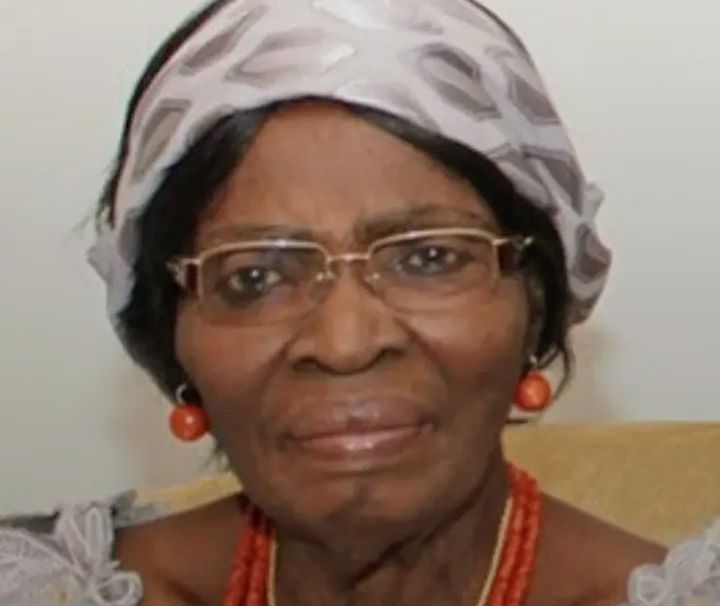
President Bola Tinubu has expressed condolences to the Okonjo royal family of Ogwashi-Uku, Delta State, following the death of Prof. Kamene Okonjo, mother of the Director-General of the World Trade Organisation (WTO), Dr Ngozi Okonjo-Iweala.
Kamene, a renowned sociologist and scholar, died at the age of 96.
In a condolence statement issued on Sunday by his Special Adviser on Information and Strategy, Bayo Onanuga, Tinubu described the deceased as “a champion of women’s empowerment and a revered matriarch”.
The President commiserated with Okonjo-Iweala, other members of the family and the people of Ogwashi-Uku over the loss of their mother, community leader and respected member of the royal family.
Tinubu said the late scholar’s death represented the loss of an accomplished academic whose life was defined by intellectual distinction, service to humanity and a longstanding commitment to advancing women and society.
He also acknowledged her contributions to scholarship and her dedication to family, community development and the preservation of traditional institutions.
The President prayed for the peaceful repose of her soul and asked God to grant her family and all those mourning her the strength and comfort to bear the loss.
Kamene Okonjo’s Contributions to Sociology
Kamene Okonjo was widely recognised for her research into the political and social roles of Igbo women living west of the River Niger.
One of her notable works was the 1976 essay, The Dual-Sex Political System in Operation: Igbo Women and Community Politics in Midwestern Nigeria, which has been widely cited in African gender studies.
She also authored The Role of Women in Social Change among the Igbo of Southeastern Nigeria Living West of the River Niger, published in 1980.
Her academic contributions examined women’s participation in community politics and the social structures that shaped their roles in Igbo society.
Kamene was married to Chukwuka Okonjo, a mathematician and economist who became the Obi of Ogwashi-Uku in 2007. He died in Lagos on September 13, 2019, at the age of 91.
The couple had seven children, including Ngozi Okonjo-Iweala, Nigeria’s former two-time Minister of Finance, a former Managing Director of the World Bank and the current Director-General of the WTO.
Mother of WTO Chief Was Kidnapped in 2012
Kamene Okonjo was abducted by gunmen from the family palace in Ogwashi-Uku in December 2012, when she was 82 years old.
She was held captive for five days before regaining her freedom.
At the time, her daughter, Ngozi Okonjo-Iweala, was serving as Nigeria’s Minister of Finance.
She later disclosed that the kidnappers had demanded her resignation from office and departure from the country.
Okonjo-Iweala linked the abduction to her position on fuel subsidy payments, although the allegation was attributed to her account of the incident.
Kamene Okonjo’s death marks the end of a life associated with academic scholarship, women’s empowerment, family leadership and community service.











Spanish football has been thrown into mourning following the death of CD Tenerife striker Jesus de Miguel Alameda, who died after sustaining a serious injury in a collision with an opposing goalkeeper during a league match against FC Andorra.
The club confirmed the death of the 30-year-old forward in a statement issued on Tuesday, November 3, 2026, expressing deep sorrow over the loss.
According to the statement, De Miguel died at 8:00 a.m. local time, hours after the incident that left players, officials, supporters and his family devastated.
“Broken in pain, with a knot in the throat and unable to believe this is true, from the CD Tenerife we communicate the tragic death, this Tuesday, November 3, 2026, at 8:00 hours, of Jesus de Miguel Alameda,” the club said.
The club added that there were no words capable of easing the grief surrounding his death, while extending its condolences to his family, loved ones and supporters.
Tenerife also disclosed that De Miguel’s family appreciated the messages of sympathy and support received since the incident but appealed to the public to respect their privacy during the mourning period.
The striker sustained the fatal injury during Tenerife’s Spanish second-division encounter against FC Andorra on Monday at the Heliodoro Rodríguez López Stadium.
The incident occurred in the closing stages of the match when De Miguel collided with Andorra goalkeeper Jesús Owono as both players challenged for a loose ball.
The forward collapsed unconscious following the impact, prompting players from both teams to immediately call for medical assistance.
Owono was subsequently shown a straight red card following the collision.
Medical personnel attended to De Miguel on the pitch before he was transported by ambulance to the Hospital Universitario Nuestra Señora de Candelaria.
Reports indicated that the striker suffered cardiac arrest during the emergency transfer but was resuscitated by medical personnel, who managed to restore his pulse.
He remained unconscious and was admitted to the hospital’s intensive care unit.
Tenerife had earlier announced that his neurological condition had deteriorated before confirming his death on Tuesday morning.
The match was abandoned in the 108th minute following the incident, with both teams level at 2-2.
De Miguel’s death has left CD Tenerife and the wider football community mourning the loss of a player whose life was cut short following the tragic match incident.
Global impunity for the killing of journalists has increased for the first time in more than a decade, with six out of every seven cases remaining unresolved, according to a new report by the United Nations Educational, Scientific and Cultural Organisation (UNESCO).
The report revealed that the global impunity rate rose to 86 per cent in 2024 and 2025, compared with 85 per cent in the previous two-year period, reversing progress in efforts to ensure justice for journalists killed in the line of duty.
It also raised concerns over the growing use of drones in attacks against journalists, particularly those reporting from conflict zones.
The News Agency of Nigeria reports that UNESCO released the findings on Monday, ahead of the International Day to End Impunity for Crimes against Journalists, observed annually on November 2.
According to the report, 189 journalists were killed worldwide in 2024 and 2025, representing a 20 per cent increase compared with the preceding two-year period.
Of the total number, 127 journalists, representing more than two-thirds, were killed in conflict zones.
The findings were contained in UNESCO’s Director-General’s Report on the Safety of Journalists and the Danger of Impunity, which is published every two years to mark the international day.
UNESCO Director-General, Khaled El-Enany, expressed concern over the increasing dangers journalists face while covering armed conflicts and the failure to bring those responsible for their deaths to justice.
“Journalists are increasingly paying with their lives for reporting from the frontlines of war and far too often those responsible for their killings are not held accountable,” he said.
The report showed that the Arab States recorded the highest number of verified journalist killings, with 97 cases.
Latin America and the Caribbean followed with 37 cases, while the Asia-Pacific region recorded 34. Central and Eastern Europe had 14 cases, Africa recorded six, while Western Europe and North America recorded one.
The State of Palestine recorded the highest number of journalist killings in both years, with 30 cases in 2024 and 32 in 2025.
UNESCO also identified the increasing use of drones in attacks against journalists as an emerging threat, particularly in areas affected by armed conflict.
According to the report, drone strikes killed 50 journalists during the 2024–2025 period, accounting for 40 per cent of all journalists killed in conflict zones.
It further documented seven incidents in which multiple journalists were targeted and killed in single attacks, including strikes on media workplaces and temporary reporting centres.
Fifteen journalists were reportedly killed while wearing press vests or travelling in vehicles clearly marked with the word ‘Press’.
Reacting to the findings, El-Enany called for compliance with United Nations Security Council Resolution 2222, unanimously adopted in 2015 to protect journalists, media professionals and associated personnel as civilians during armed conflicts.
He said the protection of journalists had also been reaffirmed in the Pact for the Future.
Despite the increase in global impunity, UNESCO noted that some progress had been recorded in countries not experiencing armed conflict.
The impunity rate in non-conflict countries declined from 94 per cent in 2012 to 77 per cent in 2026, representing an average reduction of approximately one percentage point annually.
The number of journalists killed in non-conflict zones also fell to 85, the lowest figure recorded in 18 years.
“This demonstrates that when governments invest in investigations, prosecutions and protections for journalists, progress is possible,” UNESCO said.
Meanwhile, the report highlighted the particular dangers faced by women journalists, who continue to experience threats and attacks both in conflict zones and online.
It disclosed that 13 of the 14 women journalists killed during the 2024–2025 period were in countries experiencing armed conflict.
A 2025 study conducted by UN Women and the International Center for Journalists also found that 75 per cent of women journalists had experienced online or offline abuse and harassment.
More than 40 per cent reported experiencing offline violence linked to online attacks, compared with 20 per cent recorded in a 2020 UNESCO survey.
UNESCO’s findings underscore continuing concerns over the safety of journalists, the protection of press freedom and the need for stronger investigations and prosecutions to ensure that crimes against media professionals do not go unpunished.
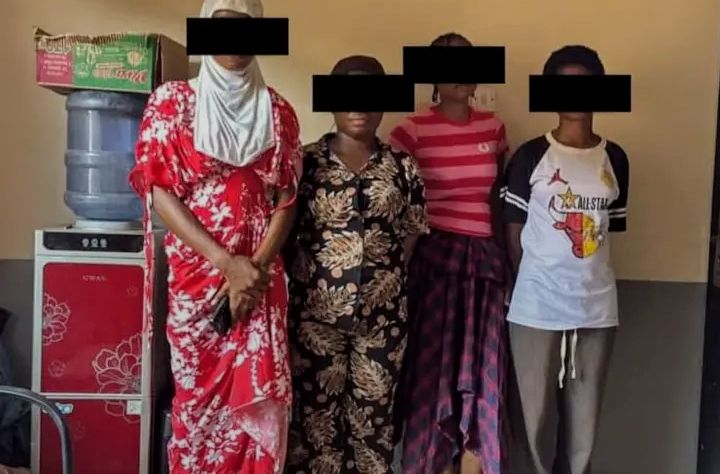
Four Nigerian girls from Okene Local Government Area of Kogi State, including a 14-year-old minor, have been rescued from a human trafficking network in Morila, Mali, after being lured abroad with promises of legitimate employment.
The victims were reportedly deceived with offers of jobs in gold mining and shops but were allegedly forced into prostitution upon arriving in the West African country.
Their rescue followed a joint intervention by the Global Anti-Human Trafficking Organisation (GAHTO) and the National Agency for the Prohibition of Trafficking in Persons (NAPTIP).
According to a statement issued on Monday by GAHTO founder, Prosper Michael, the operation was triggered by a distress message sent by one of the victims through WhatsApp after using artificial intelligence (AI) to seek help.
The rescue team appealed to the Senator representing Kogi Central, Natasha Akpoti-Uduaghan, and the Kogi State Government to provide the survivors with medical attention, psychological counselling and educational support to help them recover and rebuild their lives.
They also called on relevant authorities to investigate the alleged trafficking network and prosecute those found responsible.
The statement added that the four girls are currently receiving care and undergoing rehabilitation.
-

 Security4 months ago
NDLEA Declares Alleged Drug Kingpin, Three Associates Wanted, Freezes ₦9.8bn Linked to Syndicate
-

 Business/Finance3 months ago
How to Apply for Tunde Onakoya’s ₦250 Million Scholarship Programme and Free Laptop Offer
-

 National Affairs3 months ago
ICPC Uncovers 908 Suspected Ghost Workers Across 50 Federal MDAs, Recovers ₦942 Million
-

 Judiciary | Public Safety3 months ago
INEC Tells Court Voter Information Is Not Confidential in Emeka Ike’s ₦10bn Lawsuit
-

 Politics3 months ago
Atiku Challenges Tinubu to Reveal Details of ₦15.13bn SUV Procurement in 2026 Budget
-

 Judiciary | Public Safety3 months ago
Court to Rule Friday on NDLEA’s Bid to Destroy ₦480bn Meth Lab in Ogun
-

 Security3 months ago
Family Paid ₦50 Million Ransom to Secure Release of Abducted Kebbi Judge
-

 News3 months ago
2026 Budget: FG Earmarks ₦962.83bn for SUVs, Empowerment Projects Amid Debt Concerns