
National Affairs
There’s No Fixed Price for Kidney, Surgeon Explains Amid Trafficking Probe

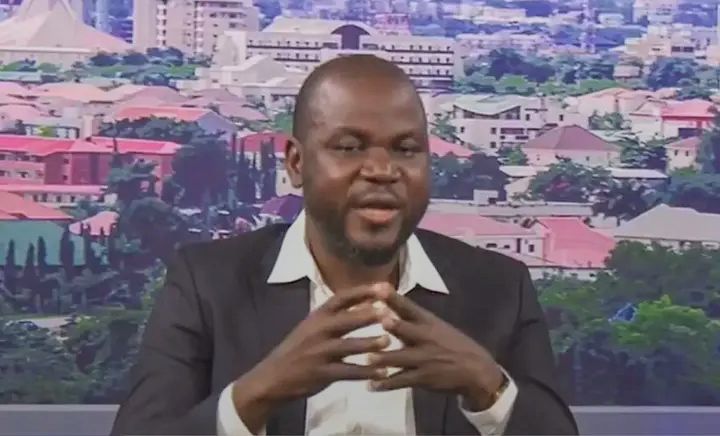
A Consultant Plastic Surgeon, Dr Torngee Malu, has said there is no fixed monetary value for a human kidney, amid growing concerns over alleged kidney harvesting and human trafficking in Nigeria.
Malu made the clarification while addressing the increasingly common question of how much an individual can receive for donating a kidney.
According to the surgeon, attaching a specific price to a human kidney is misleading, as organ donation should not be treated simply as a commercial transaction.
He stressed that kidney donation is primarily a medical and ethical issue, rather than an arrangement based on the buying and selling of human organs.
His comments come amid an ongoing investigation into allegations of kidney harvesting and human trafficking in parts of Nigeria, which have renewed public concern over the safety of individuals who may be vulnerable to exploitation.
The controversy has also generated questions about the financial value allegedly attached to human organs and the circumstances under which people agree to donate kidneys.
However, Malu’s explanation suggests that there is no universally established or medically recognised price for a kidney that can be used as a standard for determining what a donor should receive.
Kidney donation is governed by medical, ethical and legal considerations, with legitimate transplantation systems focusing primarily on the welfare of the donor and recipient rather than the commercial value of an organ.
The issue has become particularly sensitive because of concerns that vulnerable people could be deceived, coerced or exploited by individuals involved in illegal organ trafficking.
Health professionals and authorities have repeatedly warned against unregulated organ transactions, stressing the potential risks associated with procedures carried out outside approved medical systems.
The investigation into alleged kidney harvesting and human trafficking has therefore heightened calls for greater public awareness, stronger regulation and effective enforcement against individuals or networks involved in the illegal trade in human organs.
Malu’s remarks provide further context to the debate, emphasising that the question of how much a person can receive for a kidney cannot simply be answered with a fixed figure.
Rather, the focus should remain on protecting human life, ensuring that legitimate organ donation is carried out under appropriate medical and ethical standards, and preventing vulnerable individuals from being exploited.







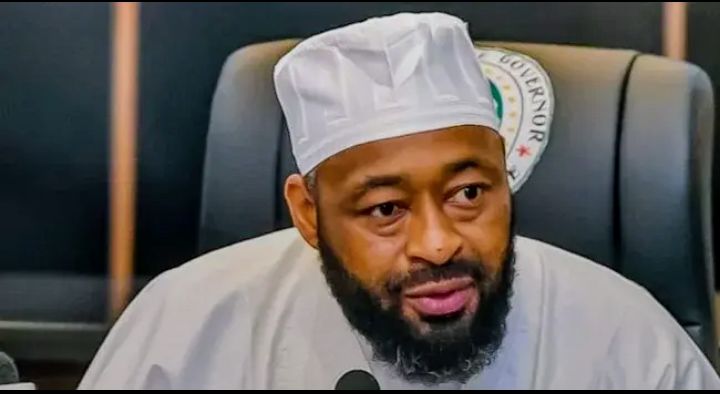
Niger State Governor, Umar Bago, has imposed a 24-hour curfew across the state following protests and destruction of property linked to the deaths of 37 suspected illegal miners who were in the custody of the Nigeria Security and Civil Defence Corps.
Bago announced the curfew on Friday during a press conference, saying it would take effect immediately after the Friday congregational prayers.
The governor said the measure became necessary after protesters allegedly vandalised government property, a bank, political party offices and private businesses amid growing anger over the deaths.
“Immediately after the Friday mosque, we are putting a 24-hour curfew here,” Bago said.
He listed some of the properties affected by the unrest, saying the State Transport Company had its buses vandalised, while Sterling Bank, political party offices and private businesses were also attacked.
“The State Transport Company, all the buses we have there have been vandalised. Sterling Bank, hit. Party offices destroyed, people’s businesses destroyed,” he added.
According to Bago, the situation had deteriorated to the point where vandals were taking over the streets, prompting the government to impose restrictions in order to prevent further destruction and restore calm.
“Vandals are taking over the street, and there’s need for us to, you know, curtail this thing so that we can have calm in the society,” he said.
The governor appealed to residents across the state to remain calm, exercise restraint and allow the authorities to address the situation.
“So, we call on Nigerlites, please, to exercise restraint and be patient,” Bago said.
The curfew followed protests in parts of Niger State after the deaths of suspected illegal miners detained by the NSCDC.
Bago had earlier confirmed that 37 suspected illegal miners died while in NSCDC custody.
Authorities have commenced forensic examinations, medical examinations and autopsies as part of efforts to establish the circumstances and cause of the deaths.
The suspects were arrested during enforcement operations against illegal mining activities in the Wushishi/Lukoto axis of Niger State on September 15 and 16.
Following the deaths, the NSCDC constituted an investigative team to examine the circumstances surrounding the incident.
The investigation is expected to consider the condition of the suspects when they were arrested, their period in custody, conditions of detention and the medical attention provided to them.
The Minister of Interior, Olubunmi Tunji-Ojo, also suspended the Niger State NSCDC Commandant, Suberu Siyaka Aniviye, and ordered a full investigation into the incident.
The Federal Government, through the Minister of Information and National Orientation, Mohammed Idris, said no individual found culpable would be shielded from accountability.
However, the government also cautioned against prejudging the investigation before its findings are established.
Former Vice President and 2027 presidential candidate of the African Democratic Congress, Atiku Abubakar, has equally demanded accountability over the deaths.
Atiku said anyone found responsible through “action, abuse or negligence” should be held fully accountable.
As of Friday, the cause of the deaths had not been established, with investigations and medical examinations ongoing.
The 24-hour curfew is expected to remain in force as authorities work to restore order and prevent further destruction of lives and property across Niger State.

The Nigeria Police Force has presented insurance benefit cheques totalling ₦9.797 million to the families and beneficiaries of police officers who died in the line of duty in Ekiti State.
The cheques were presented by the Commissioner of Police in the state, Michael Falade, on behalf of the Inspector-General of Police, Olatunji Disu, in Ado Ekiti on Tuesday.
According to a statement made available in Ado Ekiti on Wednesday, Falade said the payment demonstrated the commitment of the Nigeria Police Force to the welfare of its personnel and the families they leave behind.
The commissioner described the insurance benefits as a practical expression of the Force’s appreciation for the sacrifices made by officers who lost their lives while serving the country.
He acknowledged that no financial compensation could replace a deceased family member, but said the payment would provide meaningful support to the families as they cope with the loss of their loved ones.
“While no amount of money can replace a loved one, this benefit provides meaningful support to the families left behind.
“The Nigeria Police Force remembers its own and will not abandon the families of officers who paid the supreme price,” Falade said.
He urged the beneficiaries to manage the funds prudently, particularly by using them to support the education and welfare of the children of the deceased officers.
Falade also commended the Inspector-General of Police, the Force Management Team, insurance stakeholders and the Force Insurance Unit for their efforts in processing and settling the legitimate claims.
He said the development should also reassure serving police personnel that the welfare of officers and their families remained a priority of the Force.
The commissioner expressed condolences to the families of the deceased officers and prayed for strength for them as they continue to cope with their loss.
He also prayed for the eternal rest of the souls of the fallen officers who died in the line of duty.
Speaking on behalf of the beneficiaries, Mathew Emmanuel expressed appreciation to the Inspector-General of Police and the Nigeria Police Force for the financial support and continued assistance to families of deceased officers.
Emmanuel assured the Force that the beneficiaries would use the funds judiciously for the welfare and benefit of the affected families.
The payment forms part of the Nigeria Police Force’s efforts to settle legitimate insurance claims and provide financial support to families of personnel who lose their lives in the course of their duties.
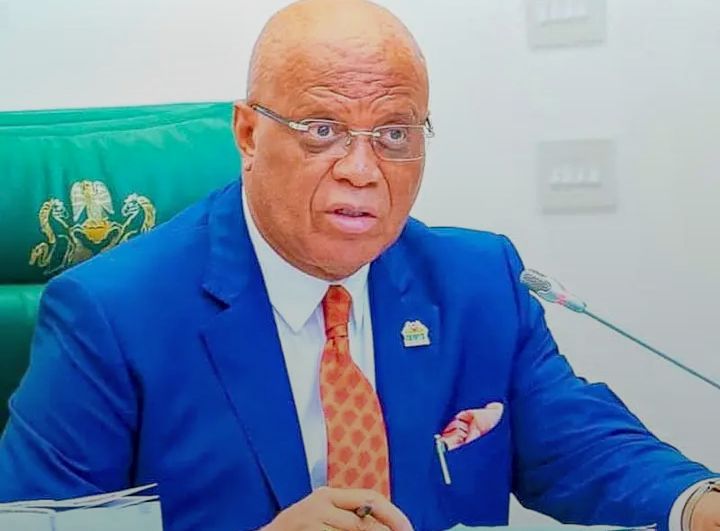
The Akwa Ibom State Government has paid more than N90 billion out of the N111 billion gratuity liabilities inherited by the administration of Governor Umo Eno, the state Head of Civil Service, Mrs Elsie Peters, has disclosed.
Peters made the disclosure on Monday in Uyo during a media parley organised to mark the commencement of the 2026 Public Service Day celebration.
She described the payment of the outstanding gratuities as one of the major interventions of the Eno administration aimed at improving the welfare of workers and strengthening the state’s public service.
“One of the most significant interventions has been the payment of over N90 billion out of inherited gratuity liabilities of more than N111 billion, owed to retired public servants, with a firm commitment to progressively liquidate the outstanding balance,” Peters said.
According to her, the state government has also sustained regular salary payments while implementing the N80,000 minimum wage from November 1, 2024, following a verification exercise.
She said the minimum wage was introduced to improve workers’ purchasing power and cushion the impact of rising living costs.
Peters also highlighted the continuation of the 13th-month salary introduced by Governor Eno in 2023 and popularly known as “Eno-Mber.”
“In 2023, Governor Umo Eno introduced the 13th-month salary, popularly known as ‘Eno-Mber,’ as an additional financial benefit for public servants.
“This initiative is a sustained and notable welfare intervention providing additional financial support during the festive period,” she said.
Akwa Ibom recruits 7,069 workers
The Head of Service further disclosed that the Eno administration had recruited or approved the recruitment of approximately 7,069 personnel across various sectors of the state.
She explained that about 4,000 general workers had been recruited by May 2026, while approval had also been given for the recruitment of 1,000 additional primary school teachers.
Peters added that 766 personnel had been recruited into the health sector and other critical areas.
“Approximately 4,000 personnel had been recruited by May 2026, with approval for 1,000 additional primary school teachers, while 766 personnel were recruited into the health sector and other critical areas, bringing the total recruited or approved to approximately 7,069 personnel,” she stated.
She said the recruitment drive was designed to address critical manpower shortages, strengthen institutional capacity and improve service delivery across the state.
Government provides houses, health insurance for workers
Peters also disclosed that the state government had allocated 150 completed two-bedroom expandable houses under the Grace Estate initiative to civil servants on Grade Levels 01–08.
According to her, the houses were allocated free of charge through a transparent raffle process.
She said the administration had also introduced the Akwa Ibom State Health Insurance Scheme for civil servants, with the government fully paying the premiums for junior workers.
Peters said the various interventions reflected the administration’s commitment to improving the welfare of workers and ensuring that government policies translated into tangible benefits for citizens.
She maintained that the state government would continue to implement measures aimed at strengthening the public service and improving the conditions of serving and retired workers.
-
 Security2 months ago
NDLEA Declares Alleged Drug Kingpin, Three Associates Wanted, Freezes ₦9.8bn Linked to Syndicate
-
 National Affairs2 months ago
ICPC Uncovers 908 Suspected Ghost Workers Across 50 Federal MDAs, Recovers ₦942 Million
-

 Business/Finance2 months ago
How to Apply for Tunde Onakoya’s ₦250 Million Scholarship Programme and Free Laptop Offer
-
 Politics2 months ago
Atiku Challenges Tinubu to Reveal Details of ₦15.13bn SUV Procurement in 2026 Budget
-

 Judiciary | Public Safety2 months ago
INEC Tells Court Voter Information Is Not Confidential in Emeka Ike’s ₦10bn Lawsuit
-
 Judiciary | Public Safety2 months ago
Court to Rule Friday on NDLEA’s Bid to Destroy ₦480bn Meth Lab in Ogun
-
 Security2 months ago
Family Paid ₦50 Million Ransom to Secure Release of Abducted Kebbi Judge
-
 Breaking News2 months ago
Girl Dies in Uyo House Fire After Allegedly Accompanying Man Home from Nightclub