Business/Finance
Kano to Launch State-Owned Airline Within One Year, Governor Yusuf Announces

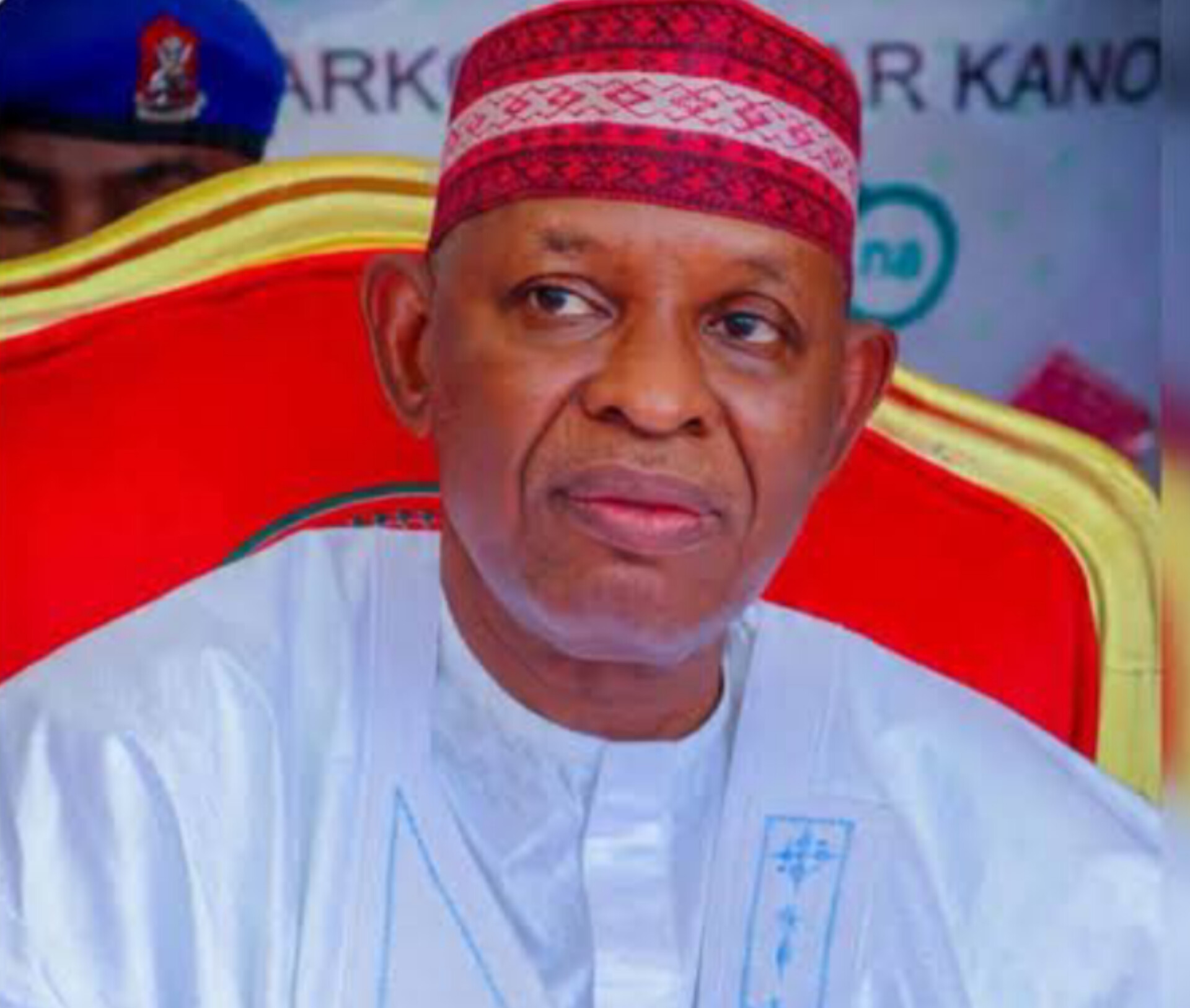
Kano State Governor Abba Kabir Yusuf has announced plans to establish a state-owned airline within the next year as part of efforts to boost economic development, improve air connectivity and create employment opportunities for qualified indigenes.
The governor said the proposed airline would provide jobs for trained aviation professionals from Kano while strengthening the state’s participation in Nigeria’s aviation sector.
Governor Yusuf said the initiative is aimed at creating employment for graduates and skilled professionals in aviation, including pilots, engineers, cabin crew and other technical personnel.
He noted that many qualified youths from the state possess aviation-related skills but have limited employment opportunities.
According to him, the proposed airline will help bridge that gap while contributing to the state’s economic growth.
The governor said the state-owned carrier is also expected to improve air transportation, facilitate business activities and attract more investment into Kano.
He added that the project forms part of the administration’s broader agenda to modernise infrastructure, diversify the economy and position Kano as a leading commercial hub in northern Nigeria.
Governor Yusuf expressed confidence that the airline could become operational within a year, although details regarding funding, fleet acquisition, regulatory approvals and operational structure have yet to be announced.
Industry experts note that launching an airline requires certification from the Nigeria Civil Aviation Authority (NCAA) and compliance with strict safety, operational and financial requirements.
If successfully implemented, the proposed airline could enhance regional connectivity, create employment and stimulate economic activities in Kano.
However, aviation analysts stress that long-term sustainability, sound management and regulatory compliance will be essential to the project’s success.









The Nigerian Midstream and Downstream Petroleum Regulatory Authority (NMDPRA) has clarified that it does not determine or fix the retail pump price of Premium Motor Spirit, popularly known as petrol.
The clarification followed recent increases in the price of petrol across the country, with the regulator acknowledging that the development had increased financial pressure on households, transport workers and businesses.
In a statement on Saturday, the NMDPRA said the Petroleum Industry Act 2021 provides for the pricing of petroleum products under unrestricted free-market conditions.
According to the Authority, Section 205(1) of the PIA stipulates that wholesale and retail prices of petroleum products shall be determined by market forces.
“Section 205(1) provides that wholesale and retail prices of petroleum products shall be based on unrestricted free market pricing conditions. The Authority does not fix pump prices or issue administrative price templates,” it said.
The regulator explained that government intervention in petroleum pricing is limited to exceptional circumstances where there is formal evidence of a declared market failure.
It added that no such market failure had been declared.
The NMDPRA, however, noted that it retains regulatory powers under Section 216 of the PIA to prevent anti-competitive practices, price-fixing and abuse of market dominance within the petroleum industry.
The Authority also disclosed that it was working with the Nigeria Customs Service and other security agencies to intensify surveillance along border corridors.
The move, it said, was aimed at preventing the illegal diversion of petroleum products across Nigeria’s borders.
The NMDPRA stressed that deregulation does not exempt petroleum operators from complying with regulatory requirements and fair-trade standards.
It further said it was coll.
aborating with the Federal Competition and Consumer Protection Commission under a memorandum of understanding to monitor practices such as price-gouging, collusion, under-dispensing and the sale of products that fail to meet required quality standards.
The regulator also announced plans to establish dedicated feedback and reporting channels through which members of the public and industry stakeholders can report suspected irregular pricing and exploitative trade practices.
According to the Authority, such reports will be investigated and appropriate enforcement action taken where violations are established.
The NMDPRA said it remained committed to ensuring energy security, promoting fair competition and protecting consumers within the legal framework established by the Petroleum Industry Act.

The Nobel Foundation has increased the prize money for the 2026 Nobel Prize laureates to 12 million Swedish kronor, equivalent to about $1.27 million, for each prize category.
The foundation announced the increase on Friday, raising the award from the 11 million kronor paid to laureates in 2025.
The latest increase represents an additional one million kronor, or approximately $106,000, for each prize category.
However, where a prize is awarded to more than one laureate, the 12 million-kroner prize sum will be shared among the recipients.
The Nobel Foundation Director, Hanna Stjarne, said the increase was particularly significant as the Nobel Prize celebrates its 125th anniversary this year.
“This year, we are celebrating the 125th anniversary of the Nobel Prize, and in connection with this, we are pleased to be able to increase the prize amount by one million (kroner),” Stjarne said in a statement.
She explained that the adjustment was intended to preserve the long-term value and significance of the prestigious awards.
“By increasing the prize amount, we uphold the long-term significance of the Nobel Prize and ensure that the financial part of the prize retains its value over time,” she added.
The Nobel Prizes were first awarded in 1901, with the original prize amount standing at 150,782 kronor per discipline.
Over the decades, the monetary value attached to the awards has changed in response to economic conditions and decisions by the Nobel Foundation.
The 2026 Nobel Prize announcements will take place between October 5 and October 12, with six prize categories scheduled for recognition.
The Nobel week will begin on October 5 with the announcement of the Nobel Prize in Physiology or Medicine.
The Physics Prize will follow on October 6, while the Chemistry Prize will be announced on October 7.
The Nobel Prize in Literature is scheduled for October 8, followed by the Nobel Peace Prize on October 9.
The economics prize, officially known as the Sveriges Riksbank Prize in Economic Sciences in Memory of Alfred Nobel, will bring the 2026 announcements to a close on October 12.
The Nobel Prizes recognise individuals and organisations whose work is judged to have conferred the greatest benefit to humanity in fields established in accordance with Alfred Nobel’s will.
The awards have become among the world’s most prestigious honours, attracting global attention each year across science, literature, peace and economics.


The Economic and Financial Crimes Commission has warned Point of Sale operators across Nigeria against aiding fraudsters, money launderers and other criminals in perpetrating financial crimes.
The EFCC Chairman, Ola Olukoyede, issued the warning on Thursday when a delegation of the Association of Mobile Money and Bank Agents in Nigeria, led by its National President, Oti Obioha, visited the Commission’s headquarters.
Olukoyede, who spoke through his Chief of Staff, Commander of the EFCC, Michael Nzekwe, said POS operators were increasingly being linked to transactions involving money laundering, terrorist financing and ransom payments.
He urged AMMBAN to strengthen its regulatory structure and establish a comprehensive framework for monitoring its members and maintaining accurate records.
“We have realized that the issues of money laundering, terrorist financing, and even ransom payments are made mostly from POS machines,” Nzekwe quoted Olukoyede as saying.
According to the EFCC chairman, proper records of POS operators and their transactions would assist law enforcement agencies in tracing suspicious funds and identifying individuals involved in financial crimes.
“Your association needs to do more, by coming up with a structure and a comprehensive framework that will have records of all your operators, so that during the course of investigation, we will be able to trace, monitor and have records that can aid us,” he said.
Olukoyede also questioned the level of supervision, training and record-keeping within the POS sector, asking the association to demonstrate the measures it had put in place to ensure compliance among its members.
“My question is, what is the impact of your association on the members? Do you train your members? Do you have records of the address of your members?” he asked.
The EFCC boss further raised concerns over the alleged involvement of some POS operators in fraudulent activities, saying some operators could knowingly or unknowingly facilitate criminal transactions.
“There are even some POS operators who are actually fraudsters; they aid, conspire, give out information and abet fraudsters,” he said.
He noted that inadequate transaction records often create difficulties for investigators attempting to trace funds transferred through POS outlets.
“Most times, in the course of investigation, when you find out that money was laundered through a POS operator, by the time you bring them in, they won’t even know the person who sent the money and who withdrew it — no records of the transactions — and no one is asking questions,” Olukoyede said.
He therefore urged AMMBAN to ensure that its members maintain proper financial records for every transaction and keep reliable information on their operators across the country.
The EFCC chairman also expressed the Commission’s readiness to collaborate with the association on training, public awareness and information sharing to strengthen efforts against financial crimes within the POS sector.
Responding, AMMBAN National President, Oti Obioha, thanked the EFCC for receiving the delegation and acknowledged the need for stronger cooperation between the association and the anti-graft agency.
“We deem it fit to present ourselves to help and work with the EFCC in preventing money laundering and other kinds of fraud,” Obioha said.
He explained that POS operators have a strong presence at the grassroots and could therefore play a significant role in preventing and detecting financial crimes.
“We are at the grassroots, and we observe that your institution is always inviting our members, so we wish we could have a partnership that can see to the training of our members on some of the issues like financial thresholds and the risks involved in some of our operations,” he said.
Obioha said the association was prepared to work with the EFCC to reduce fraudulent activities within the sector, particularly through improved training and awareness.
“We want to collaborate in the areas of training, because most of our agents don’t know the rules of our operations. So, we need to partner in creating awareness,” he said.
The proposed collaboration is expected to focus on improving compliance, strengthening transaction monitoring and educating POS operators on the risks associated with handling suspicious funds and transactions.
With POS services now widely used for cash withdrawals, transfers and other financial transactions, the EFCC’s warning underscores the importance of proper record-keeping and greater oversight within the sector.
-
 Security2 months ago
NDLEA Declares Alleged Drug Kingpin, Three Associates Wanted, Freezes ₦9.8bn Linked to Syndicate
-
 National Affairs2 months ago
ICPC Uncovers 908 Suspected Ghost Workers Across 50 Federal MDAs, Recovers ₦942 Million
-

 Business/Finance2 months ago
How to Apply for Tunde Onakoya’s ₦250 Million Scholarship Programme and Free Laptop Offer
-

 Politics2 months ago
Atiku Challenges Tinubu to Reveal Details of ₦15.13bn SUV Procurement in 2026 Budget
-

 Judiciary | Public Safety2 months ago
INEC Tells Court Voter Information Is Not Confidential in Emeka Ike’s ₦10bn Lawsuit
-
 Judiciary | Public Safety2 months ago
Court to Rule Friday on NDLEA’s Bid to Destroy ₦480bn Meth Lab in Ogun
-
 Security2 months ago
Family Paid ₦50 Million Ransom to Secure Release of Abducted Kebbi Judge
-
 Breaking News2 months ago
Girl Dies in Uyo House Fire After Allegedly Accompanying Man Home from Nightclub