
News
Halima Dangote Explains Why She and Sisters Keep Low Profile Despite Wealth


A resurfaced video featuring the daughters of Nigerian billionaire businessman Aliko Dangote has sparked reactions online after Halima Dangote explained why she and her sisters prefer to maintain a low public profile despite growing up in one of Nigeria’s wealthiest families.
The video, taken from a Bloomberg Next Africa special featuring Halima, Mariya and Fatima Dangote, was filmed at the family’s home in Lagos and published in August 2026.
In the interview, Halima said the sisters were not “spoilt” and had deliberately chosen to remain relatively private, preferring to be recognised for their professional achievements rather than their family background or wealth.
“We are not spoilt,” she said.
Explaining the family’s approach, Halima said she and her sisters were generally quiet about their identities and personal possessions when interacting with people from similar backgrounds.
“Any time we meet with our co-peers — like the kids of our dad’s friends, or people that we’re supposed to — we don’t… I mean, everyone has his own job. We are more… I don’t know if it’s fortunate or unfortunate, now people recognise us,” she said.
According to her, being less recognisable had previously made it easier for the sisters to live privately and focus on their work.
“But it was easier when we were not recognised; you know, our results speak for themselves,” Halima added.
She also explained that unlike some wealthy individuals who are comfortable displaying their lifestyles on social media, she and her sisters were not particularly interested in showcasing their possessions or activities publicly.
“I mean, some people are really comfortable with social media, with being known, with being expressive. I don’t think we are — all three of us are not expressive of what we have or what we own or what we’re doing,” she said.
Halima stressed that the sisters preferred their professional performance and business results to speak on their behalf.
“I think, like Fatima and Mariya said, the results are just the ones speaking for themselves:
the sale of this business, the profit of this, the EBITDA, our growth, growing to $100 billion.
We are all in those key positions and, I mean, numbers don’t lie,” she said.
Social media reactions
The resurfaced interview has attracted reactions from social media users, with some praising the sisters for maintaining a relatively private lifestyle despite their family’s wealth and prominence.
An X user, #Khaleelmuhd111, said Dangote had done well by keeping his children away from controversy and excessive public attention while giving them opportunities to occupy leadership positions within his businesses.
Another user, #MaameAfibaBessa, described the sisters as intelligent women who were successfully involved in business, while questioning the continued public interest in whether Dangote would have a male child.
Similarly, #MukAli_14 interpreted Halima’s comments as an indication that extremely wealthy people can choose to remain humble and private.
However, #BulusPaul9 focused on the sisters’ comments about social media, arguing that many people use social media primarily for entertainment and to observe different perspectives rather than as a reflection of their real-life experiences.
Dangote daughters take senior roles
Halima, Fatima and Mariya Dangote hold senior positions within the Dangote Group, as the conglomerate continues to develop its leadership and succession structure.
Their increasing responsibilities have also fuelled speculation about the future leadership of the business empire founded by their father.
Dangote has previously acknowledged that one of his daughters could eventually take charge of the conglomerate.
Asked whether he could see one of his daughters leading the Dangote Group in the future, he said: “I think, yes, I can see one of them. I’ve been watching all of them, so I can definitely see one of the three that can actually lead.”
The sisters’ comments have continued to attract attention as their roles within the family business become more prominent, while they maintain a relatively restrained presence in the public space.






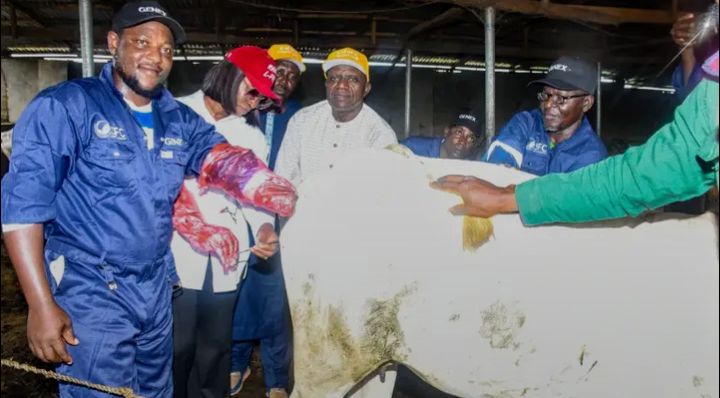
The Kwara State Government has commenced a statewide cattle artificial insemination programme aimed at improving livestock breeds and increasing milk, dairy and meat production across the state.
The initiative, being implemented in partnership with Genex URUS American International Animal Breeding Company, commenced with 500 cattle in September, with the government targeting about 1,000 animals by the end of the year.
The Commissioner for Livestock Development, Oloruntoyosi Thomas, disclosed this on Sunday during the flag-off of the exercise at TGB Farms in Ganiki, Ilorin South Local Government Area of Kwara State.
Thomas said the programme was part of the government’s broader strategy to transform the livestock sector by giving farmers access to improved cattle breeds and modern breeding techniques.
According to her, artificial insemination would enable livestock farmers to improve the genetic quality of their animals while increasing their potential for milk and meat production.
“One of the ways to improve breeds is through artificial insemination. We are going to inseminate thousands of cattle across the state,” she said.
She explained that the programme had started with 500 cattle in September, while the state government was working towards reaching about 1,000 cattle before the end of the year.
“In terms of numbers, we are going to inseminate thousands. We are starting with 500 this month of September, but by the end of the year, we are hoping to reach maybe a thousand, and then we keep going. It’s a long process, but we are just starting,” Thomas said.
The commissioner disclosed that the animals had undergone synchronisation ahead of the insemination exercise, describing the process as necessary to improve the efficiency of the breeding programme.
She added that the initiative would continue beyond the initial phase as the government seeks to expand modern livestock breeding practices across the state.
Thomas also revealed plans to establish an artificial insemination centre in the Malete area of Kwara State.
She said similar facilities would subsequently be established in other identified communities to make artificial insemination services more accessible to livestock farmers.
The commissioner said the state government was also investing in human capacity development by involving students of Animal Production and youths from pastoralist communities in the programme.
“We need to ensure that we have our well-trained technicians—artificial insemination technicians—and that’s why we are involving our students from the University of Ilorin, the various tertiary institutions in the state,” she said.
Thomas explained that developing a pool of trained artificial insemination technicians within the state would help reduce the cost of the service, improve the synchronisation process and increase the chances of successful insemination.
The Director of Livestock in the Ministry of Livestock Development, Ahmed Umar, stressed the importance of cooperation among farmers, government agencies, technical experts and other stakeholders for the success of the initiative.
Umar expressed optimism that the programme could achieve an 85 per cent success rate, while urging livestock owners and other stakeholders to support the intervention.
“We want to develop this sector the way it should be developed by having improved breeds. This cannot be done alone. All stakeholders must come together to ensure success,” he said.
Also speaking, the Team Lead of Genex URUS American International Animal Breeding Company, Saka Shittu, said the programme was designed to improve the quality of cattle through the use of carefully selected semen.
Shittu explained that the immediate focus was on cattle, particularly with the objective of increasing dairy production, while the intervention could later be extended to other livestock.
“For now, the programme focuses on cattle; it will later be extended to other livestock. The essence of the programme is that animals are being inseminated with improved semen selected to boost dairy production,” he said.
He encouraged cattle owners, including pastoralists and smallholder dairy farmers, to participate in the scheme and take advantage of the free service being provided under the programme.
According to him, each farmer is entitled to have two cattle inseminated at no cost.
The intervention also provided practical training and exposure for students studying Animal Production, with participants drawn from the University of Ilorin, Kwara State University, Malete, and Usmanu Danfodiyo University, Sokoto.
The delegation at the flag-off included the Permanent Secretary of the Ministry of Livestock Development, Muhammed Yahaya;
principal officers of the ministry; officials of the Special Agro-Industrial Processing Zones (SAPZ) and Livestock Productivity and Resilience Support Project (L-PRES), as well as students and youths from pastoralist communities.
The Director of TGB Farms, Ishola Peace, commended the Kwara State Government for selecting the farm to participate in the programme.
Peace said the intervention would give the farm an opportunity to benefit from the state’s livestock development efforts while contributing to the broader objective of improving livestock production in Kwara.
The state government’s artificial insemination initiative is expected to strengthen access to improved cattle genetics, support dairy farmers and contribute to the development of the livestock value chain as the programme expands across Kwara.

President Bola Ahmed Tinubu has mandated Vice President Kashim Shettima to represent him and lead Nigeria’s delegation to the 81st Session of the United Nations General Assembly (UNGA) in New York, United States.
The Presidency announced the development on Sunday, ending weeks of uncertainty over whether Tinubu would personally attend the annual gathering of world leaders.
Shettima will lead a high-level Nigerian delegation comprising Rivers State Governor Siminalayi Fubara, Zamfara State Governor Dauda Lawal, ministers and other senior government officials.
The announcement was contained in a statement issued by the Senior Special Assistant to the President on Media and Communications, Office of the Vice President, Stanley Nkwocha.
According to the statement, “President Bola Ahmed Tinubu has mandated Vice President Kashim Shettima to represent him and lead Nigeria’s delegation to the 81st Session of the United Nations General Assembly, UNGA, in New York, United States.”
The development represents a change from earlier plans announced in July, when Nigeria’s Permanent Representative to the United Nations, Ambassador Jimoh Ibrahim, said Tinubu would personally attend the 81st UNGA.
Ibrahim had said provisions had been made for the President to participate in the gathering and engage with other world leaders.
Tinubu, however, departed Abuja on August 30 for a three-week vacation in Europe, with London as his first destination before proceeding to France.
The President’s European trip had fuelled speculation about whether he would return to Nigeria in time to travel to New York for the UNGA.
With the Presidency’s latest announcement, Shettima will now represent Nigeria at the high-level international gathering.
The 81st UNGA General Debate is scheduled to take place from September 22 to 28, 2026, under the theme, “Restoring trust, managing transformation: A United Nations that delivers for all.”
The Presidency said Shettima would deliver Nigeria’s national statement during the General Debate, presenting the country’s position and priorities on major global issues.
His address is expected to cover issues with implications for Nigeria’s national development, peace and security, economic growth and international cooperation.
The Vice President will also participate in several high-level meetings during the UNGA week, including engagements focused on the Right to Development, climate action and other issues considered strategically important to Nigeria and Africa.
Shettima is expected to join other world leaders at the traditional reception for heads of delegation and participate in bilateral meetings with foreign leaders, international organisations and development partners on the sidelines of the General Assembly.
According to the Presidency, Shettima’s engagements in New York will provide Nigeria with an opportunity to advance Tinubu’s economic diplomacy and deepen strategic partnerships with other countries and international institutions.
The Nigerian delegation is also expected to use the meetings to strengthen the country’s position on reform of the global financial architecture, sustainable development, climate finance and multilateral cooperation.
The Presidency said the engagements would further provide an opportunity for Nigeria to strengthen its voice on issues affecting the African continent and promote partnerships capable of supporting the country’s development priorities.
Shettima has represented President Tinubu at major international gatherings on previous occasions, including the United Nations General Assembly in 2024 and 2025.
Following the conclusion of his engagements in New York, the Vice President is expected to return to Nigeria.
The latest announcement formally settles the question of who will lead Nigeria’s delegation to the 81st UNGA, with Shettima now scheduled to represent the President at the high-level gathering.

Newborn and child health experts have warned parents that failure of a newborn to pass stool within the first 24 to 48 hours after birth is a medical red flag requiring prompt professional evaluation.
The experts explained that newborns normally pass their first stool, known as meconium, shortly after birth. Meconium is typically a thick, dark, tar-like substance made up largely of materials accumulated in the baby’s intestines during pregnancy.
Speaking with PUNCH Healthwise, a paediatric surgeon and Professor of Surgery at Bayero University, Kano, and Aminu Kano Teaching Hospital, Aminu Mohammad, said most healthy term newborns should have passed meconium within the first 48 hours of life.
Mohammad, who is also Chair of the Department of Surgery at Bayero University, Kano, described failure to pass stool within the expected period as highly abnormal and requiring immediate medical attention.
He explained that up to 90 per cent of healthy newborns pass meconium within the first 24 hours, while virtually all healthy term babies should have passed their first stool by 48 hours.
According to him, a newborn who has not passed meconium after 48 hours should be taken to a paediatrician or an emergency department for assessment.
He warned against waiting several days before seeking medical care, noting that delayed passage of stool could indicate a serious underlying condition.
“Delayed passage is officially considered when a baby does not stool within 48 hours. A delay beyond this point requires immediate medical evaluation,” he said.
Possible causes
Mohammad said failure to pass meconium could be caused by congenital abnormalities affecting the baby’s digestive system.
He identified imperforate anus, intestinal atresia or stenosis, intestinal obstruction and Hirschsprung’s disease among possible causes.
Imperforate anus occurs when the anus does not develop normally or is absent, making it impossible for the baby to pass stool through the normal route.
He explained that some babies could also have intestinal atresia or stenosis, in which parts of the intestine are either disconnected or abnormally narrowed.
“These are conditions that cannot be relieved by giving the newborn anything by mouth or from the anus. Such cases may require surgery,” he said.
The professor also identified Hirschsprung’s disease as another possible cause.
He explained that the condition involves the absence of specialised nerve cells in part of the intestine, affecting the normal movement of intestinal contents and making it difficult for the baby to pass stool.
Other possible causes, he said, include unusually thick and sticky meconium, systemic illnesses such as poor thyroid function and certain medications given to mothers during labour.
Experts warn against home remedies
The paediatric surgeon strongly cautioned parents against using home remedies, oils, concoctions or objects inserted into a newborn’s rectum to stimulate bowel movement.
He said such practices could cause serious complications while also masking an underlying condition that might require surgery.
“Parents should not attempt to treat this at home with remedies like rectal stimulation, as this can mask a serious diagnosis and delay proper treatment,” he warned.
Mohammad specifically cautioned against giving newborns oils such as castor oil or mineral oil orally.
According to him, oil could be accidentally inhaled into the lungs and cause a potentially fatal form of pneumonia.
He also warned that enemas and suppositories could injure the delicate tissues of a newborn’s rectum.
Another danger, he noted, was that home remedies might temporarily produce stool, creating a false impression that the underlying problem had been resolved.
He said this could allow conditions such as Hirschsprung’s disease or intestinal obstruction to continue undiagnosed and worsen.
Warning signs parents should watch
Mohammad advised parents to seek urgent medical attention if a newborn fails to pass stool within 24 to 48 hours, particularly when the condition is accompanied by other symptoms.
These include green-coloured vomiting, abdominal swelling, refusal to feed, weakness or blood in the stool.
He said affected babies would require physical examination and, where necessary, diagnostic investigations to determine the cause of the delayed stool passage.
Leaving an intestinal obstruction untreated, he warned, could eventually result in bowel perforation, severe infection and death.
Breastfeeding important after birth
Also speaking with PUNCH Healthwise, Professor of Paediatrics and Neonatology at Ahmadu Bello University, Zaria, Kaduna State, Isa Abdulkadir, said most healthy term newborns were expected to pass meconium within the first few days of life.
Abdulkadir, a Consultant Paediatrician and Neonatologist at Ahmadu Bello University Teaching Hospital, said failure to pass the first stool should prompt medical evaluation, particularly in term babies.
He noted that between 80 and 90 per cent of healthy term babies would normally pass meconium within the first two to three days.
“If that doesn’t occur, we need to worry,” he said.
The neonatologist advised parents of babies who failed to pass stool to seek immediate assessment from a paediatrician or neonatologist.
He said feeding practices after delivery could also support normal bowel function, although many causes of delayed meconium passage were congenital and unrelated to anything the mother did during pregnancy.
Abdulkadir encouraged mothers to initiate breastfeeding as early as possible after delivery, preferably within the first 30 minutes to one hour, and to give the newborn only breast milk unless a health professional advises otherwise.
He said breast milk was natural, easily digestible and appropriate for the newborn.
Antenatal and postnatal care
Abdulkadir further stressed the importance of quality antenatal care, skilled delivery and appropriate postnatal monitoring in reducing the risk of complications.
He urged expectant mothers to receive antenatal care from approved healthcare providers and deliver in certified health facilities under the supervision of trained professionals.
He also recommended that newborns receive appropriate postnatal assessment, including evaluation of feeding, general wellbeing and any abnormal signs.
The neonatologist stressed that babies required specialised care and should not be treated like adults.
“Every deviation from what we consider to be normal needs to be properly looked into and assessed,” he said.
He urged parents to report anything unusual about a newborn to a paediatrician or neonatologist rather than attempting self-treatment.
The experts emphasised that while many causes of delayed passage of meconium occur before birth and cannot be prevented through home interventions, early recognition and prompt medical treatment can prevent serious complications and save the baby’s life.
-

 Security2 months ago
NDLEA Declares Alleged Drug Kingpin, Three Associates Wanted, Freezes ₦9.8bn Linked to Syndicate
-
 National Affairs2 months ago
ICPC Uncovers 908 Suspected Ghost Workers Across 50 Federal MDAs, Recovers ₦942 Million
-

 Business/Finance2 months ago
How to Apply for Tunde Onakoya’s ₦250 Million Scholarship Programme and Free Laptop Offer
-

 Politics2 months ago
Atiku Challenges Tinubu to Reveal Details of ₦15.13bn SUV Procurement in 2026 Budget
-

 Judiciary | Public Safety2 months ago
INEC Tells Court Voter Information Is Not Confidential in Emeka Ike’s ₦10bn Lawsuit
-

 Judiciary | Public Safety2 months ago
Court to Rule Friday on NDLEA’s Bid to Destroy ₦480bn Meth Lab in Ogun
-

 Security2 months ago
Family Paid ₦50 Million Ransom to Secure Release of Abducted Kebbi Judge
-

 News2 months ago
2026 Budget: FG Earmarks ₦962.83bn for SUVs, Empowerment Projects Amid Debt Concerns