
Business/Finance
Women Accountants Pledge Scholarships, Mentorship to Protect Girls’ Rights


The Society of Women Accountants of Nigeria (SWAN) has reaffirmed its commitment to protecting the rights of the girl child through scholarships, mentorship and professional training aimed at helping vulnerable girls overcome poverty and achieve financial independence.
The National Chairperson of SWAN, Blessing Osakwe-Ogo, disclosed this as the association joined the global community to commemorate the 2026 International Day of the Girl Child, observed annually on October 11.
The 2026 celebration was held under the theme, “End Child Marriage and Invest in Girls’ Rights,” highlighting the need for stronger efforts to eliminate harmful practices and expand opportunities for girls to access education, develop their skills and achieve their full potential.
The United Nations General Assembly designated October 11 as the International Day of the Girl Child in 2011 to recognise the rights of girls and draw attention to the challenges they face worldwide.
Speaking on the association’s interventions, Osakwe-Ogo explained that SWAN had continued to address barriers to girls’ education and professional development by providing financial assistance, career guidance and opportunities to acquire recognised qualifications.
She said the scholarship initiative was designed to support girls whose families might struggle to meet the financial demands of formal education.
“We identify that it is difficult for some children, some girls, to go to school. So we give them scholarships,” she stated.
Beyond financial assistance, the SWAN chairperson said the organisation encouraged secondary school students to consider careers in accounting by exposing them to professional training opportunities and providing mentorship to guide their educational and career choices.
According to her, some students use the period between completing secondary school and gaining admission to a university to begin professional accounting training through the accounting technicians programme.
“Some of them, when they finish secondary school, while they are waiting for university education, they write our institute exam, what we call the accounting technicians,” she added.
Osakwe-Ogo explained that the qualification could provide opportunities to work in different African countries, while candidates who complete the remaining professional requirements could progress towards becoming chartered accountants.
She said the initiative was intended to equip girls with practical skills and professional credentials that could improve their employment prospects, strengthen their economic independence and reduce their vulnerability to poverty.
SWAN Raises Awareness on Child Abuse, Sexual Harassment
The association also conducts awareness programmes to educate girls about sexual harassment, child abuse and the warning signs associated with abusive behaviour.
Osakwe-Ogo said the programmes featured motivational speakers who educated participants on recognising inappropriate conduct, understanding their rights and seeking assistance when confronted with abuse or harassment.
“We bring motivational speakers who talk to them, educate them on sexual harassment, give them the red lights, the signs on how to go against them,” she stated.
She explained that the interventions were designed to build confidence among girls, equip them with knowledge about personal safety and encourage them to speak up when their rights were threatened.
The initiative also seeks to challenge societal attitudes that limit girls’ ambitions and restrict their access to education and professional opportunities.
SWAN Calls for Stronger Enforcement of Child Protection Policies
Despite the existence of policies intended to protect children and safeguard their rights in Nigeria, Osakwe-Ogo identified weak implementation as a major obstacle to achieving meaningful progress.
She argued that the government must move beyond policy announcements and ensure that existing protections translate into practical measures that prevent abuse and provide justice for affected children.
“The problem has been implementation, to back up those policies with action. That is yet to be seen or yet to be well seen,” she said.
The SWAN chairperson called for decisive government action against perpetrators of child abuse, stressing that stronger enforcement was necessary to protect vulnerable children and discourage violations of their rights.
“The government should go beyond talking. They should put the policies into action to protect the girl child,” she stated.
She maintained that effective child protection required coordinated efforts by government institutions, families, schools and civil society organisations to ensure that girls could access education and live free from abuse and discrimination.
Women Accountants Urge Review of Harmful Cultural Practices
Osakwe-Ogo also called for a review of cultural practices that expose girls to early marriage or prevent them from pursuing formal education.
She argued that traditions should not be used to justify practices that undermine girls’ rights or restrict their opportunities for personal and professional development.
According to her, communities should be willing to adapt cultural practices to contemporary realities, particularly where such changes would improve access to education and protect children from harmful experiences.
“Culture can be amended. It is a law made by human beings. So it can also be adjusted with modernity to make sure that girls from certain regions are allowed to go to school,” she said.
Her remarks underscored the importance of addressing social and cultural barriers alongside economic challenges in efforts to protect the girl child.
As Nigeria joins the global campaign against child marriage and other violations of girls’ rights, SWAN’s position highlights the role professional organisations can play in expanding access to education, promoting career development and raising awareness about child protection.
The association maintained that investing in girls through education, mentorship and professional training remained essential to helping them overcome disadvantage, achieve financial independence and contribute meaningfully to national development.


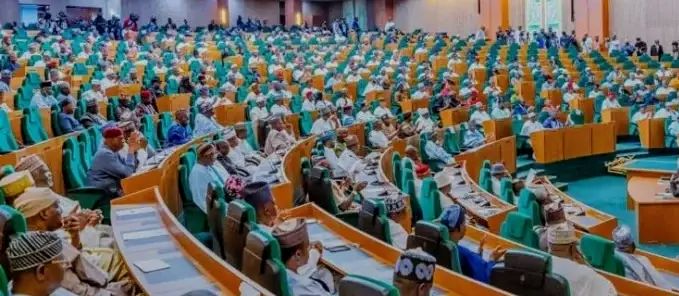
The House of Representatives has resolved to invite the Governor of the Central Bank of Nigeria (CBN), Olayemi Cardoso, to explain alleged breaches of pension agreements and the non-payment of outstanding benefits to retired employees of the apex bank.
The resolution followed the adoption of a motion on Tuesday titled, “Need to investigate the Central Bank of Nigeria for alleged breach of approved pension agreements, non-implementation of harmonisation policy and exclusion of pensioners from general pension increases.”
The motion was moved by the member representing Igabi Federal Constituency of Kaduna State, Hussaini Jallo, who raised concerns over the alleged failure of the CBN to honour agreements governing the pension entitlements and welfare of its retired employees.
Presenting the motion, Jallo said the alleged non-implementation and faulty execution of the pension harmonisation policy might have created disparities in pension payments and led to the accumulation of unpaid arrears, leaving affected retirees in financial hardship.
He expressed concern that pensioners who depend on their retirement benefits for their livelihood were being denied entitlements allegedly due to them.
“The House is concerned that the alleged non-implementation and faulty execution of the harmonisation policy may have led to disparities in pension benefits and the accumulation of unpaid arrears, ultimately denying rightful entitlements and imposing severe financial hardship on affected pensioners who depend on these funds for their livelihood,” he said.
The lawmaker also questioned allegations that some retired CBN employees had been excluded from general pension increases because of additional or extra-statutory demands that might not align with existing laws, binding agreements or approved pension policies.
Jallo further disclosed that the number of CBN pensioners had dropped from 5,104 in 2011 to approximately 3,000, representing a decline of more than 2,100 retirees.
He said the figures indicated an average reduction of about 140 pensioners annually, warning that the mortality rate could increase as the surviving retirees continued to advance in age.
According to him, prolonged delays in the payment of pension benefits could expose elderly and vulnerable pensioners to poverty, ill health and avoidable loss of life.
He maintained that Nigerians who had served the country deserved fairness, transparency and the prompt payment of all benefits lawfully due to them.
“The House acknowledges the need for legislative oversight to establish the facts, determine the extent of any breaches or administrative failures, and ensure that all eligible pensioners receive their lawful entitlements,” Jallo said.
The motion received overwhelming support from lawmakers during a voice vote conducted at plenary presided over by the Speaker, Tajudeen Abbas.
Following its adoption, the House urged the CBN and other relevant authorities to verify and pay all outstanding pension arrears lawfully due to affected retirees within a reasonable and clearly defined period.
It also called for the extension of applicable general pension increases to eligible pensioners in accordance with relevant laws.
The lawmakers subsequently invited Cardoso and other relevant officials, alongside pension administrators, regulators and representatives of the affected pensioners, to appear before the House and provide explanations.
They are also expected to submit relevant documents to assist the investigation.
The House mandated its Committee on Pension to investigate allegations of non-compliance by the CBN with contractual agreements governing the administration and payment of retirement benefits to its former employees.
The committee is expected to examine the terms and obligations contained in the agreements, particularly the circumstances surrounding the non-implementation of the harmonisation policy, the reasons for the delay and the total amount of outstanding arrears.
It will also investigate the alleged exclusion of eligible pensioners from general pension increases on the basis of extra-statutory demands and determine whether such actions comply with applicable laws, contractual obligations and approved pension policies.
As part of its assignment, the committee will review relevant documents, including contractual agreements, policy circulars, payment records and actuarial reports, to establish responsibility for any administrative failures or breaches.
It is also expected to recommend appropriate corrective measures, including the non-discriminatory extension of applicable general pension increases to all eligible retirees in line with relevant laws and approved policies.
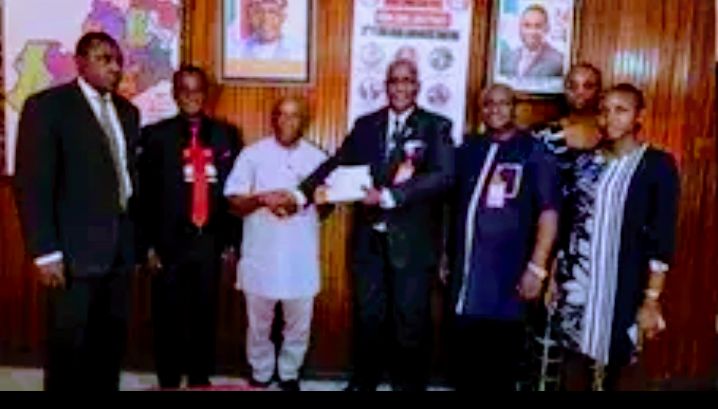
The Economic and Financial Crimes Commission (EFCC) has recovered and returned N114 million stolen from a microfinance bank through a cyber fraud scheme.
The commission disclosed this in a post on its official X handle on Friday, stating that the recovered funds were handed over to the financial institution on Thursday.
According to the EFCC, the Acting Zonal Director of its Benin Zonal Directorate, Deputy Commander Sa’ad Hanafi Sa’ad, presented a bank draft worth N114 million to a senior official of the bank, Samuel Ikechukwu.
The recovery followed a petition filed by Ikechukwu in August 2024, after the financial institution discovered that one of its customers’ accounts had been fraudulently hacked and funds withdrawn without authorisation.
The recovery followed a petition filed by Ikechukwu in August 2024, after the financial institution discovered that one of its customers’ accounts had been fraudulently hacked and funds withdrawn without authorisation.
The commission said its investigators traced the stolen money to several suspects, leading to the arrest of one of them, identified as Obumneme Bright.
It added that N114 million was recovered from Bright following his arrest and subsequently returned to the affected financial institution.
The EFCC, however, disclosed that efforts were ongoing to track down and apprehend other suspects allegedly connected to the cyber fraud.
The recovery highlights the commission’s ongoing efforts to investigate financial crimes, recover illicit funds and return stolen assets to their rightful owners.
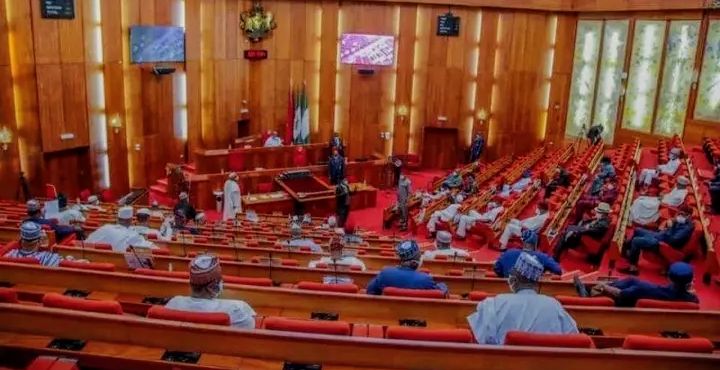
President Bola Tinubu has asked the Senate to approve the Federal Government’s 2026–2027 Supplementary External Borrowing Plan, seeking loans of $20.52bn and €1.05bn to finance infrastructure and development projects across Nigeria.
The request was transmitted to the National Assembly and read by Senate President Godswill Akpabio during Tuesday’s plenary.
In the letter, Tinubu urged lawmakers to consider and approve the borrowing plan promptly, saying the proposed funds would support critical projects and programmes across infrastructure, agriculture, healthcare, education, water supply, security, employment generation and financial management reforms.
The proposed borrowing amounts to $20,517,755,901 and €1,045,083,643, respectively.
The President said the external financing was necessary to address Nigeria’s infrastructure deficit and bridge the funding gap affecting the implementation of development projects.
“I submit the attached Federal Government 2026–2027 Supplementary External Borrowing Plan for consideration and early approval of the National Assembly to ensure prompt implementation of our projects,” he stated.
Tinubu explained that the projects and programmes were selected following technical and economic evaluations, with emphasis on their expected contributions to Nigeria’s socioeconomic development.
According to him, the initiatives are designed to generate employment, promote skills acquisition, encourage entrepreneurship, reduce poverty and strengthen food security.
“These initiatives aim to generate employment, promote skill acquisition, foster entrepreneurship, reduce poverty and enhance food security, all of which improve the livelihood of the Nigerian child,” the President said.
He added that most of the projects would be implemented across Nigeria’s 36 states and the Federal Capital Territory, highlighting the nationwide scope of the proposed investments.
Tinubu Cites Infrastructure Funding Gap
The President maintained that the scale of Nigeria’s infrastructure needs required additional financing, arguing that external borrowing would help bridge the gap between available resources and the funding required to deliver critical projects.
“In light of the need for significant infrastructure investment in the country and the vast financial resources needed to address this gap, it has become essential to pursue prudent external borrowings to close the financing shortfall,” Tinubu stated.
He said the funds would primarily support critical infrastructure, particularly in the power, transportation and healthcare sectors.
Tinubu urged the Senate leadership and the wider National Assembly to approve the proposal without delay, arguing that timely approval would facilitate fund disbursement and accelerate project implementation.
However, the request is expected to undergo scrutiny by the relevant Senate committees, including an examination of its scope and relationship with the Federal Government’s existing borrowing arrangements.
Akpabio Says Borrowing Plan Was Previously Approved
Reacting after the presidential letter was read, Akpabio said the borrowing plan had featured in previous government borrowing and budgetary arrangements, although he expressed uncertainty about the exact period covered by the earlier approval.
“The borrowing plan is attached, but of course, this was even earlier approved in our budget, and also the external borrowing plan was approved as far back as 2025 to 2027, I think to 2028 or thereabout,” the Senate President said.
Akpabio announced that the request would be referred to the Senate Committee on Local and Foreign Debts for consideration, with possible contributions from the Committees on Appropriations and Finance.
“However, this request will be looked at by the Committee on Local and Foreign Debts, probably in collaboration with Appropriations and Finance, but mainly by the Committee on Local and Foreign Debts,” he stated.
The Senate President also referenced Senator Haruna Manu in connection with the committee’s leadership.
The committee’s review is expected to examine the details of the proposed financing and determine how the supplementary borrowing plan relates to previously approved arrangements before the Senate decides on the next legislative steps.
The proposal would add to the Federal Government’s external financing commitments if approved.
Its consideration is also likely to bring attention to the terms of the proposed loans, the projects to be financed, repayment obligations and the expected economic benefits of the investments.
The Senate has yet to make a final decision on the request, which is to undergo committee consideration.
The alternative expresses the approximate combined value in US-dollar terms only if an exchange rate is specified and applied. The original headline is safer and more precise.
-
 Security4 months ago
NDLEA Declares Alleged Drug Kingpin, Three Associates Wanted, Freezes ₦9.8bn Linked to Syndicate
-

 Business/Finance3 months ago
How to Apply for Tunde Onakoya’s ₦250 Million Scholarship Programme and Free Laptop Offer
-
 National Affairs3 months ago
ICPC Uncovers 908 Suspected Ghost Workers Across 50 Federal MDAs, Recovers ₦942 Million
-

 Judiciary | Public Safety3 months ago
INEC Tells Court Voter Information Is Not Confidential in Emeka Ike’s ₦10bn Lawsuit
-
 Politics3 months ago
Atiku Challenges Tinubu to Reveal Details of ₦15.13bn SUV Procurement in 2026 Budget
-
 Judiciary | Public Safety3 months ago
Court to Rule Friday on NDLEA’s Bid to Destroy ₦480bn Meth Lab in Ogun
-
 Security3 months ago
Family Paid ₦50 Million Ransom to Secure Release of Abducted Kebbi Judge
-
 News3 months ago
2026 Budget: FG Earmarks ₦962.83bn for SUVs, Empowerment Projects Amid Debt Concerns