
Business/Finance
Tinubu Seeks Senate Approval for $20.52bn, €1.05bn External Loans

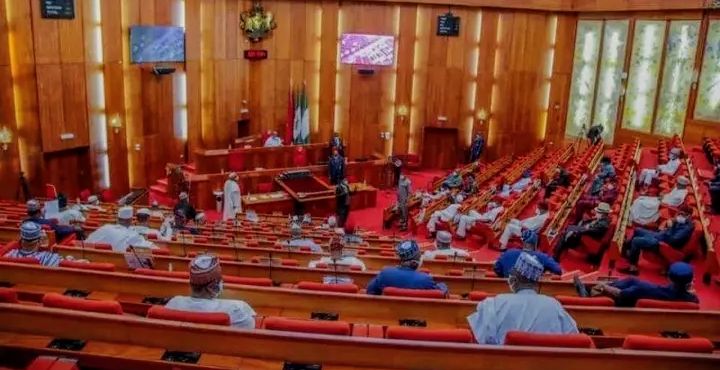
President Bola Tinubu has asked the Senate to approve the Federal Government’s 2026–2027 Supplementary External Borrowing Plan, seeking loans of $20.52bn and €1.05bn to finance infrastructure and development projects across Nigeria.
The request was transmitted to the National Assembly and read by Senate President Godswill Akpabio during Tuesday’s plenary.
In the letter, Tinubu urged lawmakers to consider and approve the borrowing plan promptly, saying the proposed funds would support critical projects and programmes across infrastructure, agriculture, healthcare, education, water supply, security, employment generation and financial management reforms.
The proposed borrowing amounts to $20,517,755,901 and €1,045,083,643, respectively.
The President said the external financing was necessary to address Nigeria’s infrastructure deficit and bridge the funding gap affecting the implementation of development projects.
“I submit the attached Federal Government 2026–2027 Supplementary External Borrowing Plan for consideration and early approval of the National Assembly to ensure prompt implementation of our projects,” he stated.
Tinubu explained that the projects and programmes were selected following technical and economic evaluations, with emphasis on their expected contributions to Nigeria’s socioeconomic development.
According to him, the initiatives are designed to generate employment, promote skills acquisition, encourage entrepreneurship, reduce poverty and strengthen food security.
“These initiatives aim to generate employment, promote skill acquisition, foster entrepreneurship, reduce poverty and enhance food security, all of which improve the livelihood of the Nigerian child,” the President said.
He added that most of the projects would be implemented across Nigeria’s 36 states and the Federal Capital Territory, highlighting the nationwide scope of the proposed investments.
Tinubu Cites Infrastructure Funding Gap
The President maintained that the scale of Nigeria’s infrastructure needs required additional financing, arguing that external borrowing would help bridge the gap between available resources and the funding required to deliver critical projects.
“In light of the need for significant infrastructure investment in the country and the vast financial resources needed to address this gap, it has become essential to pursue prudent external borrowings to close the financing shortfall,” Tinubu stated.
He said the funds would primarily support critical infrastructure, particularly in the power, transportation and healthcare sectors.
Tinubu urged the Senate leadership and the wider National Assembly to approve the proposal without delay, arguing that timely approval would facilitate fund disbursement and accelerate project implementation.
However, the request is expected to undergo scrutiny by the relevant Senate committees, including an examination of its scope and relationship with the Federal Government’s existing borrowing arrangements.
Akpabio Says Borrowing Plan Was Previously Approved
Reacting after the presidential letter was read, Akpabio said the borrowing plan had featured in previous government borrowing and budgetary arrangements, although he expressed uncertainty about the exact period covered by the earlier approval.
“The borrowing plan is attached, but of course, this was even earlier approved in our budget, and also the external borrowing plan was approved as far back as 2025 to 2027, I think to 2028 or thereabout,” the Senate President said.
Akpabio announced that the request would be referred to the Senate Committee on Local and Foreign Debts for consideration, with possible contributions from the Committees on Appropriations and Finance.
“However, this request will be looked at by the Committee on Local and Foreign Debts, probably in collaboration with Appropriations and Finance, but mainly by the Committee on Local and Foreign Debts,” he stated.
The Senate President also referenced Senator Haruna Manu in connection with the committee’s leadership.
The committee’s review is expected to examine the details of the proposed financing and determine how the supplementary borrowing plan relates to previously approved arrangements before the Senate decides on the next legislative steps.
The proposal would add to the Federal Government’s external financing commitments if approved.
Its consideration is also likely to bring attention to the terms of the proposed loans, the projects to be financed, repayment obligations and the expected economic benefits of the investments.
The Senate has yet to make a final decision on the request, which is to undergo committee consideration.
The alternative expresses the approximate combined value in US-dollar terms only if an exchange rate is specified and applied. The original headline is safer and more precise.
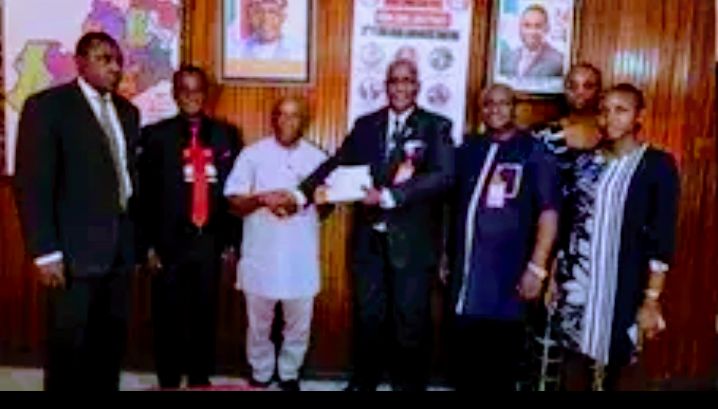
The Economic and Financial Crimes Commission (EFCC) has recovered and returned N114 million stolen from a microfinance bank through a cyber fraud scheme.
The commission disclosed this in a post on its official X handle on Friday, stating that the recovered funds were handed over to the financial institution on Thursday.
According to the EFCC, the Acting Zonal Director of its Benin Zonal Directorate, Deputy Commander Sa’ad Hanafi Sa’ad, presented a bank draft worth N114 million to a senior official of the bank, Samuel Ikechukwu.
The recovery followed a petition filed by Ikechukwu in August 2024, after the financial institution discovered that one of its customers’ accounts had been fraudulently hacked and funds withdrawn without authorisation.
The recovery followed a petition filed by Ikechukwu in August 2024, after the financial institution discovered that one of its customers’ accounts had been fraudulently hacked and funds withdrawn without authorisation.
The commission said its investigators traced the stolen money to several suspects, leading to the arrest of one of them, identified as Obumneme Bright.
It added that N114 million was recovered from Bright following his arrest and subsequently returned to the affected financial institution.
The EFCC, however, disclosed that efforts were ongoing to track down and apprehend other suspects allegedly connected to the cyber fraud.
The recovery highlights the commission’s ongoing efforts to investigate financial crimes, recover illicit funds and return stolen assets to their rightful owners.

statutory revenue between January and October 2026, despite a sharp rise in international crude oil prices following the United States-Iran conflict.
Figures from the Federation Account income distribution report of the Office of the Accountant-General of the Federation showed that statutory revenue stood at N26.14tn during the 10-month period, against a budget projection of N46.87tn.
The shortfall represented 44.24 per cent of the projected revenue, raising questions about the country’s ability to translate higher global oil prices into increased government earnings.
The figures were analysed by The PUNCH from documents associated with the Federation Account Allocation Committee’s September meeting, held at the Federal Ministry of Finance headquarters in Abuja, to consider the August 2026 accounts.
The technical sub-committee’s report, dated October 14, was obtained by the newspaper on Monday.
Despite improved receipts in some months, the government failed to meet its statutory revenue target throughout the period under review.
Oil Price Surge Fails to Close Revenue Gap
The revenue shortfall occurred amid elevated international crude oil prices following the escalation of hostilities involving the United States, Israel and Iran.
The conflict, which began on February 28, disrupted shipping through the Strait of Hormuz, a major route for global oil and gas supplies, contributing to uncertainty in international energy markets.
Nigeria, as a crude oil-producing country, was expected to benefit from the increase in global oil prices through higher export earnings and government oil receipts.
On October 22, the price of Nigeria’s flagship crude grade was quoted at $123.97 per barrel, representing an increase of $59.12, or 91.16 per cent, above the Federal Government’s 2026 budget benchmark of $64.85 per barrel.
A separate report on October 24 quoted Bonny Light at approximately $115 per barrel, significantly above the budget benchmark.
However, the revenue figures showed that higher crude prices did not translate into sufficient statutory receipts to meet the government’s monthly budget projections.
The figures alone do not establish how much additional revenue Nigeria generated directly from the oil price increase.
Actual government earnings also depend on crude oil production volumes, export performance, exchange rates, collection efficiency and other revenue sources.
Monthly Revenue Performance Remains Below Target
The government’s monthly statutory revenue benchmark remained at N4.687tn throughout the 10-month period, while actual receipts fluctuated considerably.
In January, statutory revenue stood at N1.63tn, leaving a shortfall of N3.06tn, or 65.19 per cent below the target.
Revenue increasedto N1.96tn in February, representing a month-on-month rise of N325.35bn, or 19.94 per cent. However, the figure remained N2.73tn below the budget projection.
The improvement was reversed in March, when receipts fell to N1.56tn, a decline of N395.14bn, or 20.19 per cent, compared with February.
March recorded the weakest performance of the first quarter, with revenue missing the monthly target by N3.13tn, representing a 66.68 per cent shortfall.
In April, receipts recovered to N1.70tn, an increase of N137.91bn, or 8.83 per cent. Nevertheless, the figure remained N2.99tn below the monthly target.
The recovery gathered pace in May, when statutory revenue increased to N2.38tn from N1.70tn in April. The N678.22bn rise represented a 39.90 per cent month-on-month improvement.
Revenue climbed further to N2.65tn in June, an increase of N273.62bn, or 11.51 per cent, although receipts remained N2.04tn below the target.
Revenue Peaks in August Before September Decline
The strongest monthly improvement occurred in July, when statutory revenue, including a N250bn augmentation, reached N3.95tn.
The figure represented an increase of N1.30tn, or 48.99 per cent, compared with June. However, July’s receipts still fell N736.50bn short of the monthly target.
Revenue rose further to N4.36tn in August, the highest monthly figure recorded during the period.
The August receipts represented an increase of N408.09bn, or 10.33 per cent, from July and came closest to the monthly budget projection.
The shortfall narrowed to N328.41bn, equivalent to 7.01 per cent of the target.
However, the improvement was not sustained.
Statutory revenue dropped to N2.85tn in September from N4.36tn in August, representing a decline of N1.51tn, or 34.61 per cent.
September’s receipts were N1.84tn below the monthly target, leaving a shortfall of 39.19 per cent.
Revenue recovered modestly in October to N3.10tn, an increase of N246.38bn, or 8.64 per cent, compared with September.
Despite the recovery, October’s revenue remained N1.59tn below the monthly target, representing a deficit of 33.94 per cent.
The October figure was approximately 89.77 per cent higher than January’s N1.63tn. However, the increase in monthly receipts was insufficient to bridge the gap between actual collections and budget projections.
Second-Half Receipts Exceed First-Half Total
The report also showed a significant difference between revenue collected in the first six months of the year and receipts recorded from July to October.
Between January and June, statutory revenue totalled N11.88tn.
From July to October, receipts rose to N14.26tn, including the N250bn augmentation recorded in July.
The four-month total was therefore N2.38tn higher than the revenue recorded during the first six months of the year, despite covering a shorter period.
The stronger performance from July coincided with elevated international oil prices, suggesting that improved oil receipts may have contributed to the increase.
However, the figures do not establish the precise contribution of higher crude prices to the additional revenue.
The subsequent decline in September and the incomplete recovery in October also demonstrated that the improvement was not sustained consistently.
Revenue Shortfall Raises Budget Implementation Concerns
The persistent revenue gap has implications for the Federal Government, state governments and local government councils that depend on Federation Account allocations to finance public services and development projects.
When actual revenue falls below budget projections, governments may face pressure to adjust spending plans, delay capital projects or seek alternative sources of financing.
The extent of the impact depends on the structure of each government’s budget, expenditure commitments and available financing options.
Although higher crude oil prices can increase government earnings, the benefits depend on Nigeria’s capacity to produce and export crude oil, collect the proceeds due to the Federation and convert additional earnings into distributable revenue.
The report also recorded N39.91bn in shared Electronic Money Transfer Levy proceeds in January, with no further amounts shown under that column from February to October.
The levy was listed separately from the statutory revenue figures used in the monthly budget comparison.
Oyedele Admits Revenue Projections Have Been Unrealistic
The revenue shortfall comes amid concerns over the assumptions underpinning Nigeria’s annual budgets.
The Minister of Finance and Coordinating Minister of the Economy, Taiwo Oyedele, recently acknowledged that government budgets had often relied on overly optimistic revenue projections, resulting in actual collections falling below expectations.
Speaking at Chatham House in London, Oyedele said Nigeria needed to improve the way it prepared its budgets by basing revenue estimates on realistic assessments of the country’s earning capacity.
“We haven’t been doing the budget right. We do projections that are sometimes based on faith and hope. You don’t run a country based on faith,” he said.
His comments highlight the importance of aligning government expenditure plans with credible revenue estimates, particularly in an economy where oil prices, production levels and other revenue sources can fluctuate.
Outlook
Nigeria’s N20.74tn statutory revenue shortfall during the first 10 months of 2026 highlights the gap between budget expectations and actual government receipts.
Although revenue improved significantly between May and August, the subsequent decline showed that the gains were not sufficient to put collections on track to meet the period’s target.
The figures do not mean Nigeria received no benefit from higher international crude oil prices. Rather, they show that total statutory revenue remained substantially below the amount projected in the budget.
Closing the gap will require more reliable revenue forecasting, stronger collection performance and sustained efforts to improve the contribution of oil and non-oil revenue sources to government finances.

The High Performance Centre and Sports Leadership Hub (HPCSLH) has signed a multi-year agreement with Ibori Golf and Country Club to host the World Amateur Golf Ranking (WAGR)-sanctioned SUN Amateur Open, in a move aimed at raising the international profile of Nigerian amateur golfers.
The tournament is scheduled to take place from January 7 to 9, 2027, and will offer participants the opportunity to earn points towards the WAGR, which ranks amateur golfers worldwide.
The partnership is expected to strengthen competitive opportunities for Nigerian golfers, encourage the development of emerging talents and enhance Delta State’s profile as a destination for sporting events.
The agreement was signed by representatives of both organisations, with Ibori Golf and Country Club represented by its captain, Alex Joe, and treasurer, Sunny Okorie. The HPCSLH delegation comprised Bob Olukoya, Joanne Macrae and Kolawole Oyekunle.
Speaking after the signing, Joe said the agreement reflected the club’s ambition to host international-standard tournaments while promoting the tourism potential of Delta State.
He assured stakeholders that the club would prepare its course to meet the demands of the competition, expressing optimism that golfers from different categories, including categories one and two players and junior golfers, would participate.
“We are expecting a full house,” Joe said.
Joe’s remarks underscored the club’s expectation of strong participation and its commitment to providing a suitable environment for the tournament.
Speaking on behalf of HPCSLH after inspecting the golf course and the club’s facilities, Olukoya expressed satisfaction with the state of preparation and the quality of the available facilities.
He also highlighted the need to increase Nigeria’s representation on the World Amateur Golf Ranking, noting that the country has considerable potential to compete more prominently in international amateur golf.
According to Olukoya, only one Nigerian golfer, Olalekan Ogunbameru, featured on the WAGR at the time of his remarks. Ogunbameru earned his place after winning the previous edition of the SUN Open, held at Ibadan Golf Club in January 2026.
“Nigeria is a great amateur golfing nation and ought to have multiple entries on WAGR listings, just like South Africa and Zimbabwe,” Olukoya said.
His comments highlighted the importance of creating more opportunities for Nigerian golfers to participate in ranking-sanctioned.
tournaments, where strong performances can improve their international standing.
HPCSLH said the partnership formed part of its broader commitment to expanding competitive opportunities for Nigerian amateur golfers and helping them gain international exposure through tournaments that award WAGR points.
The organisation also reaffirmed its commitment to junior golf development, emphasising the need to establish a clear pathway for young players to progress from grassroots participation to the highest levels of amateur competition globally.
The January 2027 tournament is expected to provide a platform for golfers to test their abilities, pursue ranking points and gain valuable competitive experience.
Through the partnership, HPCSLH and Ibori Golf and Country Club aim to contribute to the growth of amateur golf in Nigeria while strengthening the country’s presence on the international golfing scene.
The event will also offer an opportunity to showcase the facilities at Ibori Golf and Country Club and support efforts to position Delta State as a destination for sporting activities and tourism.
-
 Security4 months ago
NDLEA Declares Alleged Drug Kingpin, Three Associates Wanted, Freezes ₦9.8bn Linked to Syndicate
-

 Business/Finance3 months ago
How to Apply for Tunde Onakoya’s ₦250 Million Scholarship Programme and Free Laptop Offer
-
 National Affairs3 months ago
ICPC Uncovers 908 Suspected Ghost Workers Across 50 Federal MDAs, Recovers ₦942 Million
-

 Judiciary | Public Safety3 months ago
INEC Tells Court Voter Information Is Not Confidential in Emeka Ike’s ₦10bn Lawsuit
-
 Politics3 months ago
Atiku Challenges Tinubu to Reveal Details of ₦15.13bn SUV Procurement in 2026 Budget
-
 Judiciary | Public Safety3 months ago
Court to Rule Friday on NDLEA’s Bid to Destroy ₦480bn Meth Lab in Ogun
-
 Security3 months ago
Family Paid ₦50 Million Ransom to Secure Release of Abducted Kebbi Judge
-
 News3 months ago
2026 Budget: FG Earmarks ₦962.83bn for SUVs, Empowerment Projects Amid Debt Concerns