
Sports
Countries FIFA/UEFA Keep Apart Because of Political Tensions


Territorial disputes, wars and diplomatic tensions have forced football authorities to prevent some countries from meeting in competitive fixtures
Football is often celebrated as the world’s universal language, a sport capable of bringing people together regardless of nationality, religion, ethnicity or political affiliation.
But the game has never been completely insulated from international politics.
In Europe, some political disputes are so deeply rooted that UEFA has had to intervene in the organisation of its competitions, preventing certain national teams from being drawn against one another.
The restrictions are not necessarily blanket bans on the countries ever playing a football match. Instead, UEFA has, in several competitions, classified particular pairings as prohibited clashes, meaning they cannot be placed in the same qualifying group.
The reasons range from unresolved territorial disputes and diplomatic hostility to concerns about security.
UEFA’s official draw documentation has, at different times, identified pairings including Armenia and Azerbaijan, Gibraltar and Spain, Kosovo and Bosnia and Herzegovina, Kosovo and Serbia, Kosovo and Russia, and Ukraine and Russia as prohibited clashes.
The situation illustrates how events outside football can ultimately determine who can — and cannot — meet on the pitch.
1. Spain vs Gibraltar
The dispute between Spain and Gibraltar is one of Europe’s longest-running territorial disagreements.
Gibraltar has been under British control since 1713, following the Treaty of Utrecht, although Spain continues to claim sovereignty over the territory.
Gibraltar’s political status has consequently remained a sensitive issue between Britain and Spain.
The dispute eventually found its way into European football.
UEFA has repeatedly prevented Spain and Gibraltar from being drawn into the same qualifying group. UEFA explicitly identified the pairing as a prohibited clash in its competition draw procedures.
That does not mean the two football associations are completely outside the same football ecosystem. Gibraltar became a UEFA member in 2013 and has since participated in European competitions.
But when the political sensitivity of the relationship is taken into account, UEFA has chosen to prevent the national teams from being placed in the same qualifying groups.
The issue became particularly visible when Gibraltar entered UEFA’s competitions and Spain’s political claim over the territory remained unresolved.
In other words, the football restriction reflects a dispute that existed long before either team stepped onto the pitch.
2. Armenia vs Azerbaijan
The Armenia-Azerbaijan rivalry is considerably more serious because it is rooted in decades of territorial conflict and armed confrontation.
At the centre of the dispute is Nagorno-Karabakh, a territory internationally recognised as part of Azerbaijan but historically populated largely by ethnic Armenians.
The dispute produced years of political tension and armed conflict, including major fighting in 2020 and renewed military action in 2023.
Football has not escaped the consequences.
UEFA has repeatedly treated Armenia and Azerbaijan as a prohibited pairing in its competition draws. The restriction was included in UEFA’s procedures for major qualifying competitions.
The political dispute has also affected individual footballers.
Armenian international Henrikh Mkhitaryan did not play in Arsenal’s 2019 Europa League final against Chelsea in Baku because of security concerns surrounding his participation in Azerbaijan.
The incident demonstrated that geopolitical tensions can affect not only the organisation of competitions but also the careers of individual players.
3. Kosovo vs Serbia
Few football relationships in Europe are as politically sensitive as Kosovo and Serbia.
Kosovo declared independence from Serbia in 2008, but Serbia continues to reject the declaration and considers Kosovo part of its territory.
The dispute has remained a major political issue in the Balkans.
UEFA therefore treats Kosovo-Serbia as a prohibited pairing in relevant competition draws.
The restriction has a practical purpose: preventing a sporting contest from becoming a potential flashpoint for wider political confrontation.
UEFA has previously included Kosovo and Serbia among the teams that cannot be drawn into the same group.
For football authorities, the calculation is straightforward. A high-profile competitive match between the two sides could attract enormous political attention, potentially increasing security risks around the stadium and beyond.
4. Kosovo vs Bosnia and Herzegovina
Kosovo’s relationship with Bosnia and Herzegovina presents another complicated political situation.
Bosnia and Herzegovina has not recognised Kosovo’s independence, while internal political divisions within Bosnia have also influenced its position on the issue.
UEFA has consequently treated Kosovo and Bosnia and Herzegovina as another prohibited pairing.
The restriction has appeared in UEFA’s competition draw procedures, including the Euro 2024 qualifying process.
The important point is that UEFA’s restrictions are competition-specific and can change depending on the teams involved, the competition and decisions of the UEFA Executive Committee.
Indeed, UEFA’s current 2026–27 Nations League draw information still identifies Kosovo and Bosnia and Herzegovina as a prohibited clash.
5. Kosovo vs Russia
The political relationship between Kosovo and Russia is also highly sensitive.
Russia does not recognise Kosovo’s independence and has maintained support for Serbia’s position.
The football authorities have therefore taken specific measures to prevent the two teams from meeting.
In 2019, UEFA’s Emergency Panel formally decided that teams from Kosovo and Russia should be kept apart in UEFA competitions because of the security risks surrounding potential matches.
UEFA also ruled that two already-scheduled women’s qualifying fixtures involving the countries should be played at neutral venues.
That decision demonstrates an important distinction between ordinary competition-draw restrictions and a situation where UEFA has assessed an actual fixture as presenting significant security concerns.
6. Ukraine vs Russia
The Russia-Ukraine case is perhaps the clearest example of football being overwhelmed by war.
The relationship between the two countries deteriorated dramatically following Russia’s invasion of Ukraine in 2022.
Initially, FIFA introduced measures preventing international competitions from being played on Russian territory and requiring Russian teams to play under modified conditions.
But the measures escalated rapidly.
On February 28, 2022, FIFA and UEFA jointly announced the suspension of all Russian national teams and clubs from their competitions until further notice.
That decision effectively removed Russian teams from the international and European football calendar.
UEFA had already identified Ukraine and Russia as a prohibited pairing in earlier competition draw procedures.
The consequences have gone far beyond the national team.
Ukrainian clubs have faced major disruption to domestic competitions, players have been displaced and football infrastructure has been affected by the wider war.
For Ukraine, football has increasingly become intertwined with national identity, resilience and the country’s international representation.
Why Does UEFA Separate These Teams?
The answer is not simply politics.
Security is a major factor.
UEFA’s regulations place significant responsibility on host associations for safety and security before, during and after matches. The organisation can also alter venues, dates or kick-off times where safety and security concerns arise.
A football match involving politically hostile countries can create risks beyond the stadium.
Supporters from opposing sides may clash. Political demonstrations can emerge. Players can become targets of abuse or intimidation, while the match itself can become a platform for nationalist or political messaging.
UEFA’s objective is therefore not necessarily to settle political disputes but to prevent football competitions from becoming another arena in which those disputes are fought.
Football Has Always Had a Political Side
Although football governing bodies often insist that sport and politics should remain separate, history demonstrates that the two frequently intersect.
National teams represent countries.
Their flags are displayed.
Their anthems are played.
Millions of supporters identify emotionally with their national teams.
That makes international football fundamentally different from an ordinary sporting contest.
When two countries have unresolved territorial disputes, diplomatic hostility or an active war between them, a football match can carry a significance far beyond the 90 minutes played on the pitch.
This is why UEFA’s prohibited-clash system exists.
It is also why the organisation has occasionally required matches to be played at neutral venues or changed arrangements when security considerations demanded it.
Not Every Political Rivalry Leads to a Ban
It is important, however, not to assume that every country with political disagreements is prevented from playing another.
UEFA’s restrictions are based on decisions taken by its governing bodies and the circumstances surrounding particular competitions.
The list can therefore change.
For example, UEFA’s 2026–27 Nations League draw currently lists Kosovo and Bosnia and Herzegovina as a prohibited pairing, while other historic restrictions may not apply in a particular competition simply because the teams are not eligible to meet in the same league or draw.
The system is therefore better understood as risk management within football competitions, rather than a universal political blacklist.
When the Pitch Becomes a Political Boundary
The cases of Spain and Gibraltar, Armenia and Azerbaijan, Kosovo and Serbia, Kosovo and Bosnia and Herzegovina, Kosovo and Russia, and Russia and Ukraine reveal an uncomfortable reality.
Football can unite people, but it cannot always erase the conflicts that divide them.
Sometimes the political reality outside the stadium is simply too powerful for the sporting authorities to ignore.
In those circumstances, keeping two teams apart may be less about denying football to supporters and more about protecting players, fans and the integrity of the competition.
The irony is that a sport celebrated for bringing nations together can sometimes be forced to acknowledge just how deeply those nations remain divided.






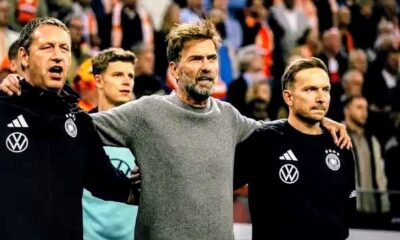


China’s state broadcaster, China Central Television (CCTV), has refused to broadcast a Real Madrid match despite an apology from French football star Kylian Mbappé over controversial remarks involving the late Chinese leader, Mao Zedong.
According to the BBC on Monday, the decision was enforced on Sunday when Real Madrid faced Racing Santander in a La Liga fixture, winning 3-0 through goals from Mbappé, Jude Bellingham and Yan Diomande.
China Media Group (CMG), the parent organisation of CCTV, had announced last Tuesday that it would suspend broadcasts of Spanish La Liga matches following widespread outrage over Mbappé’s comments.
The controversy began after the French forward reportedly said during an appearance on French talk show The Bridge that the funniest meme he had seen was one showing his face superimposed on the image of a Chinese dictator resembling Mao.
The remarks sparked anger in China, where Mao remains a highly sensitive historical and political figure.
Mbappé subsequently apologised, admitting that his comments were ill-judged and acknowledging that they had offended many people in China and Chinese communities around the world.
China’s Foreign Ministry said it took the apology seriously, while Real Madrid and La Liga also issued apologies over the incident.
However, CMG had earlier insisted that apologies from Mbappé, Real Madrid and La Liga were an absolute prerequisite for resolving the controversy.
Although the broadcaster has acknowledged the apologies, it has yet to announce when coverage of La Liga matches will resume.
The controversy has also reportedly resulted in several Chinese brands dropping Mbappé from their promotional campaigns.
Mao, who founded the People’s Republic of China in 1949 after leading the Communist Party to victory in the civil war, died in 1976.
His rule included the Great Leap Forward and the Cultural Revolution, periods associated with mass famine, political persecution and widespread violence.
China has previously taken similar action against international sporting organisations over political controversies.
In October 2019, Chinese broadcasters suspended NBA coverage for about a year after Houston Rockets general manager Daryl Morey expressed support for Hong Kong protesters in a social media post.
Morey later sought to clarify his position, saying he had listened to other perspectives and never intended to offend Chinese fans or sponsors.
The latest dispute underscores the potential commercial consequences international sports figures and organisations may face when their public comments conflict with China’s political sensitivities.
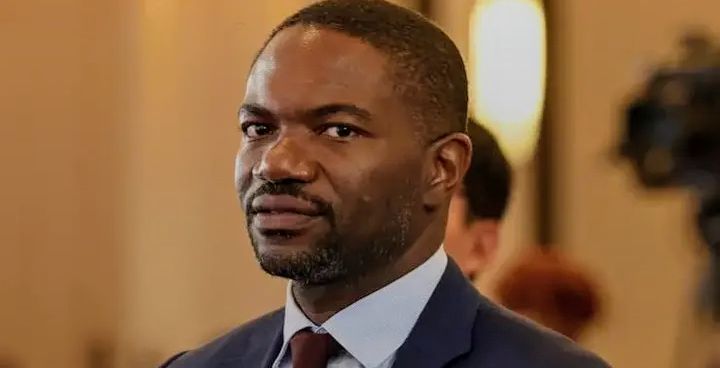
Nigerian football administrator Samson Adamu has been appointed General Secretary of the Confederation of African Football (CAF), becoming the latest Nigerian to occupy a key administrative position in African football.
CAF announced the appointment in a statement published on its official website on Sunday, following what it described as a comprehensive recruitment process.
Adamu had been serving as Acting General Secretary since March, following the resignation of his predecessor, Veron Mosengo-Omba, who later became president of the football federation in the Democratic Republic of Congo.
The new CAF General Secretary has spent eight years with the continental football governing body, having joined the organisation in 2018 as Director of Competitions before subsequently serving as Director of Tournaments and Events.
During his time at CAF, Adamu played a leading role in organising several major continental football competitions, including the Africa Cup of Nations (AFCON).
CAF President Patrice Motsepe, commenting on the appointment, said Adamu’s experience and understanding of the organisation made him suitable for the position.
“Adamu brings extensive experience in African football administration, having joined CAF in 2018 as Director of Competitions before subsequently serving as Director of Tournaments and Events.
“He has played a leading role in the delivery of several major continental competitions, including CAF’s flagship tournament, the TotalEnergies CAF Africa Cup of Nations,” Motsepe was quoted as saying.
Adamu is a graduate of the FIFA Master programme in International Management, Law and Humanities of Sport, an academic qualification that focuses on the management and administration of sports.
In his new position, he is expected to oversee CAF’s day-to-day administrative operations and support the implementation of the organisation’s strategic priorities.
He is the son of Amos Adamu, a former Director of Sports in Nigeria’s then Ministry of Sports and a former member of the FIFA Executive Committee.
His appointment also places him among a succession of CAF General Secretaries with family connections to the position, particularly members of Egypt’s Fahmy family.
Mourad Fahmy served as CAF General Secretary from 1961 to 1982 before his son, Mustapha Fahmy, took over and held the position until 2010.
Amr Fahmy, the grandson of Mourad, also served as CAF General Secretary between 2017 and 2019.
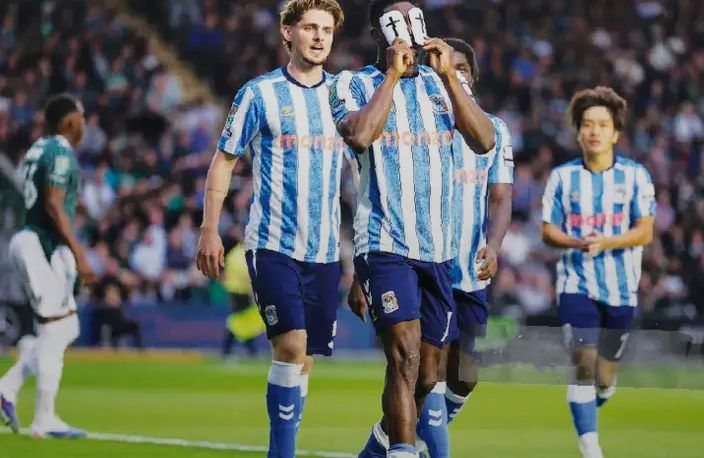
Super Eagles striker Taiwo Awoniyi ended his Premier League goal drought on Saturday as Coventry City secured a crucial 3-1 victory over Sunderland at the Coventry Building Society Arena.
Awoniyi scored his first Premier League goal of the 2026/27 campaign in the encounter, providing a timely boost for Frank Lampard’s side in their battle to avoid relegation.
The Nigerian forward found the back of the net in the 37th minute to double Coventry’s advantage after Tatsuhiro Sakamoto had opened the scoring in the 17th minute.
His goal ended a frustrating wait for a league breakthrough this season, having managed just one other goal in the EFL Cup.
Awoniyi delivered an impressive performance, repeatedly troubling Sunderland’s defence before being substituted in the 72nd minute.
The encounter was regarded as a crucial relegation battle between Coventry and bottom-placed Sunderland, who are managed by Régis Le Bris.
Coventry strengthened their grip on the contest seven minutes into the second half when Jack Rudoni scored in the 52nd minute to make it 3-0.
Sunderland reduced the deficit in the 67th minute through Enzo Le Fée, who converted a penalty following a Video Assistant Referee review.
However, the visitors struggled to build on the goal and failed to mount a serious comeback against the hosts.
Their difficult afternoon was compounded in the 99th minute when defender Omar Alderete received a second yellow card and was sent off, leaving Sunderland with 10 players.
The victory handed Coventry three valuable points as they continue their fight for Premier League survival, while Awoniyi’s breakthrough goal will provide encouragement as the season progresses.
-

 Security4 months ago
NDLEA Declares Alleged Drug Kingpin, Three Associates Wanted, Freezes ₦9.8bn Linked to Syndicate
-

 Business/Finance3 months ago
How to Apply for Tunde Onakoya’s ₦250 Million Scholarship Programme and Free Laptop Offer
-

 National Affairs3 months ago
ICPC Uncovers 908 Suspected Ghost Workers Across 50 Federal MDAs, Recovers ₦942 Million
-

 Judiciary | Public Safety3 months ago
INEC Tells Court Voter Information Is Not Confidential in Emeka Ike’s ₦10bn Lawsuit
-

 Politics3 months ago
Atiku Challenges Tinubu to Reveal Details of ₦15.13bn SUV Procurement in 2026 Budget
-

 Judiciary | Public Safety3 months ago
Court to Rule Friday on NDLEA’s Bid to Destroy ₦480bn Meth Lab in Ogun
-

 Security3 months ago
Family Paid ₦50 Million Ransom to Secure Release of Abducted Kebbi Judge
-

 News3 months ago
2026 Budget: FG Earmarks ₦962.83bn for SUVs, Empowerment Projects Amid Debt Concerns