
2027 Elections
Dino Melaye Warns FG Against Arresting Atiku

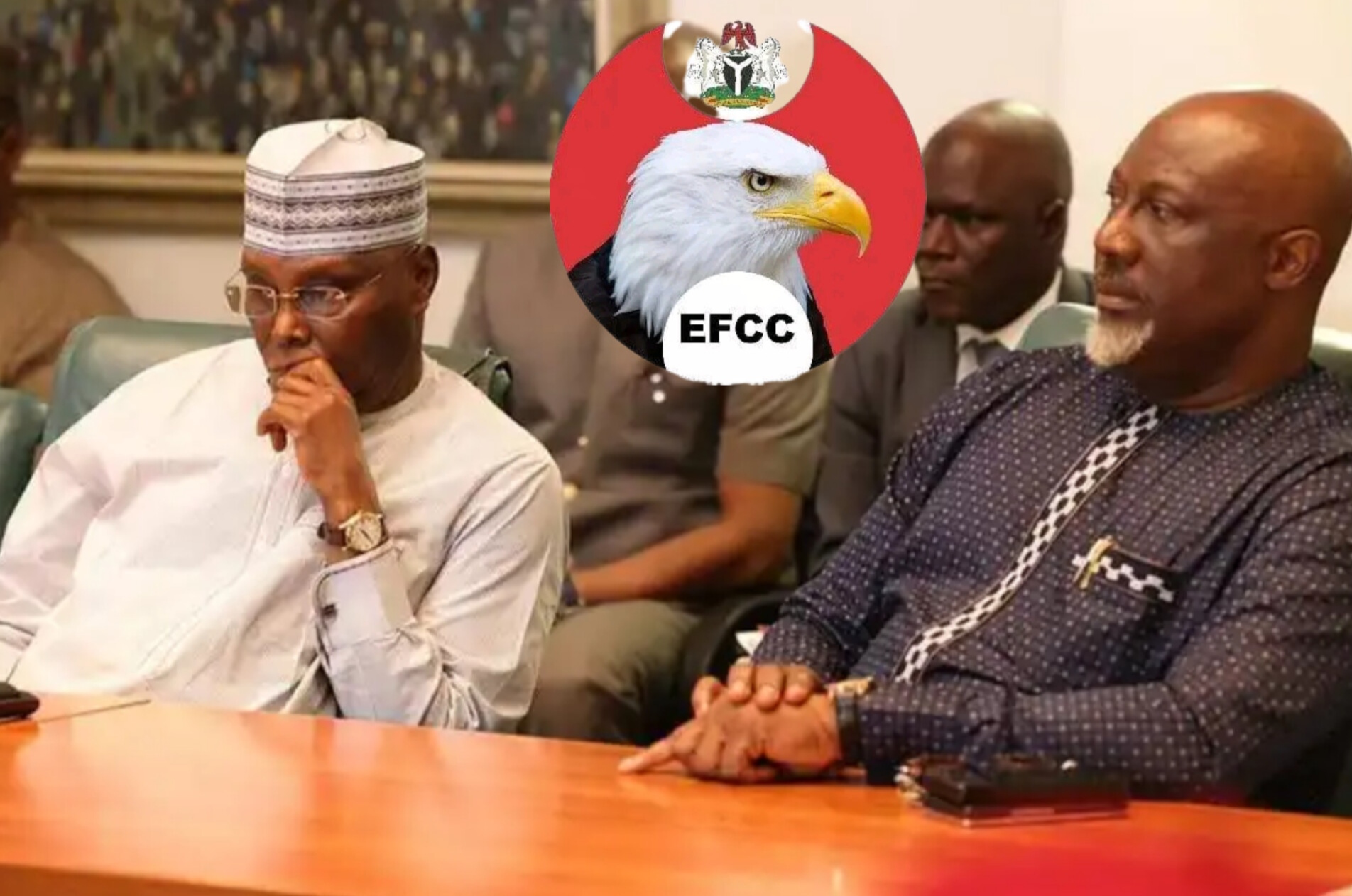
Former Kogi West Senator Dino Melaye has warned the Federal Government against inviting, interrogating or arresting African Democratic Congress (ADC) presidential candidate Atiku Abubakar over allegations of corruption.
Melaye said the ADC would mobilise Nigerians if Atiku were arrested or subjected to what he described as an unjustified investigation based on a “frivolous” petition.
The former senator’s comments add another layer to the growing political confrontation between the opposition ADC and the Federal Government as Nigeria moves closer to the 2027 general elections.
Melaye: Power Belongs to Nigerians
Melaye warned that any attempt to use state institutions to intimidate or harass Atiku would attract a response from the opposition and its supporters.
According to him, the ADC would mobilise Nigerians to demonstrate that political authority ultimately derives from the people rather than from the government or any individual office holder.
His warning was framed as a defence of Atiku against what the opposition considers politically motivated attempts to use anti-corruption institutions against its presidential candidate.
However, allegations contained in any petition against Atiku remain allegations unless investigated and established through due process. A petition itself does not constitute proof of wrongdoing.
Atiku Faces Corruption Allegations
The latest controversy comes against the backdrop of previous corruption allegations involving Atiku and renewed political attacks ahead of the 2027 presidential election.
In 2023, then-APC presidential campaign spokesperson Festus Keyamo petitioned the EFCC, ICPC and Code of Conduct Bureau, calling for Atiku to be investigated over allegations relating to the handling of public funds through entities he was associated with.
Atiku rejected the allegations and accused his opponents of using them to distract Nigerians from substantive political issues.
The current situation should therefore be distinguished from established findings of guilt: an invitation by a law-enforcement agency, if issued, would ordinarily be part of an investigative process and would not by itself amount to a conviction.
ADC and the 2027 Political Contest
Atiku’s position as the ADC’s presidential candidate places the issue within an increasingly competitive opposition landscape ahead of the 2027 elections.
The former vice president has emerged as one of the principal opposition figures challenging President Bola Tinubu’s administration.
For the ADC, any investigation involving its presidential candidate could therefore have significant political consequences, particularly if it occurs during the election cycle.
For the government and law-enforcement agencies, however, the central issue would be whether any investigation is based on credible evidence and conducted in accordance with Nigerian law, rather than whether the person involved is a presidential candidate.
The Bigger Issue: Politics and State Institutions
Melaye’s warning also revives a longstanding question in Nigerian politics: how should anti-corruption institutions handle allegations involving major opposition politicians without creating the perception that law enforcement is being used for political purposes?
The government has a legitimate responsibility to investigate credible allegations of corruption, regardless of the political status of the person involved.
At the same time, opposition parties and candidates have the right to demand due process and challenge investigations they consider politically motivated.
The balance between those two principles will be particularly important as the country approaches the 2027 elections.
A confrontation that turns a legitimate investigation into a political mobilisation campaign could further intensify tensions, while failure to investigate credible allegations because of a person’s political position would equally raise questions about accountability.
For now, Melaye’s warning signals that the ADC intends to treat any move against Atiku as a potentially broader political issue, one that could mobilise opposition supporters beyond the immediate allegations.









The Independent National Electoral Commission has commenced strategic engagement with the Joint National Association of Persons with Disabilities and Organisations of Persons with Disabilities as part of efforts to increase the participation of persons with disabilities in the 2027 general elections.
The engagement, which also involved cluster heads, focused on sensitisation and mobilisation of persons with disabilities to ensure that eligible voters are adequately informed, effectively reached and meaningfully involved at every stage of the electoral process.
The initiative comes as preparations for the 2027 general elections gather momentum, with the electoral commission seeking greater inclusivity and accessibility for all eligible voters.
In a post on its X handle on Wednesday, the Acting Chairman of INEC, Prof. Rhoda Gumus, who represented the Commission’s Chairman, Prof. Joash Amupitan, SAN, said the engagement was timely.
Gumus said INEC was committed to building an electoral process that would be inclusive, accessible, participatory and responsive to the needs of all eligible citizens.
“The Commission is committed to building an electoral process that is inclusive, accessible, participatory and responsive to the needs of all eligible citizens,” she said.
She noted that the participation of persons with disabilities in elections was backed by relevant legal and policy frameworks.
These include Section 54 of the Electoral Act 2026, the Discrimination Against Persons with Disabilities (Prohibition) Act 2018 and INEC’s Framework on Access and Participation of Persons with Disabilities in the Electoral Process.
The Acting Chairman, however, stressed the need for innovative approaches to voter education to ensure that electoral information reaches persons with different forms of disabilities.
“We must explore innovative approaches to voter education, including disability-specific communication channels, community-based organisations, radio, social media and other assistive formats,” Gumus said.
INEC releases disability voter data
The Commission disclosed that its available data, compiled before the introduction of the Automated Fingerprint Identification System, recorded 137,487 persons with disabilities.
According to INEC, the figure comprises 13,080 visually impaired persons, 9,299 hearing-impaired persons, 30,561 persons with albinism, 19,430 persons with physical impairments and 54,941 persons under other disability categories.
The Commission’s engagement with disability organisations is expected to help bridge information gaps and address challenges that could prevent eligible persons with disabilities from participating effectively in the electoral process.
Gumus urged JONAPWD and the various Organisations of Persons with Disabilities to take ownership of the sensitisation campaign by reaching their members across different disability clusters.
She said members should receive timely and accurate information about voter registration, Permanent Voter Card collection, voting procedures, accessibility measures and other aspects of the electoral process.
“I urge JONAPWD and the Organisations of Persons with Disabilities to take ownership of this sensitisation process and ensure that members within your respective clusters receive timely and accurate information,” she said.
Stakeholders to identify barriers before 2027 polls
According to Gumus, the engagement also provides an opportunity for stakeholders to identify barriers that could affect the participation of persons with disabilities before, during and after the 2027 elections.
She said stakeholders would be able to share successful strategies and agree on practical measures to improve the experience of persons with disabilities throughout the electoral process.
“This engagement provides an opportunity to identify barriers to participation, share successful strategies and agree on practical actions that can be implemented before, during and after the elections,” Gumus said.
The Director of Gender and Inclusivity at INEC, Mrs Lakunuya Dorothy Bello, also highlighted some measures already introduced by the Commission to improve accessibility for voters with disabilities.
Among the measures are Braille ballot guides, magnifying glasses, the EC30 PWD form and sign-language interpretation during collation activities.
The Commission said the latest engagement forms part of its broader efforts to ensure that persons with disabilities are adequately informed and able to participate fully in the electoral process.
INEC said continued collaboration with JONAPWD, OPDs and other relevant stakeholders would be important in identifying practical solutions to accessibility challenges ahead of the 2027 general elections.
2027 Elections
2027: APC Governors Reject Parallel Structures as Wike’s Rainbow Coalition Tests Tinubu’s Political Alliance
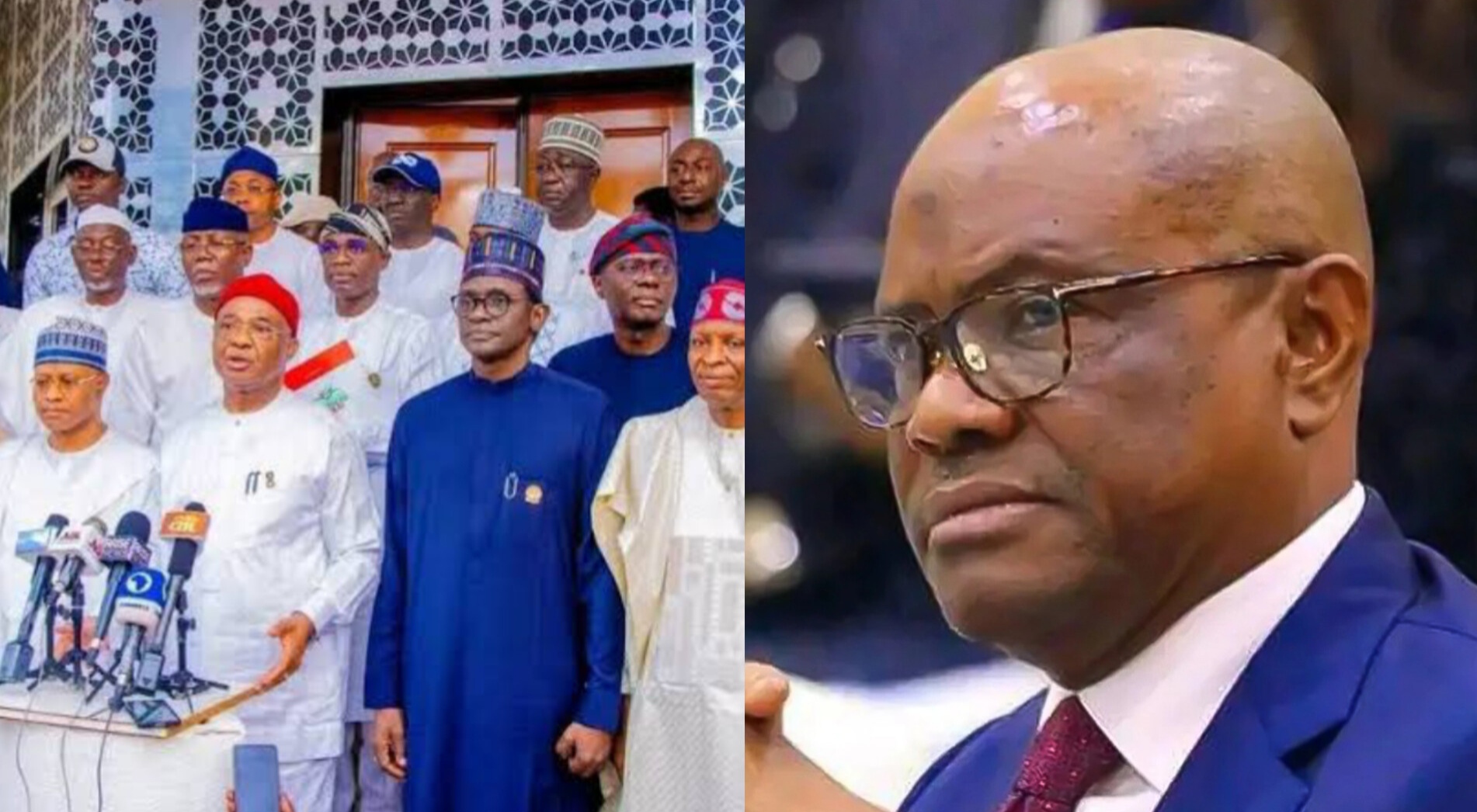
The All Progressives Congress (APC) Governors’ Forum has rejected political alliances and parallel structures that could weaken the ruling party or undermine President Bola Ahmed Tinubu’s re-election bid in the 2027 general elections.
The governors said they would not support candidates outside the APC or participate in political arrangements capable of creating divided loyalty within the party.
The position was reached at a closed-door meeting of APC governors in Abuja on Monday night and announced by the Chairman of the Progressive Governors Forum and Imo State Governor, Hope Uzodimma.
The declaration comes amid growing political tension surrounding the Rainbow Coalition associated with Minister of the Federal Capital Territory, Nyesom Wike, who remains a member of the Peoples Democratic Party (PDP) while serving in the APC-led Federal Government.
Wike has maintained that his political coalition is primarily designed to support Tinubu’s re-election in 2027.
However, the emergence of candidates and political interests operating across different party platforms has generated concern among APC governors that the arrangement could weaken the party’s candidates in governorship, National Assembly and state assembly contests.
Reading the communiqué after the meeting, Uzodimma said APC governors would remain committed to candidates officially sponsored by the party.
“The APC Governors Forum unanimously resolved that its members will not participate in, support or endorse any alliance or political arrangement capable of undermining the re-election of Mr President, weakening the APC or adversely affecting any candidate of the party at all levels,” he said.
The Imo governor added that the governors had no intention of supporting candidates who were not running on the APC platform.
He said the governors’ campaign commitment would be exclusively directed towards APC candidates, with the party’s campaign structure expected to align with Tinubu’s re-election strategy and the broader objectives of the APC.
The declaration effectively establishes a position that APC governors will not treat support for Tinubu at the presidential level as a licence to support rival candidates in other elections.
The development places Wike’s political project at the centre of an increasingly complicated calculation within the ruling party.
Wike has promoted a broad political coalition bringing together politicians across party lines while maintaining support for Tinubu’s presidential ambition.
That strategy creates a potential distinction between support for Tinubu and support for APC candidates.
For the APC governors, the concern is that a political structure capable of mobilising voters for Tinubu while simultaneously supporting candidates from other parties could weaken the ruling party’s candidates in the same election cycle.
Reports have identified growing political tensions associated with the coalition in states including Rivers, Kwara, Gombe and Cross River.
The governors’ objection is therefore not simply about whether Wike supports Tinubu. It is also about who controls the political machinery through which votes are mobilised and which candidates ultimately benefit from that machinery.
The split-ticket voting concern
At the heart of the disagreement is the possibility of split-ticket voting.
Under such an arrangement, a voter could support Tinubu for president while voting for a candidate from another party in a governorship or legislative contest.
For Wike and his allies, such an arrangement can be presented as a way of building a broad coalition around the presidency without requiring every participant to join the APC.
For APC governors, however, it creates a direct threat to the party’s candidates.
The governors’ latest resolution suggests that they want the 2027 campaign architecture to operate as a unified structure, rather than one in which different political blocs mobilise voters for different candidates.
Wike and APC governors already at odds
The latest development also follows increasingly public disagreements between Wike and some APC governors.
Wike recently alleged that Uzodimma and Kwara State Governor AbdulRahman AbdulRazaq were behind political opposition to his activities.
According to reports, Wike linked the resistance to the expansion of his Rainbow Coalition and its growing influence among politicians seeking electoral opportunities outside the APC.
The governors’ latest resolution did not name Wike or the Rainbow Coalition directly. Nevertheless, the timing and content of the declaration have been widely interpreted as a response to the political arrangement associated with the FCT minister.
A test of Tinubu’s 2027 coalition strategy
The disagreement presents an important political challenge for the Tinubu camp.
The President’s re-election strategy could benefit from support beyond the formal APC structure, particularly from influential politicians who remain members of opposition parties but are willing to support his presidential bid.
At the same time, APC governors have their own electoral interests. Their political survival depends not only on the President’s performance at the presidential level but also on the success of APC candidates seeking governorship, Senate, House of Representatives and state assembly seats.
That creates a potentially delicate balance between Tinubu’s national coalition-building strategy and the APC’s institutional interest in protecting its candidates at every level.
For Wike, the challenge is equally significant. His continued influence within the Tinubu administration gives him access to national political space, but his decision to remain in the PDP while promoting a cross-party coalition places him outside the formal structure of the ruling party.
The governors’ resolution shows that they are increasingly unwilling to allow that distinction to translate into competing political structures within states controlled by the APC.
The immediate question is whether the governors’ position will remain a political warning or develop into a broader confrontation over the structure of the 2027 campaign.
Wike has consistently argued that his political activities are intended to strengthen Tinubu’s chances. The APC governors, however, are insisting that support for the President must not come at the expense of the party’s candidates.
That difference could become increasingly important as the 2027 election approaches and parties begin finalising candidates, alliances and campaign structures.
For now, the APC governors have made their position clear: Tinubu’s re-election and the electoral fortunes of APC candidates must not be separated in a way that creates competing political loyalties within the ruling party.
The emerging contest, therefore, may be less about whether Wike supports Tinubu and more about who controls the political machinery that will determine how that support translates into votes in 2027.
The Peoples Democratic Party (PDP) has said its political collaboration with the Accord Party in Osun State ended with the conclusion of the state’s August 15 governorship election.
National Treasurer of the PDP, Diran Odeyemi, disclosed this while outlining the party’s preparations for the 2027 general elections and reaffirming the party’s support for Senator Olubiyi Fadeyi Ajagunla as its candidate for the Osun Central Senatorial District.
Odeyemi said the PDP was now focused on mobilising its members and supporters for the forthcoming elections, declaring that the party’s candidates were ready to commence campaign activities.
He explained that the PDP had deployed its political structure to support the re-election bid of Governor Ademola Adeleke, who contested the governorship election on the platform of the Accord Party.
According to him, the understanding between the PDP and Accord was specifically tied to the governorship election and had now expired.
“The agreement between the party and Accord ended with the Governorship election and now the party is ready to support and work for Senator Ajagunla during the 2027 poll,” Odeyemi said.
He further declared that Fadeyi remained the PDP’s candidate for Osun Central Senatorial District in the 2027 election.
“In the Osun Central Senatorial District, Senator Olubiyi Fadeyi Ajagunla is our candidate and the PDP will campaign and work with him,” he said.
Odeyemi also acknowledged the cordial relationship between him and Gani Olaoluwa, the Accord Party’s senatorial candidate for Osun Central, but stressed that the PDP’s decision was based on party interests.
“Gani Olaoluwa, the Accord Party Senatorial candidate for Osun Central is my very good friend. I have nothing against him, but this is a party affair. I have been informed as the National Treasurer of the PDP to deliver for the party,” he added.
The PDP chieftain maintained that the political arrangement with Accord in Osun was no longer in operation following the governorship election.
“The arrangement we had with Accord in Osun has ended with Governor Adeleke’s election,” he stated.
Fadeyi returns to PDP
Fadeyi, who previously represented Osun Central on the platform of the All Progressives Congress (APC), recently announced his return to the PDP.
The lawmaker confirmed his defection during a telephone interview, stating that he had formally communicated his decision to the Senate.
“I am back in the PDP led by the FCT Minister, His Excellency, Nyesom Wike. I have already written to the Senate,” Fadeyi said.
He also confirmed his emergence as the PDP candidate for the Osun Central senatorial seat in the 2027 election.
“I can also confirm to you that I am the candidate for Osun Central Senatorial District for the 2027 Senate election,” he added.
In his letter to the Senate explaining his departure from the APC, Fadeyi cited the conduct of the party’s 2027 National Assembly primary for Osun Central.
His return to the PDP is expected to further shape the political contest for the Osun Central senatorial seat ahead of the 2027 general elections, with the PDP signalling its intention to deploy its structures behind his candidacy.
The development also marks a clear shift in the PDP’s political strategy in Osun State, as the party moves away from its temporary electoral understanding with Accord and begins preparations for the 2027 general elections.
-
 Security2 months ago
NDLEA Declares Alleged Drug Kingpin, Three Associates Wanted, Freezes ₦9.8bn Linked to Syndicate
-

 National Affairs2 months ago
ICPC Uncovers 908 Suspected Ghost Workers Across 50 Federal MDAs, Recovers ₦942 Million
-

 Business/Finance2 months ago
How to Apply for Tunde Onakoya’s ₦250 Million Scholarship Programme and Free Laptop Offer
-

 Politics2 months ago
Atiku Challenges Tinubu to Reveal Details of ₦15.13bn SUV Procurement in 2026 Budget
-

 Judiciary | Public Safety2 months ago
INEC Tells Court Voter Information Is Not Confidential in Emeka Ike’s ₦10bn Lawsuit
-
 Judiciary | Public Safety2 months ago
Court to Rule Friday on NDLEA’s Bid to Destroy ₦480bn Meth Lab in Ogun
-

 Breaking News2 months ago
Girl Dies in Uyo House Fire After Allegedly Accompanying Man Home from Nightclub
-
 Security1 month ago
Family Paid ₦50 Million Ransom to Secure Release of Abducted Kebbi Judge