
Business/Finance
Full List: Meet the 2026 Nobel Prize Winners in All Six Categories

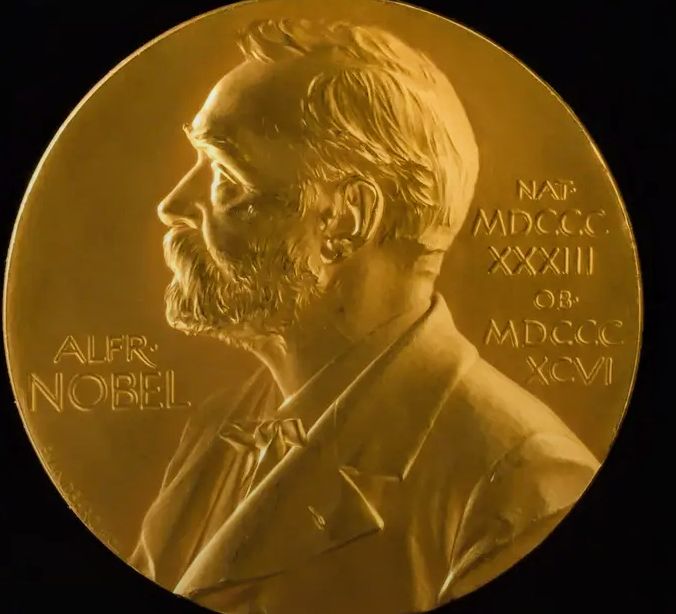
The 2026 Nobel Prize announcements have highlighted contributions to science, literature, international law and economics, with laureates recognised across six categories for work aimed at advancing knowledge and benefiting humanity.
The annual announcements began on October 5 with the Nobel Prize in Physiology or Medicine and concluded on Monday, October 12, with the Sveriges Riksbank Prize in Economic Sciences in Memory of Alfred Nobel.
The six categories cover physiology or medicine, physics, chemistry, literature, peace and economic sciences. The prizes recognise achievements ranging from scientific discoveries and literary creativity to efforts to strengthen international justice and improve understanding of economic policy.
The Nobel Prize was established through the will of Swedish inventor and industrialist Alfred Nobel, who directed that his fortune be used to reward individuals whose contributions brought significant benefits to humanity.
The economics prize was introduced later by Sweden’s central bank, Sveriges Riksbank, in memory of Alfred Nobel. It was first awarded in 1969.
1. Medicine: Karl Deisseroth, Peter Hegemann and Georg Nagel
The Nobel Prize in Physiology or Medicine was reported to have been awarded to American scientist Karl Deisseroth and German scientists Peter Hegemann and Georg Nagel for discoveries involving light-gated ion channels and optogenetics.
Optogenetics is a research technique that enables scientists to control the activity of specific nerve cells using light. The method has become an important tool in neuroscience, allowing researchers to investigate how particular brain cells influence memory, emotions, movement and behaviour.
Hegemann and Nagel contributed to the discovery and study of light-sensitive proteins found in algae, while Deisseroth helped develop techniques for applying these discoveries to the study of nerve cells.
The approach has expanded researchers’ ability to investigate brain activity and explore the biological mechanisms underlying neurological and psychiatric conditions.
About the reported winners
Karl Deisseroth: Born in 1971, Deisseroth is an American neuroscientist and psychiatrist at Stanford University, where he is a professor of bioengineering and psychiatry and behavioural sciences. He obtained his medical and doctoral degrees from Stanford.
Peter Hegemann: Born in 1954, Hegemann is a German neuroscientist associated with Humboldt University of Berlin.
His research has focused on light-sensitive proteins and the mechanisms through which organisms respond to light.
Georg Nagel: Born in 1953, Nagel is a German scientist and professor of molecular plant physiology at the University of Würzburg. His work on light-sensitive proteins contributed to the development of optogenetics.
2. Physics: Francis Halzen
Belgian-American physicist Francis Halzen was reported to have won the 2026 Nobel Prize in Physics for his contributions to the IceCube Neutrino Observatory and the discovery of high-energy neutrinos originating from astrophysical sources.
Neutrinos are subatomic particles that interact extremely weakly with matter, allowing them to travel vast distances through the universe with little interference.
Studying these particles gives scientists another way to investigate some of the universe’s most energetic phenomena, including processes associated with distant galaxies and black holes.
Halzen played a leading role in developing the IceCube Neutrino Observatory, a large scientific installation embedded in Antarctic ice near the South Pole.
The observatory uses thousands of optical sensors to detect faint flashes of light produced when neutrinos interact with matter. These observations help scientists trace the particles to their possible cosmic sources.
About the reported winner
Halzen was born in Belgium in 1944. He studied at the Catholic University of Leuven, now KU Leuven, where he obtained his master’s and doctoral degrees.
He joined the University of Wisconsin–Madison’s physics faculty in 1972 and became a leading figure in neutrino astronomy.
His work on IceCube helped establish neutrino detection as an important method for studying the universe beyond conventional astronomical observations.
3. Chemistry: Henri B. Kagan and Kenso Soai
French chemist Henri B. Kagan and Japanese chemist Kenso Soai were reported to have won the 2026 Nobel Prize in Chemistry for research involving asymmetric organic synthesis and chemical reactions that favour one of two mirror-image forms of a molecule.
Many molecules exist in two forms that resemble each other as mirror images but cannot be superimposed. These forms, known as enantiomers, can behave differently in biological systems.
Controlling which form a chemical reaction produces is particularly important in pharmaceutical research because different molecular forms can interact differently with biological targets.
Kagan’s research advanced asymmetric catalysis, which enables chemists to favour the production of one molecular form over another.
Soai became known for research into asymmetric autocatalysis, in which a reaction product helps promote the production of more molecules with the same handedness. This work is associated with the Soai reaction.
Together, their reported contributions highlight the importance of controlling molecular structure in modern chemistry.
About the reported winners
Henri B. Kagan: Kagan is a French chemist recognised for his research in stereochemistry and asymmetric catalysis. He has been associated with Université Paris-Sud, now part of Université Paris-Saclay.
His work contributed to methods for controlling the three-dimensional structures of molecules produced during chemical reactions.
Kenso Soai: Born in Hiroshima Prefecture, Japan, in 1950, Soai graduated from the University of Tokyo and obtained a Doctor of Science degree.
He later became a professor at Tokyo University of Science, where his research on asymmetric autocatalysis led to the discovery associated with the Soai reaction. He is now a professor emeritus at the institution.
4. Literature: Anne Carson
Canadian poet, essayist, classicist and translator Anne Carson was reported to have received the 2026 Nobel Prize in Literature for a body of work combining classical traditions with innovative forms of contemporary writing.
Carson’s writing frequently explores ancient Greek literature, philosophy and mythology while connecting classical ideas with modern experiences.
Her work crosses conventional boundaries between poetry, prose, translation and literary scholarship, creating a distinctive style that has attracted international recognition.
Her reported selection highlights the continuing influence of classical literature on contemporary writing and the possibilities of combining academic scholarship with creative expression.
About the reported winner
Carson was born on June 21, 1950, in Toronto, Canada.
She studied at the University of Toronto, earning bachelor’s and master’s degrees in 1974 and 1975, respectively, before completing her PhD there in 1981.
Her notable works include Eros the Bittersweet, Autobiography of Red and If Not, Winter: Fragments of Sappho.
Carson has received several literary honours, including a MacArthur Fellowship, Guggenheim Fellowships and Spain’s Princess of Asturias Award for Literature. She was appointed a Member of the Order of Canada in 2005.
5. Peace: Navanethem ‘Navi’ Pillay
South African jurist and former United Nations High Commissioner for Human Rights Navanethem ‘Navi’ Pillay was reported to have won the 2026 Nobel Peace Prize for her contributions to international law, human rights and efforts to promote accountability for serious international crimes.
Her reported recognition underscores the role of legal institutions in addressing war crimes, crimes against humanity and genocide.
Pillay’s career has included defending activists during apartheid, serving in international judicial institutions and leading human rights work at the United Nations.
Her work has focused on strengthening the international legal framework for protecting human rights and ensuring that perpetrators of serious violations can be held accountable.
About the reported winner
Pillay was born in 1941 in Durban, South Africa, into a family of Indian Tamil descent.
She became a lawyer during apartheid and established her own law firm in 1967.
She later studied at Harvard University, earning a Doctor of Juridical Science degree in 1988. In 1995, she became a judge of South Africa’s High Court.
In 1999, she became a judge of the International Criminal Tribunal for Rwanda and subsequently served as its president.
Pillay also served as a judge of the International Criminal Court and as the UN High Commissioner for Human Rights from 2008 to 2014.
Between 2021 and 2025, she chaired the UN Independent International Commission of Inquiry on the Occupied Palestinian Territory.
6. Economic Sciences: Robert E. Hall and Michael Woodford
American economists Robert E. Hall and Michael Woodford were reported to have received the 2026 Sveriges Riksbank Prize in Economic Sciences in Memory of Alfred Nobel for work described as concerning the microeconomic foundations of macroeconomic stabilisation.
The Royal Swedish Academy of Sciences reportedly announced the award on Monday, October 12, concluding this year’s Nobel Prize announcement calendar.
The research attributed to the economists focuses on improving the understanding of how governments and central banks can stabilise economies during recessions and periods of rapid economic growth.
The underlying approach considers how individual households and businesses make decisions about spending, saving, investment and prices, as well as how their expectations about future government policies influence economic activity.
By incorporating these decisions into broader economic models, researchers can better examine the effects of fiscal and monetary policies.
Such research is relevant to debates about inflation, unemployment, interest rates and the measures governments and central banks use to respond to economic instability.
About the reported winners
Robert E. Hall: Born in 1943 in Palo Alto, California, Hall obtained his PhD from the Massachusetts Institute of Technology in 1967.
He is a professor at Stanford University and is known for research into macroeconomics, economic fluctuations and consumer behaviour.
Michael Woodford: Born in 1955 in Chicopee, Massachusetts, Woodford obtained his PhD from the Massachusetts Institute of Technology in 1983.
He is a professor at Columbia University in New York and is recognised for his work on monetary policy, economic expectations and macroeconomic theory.
How the economics prize differs from the original Nobel Prizes
The economics award differs from the five original Nobel Prize categories because it was established by Sweden’s central bank in 1968 in memory of Alfred Nobel and first awarded in 1969.
Although it is not one of the original categories specified in Nobel’s will, it is administered alongside the other Nobel Prizes and follows a similar selection and presentation process.
When will the 2026 Nobel Prizes be presented?
The Nobel laureates traditionally receive their medals and diplomas at ceremonies held on December 10, the anniversary of Alfred Nobel’s death in 1896.
The Nobel Peace Prize ceremony takes place in Oslo, Norway, while the ceremonies for the other Nobel Prize categories are held in Stockholm, Sweden.
The annual awards recognise achievements across scientific research, literature, peace and economic sciences, drawing international attention to work that has influenced knowledge, public policy and society.
Important publication note: The names and award citations in this report have not been independently verified. Confirm all six categories and the reported laureates against the official Nobel Prize announcements before publication.


The National Insurance Commission (NAICOM) has warned that Nigeria’s insurance industry may struggle to achieve lasting financial stability if operators fail to strengthen corporate governance, risk management and accountability, despite ongoing recapitalisation efforts.
The commission stressed that raising additional capital alone would not guarantee the resilience of insurance companies, noting that their ability to protect, manage and effectively deploy the funds would determine their long-term sustainability.
The Commissioner for Insurance and Chief Executive of NAICOM, Olusegun Omosehin, gave the warning at the eighth Annual Insurance Directors’ Conference, organised by the College of Insurance and Financial Management in collaboration with NAICOM in Lagos on Thursday.
The conference was themed, ‘Recapitalisation to Resilience: Leading the Risk-Based Capital Era’.
Omosehin said recapitalisation was only the first step towards building financially stronger insurance institutions, urging operators to move beyond meeting minimum regulatory capital requirements to developing businesses capable of withstanding economic shocks, technological disruptions and emerging risks.
He explained that the Minimum Capital Requirement represents the minimum funds an insurance company must maintain to operate its licensed business, while Risk-Based Capital takes into account the nature, size and complexity of the risks carried by individual institutions.
According to him, an insurance company could satisfy its prescribed minimum capital requirement but still lack sufficient capital to support its actual risk exposure.
He said NAICOM would consequently intensify its focus on the quality of capital, corporate governance structures, risk management systems, financial reporting and insurers’ capacity to meet claims obligations.
The commissioner warned that successful recapitalisation would not exempt insurance operators from continuous regulatory scrutiny, emphasising the need for accurate financial records and timely submission of reliable information to the commission.
He also identified poor underwriting decisions, excessive operating expenses, inappropriate investments and uncontrolled business expansion as factors capable of eroding insurers’ capital.
Speaking at the conference, the President of the Chartered Insurance Institute of Nigeria, Akinjide Orimilade, said the new regulatory environment would place greater responsibility on directors, chief executives and other key management personnel.
Orimilade maintained that insurance companies must move beyond simply satisfying statutory requirements, warning that directors could be held accountable where poor oversight and failure to exercise reasonable care exposed their institutions to significant risks.
He identified directors’ qualifications, professional experience, character, board independence, effectiveness of board committees and related-party transactions as critical areas requiring attention under the new regulatory framework.
He also stressed the importance of regular board assessments and compliance with NAICOM’s fit-and-proper requirements, cautioning that membership of an insurance company’s board should not be treated as an honorary position.
According to him, the Nigerian Insurance Industry Reform Act, signed into law on July 31, 2025, represents a major overhaul of the country’s insurance legislation and provides the foundation for the sector’s transition.
Orimilade disclosed that approximately 50 insurance operators had met the new recapitalisation thresholds, with NAICOM reporting statutory capital of about N715bn.
Meanwhile, the Special Adviser to the President on Economic Affairs, Tope Fasua, said the insurance industry must prioritise public confidence, improve insurance penetration and strengthen operational efficiency as it enters the post-recapitalisation era.
He noted that changing customer expectations, technological innovation, emerging risks and evolving regulatory requirements required insurance companies to rethink their business models and improve their institutional capacity.
Fasua urged industry leaders to use the conference to develop practical strategies for strengthening governance, expanding insurance coverage and positioning Nigerian insurance operators for long-term sustainability.
Similarly, the Minister of Finance, Taiwo Oyedele, represented by his Special Adviser on Public Finance, Greg Ezeilo, described a resilient insurance industry as essential to Nigeria’s economic development.
He said the sector played an important role in mobilising long-term capital, protecting businesses and households, and supporting productive investments.
According to him, insurance companies could make greater contributions to infrastructure financing, agriculture, manufacturing and trade if they developed the financial and institutional capacity to underwrite emerging risks.
Oyedele identified stronger corporate governance, wider insurance access, technology adoption, improved risk management and investment in human capital as key priorities for the sector.
He also called for the development of affordable and accessible insurance products for households, small businesses, farmers and underserved communities.
The minister stressed that insurance should become an everyday financial protection mechanism accessible to a wider segment of the population rather than a privilege enjoyed by a limited group.

The Nigeria Customs Service (NCS), Apapa Area Command, has generated N302bn in revenue in October 2026, representing an increase of N20bn compared with the N282bn collected in September.
The command’s Public Relations Officer, Isah Sulaiman, disclosed this in a statement on Thursday, noting that the October collection represented a month-on-month growth of approximately 7.13 per cent.
“The Apapa Area Command generated N302bn in October 2026, representing an increase of N20bn over the N282bn recorded in September 2026. This represents a month-on-month growth of approximately 7.13 per cent,” Sulaiman said.
He described the performance as another significant revenue achievement, noting that the command had surpassed the N300bn threshold following its record-breaking collection of over N323bn in July 2026.
He said the consignments were jointly examined with relevant sister agencies, demonstrating the command’s commitment to preventing the use of Nigeria’s maritime gateway for illicit trade and safeguarding public health and national security.
The Customs Area Controller reiterated that the command would continue to strengthen revenue generation, intensify enforcement operations and build stronger partnerships with stakeholders to improve port efficiency.
He maintained that the command would sustain a balanced approach that protects government revenue and national security while creating an enabling environment for legitimate trade and economic growth.
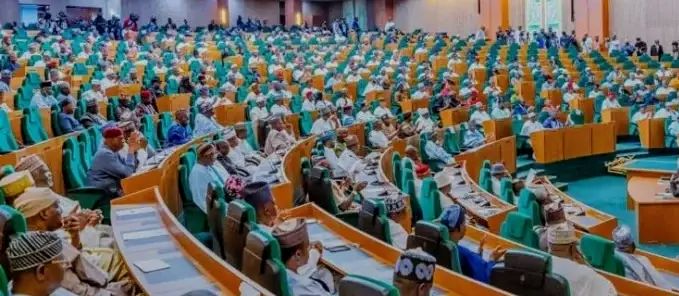
The House of Representatives has resolved to invite the Governor of the Central Bank of Nigeria (CBN), Olayemi Cardoso, to explain alleged breaches of pension agreements and the non-payment of outstanding benefits to retired employees of the apex bank.
The resolution followed the adoption of a motion on Tuesday titled, “Need to investigate the Central Bank of Nigeria for alleged breach of approved pension agreements, non-implementation of harmonisation policy and exclusion of pensioners from general pension increases.”
The motion was moved by the member representing Igabi Federal Constituency of Kaduna State, Hussaini Jallo, who raised concerns over the alleged failure of the CBN to honour agreements governing the pension entitlements and welfare of its retired employees.
Presenting the motion, Jallo said the alleged non-implementation and faulty execution of the pension harmonisation policy might have created disparities in pension payments and led to the accumulation of unpaid arrears, leaving affected retirees in financial hardship.
He expressed concern that pensioners who depend on their retirement benefits for their livelihood were being denied entitlements allegedly due to them.
“The House is concerned that the alleged non-implementation and faulty execution of the harmonisation policy may have led to disparities in pension benefits and the accumulation of unpaid arrears, ultimately denying rightful entitlements and imposing severe financial hardship on affected pensioners who depend on these funds for their livelihood,” he said.
The lawmaker also questioned allegations that some retired CBN employees had been excluded from general pension increases because of additional or extra-statutory demands that might not align with existing laws, binding agreements or approved pension policies.
Jallo further disclosed that the number of CBN pensioners had dropped from 5,104 in 2011 to approximately 3,000, representing a decline of more than 2,100 retirees.
He said the figures indicated an average reduction of about 140 pensioners annually, warning that the mortality rate could increase as the surviving retirees continued to advance in age.
According to him, prolonged delays in the payment of pension benefits could expose elderly and vulnerable pensioners to poverty, ill health and avoidable loss of life.
He maintained that Nigerians who had served the country deserved fairness, transparency and the prompt payment of all benefits lawfully due to them.
“The House acknowledges the need for legislative oversight to establish the facts, determine the extent of any breaches or administrative failures, and ensure that all eligible pensioners receive their lawful entitlements,” Jallo said.
The motion received overwhelming support from lawmakers during a voice vote conducted at plenary presided over by the Speaker, Tajudeen Abbas.
Following its adoption, the House urged the CBN and other relevant authorities to verify and pay all outstanding pension arrears lawfully due to affected retirees within a reasonable and clearly defined period.
It also called for the extension of applicable general pension increases to eligible pensioners in accordance with relevant laws.
The lawmakers subsequently invited Cardoso and other relevant officials, alongside pension administrators, regulators and representatives of the affected pensioners, to appear before the House and provide explanations.
They are also expected to submit relevant documents to assist the investigation.
The House mandated its Committee on Pension to investigate allegations of non-compliance by the CBN with contractual agreements governing the administration and payment of retirement benefits to its former employees.
The committee is expected to examine the terms and obligations contained in the agreements, particularly the circumstances surrounding the non-implementation of the harmonisation policy, the reasons for the delay and the total amount of outstanding arrears.
It will also investigate the alleged exclusion of eligible pensioners from general pension increases on the basis of extra-statutory demands and determine whether such actions comply with applicable laws, contractual obligations and approved pension policies.
As part of its assignment, the committee will review relevant documents, including contractual agreements, policy circulars, payment records and actuarial reports, to establish responsibility for any administrative failures or breaches.
It is also expected to recommend appropriate corrective measures, including the non-discriminatory extension of applicable general pension increases to all eligible retirees in line with relevant laws and approved policies.
-

 Security4 months ago
NDLEA Declares Alleged Drug Kingpin, Three Associates Wanted, Freezes ₦9.8bn Linked to Syndicate
-

 National Affairs4 months ago
ICPC Uncovers 908 Suspected Ghost Workers Across 50 Federal MDAs, Recovers ₦942 Million
-

 Business/Finance3 months ago
How to Apply for Tunde Onakoya’s ₦250 Million Scholarship Programme and Free Laptop Offer
-

 Judiciary | Public Safety4 months ago
INEC Tells Court Voter Information Is Not Confidential in Emeka Ike’s ₦10bn Lawsuit
-

 Politics3 months ago
Atiku Challenges Tinubu to Reveal Details of ₦15.13bn SUV Procurement in 2026 Budget
-

 Judiciary | Public Safety4 months ago
Court to Rule Friday on NDLEA’s Bid to Destroy ₦480bn Meth Lab in Ogun
-

 News3 months ago
2026 Budget: FG Earmarks ₦962.83bn for SUVs, Empowerment Projects Amid Debt Concerns
-

 Security3 months ago
Family Paid ₦50 Million Ransom to Secure Release of Abducted Kebbi Judge