
Business/Finance
World Bank: Nigerian States’ Revenues Rise 93%, Education Spending Drops

The World Bank has disclosed that revenues generated by Nigeria’s 36 states increased by 93 per cent between 2023 and 2025, even as education’s share of total state expenditure declined during the period.
The bank made this known in its latest Nigeria Development Update, which examined the relationship between increased public revenues and spending priorities across the federation.
The report was made available to the News Agency of Nigeria by the World Bank in Washington, D.C.
According to the report, aggregate revenues of the states rose by approximately 93 per cent in real terms between 2023 and 2025, while expenditure increased by 92 per cent.
The improvement was attributed partly to exchange-rate reforms, the removal of the petrol subsidy, stronger revenue administration and increased allocations from the Federation Account.
The states also benefited from refunds, the settlement of longstanding federal obligations, intervention funds and improved Value Added Tax collections.
Despite the increase in available resources, the World Bank noted that education received a smaller proportion of total state expenditure in 2025 than it did in 2021.
The report showed that education’s share of state spending declined from 14.9 per cent in 2021 to 12.1 per cent in 2025, raising questions about the extent to which increased public revenues are being channelled into human capital development.
Health expenditure remained broadly stable at approximately seven per cent of total state spending, while social protection recorded an increase, with its share rising from 1.4 per cent to 4.4 per cent over the period.
Capital Expenditure Takes Larger Share of State Budgets
The World Bank also reported a significant increase in capital expenditure across the states, with capital projects accounting for 61 per cent of total spending, compared with 46 per cent previously.
Transport infrastructure recorded the largest increase in expenditure, alongside substantial investments in housing, agriculture and other economic activities.
The development suggests that state governments have directed a growing proportion of their resources towards infrastructure and other capital projects as revenues increased.
However, the bank stressed that the benefits of higher public revenue would depend on how effectively governments allocate and manage available resources, particularly in critical sectors such as education, healthcare and water supply.
Mathew Verghis, the World Bank Country Director for Nigeria, said the increase in government revenues presented an opportunity for authorities to improve infrastructure and expand access to essential public services.
He noted that the additional resources could support improvements in education, healthcare and water services, while emphasising the importance of spending efficiency, accountability and effective service delivery.
According to the bank, improved fiscal management would be necessary to ensure that increased government revenues translate into measurable improvements in the living conditions of Nigerians.
World Bank Calls for Greater Investment in Human Capital
The report acknowledged improvements in fiscal reporting, transparency and internally generated revenue among state governments.
It, however, emphasised the need for stronger investment in human capital to ensure that economic reforms deliver sustainable employment opportunities and better living standards.
Education and healthcare remain important components of human capital development, with public investment in these sectors helping to improve skills, productivity and economic opportunities.
The decline in education’s share of state expenditure, despite the increase in available revenues, highlights the importance of examining not only how much governments earn and spend but also how resources are distributed among competing priorities.
The World Bank maintained that increased public revenue should support improvements in essential services and contribute to inclusive economic development.
It also projected that Nigeria’s economy would grow by an average of 4.4 per cent between 2026 and 2028, provided reforms are sustained and service delivery improves.
The bank urged federal and state authorities to ensure that additional public resources translate into tangible improvements in citizens’ welfare.
It stressed that maintaining economic reforms, strengthening accountability and improving the quality of public expenditure would be essential to achieving sustainable growth and ensuring that Nigerians benefit from increased government revenues.
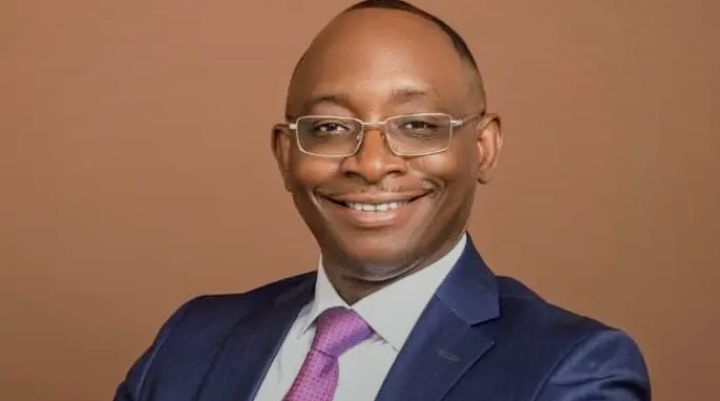
The Director-General of the Bureau of Public Procurement, Adebowale Adedokun, has urged Civil Society Organisations to intensify their monitoring of government projects from procurement planning and contract award to implementation and final service delivery.
Adedokun made the call on Wednesday at the BPP-CSO Engagement held in Abuja, where he emphasised the important role of civil society in strengthening transparency, accountability and citizen participation in Nigeria’s public procurement system.
The BPP boss said CSOs should move beyond checking whether contracts were properly awarded to determining whether projects were eventually completed and delivered the benefits promised to citizens.
According to him, procurement monitoring should not end once a contract has been awarded, as the ultimate objective of public procurement is to ensure that government spending translates into tangible development outcomes.
“We should not monitor procurement only by asking: ‘Was the contract awarded correctly?’
“We should also ask: ‘Did the contract deliver what Nigerians were promised?’.
“Was the hospital completed? Did the equipment arrive? Is the road functional? Are the classrooms being used? Did the community receive potable water? Was value for money achieved?” he asked.
Adedokun said this approach would help ensure that accountability in public procurement translated into improved public services and better outcomes for communities.
He disclosed that the bureau was proposing a structured BPP-CSO Public Procurement Partnership Framework to strengthen collaboration between the government agency and civil society organisations.
He said the proposed framework would focus on capacity building, access to procurement information and data, procurement and project monitoring, reporting and early warning mechanisms, as well as citizen engagement.
The DG explained that CSOs could monitor selected public projects from the planning stage through contract award, implementation and service delivery, particularly projects that have a direct impact on communities.
He also encouraged civil society groups to make greater use of procurement information and open contracting data in carrying out their monitoring activities.
“Greater utilisation of procurement information and open contracting data can enable Civil Society to undertake evidence-based monitoring rather than relying on speculation,” Adedokun said.
According to him, access to reliable procurement information would strengthen the ability of CSOs to identify gaps, raise concerns early and provide constructive.
recommendations to government institutions.
CSOs must remain independent.
While calling for stronger collaboration, Adedokun stressed that partnership between the BPP and civil society must not compromise the independence of CSOs.
He said civil society organisations should continue to scrutinise government activities, question decisions and identify weaknesses where necessary.
“Partnership must never mean the loss of Civil Society’s independence. We do not expect Civil Society Organisations to become an extension of government.
“We expect you to ask questions. We expect you to examine the evidence. We expect you to identify weaknesses. And where necessary, we expect you to challenge us constructively,” he said.
However, the BPP director-general urged CSOs to ensure that their criticisms and interventions were supported by evidence.
He added that the government must also remain open to scrutiny and recommendations from civil society organisations as part of efforts to improve the procurement system.
Procurement linked to development
Adedokun said public procurement should be viewed beyond administrative procedures, noting that procurement decisions directly affect the quality of essential services available to Nigerians.
He listed hospitals, schools, roads, electricity, security, agriculture and employment among areas that could be affected by the effectiveness of public procurement.
“Every procurement decision has the potential to affect a hospital, a school, a road, electricity supply, security, agriculture, employment or the quality of public services available to our citizens.
“Therefore, when procurement works, Nigeria works better,” he said.
The BPP boss called on participating CSOs to contribute to the development of the proposed partnership framework and help establish an effective system for monitoring public projects.
He said the success of the partnership should ultimately be measured by the number of projects improved, waste prevented, transparency created, communities empowered and public value delivered.
The engagement therefore underscored the need for stronger citizen participation in public procurement, with CSOs expected to play a greater role in tracking whether government contracts ultimately produce the services and infrastructure promised to Nigerians.
Heirs Energies Limited, the indigenous energy company chaired by billionaire investor Tony Elumelu, has increased its stake in Seplat Energy Plc to 21.07 per cent following the acquisition of an additional six million ordinary shares in the energy company.
The latest purchase further strengthens Elumelu’s position among Seplat Energy’s major shareholders and underscores the growing participation of Nigerian investors in the country’s oil and gas sector.
According to a corporate disclosure filed with the Nigerian Exchange Limited and the London Stock Exchange, Heirs Energies acquired the additional 6,000,000 ordinary shares on Wednesday, September 30, 2026.
The shares were purchased at £8.87 each, putting the value of the transaction at approximately £53.22 million.
Following the acquisition, Heirs Energies’ direct holding in Seplat increased to 27,943,867 ordinary shares.
When the latest holding is combined with the shares held by Heirs Holdings Limited, another investment vehicle associated with Elumelu, entities affiliated with the businessman now hold a combined 126,400,000 ordinary shares in Seplat Energy.
The combined interest represents 21.07 per cent of Seplat Energy’s 599,944,561 issued ordinary shares.
The transaction was disclosed in line with applicable capital market requirements governing dealings by directors and persons closely associated with them.
Seplat Energy’s Director of Legal and Company Secretary, Edith Onwuchekwa, said the regulatory notification was made pursuant to the relevant rules of the Nigerian Exchange and the United Kingdom’s Market Abuse Regulations.
“This notification is made in accordance with Rule 17.15(c) Disclosure of Dealings in Issuers’ Shares, Rulebook of The Exchange, 2015 (Issuers’ Rule) and Article 19(3) of the UK Market Abuse Regulations,” the company stated.
The latest acquisition comes as Nigeria’s indigenous oil and gas companies continue to expand their interests in the sector, particularly following the divestment of selected upstream assets by some international oil companies.
Seplat Energy, which operates across Nigeria’s oil and gas industry, has increasingly positioned itself as a major indigenous energy producer, with its portfolio spanning upstream oil and gas operations and gas-focused projects.
The increase in Elumelu-affiliated holdings also reflects the continued consolidation of domestic ownership in major Nigerian energy assets.
The acquisition was formally submitted to the relevant exchanges by Seplat Energy through its authorised company secretary, Edith Onwuchekwa.
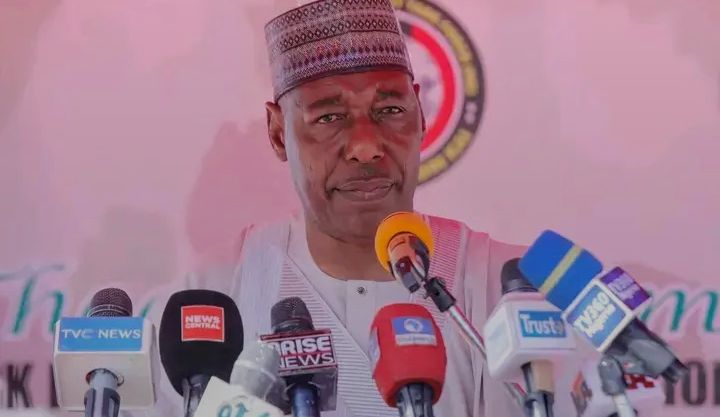
Governors of the six North-East states have resolved to establish a regional air shuttle and expand Compressed Natural Gas and Liquefied Natural Gas infrastructure as part of measures to reduce transportation costs and boost economic activities across the subregion.
The decision was contained in a communiqué issued at the end of the 13th meeting of the North-East Governors’ Forum held in Maiduguri, Borno State, on Saturday.
The forum comprises the governors of Adamawa, Bauchi, Borno, Gombe, Taraba and Yobe states.
According to the communiqué signed by the forum’s Chairman and Borno State Governor, Prof. Babagana Zulum, the proposed regional air shuttle is expected to make the movement of people and goods between and within the six states faster and easier.
“The Forum also resolved to float the North-East regional Air shuttle which would make inter and intra-regional movement of people and goods faster and easier,” the communiqué stated.
The governors also agreed to partner with Green Ville Energy to establish more CNG and LNG stations across the region.
The initiative, according to the forum, is intended to ease transportation costs, strengthen logistics and create an environment for increased economic activities.
“To ease the cost of transportation, strengthen logistics and open the region to more economic activities, the Forum agreed to partner with Green Ville Energy to build and provide more CNG and LNG stations within the region,” the communiqué added.
Electric buses, tricycles
The governors also welcomed Federal Government support through the North-East Development Commission for the provision of 10,000 electric tricycles, 10 electric buses and 300 electric taxis.
The vehicles are expected to be launched in October as part of efforts to improve transportation and reduce dependence on conventional fuel across the subregion.
The forum said the intervention would complement other measures being pursued by the states to improve mobility and reduce the cost of transportation.
Governors seek renewed infrastructure development
On infrastructure, the governors expressed appreciation to President Bola Tinubu for renewed attention to major transportation and energy projects in the region.
They specifically highlighted the Port Harcourt–Jos–Bauchi–Gombe–Maiduguri rail corridor and the Akwanga–Jos–Bauchi–Gombe–Biu–Maiduguri highway.
The forum also welcomed developments around frontier oil exploration at Kolmani.
However, the governors urged the Federal Government to revisit oil exploration activities that were earlier commenced but subsequently stalled in Magumeri and Gubio Local Government Areas of Borno State.
They also renewed their call for the completion and take-off of the Mambila Hydropower Project, urging the Federal Government to take advantage of the recent resolution of the legal dispute surrounding the project.
The forum noted that the Dadinkowa Hydropower Plant had commenced feeding electricity into the national grid.
It consequently urged member states to take advantage of the opportunities provided by the new electricity law and the region’s abundant sunshine to expand solar power and mini-grid solutions.
Security remains priority
On security, the governors acknowledged what they described as “appreciable success” in the fight against insurgency and commended the Armed Forces and other security agencies for their sacrifices.
They also praised residents of the region for their resilience in the face of persistent security and humanitarian challenges.
Despite the progress recorded, the governors acknowledged that the North-East continued to face serious humanitarian and infrastructural challenges.
The forum therefore reaffirmed its commitment to supporting security agencies while strengthening inter-state cooperation, intelligence sharing, community engagement and coordinated responses to emerging threats.
The governors also stressed the need to tackle socio-economic conditions that could make young people vulnerable to exploitation by criminal and extremist groups.
North-East govs seek more investment in education
The forum described the region’s young population as both “an enormous opportunity and a responsibility,” pledging to promote quality education, vocational and entrepreneurial training, technology and employment opportunities.
The governors called on the North-East Development Commission to increase investment in education and release long-awaited scholarship awards to indigent students across the subregion.
They also urged greater efforts to reduce the number of out-of-school children and provide coordinated support for Tsangaya education.
While acknowledging interventions by the NEDC, the governors said additional resources were needed to address the region’s educational challenges.
Governors tackle deforestation
The forum also expressed concern over the scale of environmental degradation and deforestation across the North-East.
To address the problem, the governors resolved to partner with the Institute of Forest Research to train forest experts in the region.
They said stronger cooperation would be required to protect the environment while promoting sustainable development.
Six years of regional cooperation
The governors noted that cooperation among the six states had continued to evolve since the inaugural meeting of the North-East Governors’ Forum in Gombe in March 2020.
They said their collective voice had produced tangible results in infrastructure and development, while acknowledging that the forum’s role remained a “work in progress.”
The governors recommitted themselves to speaking with one voice and acting with one purpose on issues affecting security, social development, economic integration and infrastructure in the subregion.
The meeting was attended by Governor Zulum; Adamawa State Governor, Ahmadu Umaru Fintiri; Gombe State Governor, Muhammadu Inuwa Yahaya;
Bauchi State Deputy Governor, Mohammed Auwal Jatau; Yobe State Deputy Governor, Idi Barde Gubana; and Borno State Deputy Governor, Umar Usman Kadafur.
The next meeting of the North-East Governors’ Forum is scheduled to hold on December 18 and 19, 2026, in Gombe State.
-

 Security3 months ago
NDLEA Declares Alleged Drug Kingpin, Three Associates Wanted, Freezes ₦9.8bn Linked to Syndicate
-

 Business/Finance3 months ago
How to Apply for Tunde Onakoya’s ₦250 Million Scholarship Programme and Free Laptop Offer
-
 National Affairs3 months ago
ICPC Uncovers 908 Suspected Ghost Workers Across 50 Federal MDAs, Recovers ₦942 Million
-

 Judiciary | Public Safety3 months ago
INEC Tells Court Voter Information Is Not Confidential in Emeka Ike’s ₦10bn Lawsuit
-
 Politics2 months ago
Atiku Challenges Tinubu to Reveal Details of ₦15.13bn SUV Procurement in 2026 Budget
-
 Judiciary | Public Safety3 months ago
Court to Rule Friday on NDLEA’s Bid to Destroy ₦480bn Meth Lab in Ogun
-
 Security2 months ago
Family Paid ₦50 Million Ransom to Secure Release of Abducted Kebbi Judge
-
 News2 months ago
2026 Budget: FG Earmarks ₦962.83bn for SUVs, Empowerment Projects Amid Debt Concerns