
Business/Finance
Dangote to List All Group Companies, Promises Dollar Dividends

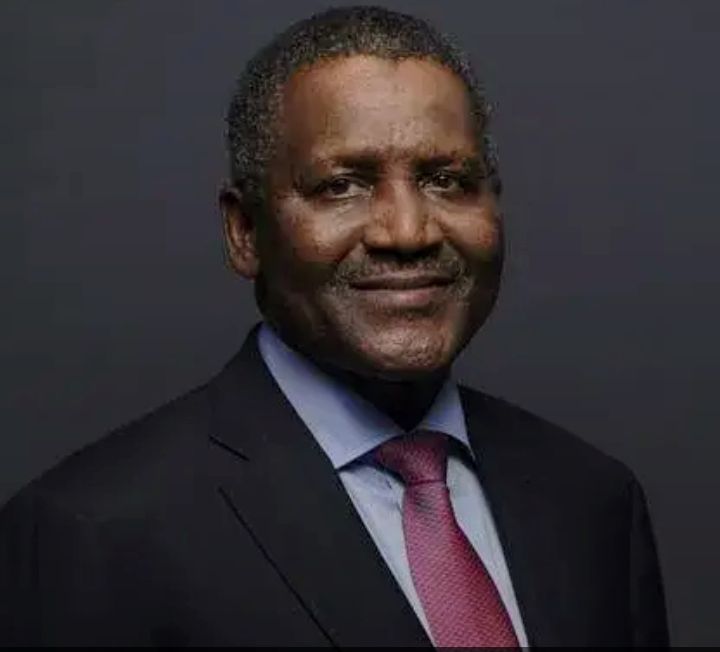
President of Dangote Group, Aliko Dangote, has disclosed plans to list all companies under the Dangote Group on the stock market, saying the move will allow Nigerians and other Africans to own stakes in the businesses.
Dangote made the disclosure while discussing the ongoing initial public offering of Dangote Petroleum Refinery in an interview with Al Jazeera uploaded on Monday.
According to the billionaire businessman, the refinery’s IPO is not primarily aimed at raising funds but at creating wealth by giving ordinary people an opportunity to become shareholders in the business.
Dangote said the public offering was designed to enable people from different income groups, including workers and members of the public, to participate in the ownership of the refinery.
He said the initiative was intended to replicate the ownership model common in developed economies, where successful businesses eventually invite members of the public to acquire stakes and benefit from their growth.
“The IPO we are doing is not that we want to raise money. It is purely we want the poor people, people like my driver, my cook, your driver, your cook, yourself, your wife, your kids to have piece of action.
We want to see how do we create wealth,” Dangote said.
He explained that after building and establishing a successful business, the owners could invite other people to participate in its ownership rather than retaining the entire investment within the original ownership structure.
“The same way, what we are actually trying to do, we are trying to do exactly what’s going on in America and other parts of the Western world, where now you go, when you create a business, you incubate a business, you create it, it turned out to be a great business because you have a great idea.
“And now, instead of you to keep that money alone to yourself, you are now inviting other people to come and now join you. And you grow together,” he added.
All Dangote companies to be listed
Dangote said the plan would not be limited to the refinery, stressing that every company operated by the Dangote Group would eventually be listed on the stock market.
He said the group was expanding across different sectors and expected its fertiliser business to become the world’s largest urea producer by 2028.
“The whole thing is that the group is having different sorts of segments of the business. Like by 2028, we will be the biggest urea company in the world,” he said.
“Every single company now that we are operating will end up listing it to make sure that the society at large are part owners of all these investments, be it fertiliser, be it, you know, even smaller ones, we’ll list them.”
According to Dangote, the planned listings would also strengthen corporate governance across the group as the businesses transition towards broader ownership and more formal management structures.
He said the group was now focusing on building professional management structures alongside its businesses.
“It wasn’t like the way that we did things before. Right now, we’re building our own management ahead of building the businesses,” he said.
Dangote further said the planned public ownership structure would extend beyond Nigeria, giving people across Africa an opportunity to participate in the businesses.
“It’s a milestone for Africa, not Nigerians.
Africans, you’ll be surprised, everybody will participate,” he said.
Dangote promises dollar dividends
The Dangote Group president also said investors in the refinery would receive their dividends in US dollars.
He explained that the refinery generates its income in dollars, which would enable the company to pay shareholders dividends in the same currency.
“And that’s why our dividend, because 100% of our income is in dollars. And that’s why we’ll pay people in dollars. You collect your dividend in dollars,” Dangote said.
He said the refinery listing would take the Nigerian capital market to “a totally different level” by broadening participation in the ownership of one of the country’s largest industrial investments.
Refinery expands petrochemical operations
Beyond refining petroleum products, Dangote disclosed that the refinery was expanding its petrochemical operations, including plans to manufacture linear alkyl benzene, a major raw material used in the production of detergents.
He said the facility would produce 400,000 tonnes of linear alkyl benzene as part of its expanding petrochemical operations.
Describing the refinery, Dangote said, “This is the most advanced refinery on earth.
This is the lowest-cost refinery on earth.”
IPO investors to see nine-month financial figures
Dangote also disclosed that investors would have access to the refinery’s nine-month financial figures before the IPO closes on October 10.
He explained that the refinery underwent planned repairs in January and February, which affected its operations during the period.
According to him, the financial figures covering the subsequent period would reflect an improvement in the refinery’s performance.
The planned IPO represents a major step in the Dangote Group’s stated strategy of broadening ownership of its businesses through the Nigerian capital market, with the group expected to gradually take more of its companies to the stock exchange.







Every day, new businesses emerge across Nigeria, with many struggling to survive long enough to establish a loyal customer base.
For business owners, the challenge often goes beyond developing quality products or services.
Many constantly research, test and adopt new marketing strategies in an effort to attract customers and keep their businesses afloat.
However, understanding what makes Nigerians buy may require more than applying conventional global marketing theories.
While traditional marketing principles suggest that consumers often make purchasing decisions based on logic and later justify those decisions emotionally, the Nigerian market presents a different set of realities.
For many Nigerian consumers, trust, relationships, reputation, convenience, perceived quality and social proof can play a major role in determining whether interest eventually becomes a transaction.
Conversations with business owners across industries including fashion, beauty, media, wellness and culinary arts, alongside observations from working with founders and brands, reveal several psychological and cultural factors influencing consumer behaviour in Nigeria.
Trust comes before the transaction
In an environment where online scams, counterfeit goods, poor delivery experiences and failed transactions remain concerns, many Nigerian consumers approach purchases with caution.
Before paying for a product or service, customers may ask:
“Will they deliver?”
“Is this original?”
“What if I pay and they disappear?”
These concerns mean that customers often want to know not only what a business sells, but also who is behind the business and whether other people have had positive experiences with it.
The manager of pastry brand Oven & Batter described relatability as an important way of building trust with Nigerian customers.
“One way to build trust with Nigerians is relatability. They patronise when they feel they know you, and the only way to achieve that is to carry them through your ups and downs,” the manager said.
For businesses, showing the person behind the brand, explaining production processes, sharing genuine customer experiences and maintaining transparency can help reduce the uncertainty that exists between interest and purchase.
After all, as the popular Nigerian expression goes, “Naija no dey carry last.” Consumers want to be sure before parting with their money.
Relationships are a powerful marketing channel
In Nigeria, the question, “Who introduced you to it?” can sometimes be as important as the advertisement that first introduced a customer to a product.
Recommendations from friends, colleagues, relatives and members of trusted communities can move potential customers towards a purchase faster than an expensive advertising campaign.
Commerce in Nigeria is deeply relational. Consumers often want to feel recognised, valued and remembered by the businesses they patronise.
Uche Joy, founder of fashion brand Juche Designz, highlighted the importance of customer service in creating such connections.
“Really good customer care service makes customers feel special, and Nigerians like feeling special, even if they happen to be in the wrong,” she said.
When customers develop a positive relationship with a brand, they may not only return but also recommend the business to others.
This makes customer experience an important part of marketing, rather than something that begins and ends at the point of sale.
Popularity can influence perceptions of quality
In the Nigerian market, perception can also influence purchasing decisions.
Businesses that appear established, popular or successful can sometimes inspire greater confidence among prospective customers.
Good packaging, visible patronage and a strong brand personality may serve as signals that a product or service is worth considering.
Augustina Uba, founder of Nailsbyaugust, said Nigerians often associate popular brands with quality.
“Nigerians like patronising high-end names because they equate popularity to quality, and people like patronising a business with personality,” she said.
This relationship between visibility and perceived value can be seen in different aspects of Nigerian social and commercial life.
The preference for crisp naira notes at social events, for instance, demonstrates how money can sometimes function beyond its transactional value.
Fresh notes are often obtained specifically for public displays of generosity and status.
The same principle can influence consumer behaviour, where the appearance and visibility of a brand can attract attention and create an initial perception of credibility.
However, perception alone may not be enough to sustain a customer.
Perception attracts customers, but quality keeps them
A business may use attractive branding, packaging and social media content to get a customer’s attention, but the actual quality of its product or service can determine whether that customer returns.
CrispTV founder, Chimaobi Okolo, stressed that sustained customer retention ultimately depends on the quality of service delivered.
The founder of Wellness Sips by Ebonie similarly pointed to freshness and transparency as important factors in building customer confidence.
“People love to buy quality stuff. At my wellness hub, people like to hear ‘fresh daily’ so they know what they are buying is fresh. Same with juice: once they hear ‘no additives’ and they try it and see it’s true, they are hooked,” the founder said.
For businesses operating in a market where consumers have encountered exaggerated claims or disappointing experiences, consistently delivering what has been promised can become a powerful marketing advantage.
A business may attract a customer with an advertisement, but fulfilling the promise made in that advertisement can determine whether the customer becomes loyal.
Convenience can determine whether interest becomes a sale
Another important consideration is convenience.
Many Nigerian consumers are comfortable with digital platforms, but they may still prefer having direct human interaction before completing a purchase.
Rather than navigating a website, a potential customer may simply send a WhatsApp message and ask:
“How much?”
“Is my size available?”
“When can it arrive?”
This does not necessarily mean Nigerian consumers reject websites or digital commerce.
Rather, businesses need to understand the purchasing journey their target customers find easiest.
For some brands, technology may be most effective when it makes human interaction easier instead of eliminating it completely.
A WhatsApp conversation, for example, can allow a customer to ask questions, negotiate a price, confirm availability and arrange delivery within a few minutes.
Nigerians bargain, but purchasing is not always about price
Price psychology also has a distinct character in Nigeria.
For many consumers, bargaining is almost part of the purchasing ritual. Asking, “How much last?” does not always mean the customer considers the product overpriced.
In many situations, negotiation is simply an expected part of the transaction.
At the same time, genuine urgency can encourage customers who are already interested to complete a purchase.
Messages such as “Price goes up tomorrow,” “Orders close tonight” or “Only three left” can encourage action when the information is truthful and relevant.
However, Nigerian consumers are not necessarily searching for the cheapest available option.
They are often looking for a combination of affordability, trust, quality, convenience, experience and confidence in what they are buying.
Understanding the Nigerian consumer
For Nigerian businesses, effective marketing may therefore require more than copying international trends or adopting the latest social media strategy.
Understanding the local consumer means recognising the cultural and psychological factors that influence purchasing decisions.
Trust matters.
Relationships matter.
Perception matters.
Quality matters.
Convenience matters.
And, sometimes, so does asking, “How much last?”
The businesses that understand these realities can position themselves not only to attract attention but also to build the confidence required to convert that attention into sales.
In a competitive Nigerian market, the transaction may begin with an advertisement, a social media post or a recommendation.
But for many consumers, the decision to part with their money begins much earlier—with the question of whether they trust the person or business asking for it.
Joan Ndulue, a marketing and communications professional, writes from Dealt state.
The Nigerian Midstream and Downstream Petroleum Regulatory Authority (NMDPRA) has clarified that it does not determine or fix the retail pump price of Premium Motor Spirit, popularly known as petrol.
The clarification followed recent increases in the price of petrol across the country, with the regulator acknowledging that the development had increased financial pressure on households, transport workers and businesses.
In a statement on Saturday, the NMDPRA said the Petroleum Industry Act 2021 provides for the pricing of petroleum products under unrestricted free-market conditions.
According to the Authority, Section 205(1) of the PIA stipulates that wholesale and retail prices of petroleum products shall be determined by market forces.
“Section 205(1) provides that wholesale and retail prices of petroleum products shall be based on unrestricted free market pricing conditions. The Authority does not fix pump prices or issue administrative price templates,” it said.
The regulator explained that government intervention in petroleum pricing is limited to exceptional circumstances where there is formal evidence of a declared market failure.
It added that no such market failure had been declared.
The NMDPRA, however, noted that it retains regulatory powers under Section 216 of the PIA to prevent anti-competitive practices, price-fixing and abuse of market dominance within the petroleum industry.
The Authority also disclosed that it was working with the Nigeria Customs Service and other security agencies to intensify surveillance along border corridors.
The move, it said, was aimed at preventing the illegal diversion of petroleum products across Nigeria’s borders.
The NMDPRA stressed that deregulation does not exempt petroleum operators from complying with regulatory requirements and fair-trade standards.
It further said it was coll.
aborating with the Federal Competition and Consumer Protection Commission under a memorandum of understanding to monitor practices such as price-gouging, collusion, under-dispensing and the sale of products that fail to meet required quality standards.
The regulator also announced plans to establish dedicated feedback and reporting channels through which members of the public and industry stakeholders can report suspected irregular pricing and exploitative trade practices.
According to the Authority, such reports will be investigated and appropriate enforcement action taken where violations are established.
The NMDPRA said it remained committed to ensuring energy security, promoting fair competition and protecting consumers within the legal framework established by the Petroleum Industry Act.

The Nobel Foundation has increased the prize money for the 2026 Nobel Prize laureates to 12 million Swedish kronor, equivalent to about $1.27 million, for each prize category.
The foundation announced the increase on Friday, raising the award from the 11 million kronor paid to laureates in 2025.
The latest increase represents an additional one million kronor, or approximately $106,000, for each prize category.
However, where a prize is awarded to more than one laureate, the 12 million-kroner prize sum will be shared among the recipients.
The Nobel Foundation Director, Hanna Stjarne, said the increase was particularly significant as the Nobel Prize celebrates its 125th anniversary this year.
“This year, we are celebrating the 125th anniversary of the Nobel Prize, and in connection with this, we are pleased to be able to increase the prize amount by one million (kroner),” Stjarne said in a statement.
She explained that the adjustment was intended to preserve the long-term value and significance of the prestigious awards.
“By increasing the prize amount, we uphold the long-term significance of the Nobel Prize and ensure that the financial part of the prize retains its value over time,” she added.
The Nobel Prizes were first awarded in 1901, with the original prize amount standing at 150,782 kronor per discipline.
Over the decades, the monetary value attached to the awards has changed in response to economic conditions and decisions by the Nobel Foundation.
The 2026 Nobel Prize announcements will take place between October 5 and October 12, with six prize categories scheduled for recognition.
The Nobel week will begin on October 5 with the announcement of the Nobel Prize in Physiology or Medicine.
The Physics Prize will follow on October 6, while the Chemistry Prize will be announced on October 7.
The Nobel Prize in Literature is scheduled for October 8, followed by the Nobel Peace Prize on October 9.
The economics prize, officially known as the Sveriges Riksbank Prize in Economic Sciences in Memory of Alfred Nobel, will bring the 2026 announcements to a close on October 12.
The Nobel Prizes recognise individuals and organisations whose work is judged to have conferred the greatest benefit to humanity in fields established in accordance with Alfred Nobel’s will.
The awards have become among the world’s most prestigious honours, attracting global attention each year across science, literature, peace and economics.
-
 Security2 months ago
NDLEA Declares Alleged Drug Kingpin, Three Associates Wanted, Freezes ₦9.8bn Linked to Syndicate
-
 National Affairs2 months ago
ICPC Uncovers 908 Suspected Ghost Workers Across 50 Federal MDAs, Recovers ₦942 Million
-

 Business/Finance2 months ago
How to Apply for Tunde Onakoya’s ₦250 Million Scholarship Programme and Free Laptop Offer
-
 Politics2 months ago
Atiku Challenges Tinubu to Reveal Details of ₦15.13bn SUV Procurement in 2026 Budget
-

 Judiciary | Public Safety2 months ago
INEC Tells Court Voter Information Is Not Confidential in Emeka Ike’s ₦10bn Lawsuit
-
 Judiciary | Public Safety2 months ago
Court to Rule Friday on NDLEA’s Bid to Destroy ₦480bn Meth Lab in Ogun
-
 Security2 months ago
Family Paid ₦50 Million Ransom to Secure Release of Abducted Kebbi Judge
-
 News2 months ago
2026 Budget: FG Earmarks ₦962.83bn for SUVs, Empowerment Projects Amid Debt Concerns