
Politics
OK Movement Crisis Deepens as DG Peter Ameh Resigns in Abuja

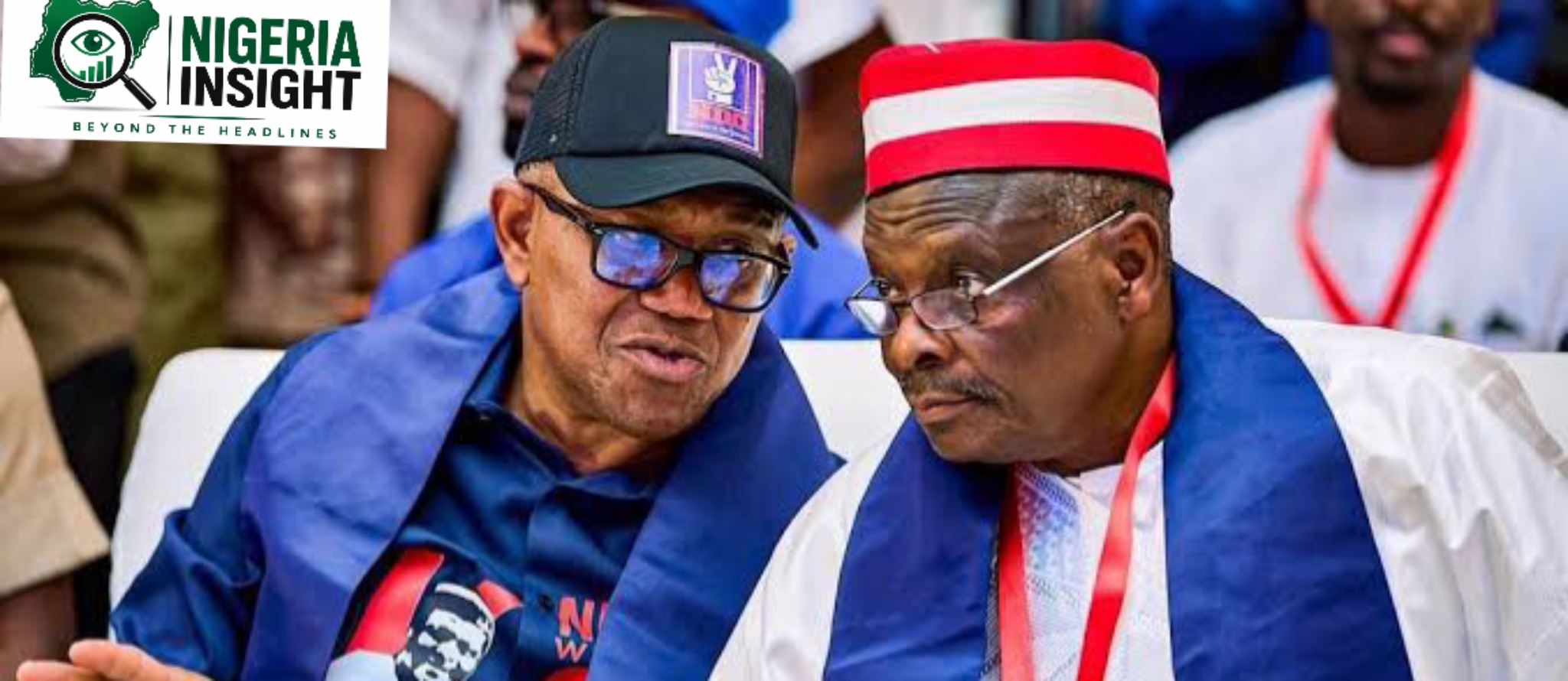
The crisis rocking the OK Movement has taken a dramatic turn following the resignation of its Director-General, High Chief Peter Ameh, in Abuja on Tuesday.
Ameh’s resignation adds a fresh dimension to the internal challenges confronting the political movement, coming at a time when political alignments and realignments are intensifying ahead of Nigeria’s 2027 general elections.
Details surrounding the circumstances that led to Ameh’s decision were not immediately clear as of the time of filing this report.
His resignation, however, is expected to generate further discussions about the direction, leadership and internal cohesion of the movement, particularly as political actors across the country continue to reposition ahead of the next electoral cycle.
Peter Ameh’s Resignation
Ameh announced his resignation in Abuja on Tuesday, formally stepping down from his position as Director-General of the OK Movement.
The development is significant because the Director-General occupies a central position in the organisation’s mobilisation, coordination and political strategy.
While Ameh did not immediately provide extensive details on the reasons for his resignation, the timing has raised questions about the internal dynamics within the movement.
The OK Movement has in recent times attracted attention within Nigeria’s political space, with its activities and organisational structure being closely watched by political stakeholders.
The resignation of a senior figure such as its Director-General could therefore have implications for the movement’s operations and its ability to maintain a coordinated political structure.
Leadership Crisis Raises Fresh Questions
Ameh’s departure comes against the backdrop of what has been described as a crisis within the OK Movement.
Although the specific issues responsible for the disagreement remain subject to clarification, the resignation is likely to fuel speculation about possible differences among key stakeholders within the organisation.
Political movements often depend heavily on internal coordination, especially when they are seeking to build structures across states and local government areas.
The loss of a director-general at such a period could create challenges around mobilisation, communication and the implementation of the movement’s political agenda.
However, it remains unclear whether Ameh’s resignation will lead to a broader restructuring of the organisation or whether the movement will move quickly to appoint a replacement.
Significance Ahead of 2027
The development comes as Nigerian political parties, movements and political actors intensify preparations for the 2027 general elections.
Across the country, politicians are increasingly reassessing existing alliances and exploring new political platforms, while emerging movements are seeking to establish themselves as alternatives to the established political parties.
For the OK Movement, maintaining internal stability could become increasingly important if it intends to play a meaningful role in the political process ahead of 2027.
A leadership dispute at this stage could potentially affect efforts to consolidate its structures and expand its political influence.
At the same time, Ameh’s resignation does not necessarily mean the end of the movement. Much will depend on how its leadership responds to the development and whether the issues behind the crisis can be resolved.
What Happens Next?
Attention will now turn to the leadership of the OK Movement for clarification on Ameh’s resignation and the next steps.
Questions are also likely to emerge over who will take over the Director-General’s responsibilities and whether other officials will follow Ameh out of the organisation.
For now, the immediate facts are that Peter Ameh has resigned as Director-General of the OK Movement, while the full circumstances surrounding his departure remain unclear.
Nigeria Insight will continue to monitor developments as more information emerges.






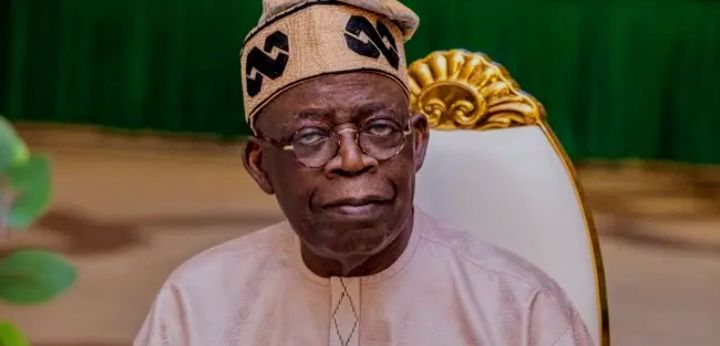
A coalition of Ogoni youth groups has called on President Bola Tinubu and the Federal Government to implement the recommendations of the Ogoni Dialogue Committee, insisting that the creation of Bori State must be given priority in the process.
The Coalition of Ogoni Youth Groups (COYOG) made the demand in a statement jointly signed by 17 youth leaders, including Chief Kpakol Kpakol of the Ogoni National Youth Congress and Gen. Ikeh Albert Jnr of the Khana Youth Assembly, on Saturday.
The coalition warned against attempts by politicians and other vested interests to hijack the dialogue process for personal or political gains, stressing that its outcomes must reflect the collective aspirations of the Ogoni people.
It described the dialogue as a collective struggle for justice, environmental restoration, political inclusion, resource control and sustainable development.
On the leadership of the Ogoni Dialogue Committee, COYOG clarified that Professor Don Baridam remains its substantive leader, warning against attempts by individuals to assume authority outside the established structure.
Reaffirming its commitment to peaceful advocacy, the coalition insisted that the dialogue process must remain inclusive and accountable, adding that its recommendations should translate into measurable benefits for the Ogoni people.
“The Ogoni dialogue belongs to the Ogoni people. Its outcomes must serve the Ogoni people. Its implementation must be transparent, inclusive and measurable,” the statement added.
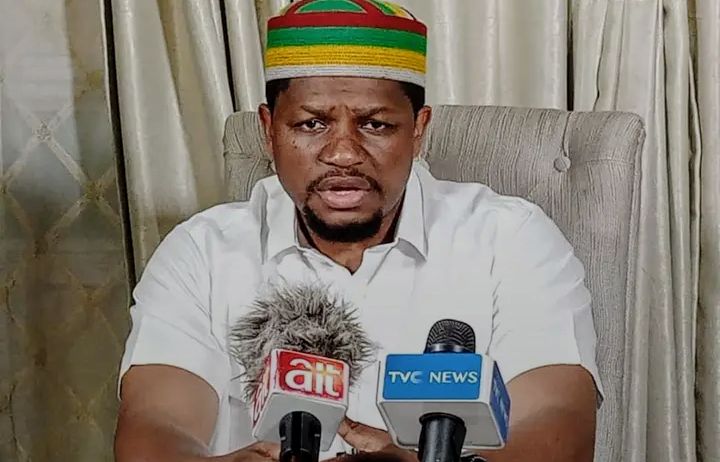
Former member of the House of Representatives, Dachung Bagos, has won the All Progressives Congress (APC) rerun primary election for the Jos South/Jos East Federal Constituency of Plateau State.
Bagos defeated his challenger, Esther Simi Dusu, in the rerun exercise conducted across 11 wards on Wednesday, following a court order nullifying the previous primary election over alleged irregularities.
The Chairman of the APC Rerun Electoral Committee, Simon Elisha, announced the results on Thursday at the party’s state secretariat, Kalwa House, in Jos.
According to the results, Bagos polled 12,181 votes to defeat Dusu, who secured 2,495 votes.
Elisha said the rerun election was conducted in compliance with the court order and in accordance with the party’s guidelines.
“The rerun was conducted in compliance with the court order and in line with the party’s guidelines to ensure transparency and fairness,” he said.
The rerun followed a decision by the High Court in Jos to nullify the earlier primary election over alleged irregularities in 11 wards within the federal constituency.
The affected wards are Du, Shen, Zawan ‘B’, Turu, Fobur ‘A’, Fobur ‘B’, Jarawan Kogi, Maijuju/Doss, Federe, Shere East and Shere West.
The court-ordered exercise was organised to address the irregularities identified in the previous primary election and determine the party’s candidate for the constituency.
With his victory, Bagos is set to represent the APC in the contest for the Jos South/Jos East Federal Constituency seat in the 2027 general election.
Bagos previously represented the constituency in the House of Representatives.
His emergence as the party’s candidate places him in contention for another term in the Green Chamber, subject to the outcome of the 2027 general election.


The presidential candidate of the Nigeria Democratic Congress (NDC), Peter Obi, has warned individuals he accused of terrorising Nigerians, declaring that his party would confront insecurity and intimidation if elected in 2027.
“Those who think they can terrorize this country, wait, we’re coming,” Obi said during the opening of the NDC’s national secretariat in Jabi, Abuja, on Monday, October 26, 2026.
The remark came as the party formally opened its national headquarters and intensified preparations for the 2027 general elections. The event brought together Obi, his running mate Rabiu Musa Kwankwaso, NDC leaders and other party members.
Obi Puts Insecurity at the Centre of His Message
Obi’s statement signals that security is expected to feature prominently in the NDC’s campaign messaging ahead of the next presidential election.
Nigeria continues to face multiple security challenges, including insurgency, kidnapping, armed attacks and communal violence in different parts of the country. These problems have affected communities, disrupted economic activities and generated demands for stronger protection of lives and property.
At the Abuja event, Obi presented his political project as an effort to change how government responds to the country’s challenges. Reports of his remarks also highlighted commitments to address corruption, poverty, unemployment and insecurity.
However, the brief statement quoted above did not identify a particular group or individual as the target of his warning. It would therefore be premature to attribute the remark to a specific organisation or political opponent without further evidence.
NDC Opens National Headquarters Ahead of 2027
The secretariat opening marked another organisational step for the NDC as it builds its structures ahead of the elections.
The ceremony followed the party’s National Executive Committee meeting and formed part of a wider programme that included unveiling its National Campaign Council and presenting Certificates of Return to candidates contesting different offices.
Kwankwaso, the party’s vice-presidential candidate, attended alongside National Leader Seriake Dickson, National Chairman Moses Cleopas and other party figures.
The new facility is expected to serve as the party’s administrative headquarters and a centre for coordinating its national political activities.
Security and Accountability in the 2027 Campaign
Obi’s warning comes as political parties begin defining their messages for the 2027 election, with security, economic hardship and public accountability among the issues likely to feature prominently.
For voters, the significance of security promises will depend not only on campaign statements but also on the policies, resources and implementation plans candidates present.
Measures to improve security can involve intelligence gathering, police and military capacity, coordination between federal and state authorities, criminal investigations, justice delivery and support for communities affected by violence.
Obi’s statement did not set out specific measures in the quoted passage. Further policy details would be needed to assess how the NDC proposes to address the different forms of insecurity affecting the country.
The remark nevertheless makes clear that the party intends to present security and protection from intimidation as part of its campaign message.
As the 2027 election approaches, the challenge for all political parties will be to explain how their proposals would be implemented and how progress would be measured.
-
 Security4 months ago
NDLEA Declares Alleged Drug Kingpin, Three Associates Wanted, Freezes ₦9.8bn Linked to Syndicate
-

 Business/Finance3 months ago
How to Apply for Tunde Onakoya’s ₦250 Million Scholarship Programme and Free Laptop Offer
-
 National Affairs3 months ago
ICPC Uncovers 908 Suspected Ghost Workers Across 50 Federal MDAs, Recovers ₦942 Million
-

 Judiciary | Public Safety3 months ago
INEC Tells Court Voter Information Is Not Confidential in Emeka Ike’s ₦10bn Lawsuit
-
 Politics3 months ago
Atiku Challenges Tinubu to Reveal Details of ₦15.13bn SUV Procurement in 2026 Budget
-
 Judiciary | Public Safety3 months ago
Court to Rule Friday on NDLEA’s Bid to Destroy ₦480bn Meth Lab in Ogun
-
 Security3 months ago
Family Paid ₦50 Million Ransom to Secure Release of Abducted Kebbi Judge
-
 News3 months ago
2026 Budget: FG Earmarks ₦962.83bn for SUVs, Empowerment Projects Amid Debt Concerns