
News
Akeredolu’s 70th Birthday Rekindles Debate Over State Police

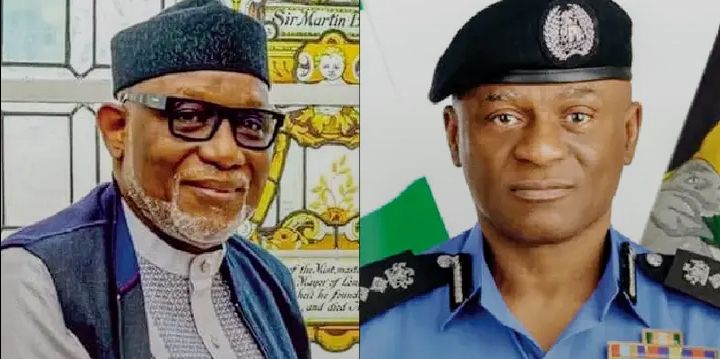
The posthumous 70th birthday celebration of former Ondo State Governor, Rotimi Akeredolu, has reignited calls for state policing in Nigeria, with political leaders and security stakeholders highlighting the need for sustainable funding, professional training, accountability and constitutional safeguards.
The celebration, held in Ibadan, the Oyo State capital, on October 8, 2026, brought together political leaders, family members, associates and other stakeholders to honour the late governor while examining his contributions to security administration, particularly the establishment of the Western Nigeria Security Network, popularly known as Amotekun.
Fondly called Aketi, Akeredolu was a lawyer, Senior Advocate of Nigeria and former president of the Nigerian Bar Association. He was widely known for his outspoken positions on governance, justice, constitutional responsibility and public security.
His death on December 27, 2023, ended a career that spanned legal practice, organised bar leadership and partisan politics. However, his advocacy for decentralised policing remains one of the most significant aspects of his political legacy.
Akeredolu’s involvement in the establishment of Amotekun brought renewed attention to the limitations of Nigeria’s centralised policing structure and the need for security arrangements that respond more effectively to local conditions.
The initiative emerged amid growing concerns about kidnapping, armed robbery, attacks on farmers and travellers, and other criminal activities affecting rural communities across the South-West.
In response, governors from the six South-West states began exploring a coordinated regional security arrangement that would improve intelligence gathering, strengthen cooperation and enhance responses to threats in their respective communities.
The initiative culminated in the formal launch of Amotekun in Ibadan on January 9, 2020, with the participation of Lagos, Ogun, Oyo, Osun, Ondo and Ekiti states.
Although the security network was a collective initiative of the six governors, Akeredolu became one of its most prominent advocates, particularly in his capacity as Ondo State governor and chairman of the South-West Governors’ Forum at the time.
Amotekun was conceived as a complementary security structure rather than a replacement for the Nigeria Police Force and other federal security agencies.
Following its launch, the participating states enacted laws to establish and regulate their respective security outfits. However, questions concerning funding, personnel training, operational capacity, coordination with federal agencies and the legal limits of their authority have remained central to the debate.
The disagreement over whether state-established security outfits should carry firearms also became a significant point of contention.
In 2022, the Federal Government maintained that security outfits established by state governments could not bear firearms.
Akeredolu challenged the position, arguing that Amotekun personnel required adequate capacity to confront the security threats they were established to address.
His position reflected a broader debate over whether Nigeria’s federal structure should accommodate state-controlled police formations alongside the existing federal police system.
Supporters of state policing argue that decentralisation could improve intelligence gathering, reduce response times and enable security personnel to develop a better understanding of local languages, communities and terrain.
However, the proposal has also raised concerns about political interference, human rights violations, uneven funding among states and the potential misuse of police institutions by state authorities.
These issues featured prominently at the colloquium held to mark Akeredolu’s 70th posthumous birthday, where speakers stressed that establishing state police would require more than constitutional amendments or the creation of new security formations.
Nigeria needs more police personnel — Abiodun
Ogun State Governor, Dapo Abiodun, who delivered the keynote address at the event, said Nigeria needed an additional 554,353 police personnel to meet the United Nations benchmark of one police officer to 414 citizens.
According to him, the projected shortfall would require the recruitment of approximately 184,784 personnel annually over three years.
Abiodun argued that Nigeria’s predominantly centralised policing structure could not adequately address the country’s diverse security challenges without a more responsive system.
“The debate is no longer whether Nigeria needs state police, but how swiftly and sustainably we establish it,” he said.
He maintained that local knowledge was essential to effective policing, particularly in communities where geographical conditions, language differences and the distance from conventional security formations could affect emergency responses.
“Security is intrinsically local. You cannot police a community whose language you do not speak, whose terrain you do not know. State policing is not a threat to unity; it is the bedrock of stability and prosperity,” the governor added.
However, Abiodun warned that differences in the revenue-generating capacities of states could undermine the proposed reform if adequate financial support was not provided.
He said Lagos, Rivers, the Federal Capital Territory, Ogun and Enugu accounted for 61.6 per cent of internally generated revenue, while 76 per cent of states generated below the national average of N13,600 per capita.
According to him, a state policing framework that depended entirely on individual state revenues could leave less financially capable states unable to recruit, equip and maintain adequate personnel.
He therefore advocated a constitutional state police take-off fund that would provide equal-access grants, need-based financial support and funding tied to established operational standards.
The governor also called for transparent recruitment procedures, thorough personnel vetting, professional training, improved welfare and effective mechanisms for investigating misconduct.
He stressed that policing must remain impartial and that journalists, peaceful protesters, political opponents and minority communities should receive equal protection under the law.
Abiodun further linked security to economic development, noting that persistent insecurity could discourage investment, disrupt agricultural production and reduce the economic benefits expected from infrastructure projects.
He credited Akeredolu with helping to move the discussion on decentralised policing beyond theoretical arguments through the establishment of Amotekun.
Aiyedatiwa highlights Akeredolu’s legacy
Ondo State Governor, Lucky Aiyedatiwa, who served as Akeredolu’s deputy before succeeding him, described the late governor as a leader who regarded public office as an opportunity to serve rather than a symbol of personal status.
Aiyedatiwa said Akeredolu’s advocacy for decentralised security administration had moved from a regional campaign to the centre of Nigeria’s national policy and constitutional discussions.
He said the establishment of Amotekun demonstrated the importance of giving communities a meaningful role in addressing the security challenges affecting them.
“What Akeredolu and other progressive voices once advanced as a necessary response to the realities of our federal structure has now entered the very centre of Nigeria’s national policy and constitutional conversation,” he said.
Aiyedatiwa, however, emphasised that any state police arrangement must balance local responsiveness with national cohesion, professional standards and respect for fundamental human rights.
His position reflected the broader challenge confronting proponents of decentralised policing: developing a system that responds to local security needs without weakening national coordination or creating opportunities for political abuse.
Fayemi recalls late governor’s contribution
Former Ekiti State Governor, Kayode Fayemi, also reflected on Akeredolu’s commitment to justice and his advocacy for decentralised security administration.
Fayemi, who worked closely with the late governor through the South-West Governors’ Forum, said Akeredolu’s contribution extended beyond the establishment of a regional security outfit.
He noted that the initiative demonstrated how cooperation among state governments could produce a coordinated response to challenges affecting communities across state boundaries.
Fayemi maintained that Akeredolu’s legacy should be assessed not only through the public offices he occupied but also through the institutions and ideas he helped advance.
Amotekun remains a prominent example of regional cooperation in security administration, particularly in efforts to strengthen local intelligence and improve responses to criminal activities in rural and underserved communities.
However, its experience has also highlighted the importance of clearly defining the responsibilities of state security formations and their relationship with federal agencies.
DAWN Commission seeks implementation framework
The Director-General of the Development Agenda for Western Nigeria Commission, Seye Oyeleye, called for the debate on state policing to move beyond commemorative discussions towards practical implementation.
He said the central questions concerned how the proposed system would be funded, equipped, trained and regulated, as well as the safeguards required to prevent political interference.
“The debate on state policing is no longer about whether. It is about how. How do we fund it? How do we train and equip it? How do we guard against abuse? How do we keep it accountable to the people, not to politicians?” he asked.
Oyeleye rejected the suggestion that state policing was exclusively a regional or ethnic agenda, describing it as a national issue arising from Nigeria’s federal structure and security challenges.
“This is not a regional agenda. It is not a Yoruba agenda. It is a national agenda. State policing goes to the heart of our nationhood,” he said.
His remarks underscored the need for a national framework that would establish common standards while allowing states to respond to their particular security needs.
Such a framework would have to address recruitment requirements, operational jurisdiction, funding arrangements, personnel training, disciplinary procedures and mechanisms for investigating complaints against officers.
Funding, accountability remain critical
The discussions at Akeredolu’s posthumous birthday colloquium highlighted the distinction between establishing a security outfit and building a sustainable policing system.
Amotekun emerged from a collective decision by South-West governors to develop a coordinated response to security concerns affecting their states. Akeredolu’s role in championing the initiative, supporting its institutionalisation in Ondo State and advocating wider decentralisation of policing established him as one of its leading proponents.
Nevertheless, the broader future of state policing depends on issues that extend beyond the legacy of any individual leader.
These include the constitutional framework governing the relationship between federal and state police formations, the division of operational responsibilities, the cost of recruiting and maintaining personnel, and the safeguards needed to protect citizens against arbitrary arrests, political persecution and other abuses.
Funding remains particularly important because state governments have different revenue-generating capacities and competing demands for public expenditure.
Without a sustainable financing arrangement, some states could struggle to provide adequate personnel, equipment, training and welfare. Differences in operational capacity could also affect the consistency of policing standards across the country.
Professional training and independent oversight would therefore be essential to ensuring that state police officers understand their legal responsibilities and operate within established rules.
Equally important would be clear procedures for investigating misconduct, protecting citizens’ rights and holding officers accountable for violations.
Effective coordination between federal and state security agencies would also be necessary to prevent jurisdictional conflicts, duplication of responsibilities and gaps in intelligence sharing.
For the South-West, Amotekun represents an established regional response to concerns about the limitations of existing security arrangements. For Nigeria as a whole, the debate over state policing raises broader questions about federalism, public safety and the responsibilities of different levels of government.
Akeredolu’s 70th posthumous birthday therefore provided an opportunity to revisit the circumstances that led to the creation of Amotekun and examine the institutional reforms required to strengthen security administration.
Ultimately, the implementation of state policing would depend on decisions by the Federal Government, the National Assembly, state governments and other stakeholders.
For those who gathered to honour Akeredolu, preserving his legacy would involve more than recalling his advocacy. It would also require sustained attention to the practical questions of funding, professionalism, constitutional.
responsibility and accountability that will determine whether decentralised policing can deliver improved security while protecting the rights of Nigerians.









The United States and Nigeria have intensified cooperation to combat sextortion, romance scams and other transnational cybercrimes, with plans to strengthen intelligence sharing, joint investigations and prosecution of offenders.
The renewed commitment followed a visit to Abuja by the US Deputy Assistant Secretary of State for International Narcotics and Law Enforcement Affairs, Michael Gonzales, who held meetings with senior officials of the Economic and Financial Crimes Commission (EFCC), the Office of the National Security Adviser, the National Drug Law Enforcement Agency and the Nigeria Police Force.
In a statement issued by the US Embassy in Abuja on Monday, the embassy said the discussions coincided with Nigeria’s Cybercrime Awareness Week and focused on expanding joint operations against financially motivated sextortion, romance scams and other cyber-enabled crimes.
Gonzales stressed the importance of international cooperation in tackling cybercriminals whose activities frequently cross national borders.
He said recent extraditions demonstrated that offenders could not rely on international boundaries to escape justice when countries combined their investigative, diplomatic and law enforcement capabilities.
The statement disclosed that Nigeria extradited two alleged cybercriminals to the United States in August. The suspects face charges in separate financially motivated sextortion cases involving American minors who died by suicide.
It added that the Federal Bureau of Investigation’s Legal Attaché Office at the US Embassy in Abuja had worked with the EFCC on 41 extraditions since 2022, including five completed in 2026.
The figure represents a significant increase compared with the period between 2012 and 2021, when the two countries recorded four arrests and five extraditions.
Gonzales commended the EFCC, the Federal Ministry of Justice and the Office of the Attorney General of the Federation for their support in investigations and extradition proceedings involving suspects wanted in the United States.
He also emphasised the need for swift and visible law enforcement action to hold offenders accountable and discourage others from targeting victims.
Highlighting the impact of financially motivated sextortion on young people and their families, the embassy said the US-based National Center for Missing and Exploited Children received more than 50,000 reports of the crime in 2025.
According to the statement, this translates to approximately 137 reports daily.
The statement added that the FBI had identified Nigeria and other parts of West Africa, alongside Southeast Asia, as locations where some of the most prevalent sextortion networks had operated.
Through Operation Artemis and related initiatives, the FBI works with Nigerian authorities to identify and disrupt criminal networks targeting Americans.
The two countries are also strengthening efforts to tackle romance scams, which exploit victims’ trust and emotional relationships to defraud them of their savings and retirement funds.
In a related development, the Nigeria Police Force’s National Cybercrime Centre launched a nationwide online safety and cyber-hygiene campaign in March to educate Nigerians about romance scams, sextortion, phishing, identity theft and business email compromise.
The campaign is part of broader efforts to improve public awareness and help individuals recognise and report online threats.
During his meeting with the EFCC, Gonzales described the commission as one of Africa’s most recognised economic crime enforcement agencies, citing its record of high-profile prosecutions, asset recovery and public engagement.
He also identified the EFCC’s partnership with the FBI as an example of effective international law enforcement cooperation.
According to the statement, the partnership has involved intelligence sharing, suspect identification, arrests and complex extradition proceedings, with some investigations requiring years of joint efforts.
However, Gonzales called for the process to become faster, more routine and proactive, with greater emphasis on dismantling entire criminal networks rather than pursuing individual suspects.
The embassy said both countries intended to expand efforts to target the financial infrastructure and facilitators behind cybercrime networks before more victims were harmed.
The next phase of cooperation is expected to prioritise stronger information sharing between US and Nigerian agencies, faster conversion of cyber and financial intelligence into investigations, wider public awareness of sextortion and romance scams, and improvements in Nigeria’s investigative, prosecutorial and cybercrime-reporting capabilities.
US authorities also stressed that the success of the partnership would not be measured solely by the number of programmes funded but by tangible outcomes, including victim protection, disruption of criminal networks, successful investigations and convictions, and stronger Nigerian institutions.
The statement added that the ultimate objective was to build sustainable law enforcement capacity that would protect the interests of both Nigerians and Americans.

The President of the Trade Union Congress (TUC), Festus Osifo, has faulted the Nigerian Labour Congress (NLC) over its handling of negotiations with the Federal Government, insisting that the TUC must be involved in discussions on salaries and allowances affecting Nigerian workers.
Osifo described the agreement on the N70,000 transport allowance recently approved by President Bola Tinubu as an aberration, arguing that the NLC lacked the authority to negotiate on behalf of the TUC without its participation or consultation.
The TUC president made the position known on Monday while appearing on Channels Television’s The Morning Brief, amid the disagreement between the two labour centres over negotiations with the Federal Government.
He criticised the NLC President, Joe Ajaero, questioning his understanding of the labour movement’s responsibilities and the relationship between the two unions.
“I went to his office and told him that, ‘Ajaero, this is wrong!’ What you used JNC to do is fundamentally wrong!” he said.
The disagreement comes amid tensions between the two labour centres over the N70,000 transport allowance approved by the Federal Government for public servants, further highlighting differences over representation and collective bargaining within Nigeria’s organised labour movement.

The Senior Pastor of Victory Life Bible Church International, Apostle Lawrence Achudume, has criticised Nigeria’s societal values, warning that the celebration of questionable wealth and the growing perception of politics as a route to personal enrichment are discouraging creativity and entrepreneurship.
Achudume said the tendency to celebrate individuals who accumulate wealth through questionable political means, rather than hold them accountable, was undermining the country’s capacity to develop innovative businesses and nurture talented individuals.
He spoke during the thanksgiving service marking the 50th anniversary of the Ogun State Council of the Nigeria Union of Journalists (NUJ) in Abeokuta, Ogun State.
According to a statement issued by the church’s media office on Sunday, the cleric expressed concern that politics was increasingly being regarded as a shortcut to wealth instead of an opportunity to serve the public.
He argued that Nigeria needed more individuals willing to deploy their talents, ideas and creativity to address societal challenges, establish businesses and inspire others.
Achudume maintained that celebrating questionable sources of wealth could discourage hardworking and innovative people who were committed to building sustainable ventures through legitimate means.
The pastor also criticised what he described as the declining standard of societal values, particularly the promotion of indecent dressing and nudity under the guise of entertainment and fashion.
“They celebrate emptiness and call it showbiz. They celebrate nakedness and call it fashion,” he said.
He further expressed concern over the growing emphasis on social media popularity, observing that some individuals increasingly measured their relevance and influence by the number of followers they had online.
Achudume urged Nigerians to make responsible choices, resist negative societal influences and embrace values that promote purpose, creativity and meaningful contributions to national development.
On spirituality, the cleric advised Christians to establish a strong relationship with God before encountering difficult circumstances.
He noted that challenges were inevitable in different aspects of life, including business, marriage and careers, urging believers to remain steadfast in their faith when confronted with difficulties.
He cautioned Christians against abandoning their convictions or seeking questionable spiritual alternatives in their quest for solutions to life’s challenges.
Meanwhile, the Ogun State NUJ Chairman, Wale Olanrewaju, commended Achudume for his longstanding support for journalism and his contributions to society.
Olanrewaju described the cleric as a social crusader who had consistently used his platform to challenge government actions and draw attention to issues requiring urgent public intervention.
He said Achudume’s relationship with journalists and willingness to support the journalism profession had earned him the respect and affection of media practitioners.
The NUJ chairman added that the cleric’s contributions to public discourse extended beyond his religious responsibilities, describing him as a worthy recipient of the council’s recognition.
In recognition of his contributions to journalism and society, Achudume was presented with the Ogun NUJ Golden Jubilee Ambassador Award during the thanksgiving service held as part of activities marking the council’s 50th anniversary.
-
 Security4 months ago
NDLEA Declares Alleged Drug Kingpin, Three Associates Wanted, Freezes ₦9.8bn Linked to Syndicate
-

 Business/Finance3 months ago
How to Apply for Tunde Onakoya’s ₦250 Million Scholarship Programme and Free Laptop Offer
-

 National Affairs3 months ago
ICPC Uncovers 908 Suspected Ghost Workers Across 50 Federal MDAs, Recovers ₦942 Million
-

 Judiciary | Public Safety3 months ago
INEC Tells Court Voter Information Is Not Confidential in Emeka Ike’s ₦10bn Lawsuit
-

 Politics3 months ago
Atiku Challenges Tinubu to Reveal Details of ₦15.13bn SUV Procurement in 2026 Budget
-
 Judiciary | Public Safety3 months ago
Court to Rule Friday on NDLEA’s Bid to Destroy ₦480bn Meth Lab in Ogun
-
 Security3 months ago
Family Paid ₦50 Million Ransom to Secure Release of Abducted Kebbi Judge
-

 News3 months ago
2026 Budget: FG Earmarks ₦962.83bn for SUVs, Empowerment Projects Amid Debt Concerns