
World News | International Affairs
Canada Clarifies Citizenship Rules for Children Born Abroad


The Canadian government has clarified its citizenship rules for people born outside the country, reaffirming that Canadian citizenship by descent generally applies only to the first generation born abroad to a Canadian parent.
The clarification comes amid continued public interest in Canada’s citizenship framework, particularly among Canadian citizens living overseas and families seeking to understand whether their children automatically qualify for Canadian citizenship.
Under Canada’s current citizenship law, a child born outside Canada may automatically become a Canadian citizen at birth if at least one parent was either born in Canada or became a naturalized Canadian citizen before the child’s birth.
However, the law generally limits automatic citizenship by descent to the first generation born outside Canada.
This means that a Canadian citizen who also obtained citizenship by descent and was born outside Canada may not automatically pass Canadian citizenship to a child born abroad, except in certain circumstances provided under Canadian law.
The Canadian government has acknowledged concerns that the existing “first-generation limit” affects many families with longstanding ties to Canada, including those working overseas in international organizations, the private sector, or humanitarian missions.
To address some of these concerns, the federal government has introduced legislative proposals aimed at amending portions of the Citizenship Act following court decisions that questioned aspects of the current rules.
The proposed changes seek to expand eligibility in certain cases while maintaining the integrity of Canada’s citizenship system. These proposals remain subject to the legislative process before becoming law.
Immigration experts advise individuals with questions about their eligibility to consult official guidance or seek professional immigration advice, as citizenship status may depend on individual circumstances, including a parent’s citizenship history, place of birth, and the timing of citizenship acquisition.
Canada remains one of the world’s leading destinations for immigrants, students, and skilled professionals. Its citizenship laws continue to evolve through legislative reforms and court rulings aimed at balancing fairness, family unity, and the country’s immigration objectives.
Prospective applicants are encouraged to rely on official information from Immigration, Refugees and Citizenship Canada (IRCC) when assessing eligibility or submitting citizenship applications.










The National Automotive Design and Development Council (NADDC) has pledged to sustain efforts to promote ethical conduct among its personnel as part of measures to strengthen discipline, integrity and accountability in the public service.
The Director-General of the council, Otunba Oluwemimo Joseph Osanipin, made the commitment at a one-day sensitisation workshop on the Code of Ethics and Conduct in Public Service held in Abuja on Thursday.
The workshop was organised by the NADDC Reform Coordination/SERVICOM Unit in collaboration with the Code of Conduct Bureau (CCB) and the Bureau of Public Service Reforms (BPSR) for staff of the council.
Osanipin, who was represented by the Director of Vehicle Electrification, NADDC, Mr Ayinde Abdullahi, described public office as a position of trust that must not be used for personal benefit.
He stressed that the quality and credibility of public institutions depended largely on the discipline and integrity of their personnel.
According to him, the mandate of the NADDC requires not only technical competence but also responsible and ethical conduct from its workforce.
In a statement issued by the NADDC, the Director-General said public service remained a critical instrument for implementing government policies and programmes and delivering services to citizens.
He urged officers entrusted with public responsibilities to uphold high standards of ethical conduct and ensure that their decisions and actions were guided by integrity, transparency, impartiality, accountability and commitment to public service.
Osanipin said the sensitisation programme was important because the Code of Ethics and Conduct provides a framework for guiding the behaviour, decisions and interactions of public servants in the course of their duties.
He reminded staff that public office represented a position of trust and responsibility and should never be used for personal advantage.
The NADDC boss urged employees to apply the lessons from the workshop in their daily duties, stressing that ethical conduct should not be seen as the sole responsibility of management.
He said the programme provided an opportunity for staff to refresh their understanding of applicable rules and standards, examine their responsibilities as public servants and strengthen their collective commitment to ethical behaviour.
Osanipin identified integrity and accountability, professionalism, impartiality and fairness, as well as the avoidance of conflicts of interest, as key principles that should guide the conduct of NADDC personnel.
He urged workers to remain honest, transparent and accountable in the performance of their duties and in the management of public resources.
He also charged staff to discharge their responsibilities competently and diligently while treating colleagues, stakeholders and members of the public fairly and without favour, discrimination or undue influence.
The Director-General further warned that personal interests must not interfere with the objective performance of official duties.
According to him, ethical conduct is a collective responsibility that involves every officer, irrespective of rank or designation.
He said, “Ethical conduct is not the responsibility of Management alone.
It is a collective responsibility. Every officer, regardless of rank or designation, has a role to play in protecting the integrity and reputation of NADDC.”
Osanipin said the council’s commitment to ethical conduct was essential to achieving its mandate of developing and promoting a globally competitive automotive industry through a competent and reliable workforce.
He appreciated the Code of Conduct Bureau and the Bureau of Public Service Reforms for their partnership and contributions towards strengthening accountability within the public service.
In a goodwill message, the Chairman of the CCB, Dr Abdullahi Bello, represented by the Director of Special Duties, Mr Akinfolarin Feyisola, urged public servants to comply with the Code of Conduct to avoid sanctions.
Bello commended the NADDC for organising the sensitisation workshop and assured that the bureau would continue to collaborate with relevant government agencies to promote compliance with ethical standards.
Also speaking, the Director-General of the BPSR, Dr Ibrahim Arabi, in a paper presentation, identified ethics, accountability and professional conduct as essential elements of institutional excellence.
Arabi said the bureau had introduced reforms aimed at building a responsible, transparent and productive public service.
The NADDC is responsible for developing and promoting Nigeria’s automotive industry, including supporting automotive manufacturing, local capacity development and industry competitiveness.
The council’s emphasis on ethical standards is aimed at ensuring that public resources, official responsibilities and institutional duties are handled responsibly in line with the principles of accountability and good governance.
World News | International Affairs
Rising Food, Fuel Costs Driving Child Malnutrition in Nigeria, Says Atiku

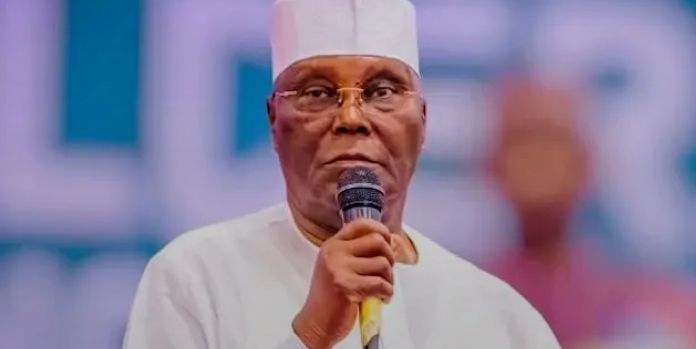
Former Vice President and African Democratic Congress presidential candidate, Atiku Abubakar, has raised concerns over Nigeria’s worsening child malnutrition crisis, linking the situation to rising food, transportation and energy costs.
Atiku said economic hardship was increasingly limiting the ability of families to provide adequate and nutritious meals for their children, warning that the impact of the cost-of-living crisis was being felt most severely by vulnerable households.
In a statement issued on Thursday by his Senior Special Assistant on Public Communication, Phrank Shaibu, Atiku cited nutrition figures showing that 41.1 per cent of Nigerian children under the age of five are stunted, while 19.2 per cent are severely stunted.
He noted that the situation was more severe in the North-West, where stunting affects 58.2 per cent of children.
The Nutrition Society of Nigeria has also raised concerns about the scale of malnutrition in the country, reporting that nearly two million Nigerian children are affected by severe acute malnutrition, with only about two in every 10 receiving treatment.
Atiku said the figures must be considered against the growing financial pressures confronting Nigerian households as the cost of food and other basic necessities continues to consume a significant portion of family incomes.
“This is the most heartbreaking face of the cost-of-living crisis. Behind every statistic is a Nigerian mother struggling to decide what her children can eat, how much they can eat and how often they can eat,” he said.
“A child does not understand inflation figures. A child only knows whether there is food on the table.”
The former vice president also linked rising fuel and transportation costs to the increasing prices of food and other essential goods, arguing that higher energy costs affect the entire supply chain from farms to markets.
According to him, the cost of transporting agricultural produce, operating small businesses and moving goods to markets ultimately translates into higher prices for consumers.
“When fuel becomes expensive, transporting tomatoes from the farm becomes expensive.
Taking rice to the market becomes expensive.
Moving children to school becomes expensive.
“And eventually, the additional cost arrives at the dinner table,” Atiku added.
The National Bureau of Statistics currently puts Nigeria’s food inflation rate at 19.57 per cent, while the World Bank has noted that higher petrol prices can reduce household purchasing power and increase the cost of other goods and services, particularly transportation.
Atiku proposes production subsidy
Atiku said his proposed intervention in the petroleum sector was designed to address some of the cost pressures facing households through what he described as a production subsidy rather than a return to the previous system of subsidising imported petrol.
“My position is straightforward: support what Nigeria produces and refines, lower domestic production costs, and ensure that the benefit reaches the Nigerian consumer.
“This is not an import subsidy. If you do not refine in Nigeria, you do not qualify. The subsidy follows the barrel refined in Nigeria,” he said.
He said the proposal would be capped, transparently budgeted and independently audited, with the broader objective of reducing energy and transportation costs while strengthening domestic production.
According to Atiku, the policy would form part of a wider affordability programme aimed at reducing the cost of moving agricultural products and goods while improving household purchasing power.
“My production-subsidy proposal is therefore not simply a petrol policy. It is part of a broader affordability programme.
“I want the farmer to spend less getting produce to market.
I want the trader to spend less transporting goods. I want the bus driver to spend less on fuel. I want parents to have more money left after transportation so that they can put better food on the table,” he added.
Calls for stronger nutrition intervention
Atiku also called for increased investment in the treatment of severely malnourished children and stronger maternal and child nutrition programmes.
He urged governments to ensure that nutrition budgets were effectively deployed to vulnerable communities, particularly those facing the greatest levels of food insecurity and malnutrition.
His comments come amid continuing debate over the social impact of Nigeria’s economic reforms introduced since 2023, including the removal of the petrol subsidy and foreign-exchange reforms.
The World Bank has said the reforms have contributed to macroeconomic stabilisation while also placing significant short-term pressure on households, particularly poor and economically vulnerable Nigerians.
The bank has further noted that food inflation disproportionately affects poorer households, which can spend as much as 70 per cent of their income on food.
Atiku said government economic policies should ultimately be assessed by their impact on ordinary Nigerians and their ability to meet basic household needs.
“We cannot build a strong country on the bodies of hungry children,” he said.
“We cannot celebrate economic statistics while mothers are cutting meals and children are denied the nutrition they require to grow.”
He said his proposed approach was intended to lower energy and production costs, strengthen domestic production and restore household purchasing power.
“Economic policy must ultimately answer a very simple question: Can the ordinary Nigerian afford to live?” Atiku asked.
World News | International Affairs
Nigerian Envoy Urges Spain to Revitalise Bilateral Agreements, Boost Air Connectivity

Nigeria’s Ambassador to Spain, Okezie Ikpeazu, has called for the revitalisation and review of existing bilateral agreements between Nigeria and Spain to reflect current economic and diplomatic priorities.
Ikpeazu made the call after presenting his Letters of Credence to King Felipe VI of Spain at the Royal Palace in Madrid on Monday, formally marking the commencement of his diplomatic assignment to the European country.
According to a statement issued on Tuesday by the spokesperson for the Ministry of Foreign Affairs, Oluwafemi Adeniyi, the ambassador conveyed the greetings and best wishes of President Bola Tinubu to the Spanish monarch, government and people.
During the ceremony, Ikpeazu reaffirmed Nigeria’s commitment to strengthening its longstanding relationship with Spain, particularly in the areas of trade and investment, energy, infrastructure, agriculture, education, culture, tourism, security and people-to-people exchanges.
He said Nigeria was prepared to work closely with the Spanish government, institutions and private sector to create new opportunities for economic partnerships while increasing trade and investment between the two countries.
Speaking later at a reception organised by the Nigerian Embassy in Madrid in his honour, Ikpeazu stressed the need to review existing bilateral agreements so they could better respond to present-day economic and diplomatic realities.
One of the agreements he specifically highlighted was the Bilateral Air Service Agreement between Nigeria and Spain.
The envoy said the agreement should be revitalised to facilitate stronger and more direct air connectivity between both countries, noting that improved air links would contribute significantly to economic cooperation, tourism and people-to-people exchanges.
Ikpeazu also advocated a broader and more sustained bilateral partnership involving government institutions, private businesses, academic institutions, cultural organisations, civil society groups and communities.
According to him, stronger participation by stakeholders across different sectors would help transform the existing goodwill between Nigeria and Spain into practical and measurable outcomes.
“The relations between the two countries offer significant opportunities for expanded cooperation,” the ambassador said, while calling for wider stakeholder involvement in deepening the partnership.
Ikpeazu expressed appreciation to the Spanish government and people for the warm reception accorded him and pledged to advance Nigeria’s interests while consolidating the relationship between the two countries.
He further acknowledged the contributions of Nigerians living in Spain, describing the Nigerian community as an important bridge for promoting understanding, friendship and cooperation between the peoples of both nations.
The ambassador reaffirmed the commitment of the Nigerian Embassy in Madrid to promoting and protecting the interests of Nigerian nationals residing in Spain.
The reception, a vin d’honneur held in his honour, was attended by members of the diplomatic corps, representatives of the Spanish government, business and cultural stakeholders, members of the Nigerian community, as well as friends and associates of Nigeria.
Ikpeazu said the embassy would continue to work with the Spanish government, diplomatic community, private sector, development partners and the Nigerian community to translate the goodwill between both countries into concrete results.
Nigeria and Spain have maintained longstanding bilateral relations, with cooperation covering economic, diplomatic, cultural and people-to-people ties.
The ambassador’s call for the revitalisation of existing agreements comes as both countries seek to deepen economic cooperation and explore new opportunities in trade, investment, aviation, tourism and other strategic sectors.
-

 Security2 months ago
NDLEA Declares Alleged Drug Kingpin, Three Associates Wanted, Freezes ₦9.8bn Linked to Syndicate
-
 National Affairs2 months ago
ICPC Uncovers 908 Suspected Ghost Workers Across 50 Federal MDAs, Recovers ₦942 Million
-

 Business/Finance2 months ago
How to Apply for Tunde Onakoya’s ₦250 Million Scholarship Programme and Free Laptop Offer
-
 Politics2 months ago
Atiku Challenges Tinubu to Reveal Details of ₦15.13bn SUV Procurement in 2026 Budget
-

 Judiciary | Public Safety2 months ago
INEC Tells Court Voter Information Is Not Confidential in Emeka Ike’s ₦10bn Lawsuit
-
 Judiciary | Public Safety2 months ago
Court to Rule Friday on NDLEA’s Bid to Destroy ₦480bn Meth Lab in Ogun
-
 Security2 months ago
Family Paid ₦50 Million Ransom to Secure Release of Abducted Kebbi Judge
-

 Breaking News2 months ago
Girl Dies in Uyo House Fire After Allegedly Accompanying Man Home from Nightclub