
Business/Finance
FCCPC Opens Probe Into Possible Cement Price Manipulation as Nigeria’s Prices Outpace African Markets

The Federal Competition and Consumer Protection Commission (FCCPC) has opened a further investigation into Nigeria’s cement market after a three-month study raised concerns that the country’s high cement prices may not be fully explained by production costs and prevailing market conditions.
The development could have significant implications for Nigeria’s construction and housing sectors, where the price of cement has become one of the major drivers of rising building costs.
The commission said its preliminary findings pointed to possible anti-competitive practices in the industry, despite Nigeria having substantial limestone deposits and an estimated installed cement production capacity far above domestic consumption.
The investigation followed widespread complaints from consumers, builders and other stakeholders over the persistent increase in cement prices across the country.
According to the FCCPC, the latest probe is intended to determine whether the prices Nigerians are paying are primarily the result of legitimate market pressures or whether elements of the cement supply chain may be engaging in conduct capable of restricting competition.
FCCPC compares Nigeria with other African markets
The commission said its Anticompetitive Practices Department conducted a three-month cross-border study comparing Nigeria’s cement market with those of Kenya, Tanzania, South Africa, Egypt, Morocco, Algeria and Togo.
The assessment considered several factors, including population, limestone availability, domestic demand, installed production capacity and retail prices.
The findings, according to the commission, raised questions about the relationship between Nigeria’s enormous production capacity and the continued increase in domestic cement prices.
Nigeria is estimated to have installed cement production capacity of between 60 million and 65 million metric tonnes annually, while domestic consumption is estimated at only about 25 million to 30 million metric tonnes per year.
That suggests that the country has substantial capacity beyond its domestic requirements.
Nigeria is also a net exporter of cement to some neighbouring countries.
Yet, despite these advantages, the FCCPC said domestic prices have continued to climb.
“Of particular concern to the Commission is that this level of production capacity has not resulted in the downward pressure on domestic prices that might ordinarily be expected in a competitive market with substantial excess capacity.”
The commission said this discrepancy was one of the reasons it decided to move beyond preliminary market analysis and commence a deeper investigation.
Cement prices rose sharply in 2026
The FCCPC said its market intelligence showed that the price of a 50kg bag of cement increased substantially within the first half of the year.
According to the commission, cement sold for between N9,300 and N9,700 in January.
By the middle of the year, prices had climbed to between N10,500 and N13,000, while by July, some parts of the country were recording prices between N13,000 and N15,000 per 50kg bag.
The increases have placed additional pressure on households constructing homes, private developers, contractors and businesses undertaking infrastructure projects.
For ordinary Nigerians, the effect extends beyond the cost of purchasing a bag of cement.
Higher cement prices translate into increased costs for blocks, foundations, walls, plastering, concrete works and other stages of construction.
The cumulative effect can make home ownership even more difficult at a time when housing affordability is already a major national challenge.
Nigeria’s prices compared with Kenya, Tanzania and Togo
One of the most striking aspects of the FCCPC’s findings was the comparison between Nigeria and other African countries.
In Kenya, where the population is approximately 58.6 million, domestic cement demand was estimated at about 9.3 million metric tonnes in 2025.
The commission said a 50kg bag of cement sold for approximately $5.40, equivalent to about N7,344 based on the exchange rate used in its analysis.
Tanzania, with a population of approximately 66.3 million and similar estimated cement demand of about 9.3 million metric tonnes, recorded a retail price of about $4.80, equivalent to approximately N6,528.
Even more notable was the comparison with Togo.
The FCCPC said a 50kg bag of cement sold for about $6.75, or approximately N9,180, in Togo.
The commission pointed out that Togo does not possess the limestone deposits available to Nigeria.
The comparison does not, by itself, establish that Nigerian cement producers are manipulating prices, because differences in taxation, energy costs, transportation, exchange rates, distribution structures and other economic factors can affect retail prices across countries.
However, the FCCPC said the disparity provides sufficient grounds to investigate whether all the factors being cited by industry participants adequately explain the prices Nigerian consumers are paying.
Cement producers cite rising costs
The commission acknowledged that cement manufacturers have provided several explanations for the high prices.
Among them are the rising cost of energy, depreciation of the naira, the cost of imported machinery and spare parts, transportation and logistics expenses.
These factors can significantly affect the cost of manufacturing and distributing cement in Nigeria.
The FCCPC, however, said it was now testing those explanations against verified information supplied by industry participants.
The commission said it would examine actual production costs, capacity utilisation, pricing structures and other relevant market conditions before reaching a conclusion.
This distinction is important.
The FCCPC has not announced a final finding that cement manufacturers are guilty of price fixing or other anti-competitive conduct.
Rather, the commission has said its preliminary findings are serious enough to justify a continuing investigation.
What exactly is the FCCPC investigating?
The commission said the investigation will examine several possible forms of anti-competitive behaviour.
These include alleged coordinated conduct, abuse of market power, restriction of domestic supply and anti-competitive distribution practices.
It has consequently issued Notices of Commencement of Investigation and Summons to Produce to key industry participants.
The companies affected are expected to provide information relating to their pricing methodologies, production levels, capacity utilisation, exports and commercial relationships.
The information will allow investigators to establish how cement prices are determined from production through distribution and ultimately to the final consumer.
The commission said the investigation would seek to answer a fundamental question: whether the current prices are the natural result of legitimate economic pressures or whether competition within the market is being unlawfully restricted.
FCCPC: We are not fixing prices
FCCPC Executive Vice Chairman and Chief Executive Officer, Tunji Bello, stressed that the investigation should not be interpreted as an attempt by government to dictate the prices companies charge.
He said businesses have the right to make legitimate commercial decisions and earn reasonable returns on their investments.
However, he maintained that such commercial freedom must operate within Nigeria’s competition laws.
“Its purpose is to protect the competitive process, so that prices, output and other market outcomes are determined by genuine competition rather than conduct that unlawfully restricts it,” Bello said.
This means the commission’s focus is not necessarily on whether cement manufacturers are making profits, but on whether the process through which prices are determined is consistent with competitive market principles.
If the investigation establishes evidence of unlawful coordination, abuse of dominance or other prohibited conduct, the FCCPC could take enforcement action under the Federal Competition and Consumer Protection Act.
Why the investigation matters beyond cement
The cement market occupies a strategic position in Nigeria’s economy.
Cement is not merely another consumer product. It is a fundamental input into residential construction, commercial development, roads, bridges, schools, hospitals and other infrastructure.
Consequently, sustained increases in its price can have a multiplier effect throughout the economy.
For example, when cement becomes more expensive, developers may increase the prices of houses and commercial properties. Contractors may revise project estimates, while government infrastructure projects may require larger allocations.
The impact can eventually reach rents and the broader cost of living.
This is particularly significant for Nigeria, where the country already faces a substantial housing deficit and where millions of households struggle to finance home construction.
The FCCPC investigation therefore has the potential to become an important test of how effectively Nigeria’s competition authorities can protect consumers in a highly concentrated strategic industry.
What happens next?
The immediate next step will be the collection and analysis of information from cement manufacturers and other players in the supply chain.
The FCCPC is expected to compare reported costs with production volumes, domestic sales, exports, distribution arrangements and retail prices.
The commission will then have to determine whether the evidence supports its preliminary concerns.
If legitimate market forces adequately explain the prices, the investigation could ultimately clear the industry of anti-competitive conduct.
If, however, investigators uncover evidence of unlawful price coordination, restriction of supply or abuse of market dominance, the commission could pursue enforcement measures against affected companies or individuals.
For consumers and the construction industry, the outcome will be closely watched.
At stake is not only the price of a 50kg bag of cement, but a broader question about whether Nigeria’s substantial natural resources and industrial capacity are translating into meaningful benefits for consumers.
For now, the FCCPC’s findings remain preliminary, and the cement industry will have an opportunity to respond to the commission’s investigation and provide evidence supporting its pricing decisions.
Why this matters
Nigeria has significant limestone resources and a cement production capacity that, according to the FCCPC, substantially exceeds domestic consumption. Yet consumers continue to face some of the highest cement prices in the region.
The central issue emerging from the investigation is therefore not simply “Why is cement expensive?”
It is whether the combination of production capacity, domestic demand, production costs, exports and retail prices is consistent with a genuinely competitive market.
The answer could have far-reaching consequences for Nigeria’s housing market, infrastructure development and the wider cost of living.










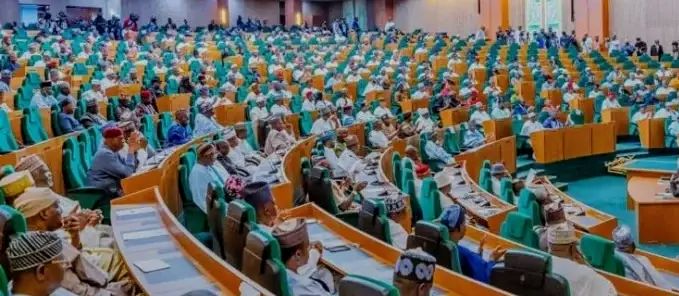
The House of Representatives has resolved to invite the Governor of the Central Bank of Nigeria (CBN), Olayemi Cardoso, to explain alleged breaches of pension agreements and the non-payment of outstanding benefits to retired employees of the apex bank.
The resolution followed the adoption of a motion on Tuesday titled, “Need to investigate the Central Bank of Nigeria for alleged breach of approved pension agreements, non-implementation of harmonisation policy and exclusion of pensioners from general pension increases.”
The motion was moved by the member representing Igabi Federal Constituency of Kaduna State, Hussaini Jallo, who raised concerns over the alleged failure of the CBN to honour agreements governing the pension entitlements and welfare of its retired employees.
Presenting the motion, Jallo said the alleged non-implementation and faulty execution of the pension harmonisation policy might have created disparities in pension payments and led to the accumulation of unpaid arrears, leaving affected retirees in financial hardship.
He expressed concern that pensioners who depend on their retirement benefits for their livelihood were being denied entitlements allegedly due to them.
“The House is concerned that the alleged non-implementation and faulty execution of the harmonisation policy may have led to disparities in pension benefits and the accumulation of unpaid arrears, ultimately denying rightful entitlements and imposing severe financial hardship on affected pensioners who depend on these funds for their livelihood,” he said.
The lawmaker also questioned allegations that some retired CBN employees had been excluded from general pension increases because of additional or extra-statutory demands that might not align with existing laws, binding agreements or approved pension policies.
Jallo further disclosed that the number of CBN pensioners had dropped from 5,104 in 2011 to approximately 3,000, representing a decline of more than 2,100 retirees.
He said the figures indicated an average reduction of about 140 pensioners annually, warning that the mortality rate could increase as the surviving retirees continued to advance in age.
According to him, prolonged delays in the payment of pension benefits could expose elderly and vulnerable pensioners to poverty, ill health and avoidable loss of life.
He maintained that Nigerians who had served the country deserved fairness, transparency and the prompt payment of all benefits lawfully due to them.
“The House acknowledges the need for legislative oversight to establish the facts, determine the extent of any breaches or administrative failures, and ensure that all eligible pensioners receive their lawful entitlements,” Jallo said.
The motion received overwhelming support from lawmakers during a voice vote conducted at plenary presided over by the Speaker, Tajudeen Abbas.
Following its adoption, the House urged the CBN and other relevant authorities to verify and pay all outstanding pension arrears lawfully due to affected retirees within a reasonable and clearly defined period.
It also called for the extension of applicable general pension increases to eligible pensioners in accordance with relevant laws.
The lawmakers subsequently invited Cardoso and other relevant officials, alongside pension administrators, regulators and representatives of the affected pensioners, to appear before the House and provide explanations.
They are also expected to submit relevant documents to assist the investigation.
The House mandated its Committee on Pension to investigate allegations of non-compliance by the CBN with contractual agreements governing the administration and payment of retirement benefits to its former employees.
The committee is expected to examine the terms and obligations contained in the agreements, particularly the circumstances surrounding the non-implementation of the harmonisation policy, the reasons for the delay and the total amount of outstanding arrears.
It will also investigate the alleged exclusion of eligible pensioners from general pension increases on the basis of extra-statutory demands and determine whether such actions comply with applicable laws, contractual obligations and approved pension policies.
As part of its assignment, the committee will review relevant documents, including contractual agreements, policy circulars, payment records and actuarial reports, to establish responsibility for any administrative failures or breaches.
It is also expected to recommend appropriate corrective measures, including the non-discriminatory extension of applicable general pension increases to all eligible retirees in line with relevant laws and approved policies.

The Economic and Financial Crimes Commission (EFCC) has recovered and returned N114 million stolen from a microfinance bank through a cyber fraud scheme.
The commission disclosed this in a post on its official X handle on Friday, stating that the recovered funds were handed over to the financial institution on Thursday.
According to the EFCC, the Acting Zonal Director of its Benin Zonal Directorate, Deputy Commander Sa’ad Hanafi Sa’ad, presented a bank draft worth N114 million to a senior official of the bank, Samuel Ikechukwu.
The recovery followed a petition filed by Ikechukwu in August 2024, after the financial institution discovered that one of its customers’ accounts had been fraudulently hacked and funds withdrawn without authorisation.
The recovery followed a petition filed by Ikechukwu in August 2024, after the financial institution discovered that one of its customers’ accounts had been fraudulently hacked and funds withdrawn without authorisation.
The commission said its investigators traced the stolen money to several suspects, leading to the arrest of one of them, identified as Obumneme Bright.
It added that N114 million was recovered from Bright following his arrest and subsequently returned to the affected financial institution.
The EFCC, however, disclosed that efforts were ongoing to track down and apprehend other suspects allegedly connected to the cyber fraud.
The recovery highlights the commission’s ongoing efforts to investigate financial crimes, recover illicit funds and return stolen assets to their rightful owners.
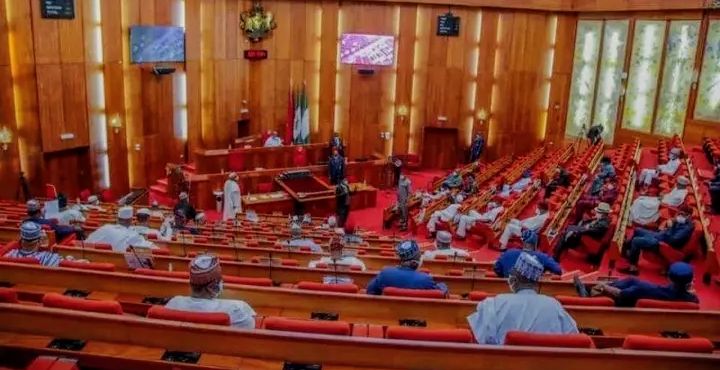
President Bola Tinubu has asked the Senate to approve the Federal Government’s 2026–2027 Supplementary External Borrowing Plan, seeking loans of $20.52bn and €1.05bn to finance infrastructure and development projects across Nigeria.
The request was transmitted to the National Assembly and read by Senate President Godswill Akpabio during Tuesday’s plenary.
In the letter, Tinubu urged lawmakers to consider and approve the borrowing plan promptly, saying the proposed funds would support critical projects and programmes across infrastructure, agriculture, healthcare, education, water supply, security, employment generation and financial management reforms.
The proposed borrowing amounts to $20,517,755,901 and €1,045,083,643, respectively.
The President said the external financing was necessary to address Nigeria’s infrastructure deficit and bridge the funding gap affecting the implementation of development projects.
“I submit the attached Federal Government 2026–2027 Supplementary External Borrowing Plan for consideration and early approval of the National Assembly to ensure prompt implementation of our projects,” he stated.
Tinubu explained that the projects and programmes were selected following technical and economic evaluations, with emphasis on their expected contributions to Nigeria’s socioeconomic development.
According to him, the initiatives are designed to generate employment, promote skills acquisition, encourage entrepreneurship, reduce poverty and strengthen food security.
“These initiatives aim to generate employment, promote skill acquisition, foster entrepreneurship, reduce poverty and enhance food security, all of which improve the livelihood of the Nigerian child,” the President said.
He added that most of the projects would be implemented across Nigeria’s 36 states and the Federal Capital Territory, highlighting the nationwide scope of the proposed investments.
Tinubu Cites Infrastructure Funding Gap
The President maintained that the scale of Nigeria’s infrastructure needs required additional financing, arguing that external borrowing would help bridge the gap between available resources and the funding required to deliver critical projects.
“In light of the need for significant infrastructure investment in the country and the vast financial resources needed to address this gap, it has become essential to pursue prudent external borrowings to close the financing shortfall,” Tinubu stated.
He said the funds would primarily support critical infrastructure, particularly in the power, transportation and healthcare sectors.
Tinubu urged the Senate leadership and the wider National Assembly to approve the proposal without delay, arguing that timely approval would facilitate fund disbursement and accelerate project implementation.
However, the request is expected to undergo scrutiny by the relevant Senate committees, including an examination of its scope and relationship with the Federal Government’s existing borrowing arrangements.
Akpabio Says Borrowing Plan Was Previously Approved
Reacting after the presidential letter was read, Akpabio said the borrowing plan had featured in previous government borrowing and budgetary arrangements, although he expressed uncertainty about the exact period covered by the earlier approval.
“The borrowing plan is attached, but of course, this was even earlier approved in our budget, and also the external borrowing plan was approved as far back as 2025 to 2027, I think to 2028 or thereabout,” the Senate President said.
Akpabio announced that the request would be referred to the Senate Committee on Local and Foreign Debts for consideration, with possible contributions from the Committees on Appropriations and Finance.
“However, this request will be looked at by the Committee on Local and Foreign Debts, probably in collaboration with Appropriations and Finance, but mainly by the Committee on Local and Foreign Debts,” he stated.
The Senate President also referenced Senator Haruna Manu in connection with the committee’s leadership.
The committee’s review is expected to examine the details of the proposed financing and determine how the supplementary borrowing plan relates to previously approved arrangements before the Senate decides on the next legislative steps.
The proposal would add to the Federal Government’s external financing commitments if approved.
Its consideration is also likely to bring attention to the terms of the proposed loans, the projects to be financed, repayment obligations and the expected economic benefits of the investments.
The Senate has yet to make a final decision on the request, which is to undergo committee consideration.
The alternative expresses the approximate combined value in US-dollar terms only if an exchange rate is specified and applied. The original headline is safer and more precise.
-

 Security4 months ago
NDLEA Declares Alleged Drug Kingpin, Three Associates Wanted, Freezes ₦9.8bn Linked to Syndicate
-

 Business/Finance3 months ago
How to Apply for Tunde Onakoya’s ₦250 Million Scholarship Programme and Free Laptop Offer
-
 National Affairs3 months ago
ICPC Uncovers 908 Suspected Ghost Workers Across 50 Federal MDAs, Recovers ₦942 Million
-

 Judiciary | Public Safety3 months ago
INEC Tells Court Voter Information Is Not Confidential in Emeka Ike’s ₦10bn Lawsuit
-

 Politics3 months ago
Atiku Challenges Tinubu to Reveal Details of ₦15.13bn SUV Procurement in 2026 Budget
-

 Judiciary | Public Safety3 months ago
Court to Rule Friday on NDLEA’s Bid to Destroy ₦480bn Meth Lab in Ogun
-

 Security3 months ago
Family Paid ₦50 Million Ransom to Secure Release of Abducted Kebbi Judge
-

 News3 months ago
2026 Budget: FG Earmarks ₦962.83bn for SUVs, Empowerment Projects Amid Debt Concerns