
World News | International Affairs
Nigeria Targets 3 Million Barrels of Oil Daily as Investments, Pipeline Security Improve


Nigeria is stepping up efforts to raise crude oil production to three million barrels per day by 2030 through fresh investments, new licensing rounds, improved field operations and strengthened pipeline security, DARE OLAWIN writes.
Nigeria is intensifying efforts to increase crude oil production to three million barrels per day by 2030, with the Federal Government pursuing fresh investments, expanded licensing.
opportunities and stronger protection of oil infrastructure to reverse years of declining output and attract capital into the upstream petroleum sector.
The Nigerian Upstream Petroleum Regulatory Commission (NUPRC) is spearheading the investment drive through licensing rounds designed to bring more operators into the industry.
The commission has announced a 2026 licensing round offering 40 oil and gas blocks across onshore, shallow-water and deepwater terrains.
At the same time, pipeline security, particularly in the Niger Delta, remains central to efforts to curb crude oil theft, minimise production disruptions and improve the reliability of petroleum transportation.
Nigeria’s crude oil production peaked at approximately 2.5 million barrels per day in November 2005. More than two decades later, the country is yet to return to that level consistently, despite reforms, new investments and successive government initiatives aimed at revitalising the sector.
The Federal Government is targeting three million barrels of oil per day and 12 billion cubic feet of gas by 2030. Meeting these ambitions will require substantial capital, improved infrastructure, stronger security and sustained investment in exploration and production.
A member of the NUPRC Governing Board, Sunday Adebayo, said recent developments indicated that the country was making progress towards higher production.
“We have already started in a good direction. One of them is the bid rounds, which were successfully done. New ones will be done that will bring in more players,” he said.
Adebayo noted that the rig count had increased and expressed optimism that more drilling rigs would become operational as investment activities expanded.
He also cited the commencement of the 2026 licensing round, announced by the commission’s Chief Executive, Oritsemeyiwa Eyesan, as another step towards attracting investors into Nigeria’s petroleum industry.
According to him, cooperation between host communities and oil companies has also improved, creating opportunities for renewed operations in areas that previously experienced limited activities.
He identified the Ogoni area as one of the locations where renewed interest could support fresh investment and economic activities, adding that the involvement of host communities remained important to the sustainability of oil operations.
NUPRC Offers 40 Oil and Gas Blocks to Investors
Eyesan said the 2026 licensing round followed approvals granted by President Bola Tinubu and the Minister of Petroleum Resources.
She explained that the 40 blocks were open to investors with the technical expertise, financial capacity and commitment required to develop Nigeria’s petroleum resources.
“This round offers 40 blocks across land, shallow water and deepwater terrains. They are open to investors with the technical competence, financial capability and, above all, the commitment to develop Nigeria’s petroleum resources,” she said.
Eyesan stressed that Nigeria must improve its competitiveness as countries across the world compete for investment in upstream oil and gas projects.
“We will not rest on our laurels. Competition for upstream capital is fierce, and it grows fiercer by the day. Investors have choices.
They go where the rules are clear, where the process is predictable and where data can be trusted,” she added.
The licensing round comes against the backdrop of a significant decline in investment in Nigeria’s oil and gas industry. According to Eyesan, annual investment in the sector fell from $26bn in 2014 to approximately $2bn.
The decline highlights the challenge facing the country as it seeks to attract the capital required to develop new fields, expand existing operations and improve production capacity.
The NUPRC has also identified the potential for significant investment in offshore oil and gas projects following the introduction of new incentives.
The commission said the incentives could attract $50bn in fresh investment into Nigeria’s offshore energy sector.
However, the ability to secure such investments will depend partly on the availability of skilled personnel to support increasingly complex exploration and production activities.
Speaking at a human resources conference, Eyesan said Nigeria needed to strengthen its supply of specialised workers, particularly those with digital skills and expertise in subsurface operations.
“Today we are attracting new investments, and so we want to see an upward trajectory. It stands to reason that you must go back to the basics. First of all, we need the right competencies in sub-surface,” she said.
Offshore developments require specialised technical knowledge to identify reserves, develop oil fields and maintain efficient production. Building the necessary workforce will therefore be important as Nigeria seeks to take advantage of new investment opportunities.
Oil Block Winners Face Deadline on Signature Bonuses
Beyond attracting new investors, the NUPRC is seeking to ensure that companies awarded oil and gas blocks meet their financial obligations and demonstrate their readiness to develop the assets.
The commission has warned 31 companies that emerged winners of 37 oil and gas blocks in the 2025 licensing round to pay their signature bonuses within the stipulated period or risk losing their provisional awards.
The warning followed the commercial bid conference held in Abuja, where the successful companies emerged as winners of the available blocks.
The commission said compliance with signature-bonus payments had commenced following the issuance of provisional awards.
It warned that companies that failed to pay within the prescribed timeframe in line with the Petroleum Industry Act would forfeit their bid guarantees and lose their provisional awards to reserve bidders.
Under the applicable licensing requirements, successful bidders are expected to pay signature bonuses ranging from $3m to $7m per block.
They are also required to provide the necessary guarantees, pay first-year rents and fulfil other post-award conditions within the stipulated period.
Failure to meet these obligations could result in the affected blocks being transferred to the next-ranked reserve bidders.
The requirements are intended to ensure that companies awarded petroleum assets possess the financial capacity and commitment needed to proceed with development rather than merely secure licences without meaningful investment.
Mature Oil Fields Offer Opportunities for Production Growth
While new licensing rounds are expected to attract fresh capital, Nigeria’s existing oil fields also offer opportunities to increase output through additional investment, drilling and improved operational efficiency.
Chairman and Chief Executive Officer of Brittania-U, Catherine Uju Ifejika, recently highlighted the importance of investing in mature assets, citing the company’s Ajapa field.
She said Brittania-U invested more than $400m after acquiring the asset from Chevron. The investment covered additional drilling and the deployment of a Floating Production, Storage and Offloading facility.
According to her, the investment enabled the Ajapa field to commence production at approximately 2,300 barrels per day in 2010, followed by increased and more stable output.
The development illustrates how investments in existing fields can help improve production, particularly where operators can deploy additional wells, upgrade facilities and improve recovery rates.
For Nigeria, developing new fields alongside maximising the potential of mature assets will be important in closing the gap between current output and the government’s 2030 target.
However, investment decisions will continue to depend on the commercial attractiveness of projects, geological prospects, operating costs, infrastructure availability, security and the stability of the regulatory environment.
The country has recorded an improvement in crude oil and condensate production this year. According to the NUPRC, total output increased from 1.48 million barrels per day in February to 1.735 million barrels per day in June.
Although the increase represents progress, production remains substantially below the three-million-barrel-per-day target.
Nigeria is also seeking to take advantage of changes in global oil supply conditions, including disruptions associated with the war in Iran. Higher output could strengthen export earnings and government revenues, provided the country can sustain production and meet its supply commitments.
The challenge is to translate licensing awards and investment commitments into operational projects capable of delivering additional barrels over the coming years.
Pipeline Security Remains Critical to Oil Production
Alongside investment and regulatory reforms, the protection of oil infrastructure remains an important factor in Nigeria’s efforts to raise production.
Pipeline vandalism, illegal tapping and crude oil theft have historically undermined production, reduced government revenues and created operational challenges for oil companies, particularly in the Niger Delta.
The Federal Government’s engagement of Tantita Security Services Nigeria Limited to protect oil assets has become a significant part of discussions about improving security across the petroleum industry.
The company, led by High Chief Government Ekpemupolo, popularly known as Tompolo, was engaged to support the protection of oil infrastructure and help address activities that disrupt petroleum production and transportation.
Tantita works alongside other security agencies in efforts to protect pipelines, deter crude oil theft and support stability in the Niger Delta.
The security of pipelines is important because disruptions can affect production, exports and government revenue. Damage to infrastructure and illegal connections can also increase operating costs and undermine confidence in Nigeria’s ability to deliver crude oil reliably.
Stakeholders supporting continued collaboration on pipeline surveillance have argued that protecting oil infrastructure is necessary to sustain production growth and improve the country’s economic prospects.
A recent survey cited in the report found that a majority of respondents attributed the de-escalation of security incidents in the Niger Delta to pipeline surveillance operations conducted by Tantita. However, the survey’s methodology and figures were not provided.
President-General of the Niger Delta Progressive Alliance, Nse Udoh, said pipeline surveillance had helped shift attention from responding to recurring security incidents towards longer-term planning across the petroleum sector.
He stressed that pipeline surveillance should be understood as one component of a wider energy system covering exploration, production, refining, distribution and pricing policies.
“Pipeline surveillance does not manage these domains,” Udoh said, while emphasising that protecting the infrastructure through which petroleum resources are transported remained fundamental to the performance of the wider industry.
He argued that production targets, refining plans, exports and government revenue projections could be undermined when transportation infrastructure was insecure.
“Asset protection, in this context, is not a supporting activity. It is a precondition for economic order. In effect, the pipeline is the hinge on which the entire petroleum value chain turns,” he said.
According to Udoh, sustained monitoring and rapid-response systems had helped reduce pipeline breaches and illegal tapping, while improved receipt rates had supported higher production.
He also linked the security of petroleum transportation infrastructure to Nigeria’s ability to meet export commitments and plan refining operations.
“When crude flows are secure, refineries can plan feedstock intake with assurance. Export commitments can be met without fear of sudden shortfalls,” he said.
Udoh added that reliable petroleum flows could help investors assess risks more accurately and make informed decisions about projects in Nigeria.
He maintained that predictable supply would strengthen government budgeting, improve infrastructure planning and make long-term commercial contracts easier to negotiate.
Sustained Investment Needed to Meet 2030 Target
Nigeria’s ambition to raise oil production to three million barrels per day by 2030 will depend on the combined impact of new investments, licensing reforms, improved operations in existing fields and sustained protection of petroleum infrastructure.
The increase in production from 1.48 million barrels per day in February to 1.735 million barrels per day in June indicates progress, but further growth will require projects to move from the licensing and investment stages to actual production.
The government must also address the factors that influence investors’ decisions, including regulatory certainty, technical capacity, infrastructure, operating costs and security.
While pipeline surveillance can help reduce disruptions and protect petroleum transportation networks, it cannot independently deliver the investment, exploration, drilling and infrastructure expansion needed to meet the production target.
The challenge for Nigeria is therefore to sustain improvements in oil asset security while ensuring that licensing opportunities attract credible investors, awarded blocks are developed and existing fields operate more efficiently.
Whether the country reaches three million barrels per day by 2030 will ultimately depend on its ability to turn these initiatives into consistent and commercially sustainable production growth.




World News | International Affairs
Lagos to Engage Fintech Operators on Taxation, Digital Infrastructure

Lagos State is set to engage financial technology operators on taxation, digital infrastructure and innovation as industry stakeholders seek greater involvement in shaping the state’s digital economy agenda for 2027 to 2031.
The engagement will take place at a fintech town hall organised by My Card Global in collaboration with the Fintech Association of Nigeria (FintechNGR) on November 20 at The George Hotel, Ikoyi, Lagos.
According to a statement sighted by The PUNCH on Monday, the meeting will bring together senior government officials, technology entrepreneurs, investors and industry executives to discuss policies and economic conditions needed to support the growth of digital businesses in the state.
The town hall, themed “The Lagos Digital Economy Blueprint: Co-Authoring the Lagos Digital Economy Agenda 2027–2031,” is expected to provide a platform for government and private-sector stakeholders to jointly develop priorities for Lagos’ digital economy over the next five years.
Among the government officials expected at the event are the Minister of Communications, Innovation and Digital Economy, Bosun Tijani; Lagos State Deputy Governor, Obafemi Hamzat; and the Chairman of the Lagos State Internal Revenue Service, Ayodele Subair.
Their expected participation is significant to discussions around taxation, digital infrastructure and the relationship between government regulation and private-sector innovation.
Also expected is Iyinoluwa Aboyeji, co-founder of Andela, alongside founders, chief executives and other professionals in Nigeria’s fintech industry.
The proposed discussions will focus on taxation, digital infrastructure, innovation and long-term economic growth, with particular attention to the operating conditions affecting technology businesses in Lagos.
Participants are expected to examine how tax policies are designed and administered, the availability of infrastructure required to support digital services and the extent to which government regulations encourage or constrain innovation.
The organisers said the town hall was designed to encourage direct engagement between policymakers and businesses, with an emphasis on developing practical policy proposals rather than limiting conversations to general discussions about technology.
They added that the meeting would give fintech operators an opportunity to contribute their industry experience and expertise to policy development while allowing government representatives to engage directly with businesses affected by regulatory and economic decisions.
FintechNGR is a self-regulatory, not-for-profit and non-political industry association established to promote the development of Nigeria’s financial technology sector and provide a platform for engagement among industry stakeholders.
The association is also a member of the Global Fintech Hubs Federation and has engaged regulatory institutions, including the Central Bank of Nigeria, the Securities and Exchange Commission and the National Insurance Commission, on policies affecting the fintech ecosystem.
It has also maintained engagements with governments at different levels on issues relating to the growth and regulation of financial technology businesses.
My Card Global and FintechNGR said their objective was to promote a sustainable and inclusive digital economy through stronger collaboration between the public and private sectors.
The November 20 town hall is expected to produce policy recommendations for consideration in shaping Lagos State’s digital economy priorities for the 2027–2031 period.
World News | International Affairs
Tinubu Moves to Tackle 15m Housing Deficit as Abbas Demands Real Estate Reforms

The Federal Government has intensified efforts to address Nigeria’s estimated 15 million housing deficit, unveiling plans for a 5,000-unit residential estate in Lagos and proposing the construction of 100 housing units in each of the country’s 774 local government areas.
The initiative comes as Speaker of the House of Representatives, Tajudeen Abbas, calls for sweeping reforms in the real estate sector, warning that weak regulation, fraudulent property transactions, bureaucratic bottlenecks and poor institutional coordination are discouraging investment and making homeownership increasingly difficult.
The Minister of Housing and Urban Development, Muttaqha Rabe Darma, disclosed the Federal Government’s plans during the groundbreaking ceremony of the 5,000-unit Harmony Renewed Hope Housing Estate in Ibeju-Lekki, Lagos State.
Darma said President Bola Tinubu was concerned about the country’s growing housing shortage and had directed the ministry to explore ways of expanding access to affordable accommodation through partnerships with private developers, mortgage institutions and other investors.
Akinyelure recalled Mosadoluwa’s involvement in the delivery of 4,000 housing units in Karsana, Abuja, describing the participation of indigenous developers in large-scale residential projects as an opportunity to expand housing supply through public-private partnerships.
He called for greater recognition of local investors contributing to residential development, stressing that stronger collaboration among government institutions, mortgage providers and private developers would help increase housing availability and improve access to homeownership.
World News | International Affairs
Florida Learjet Crash Kills All Nine Aboard After Jet Plunges Into Residential Area

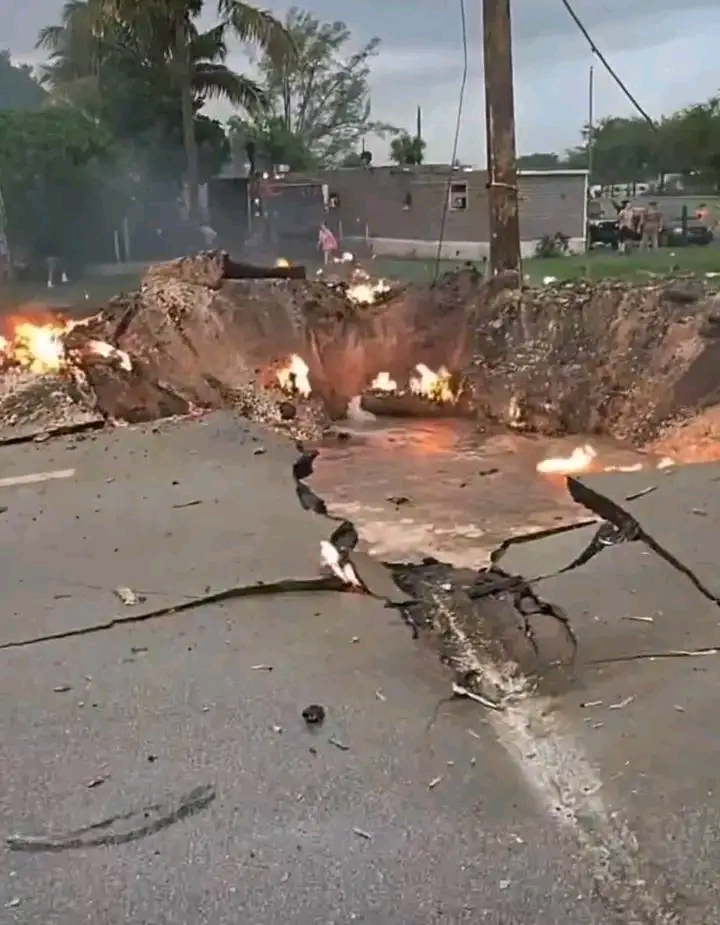
A Learjet 60 business aircraft crashed into a residential area in Palm Beach County, Florida, on Sunday, November 1, killing all nine people aboard and triggering a major emergency response, according to US Transportation Secretary Sean Duffy.
 The aircraft plunged into the Greenacres area near Military Trail, between Cresthaven Boulevard and 10th Avenue North, at approximately 12:50 p.m. local time. The impact triggered a large fireball, scattered wreckage across the roadway and created a crater in the pavement near homes and businesses.
Duffy confirmed the fatalities in a statement describing the incident as a “horrific tragedy”. He said the Federal Aviation Administration (FAA) was supporting the investigation led by the National Transportation Safety Board (NTSB).
The identities of the nine people aboard had not been publicly released in the initial reports. Authorities had also not confirmed whether anyone on the ground was killed or injured.
Aircraft Was Flying From Texas to the Bahamas
The Learjet 60 departed Austin-Bergstrom International Airport in Texas and was bound for North Eleuthera Airport in the Bahamas, according to the FAA.
The aircraft crashed shortly before 1 p.m. as it passed over the Greenacres area of Palm Beach County, south of West Palm Beach.
Flight-tracking data reviewed by CNN indicated that the aircraft lost approximately 27,000 feet of altitude in about one minute before tracking information stopped.
The rapid descent is an important part of the sequence investigators will examine, but it does not by itself establish what caused the crash.
Videos recorded by people near the scene showed the aircraft descending rapidly before striking the ground and erupting into flames. Thick black smoke rose above the area as emergency crews responded.
The circumstances surrounding the final moments of the flight remain under investigation.
Crash Sparks Fire and Disrupts Local Traffic
The impact caused extensive damage at the crash site, with debris scattered along the roadway and flames burning around the wreckage.
Emergency personnel, including firefighters and law enforcement officers, rushed to the scene. Authorities closed Military Trail in both directions between Cresthaven Boulevard and 10th Avenue North and urged motorists to avoid the area.
Local reports also indicated that the crash disrupted electricity in nearby areas. Officials described the response as an extended incident while crews worked to secure the scene and assess the damage.
The aircraft came down close to residential properties, including a mobile-home community. Initial reports did not establish the full extent of damage to nearby buildings or whether people on the ground had been injured.
The priority for emergency services was to control the fire, secure the crash site and support the investigation.
NTSB to Lead Investigation Into Cause
The FAA and NTSB are investigating the crash, with the NTSB expected to lead the inquiry and provide further information as evidence becomes available.
Investigators will need to reconstruct the aircraft’s final flight, examine recovered components, review available flight and air-traffic-control records, and assess weather conditions and other potential contributing factors.
The aircraft’s rapid loss of altitude is a significant element of the investigation. However, it would be premature to attribute the crash to mechanical failure, pilot error, severe weather or any other specific cause before investigators complete their assessment.
CNN reported that thunderstorms were present in the area around the time of the crash and that the aircraft had passed through a stronger storm cell shortly before descending. Whether weather played any role had not been established.
The investigation is expected to examine the available evidence before drawing conclusions about what happened.
Crash Occurred Near Trump’s Florida Residence
The crash site was several miles from Mar-a-Lago, President Donald Trump’s private club and residence in Palm Beach.
Trump had been in the West Palm Beach area earlier on Sunday before departing aboard Air Force One, according to CNN.
The crash occurred near Palm Beach International Airport, which was renamed Palm Beach International Airport at President Donald J. Trump’s direction earlier in 2026.
The proximity to Mar-a-Lago has prompted attention online, but the information released by authorities has not established a connection between the crash and the president’s security arrangements.
There is no verified evidence in the initial reports that the aircraft was brought down by an external intervention. The cause remains undetermined, and speculation should not be treated as an investigative finding.
Families Await Identification of Victims
The deaths of all nine people aboard the aircraft make the crash a major aviation tragedy. Authorities had not immediately released the names of the victims or detailed the circumstances of their travel.
Investigators and local authorities will need to establish the identities of those killed, notify their families and determine the sequence of events that led to the aircraft’s descent and impact.
The NTSB’s findings will be central to explaining why the Learjet went down and whether any safety lessons or recommendations emerge from the investigation.
For now, the confirmed facts are that the Learjet 60 crashed in a residential area of Palm Beach County while travelling from Texas to the Bahamas, all nine people aboard died, and federal authorities are investigating the cause.
Nigeria Insight will update this report as investigators release verified information about the victims and the circumstances of the crash.
-

 Security4 months ago
NDLEA Declares Alleged Drug Kingpin, Three Associates Wanted, Freezes ₦9.8bn Linked to Syndicate
-

 Business/Finance3 months ago
How to Apply for Tunde Onakoya’s ₦250 Million Scholarship Programme and Free Laptop Offer
-

 National Affairs3 months ago
ICPC Uncovers 908 Suspected Ghost Workers Across 50 Federal MDAs, Recovers ₦942 Million
-

 Judiciary | Public Safety3 months ago
INEC Tells Court Voter Information Is Not Confidential in Emeka Ike’s ₦10bn Lawsuit
-

 Politics3 months ago
Atiku Challenges Tinubu to Reveal Details of ₦15.13bn SUV Procurement in 2026 Budget
-

 Judiciary | Public Safety3 months ago
Court to Rule Friday on NDLEA’s Bid to Destroy ₦480bn Meth Lab in Ogun
-

 Security3 months ago
Family Paid ₦50 Million Ransom to Secure Release of Abducted Kebbi Judge
-

 News3 months ago
2026 Budget: FG Earmarks ₦962.83bn for SUVs, Empowerment Projects Amid Debt Concerns