
Politics
Presidency Hits Back at Atiku Over Fuel Subsidy Plan, Accuses ADC Candidate of ‘Hypocrisy and Deceit’

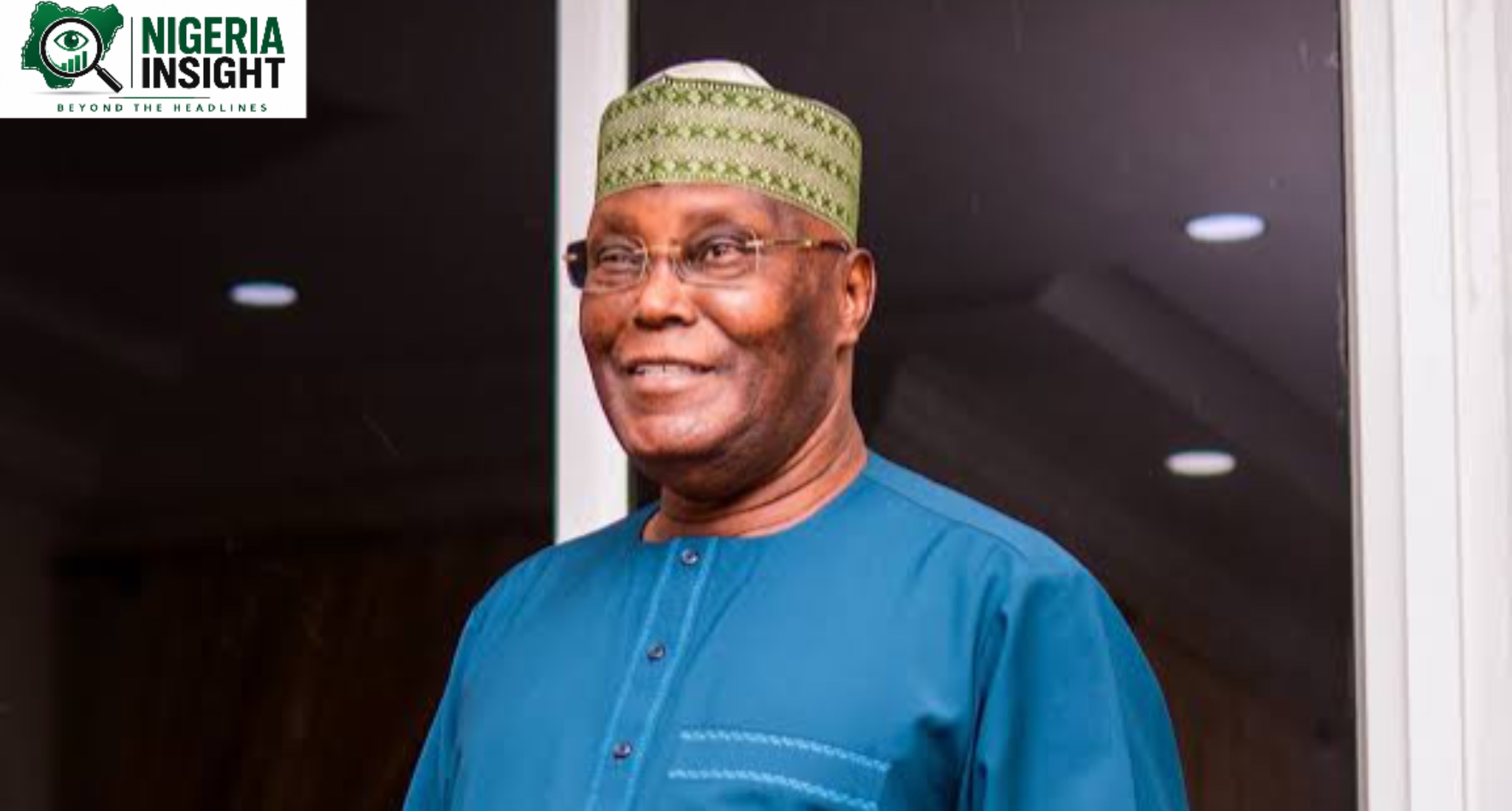
The Presidency has launched a sharp attack on former Vice President Atiku Abubakar over his pledge to consider restoring fuel subsidy if elected president in 2027, accusing the African Democratic Congress (ADC) presidential candidate of attempting to manipulate Nigerians ahead of the election.
The latest exchange has opened another major policy battle ahead of the 2027 presidential election, with the future of Nigeria’s petrol subsidy system once again emerging as a potentially decisive campaign issue.
Atiku, who is seeking to challenge President Bola Ahmed Tinubu at the 2027 election, had indicated in a recent interview that he would consider restoring fuel subsidy if Nigerians give him the mandate to govern.
The proposal directly challenges one of the defining economic decisions of the Tinubu administration, which removed the long-standing petrol subsidy after taking office in May 2023.
Reacting to Atiku’s position, presidential spokesperson Sunday Dare described the proposal as “hypocrisy and deceit.”
Dare accused the former vice president of attempting to exploit public dissatisfaction over the economic consequences of subsidy removal for electoral advantage.
In a statement, the presidential spokesperson argued that promising to restore subsidy amounted to an attempt to reverse an economic policy that the Tinubu administration considers central to its reform programme.
“Atiku Abubakar: Your pronouncement that you will bring back fuel subsidy is drenched in hypocrisy and deceit,” Dare said.
He described Atiku’s proposal as “an unpardonable manipulation of the public psyche,” alleging that it was designed to influence voters ahead of the 2027 general elections.
The Presidency’s response demonstrates how politically sensitive the fuel subsidy question remains more than three years after its removal.
The subsidy debate has remained one of the most consequential economic and political issues in Nigeria.
For years, successive governments spent substantial public resources subsidising petrol prices, allowing consumers to purchase fuel below what governments said was its full market cost.
While the policy provided cheaper petrol, critics argued that it placed a heavy burden on public finances, encouraged smuggling and created opportunities for corruption and inefficiency.
Tinubu’s decision to end the subsidy shortly after assuming office fundamentally changed the country’s fuel pricing system.
The immediate consequences included a sharp increase in petrol prices and transportation costs, followed by wider increases in the cost of goods and services.
The government has consistently defended the decision as necessary to redirect resources toward infrastructure, social investment and other areas of the economy.
Opposition politicians, however, have continued to argue that the government removed the subsidy without putting adequate measures in place to cushion its effect on ordinary Nigerians.
That disagreement is now likely to become even more prominent as political parties begin defining their economic programmes for 2027.
Dare went beyond criticising Atiku’s proposal, arguing that restoring the subsidy would undermine what he described as the country’s ongoing economic recovery.
“The ongoing recovery across various sectors of our national life annoys you, and will be halted if this thinking of yours is implemented,” he said.
The presidential spokesperson added that the policy would not be reversed under the current administration.
“By the Grace of God, it will not happen and all good men of conscience must rise up against you,” Dare stated.
The comments represent a strong indication that the Tinubu administration intends to make the defence of its economic reforms an important component of its political messaging ahead of the 2027 election.
Despite the Presidency’s criticism, Atiku’s proposal touches on a policy issue that remains highly sensitive among Nigerian households.
The removal of fuel subsidy dramatically increased the cost of petrol and contributed to higher transportation expenses.
For many Nigerians, particularly low-income households and workers who depend heavily on public transportation, the consequences of higher fuel prices have been felt beyond the filling station.
Transport costs affect the movement of food and other commodities, while businesses that rely on petrol or diesel for power generation face increased operating expenses.
This creates a difficult political calculation for whoever seeks the presidency in 2027.
A government must balance the fiscal argument against subsidies with the social and political consequences of allowing energy prices to rise sharply.
Atiku’s position therefore provides the opposition with an opportunity to frame the subsidy debate around the cost of living and the welfare of ordinary Nigerians.
For the Tinubu administration, however, accepting such an argument would risk undermining one of its central economic reform narratives.
The bigger question: What would replace subsidy?
The emerging debate is likely to extend beyond the simple question of whether subsidy should return.
The more fundamental issue is how Nigeria should protect vulnerable citizens while maintaining a financially sustainable energy market.
If Atiku eventually campaigns on subsidy restoration, voters may demand details about how such a policy would be financed.
Would the government return to direct petrol subsidies?
Would it introduce targeted subsidies for vulnerable households?
Would it subsidise transportation rather than petrol?
Would the government increase domestic refining capacity and rely less on imported petroleum products?
And how would the policy affect government revenue, foreign exchange demand and public spending?
Similarly, the Tinubu administration and the APC will face questions about whether the benefits of subsidy removal have sufficiently reached Nigerians to justify the economic pain associated with the reform.
These questions could become central to the 2027 presidential contest.
A battle over Nigeria’s economic direction
The latest exchange between the Presidency and Atiku therefore represents more than a political disagreement over petrol prices.
It points to a larger contest over the direction of Nigeria’s economy.
The Tinubu administration has presented subsidy removal, exchange-rate reforms and other policy changes as painful but necessary steps toward rebuilding the economy.
Opposition figures, including Atiku, have increasingly focused on the social consequences of those policies and the pressure they have placed on households.
As the 2027 election approaches, Nigerians are likely to hear competing promises about how to address inflation, unemployment, energy costs, poverty and declining purchasing power.
The challenge for voters will be distinguishing between campaign rhetoric and detailed, financially credible policy proposals.
For Atiku, the subsidy question could become an important part of his argument for a change in direction.
For Tinubu’s government, defending the removal of subsidy and demonstrating measurable economic gains will be equally important to its case for continuity.
The debate is only beginning, and with the 2027 campaign season now approaching, fuel subsidy is likely to remain one of the most fiercely contested economic issues in Nigeria’s political discourse.







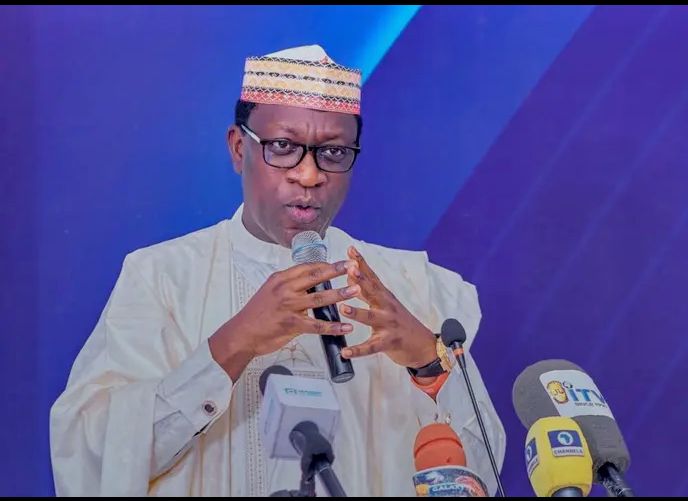
A chieftain of the All Progressives Congress (APC) and federal lawmaker, Abdulmumin Jibrin, has described the Minister of the Federal Capital Territory (FCT), Nyesom Wike, as an asset to the ruling party, urging APC leaders to refrain from publicly embarrassing him over his continued membership of the Peoples Democratic Party (PDP).
Jibrin made the remarks on Wednesday night while appearing on Channels Television’s Politics Today, where he defended Wike amid criticisms from some APC governors over his political affiliation and support for President Bola Ahmed Tinubu’s second-term bid.
The Kano lawmaker argued that Wike’s contributions to the emergence of the Tinubu administration and the APC’s political fortunes should be recognised, rather than subjected to public criticism.
“There is no APC member in Nigeria today that has not directly or indirectly benefited from the efforts of Wike, so long as delivering the President, also managing the government, also performing his work, there is nobody,” Jibrin said.
He added that Wike remained an important figure in the administration and should not be publicly attacked by members of the ruling party.
“Wike is an asset to the APC. I don’t think Wike should be embarrassed at this moment with public statements,” he said.
According to Jibrin, Wike had made significant political sacrifices in support of Tinubu and the APC despite remaining a member of the opposition PDP.
“Wike is an asset to APC; he has sacrificed so much for the President and the APC,” he added.
‘I’m Not Holding Brief for Wike’
Jibrin said his intervention was not motivated by a personal relationship with the FCT minister, explaining that he had only met Wike twice by accident.
He said his concern was primarily about protecting what he described as the stability of the political efforts aimed at securing Tinubu’s second-term bid.
“As I talk to you, before only God I worship, I don’t know Wike, but he knows me from afar, and I know him from afar, if I see him I know he is Wike, and if he sees me he will know I’m Honourable Jibrin, I have met him just twice accidentally, so I’m not holding any brief for Wike,” he explained.
Jibrin added that he considered it necessary to speak whenever political disagreements could affect the broader coalition supporting the President.
He also cited Wike’s political activities in Rivers State and the FCT as evidence of his contribution to the APC-led administration.
Wike ‘Handed Over Rivers to APC’
The former Chairman of the House Committee on Appropriation said Wike had played a role in the political realignment that strengthened the APC in Rivers State.
“I believe that Wike has sacrificed; he handed over Rivers to APC, Wike had candidates [in the] FCT election but asked them to step down for APC. Wike came into this government as [part of the] government of national unity. In reality, we should be fair to him; he has done far more than that,” Jibrin said.
He further argued that Wike’s continued membership of the PDP should not automatically disqualify him from supporting Tinubu, noting that politicians from other parties were also involved in the broader political coalition backing the President.
According to him, some politicians outside the APC had also expressed concern about the criticism directed at Wike.
“There are people who are in other parties, who are working with us in the NDC, in the ADC. Some of them called me yesterday, saying, ‘Look at what they are saying about Wike,’” he stated.
Jibrin Urges APC Governors to Engage Wike Privately
Jibrin also appealed to APC governors who have disagreements with Wike to resolve their differences through private discussions instead of public criticism.
“For the governors, they should take Wike as part of them,” he said.
He referred to Wike and Osun State Governor Ademola Adeleke as political figures whose activities, in his view, were contributing to the broader coalition supporting Tinubu.
“You call Wike the number 32 governor and Adeleke the number 33 governor of the APC; if there is a problem at the state level, the entire coalition that he is doing is for the President,” Jibrin said.
He maintained that where state-level political disagreements arise, the affected parties should engage Wike directly rather than make public statements against him.
“If anybody at the subnational level feels it may work against him or his interest, they should discuss with Wike, but I do not think Wike should be embarrassed by statements,” he added.
Criticism Amid 2027 Political Realignment
Jibrin’s comments come amid criticism from some APC governors over Wike’s continued membership of the PDP while openly supporting Tinubu’s bid for a second term in 2027.
Among those who have publicly questioned the arrangement are Kwara State Governor AbdulRahman AbdulRazaq and Imo State Governor Hope Uzodimma.
Wike has been associated with the “Rainbow Coalition”, a political alignment involving politicians across party lines that has expressed support for Tinubu’s 2027 re-election.
Jibrin, however, maintained that Wike’s political support for the President had contributed to electoral gains for the ruling party.
He pointed to the outcome of the recently concluded FCT Area Council elections, where the APC won five of the six councils, as part of the political gains he associated with the broader coalition.
The debate over Wike’s political affiliation and his role in the APC-led administration is expected to remain part of the wider political realignment ahead of the 2027 general elections.

Afrobeats superstar David Adeleke, popularly known as Davido, has thrown his weight behind the 2027 House of Representatives ambition of human rights lawyer and political campaigner, Pelumi Olajengbesi.
Davido expressed his support for Olajengbesi in an Instagram Story on Tuesday, describing the politician as “My other project” and endorsing him as a “100% winning ticket.”
Olajengbesi is seeking to represent the Oriade/Obokun Federal Constituency of Osun State in the House of Representatives in the 2027 general elections on the platform of the Accord Party.
The endorsement comes weeks after the August 15, 2026, Osun State governorship election, in which Governor Ademola Adeleke secured victory for a second term.
Olajengbesi played a prominent role in Adeleke’s re-election campaign, serving as the convener of the Imole Grassroots Mobilisation Network and campaign spokesman for the governor’s campaign.
Following Adeleke’s victory at the polls, Davido also took to X to appreciate Olajengbesi for his contribution to the campaign.
The latest endorsement by the music star is therefore being seen as a further indication of his support for Olajengbesi’s political ambition ahead of the 2027 elections.
Olajengbesi, a lawyer and human rights advocate, will be seeking to unseat the incumbent member of the House of Representatives for the constituency, Wole Oke of the All Progressives Congress.
Oke has represented the Oriade/Obokun Federal Constituency in the House of Representatives for 24 years, making the 2027 contest potentially significant for the constituency.
With Olajengbesi now receiving public backing from Davido, the race for the federal constituency is expected to attract increased political attention as parties and candidates begin preparations for the 2027 general elections.
Davido, who has remained publicly engaged with political developments in Osun State, has previously shown support for Governor Adeleke, who is his uncle.
The endorsement of Olajengbesi adds another dimension to the emerging political contest in the state, particularly as aspirants position themselves ahead of the 2027 legislative elections.
The House of Representatives election will form part of the wider 2027 general elections, with candidates across the country expected to campaign on issues including representation, development, employment, infrastructure and the welfare of their constituents.
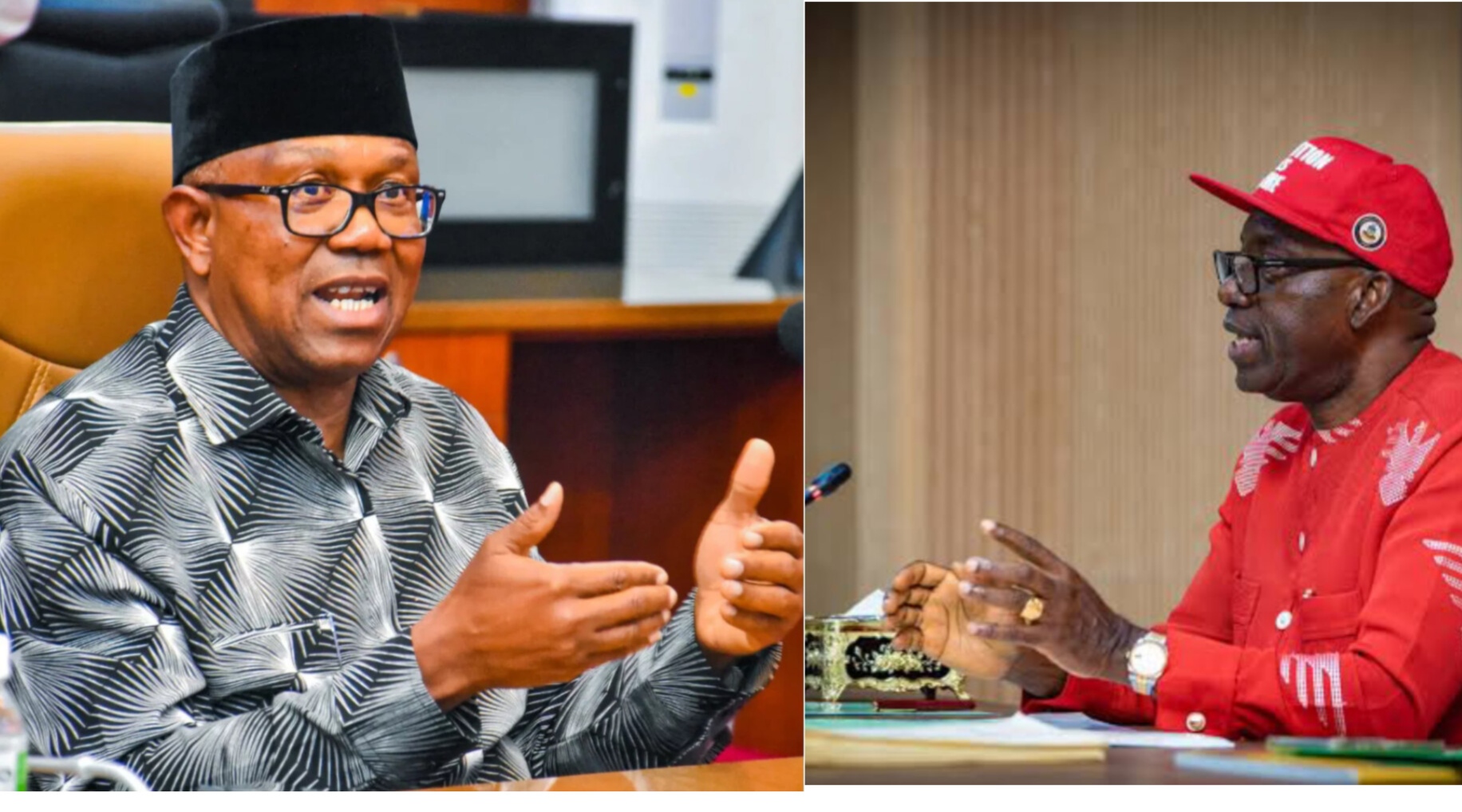
The 2027 presidential campaign has taken a fresh turn after former Anambra State Governor and Nigeria Democratic Congress (NDC) presidential candidate Peter Obi challenged the Anambra State Government to produce evidence that he left behind unpaid financial obligations when he handed over power.
Obi said he would end his 2027 presidential campaign if the state government could establish that he left even one unpaid salary, pension, gratuity, contractor, supplier or other obligation owed by the Anambra State Government at the end of his tenure.
The challenge followed fresh comments by Anambra State Commissioner for Finance, Izuchukwu Okafor, who said the administration of Governor Chukwuma Soludo was still servicing loans inherited from previous governments, including the administrations of Obi and former governor Willie Obiano.
In a video circulating online, Obi disputed the suggestion that he left Anambra with unpaid obligations.
He said he left office nearly 13 years ago without owing salaries, pensions, gratuities, contractors or suppliers.
“If you find even one person I owed, I will end my 2027 campaign today,” Obi said, according to the video and reports on his response.
The former governor’s challenge raises a distinction that is central to the dispute: whether Anambra is still servicing loans associated with previous administrations is not necessarily the same question as whether Obi personally left the state with unpaid bills or whether his administration borrowed money.
That distinction will likely become increasingly important as both sides present financial records ahead of the 2027 presidential election.
What the Anambra Finance Commissioner said
Okafor made the original claim during a Ndi Anambra podcast published by the Anambra State Government’s New Media team.
He maintained that the Soludo administration had not borrowed from any commercial bank since assuming office but continued to make deductions from the state’s Federation Account Allocation Committee (FAAC) revenue to service loans contracted by previous administrations.
According to Okafor, some of those loans dated to the administrations of Obi and Obiano.
“Every month during our FAC meetings … you will notice there were substantial, significant deductions from our own FAC because of loans previously borrowed by previous administrations,” he said.
He further claimed that Soludo’s administration had reduced the state’s debt burden by more than 83 per cent and had cleared several inherited domestic obligations, including unpaid contracts, gratuity arrears and pension arrears.
The commissioner also said Anambra’s domestic debt was now at a near-zero balance, while some external obligations continued to be repaid through deductions from the state’s federal allocations.
The latest dispute is not the first time Obi has defended his financial record as governor.
During his 2022 presidential campaign, Obi repeatedly maintained that he did not borrow from financial institutions while serving as Anambra governor.
He also said he left substantial funds for the state in bank accounts when he handed over power.
Premium Times reported that Obi had previously said he left $50 million each in Access Bank, the defunct Diamond Bank and Fidelity Bank, a combined $150 million, when he left office.
Those earlier claims, together with the latest statements from the Anambra government, have revived questions over the precise composition, origin and timing of the state’s outstanding obligations.
The latest exchange does not, on its own, settle the question of who contracted which loans or what liabilities existed at different points in Anambra’s political history.
The Anambra government says some loans being serviced were obtained during the Obi and Obiano administrations.
Obi, meanwhile, is challenging the government to demonstrate that he left behind unpaid obligations when he left office.
Those are related but distinct claims.
To conclusively resolve the dispute, the relevant evidence would include loan agreements, debt-service schedules, FAAC deduction records, audited financial statements, the state’s debt register and handover-era financial records showing when each obligation was contracted and which administration was responsible for it.
Anambra’s official financial records could therefore become central to the political argument. The state has published Accountant-General reports covering its finances, including reports bearing Okafor’s name as Commissioner for Finance.
Why the dispute matters in 2027
The confrontation comes at a politically sensitive moment.
Obi is preparing to contest the 2027 presidential election under the NDC, while Soludo remains a prominent political figure in Anambra and the South-East.
Obi’s record as governor has long been an important part of his political narrative, particularly his claims about fiscal discipline, savings and infrastructure investment.
For his political opponents, however, questions about Anambra’s historical finances provide an opportunity to challenge that narrative.
The latest exchange could therefore develop beyond a disagreement between Obi and the Soludo administration into a broader debate over how governments should account for inherited debt, savings, contracts and other financial obligations when administrations change hands.
For voters, the most useful outcome would be the publication of the underlying records rather than competing political claims.
If the relevant financial documents establish that loans were contracted during specific administrations, that should be stated clearly. If they show that particular obligations arose from other arrangements, that should equally be made public.
The political stakes are high, but the question itself is ultimately documentary: what did Anambra owe, who incurred each obligation, and what did Peter Obi’s administration actually leave behind when it handed over power?
SEO Package
SEO Title:
2027: ‘Prove I Left Anambra With Debts and I’ll Stop My Campaign,’ Obi Challenges Soludo
Meta Description:
Peter Obi challenges the Anambra government to prove he left unpaid debts or obligations, saying he will stop his 2027 campaign if evidence emerges.
Focus Keyword:
Peter Obi Anambra debts
Secondary Keywords:
Peter Obi 2027 campaign
Obi challenges Soludo
Anambra debt controversy
Izuchukwu Okafor
Soludo inherited debts
Peter Obi Anambra finances
NDC 2027 presidential candidate
Anambra loans
Obi and Soludo
URL Slug:
peter-obi-anambra-debts-soludo-2027-campaign
Category:
Politics
Tags:
Peter Obi, Charles Soludo, Anambra State, NDC, 2027 Elections, Izuchukwu Okafor, Nigeria Politics, Anambra Debt, Peter Obi Campaign
Facebook/X headline:
“Prove I Left Anambra With Debts and I’ll Stop My 2027 Campaign” — Obi Challenges Soludo
Social caption:
Peter Obi has challenged the Anambra State Government to produce evidence that he left unpaid financial obligations when he handed over power as governor.
The challenge follows claims by Finance Commissioner Izuchukwu Okafor that the state is still servicing loans inherited from previous administrations, including those of Obi and Willie Obiano.
Obi says the government should produce evidence of anyone he owed when he left office — and has attached a dramatic political consequence to the challenge.
**The question now is simple: what do Anambra’s financial records show?**
-
 Security2 months ago
NDLEA Declares Alleged Drug Kingpin, Three Associates Wanted, Freezes ₦9.8bn Linked to Syndicate
-
 National Affairs2 months ago
ICPC Uncovers 908 Suspected Ghost Workers Across 50 Federal MDAs, Recovers ₦942 Million
-

 Business/Finance2 months ago
How to Apply for Tunde Onakoya’s ₦250 Million Scholarship Programme and Free Laptop Offer
-
 Politics2 months ago
Atiku Challenges Tinubu to Reveal Details of ₦15.13bn SUV Procurement in 2026 Budget
-
 Judiciary | Public Safety2 months ago
INEC Tells Court Voter Information Is Not Confidential in Emeka Ike’s ₦10bn Lawsuit
-
 Judiciary | Public Safety2 months ago
Court to Rule Friday on NDLEA’s Bid to Destroy ₦480bn Meth Lab in Ogun
-

 Breaking News2 months ago
Girl Dies in Uyo House Fire After Allegedly Accompanying Man Home from Nightclub
-
 Security1 month ago
Family Paid ₦50 Million Ransom to Secure Release of Abducted Kebbi Judge