
Politics
Shettima Arrives in India to Represent Tinubu at 18th BRICS Summit


Vice President Kashim Shettima has arrived in New Delhi, India, to represent President Bola Ahmed Tinubu at the 18th BRICS Leaders’ Summit, as Nigeria seeks to deepen trade, investment, technology and diplomatic partnerships with major emerging economies.
Shettima is leading a high-level Nigerian delegation to the summit, which is being held in New Delhi on September 12 and 13, 2026, under India’s chairmanship.
The official theme is “Building for Resilience, Innovation, Cooperation and Sustainability.”
Nigeria’s participation comes as the country seeks to use its status as a BRICS partner country to expand South-South cooperation and attract investment into strategic sectors of the Nigerian economy.
The Nigerian delegation includes Foreign Affairs Minister Bianca Odumegwu-Ojukwu, Minister of Industry, Trade and Investment Jumoke Oduwole, Minister of Communications, Innovation and Digital Economy Bosun Tijani, and Minister of Environment Balarabe Abbas Lawal, among other senior officials.
Nigeria Targets Trade, Investment and Technology Opportunities
The summit provides Nigeria with an opportunity to engage directly with some of the world’s largest emerging economies and strengthen economic relationships beyond its traditional partners.
According to Nigeria’s Ministry of Foreign Affairs, Shettima is expected to participate in high-level sessions and hold bilateral meetings focused on trade, investment, agriculture, technology and industrial development.
The government also intends to explore opportunities in manufacturing, artificial intelligence and the digital economy.
Foreign Affairs Minister Bianca Odumegwu-Ojukwu said Nigeria is particularly interested in India’s experience in using technology and artificial intelligence to create opportunities for its large youthful population.
That interest is significant for Nigeria, which has one of the world’s largest youth populations and is seeking to expand its digital economy, technology sector and employment opportunities.
India’s experience in agriculture is also expected to feature prominently in Nigeria’s engagement, particularly given the two countries’ shared interest in improving food production, technology adoption and value-chain development.
Nigeria and India Seek Deeper Economic Relations
Minister of Industry, Trade and Investment Jumoke Oduwole said the Nigerian delegation would seek to deepen the country’s trade relationship with India.
She also disclosed that major investors of Indian origin had indicated interest in meeting Nigerian officials during the summit.
The discussions are expected to cover opportunities for expanding trade and investment, including Nigeria’s energy sector.
Oduwole noted that India has historically been an important market for Nigerian crude oil and said Nigeria wants to explore ways of expanding that relationship as global energy markets continue to change.
For Nigeria, attracting investment into manufacturing, infrastructure, agriculture, technology and energy could help translate its participation in BRICS into tangible economic opportunities.
Why BRICS Matters to Nigeria
Nigeria became a BRICS partner country in January 2025, joining an expanded network designed to strengthen cooperation among major emerging economies and countries of the Global South.
The 2026 summit is particularly significant because BRICS has expanded considerably from its original membership.
The current BRICS membership includes Brazil, China, Egypt, Ethiopia, India, Indonesia, Iran, Russia, Saudi Arabia, South Africa and the United Arab Emirates.
The grouping collectively represents a substantial share of the world’s population, economic output and international trade.
For Nigeria, partnership with BRICS provides an additional diplomatic and economic channel through which it can pursue investment, market access, technology transfer and development cooperation.
It also fits into Nigeria’s broader effort to strengthen relationships across the Global South rather than relying exclusively on traditional Western economic and diplomatic partners.
A Summit Taking Place Amid Global Tensions
The New Delhi summit is taking place against a complicated international backdrop.
BRICS members are divided on several geopolitical issues, particularly over the conflict involving Iran and the wider crisis affecting energy and maritime trade.
Reuters reported ahead of the summit that tensions between Iran and the UAE have created difficulties for the expanded bloc as it seeks consensus on major international issues.
The war has also disrupted energy flows through the Strait of Hormuz and pushed crude prices above $100 per barrel.
The wider BRICS agenda therefore extends beyond trade and investment to questions about global governance, international financial institutions, energy security, technology and the role of emerging economies in shaping the international system.
India’s official BRICS programme places particular emphasis on resilience, innovation, cooperation and sustainability, with development and the interests of the Global South at the centre of the chairmanship.
Shettima to Push Nigeria’s Economic Priorities
For the Tinubu administration, the immediate objective will be to turn Nigeria’s participation into practical economic outcomes.
That means using the summit not simply as a diplomatic platform, but to pursue concrete opportunities for investment, exports, technology partnerships and industrial development.
Bilateral meetings on the sidelines could prove particularly important because they allow Nigeria to address specific commercial and diplomatic interests with individual countries.
The delegation’s composition also reflects the administration’s focus on connecting foreign policy with its economic agenda, bringing together officials responsible for foreign affairs, trade, digital technology and the environment.
Nigeria’s BRICS Partnership and 2027 Outlook
Nigeria’s participation also comes at a time when the government is seeking to demonstrate progress under President Tinubu’s Renewed Hope Agenda, particularly in investment, economic diversification and industrial development.
The effectiveness of Nigeria’s BRICS engagement will ultimately be measured less by participation in high-level meetings and more by the agreements, investments, technology partnerships and market opportunities that emerge from them.
With the country already a major oil producer and one of Africa’s largest economies, deeper relationships with India, China, Brazil, Russia and other emerging economies could provide opportunities to diversify Nigeria’s economic partnerships.
For Shettima, representing President Tinubu at the New Delhi summit provides an opportunity to advance those interests while positioning Nigeria more firmly within the expanding network of Global South economies.





A coalition of Ogoni youth groups has called on President Bola Tinubu and the Federal Government to implement the recommendations of the Ogoni Dialogue Committee, insisting that the creation of Bori State must be given priority in the process.
The Coalition of Ogoni Youth Groups (COYOG) made the demand in a statement jointly signed by 17 youth leaders, including Chief Kpakol Kpakol of the Ogoni National Youth Congress and Gen. Ikeh Albert Jnr of the Khana Youth Assembly, on Saturday.
The coalition warned against attempts by politicians and other vested interests to hijack the dialogue process for personal or political gains, stressing that its outcomes must reflect the collective aspirations of the Ogoni people.
It described the dialogue as a collective struggle for justice, environmental restoration, political inclusion, resource control and sustainable development.
On the leadership of the Ogoni Dialogue Committee, COYOG clarified that Professor Don Baridam remains its substantive leader, warning against attempts by individuals to assume authority outside the established structure.
Reaffirming its commitment to peaceful advocacy, the coalition insisted that the dialogue process must remain inclusive and accountable, adding that its recommendations should translate into measurable benefits for the Ogoni people.
“The Ogoni dialogue belongs to the Ogoni people. Its outcomes must serve the Ogoni people. Its implementation must be transparent, inclusive and measurable,” the statement added.
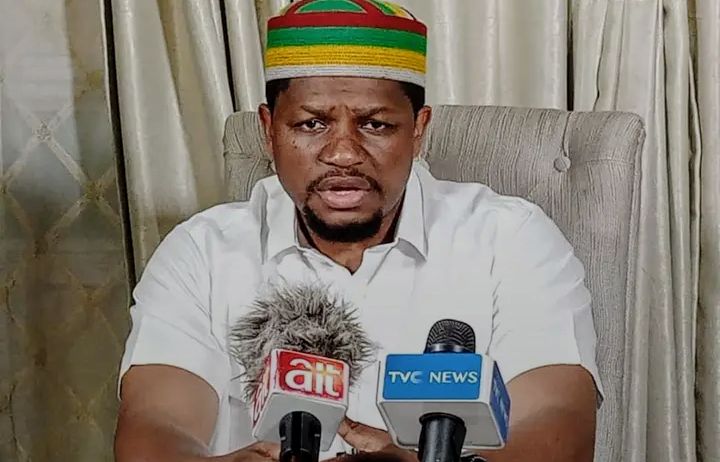
Former member of the House of Representatives, Dachung Bagos, has won the All Progressives Congress (APC) rerun primary election for the Jos South/Jos East Federal Constituency of Plateau State.
Bagos defeated his challenger, Esther Simi Dusu, in the rerun exercise conducted across 11 wards on Wednesday, following a court order nullifying the previous primary election over alleged irregularities.
The Chairman of the APC Rerun Electoral Committee, Simon Elisha, announced the results on Thursday at the party’s state secretariat, Kalwa House, in Jos.
According to the results, Bagos polled 12,181 votes to defeat Dusu, who secured 2,495 votes.
Elisha said the rerun election was conducted in compliance with the court order and in accordance with the party’s guidelines.
“The rerun was conducted in compliance with the court order and in line with the party’s guidelines to ensure transparency and fairness,” he said.
The rerun followed a decision by the High Court in Jos to nullify the earlier primary election over alleged irregularities in 11 wards within the federal constituency.
The affected wards are Du, Shen, Zawan ‘B’, Turu, Fobur ‘A’, Fobur ‘B’, Jarawan Kogi, Maijuju/Doss, Federe, Shere East and Shere West.
The court-ordered exercise was organised to address the irregularities identified in the previous primary election and determine the party’s candidate for the constituency.
With his victory, Bagos is set to represent the APC in the contest for the Jos South/Jos East Federal Constituency seat in the 2027 general election.
Bagos previously represented the constituency in the House of Representatives.
His emergence as the party’s candidate places him in contention for another term in the Green Chamber, subject to the outcome of the 2027 general election.


The presidential candidate of the Nigeria Democratic Congress (NDC), Peter Obi, has warned individuals he accused of terrorising Nigerians, declaring that his party would confront insecurity and intimidation if elected in 2027.
“Those who think they can terrorize this country, wait, we’re coming,” Obi said during the opening of the NDC’s national secretariat in Jabi, Abuja, on Monday, October 26, 2026.
The remark came as the party formally opened its national headquarters and intensified preparations for the 2027 general elections. The event brought together Obi, his running mate Rabiu Musa Kwankwaso, NDC leaders and other party members.
Obi Puts Insecurity at the Centre of His Message
Obi’s statement signals that security is expected to feature prominently in the NDC’s campaign messaging ahead of the next presidential election.
Nigeria continues to face multiple security challenges, including insurgency, kidnapping, armed attacks and communal violence in different parts of the country. These problems have affected communities, disrupted economic activities and generated demands for stronger protection of lives and property.
At the Abuja event, Obi presented his political project as an effort to change how government responds to the country’s challenges. Reports of his remarks also highlighted commitments to address corruption, poverty, unemployment and insecurity.
However, the brief statement quoted above did not identify a particular group or individual as the target of his warning. It would therefore be premature to attribute the remark to a specific organisation or political opponent without further evidence.
NDC Opens National Headquarters Ahead of 2027
The secretariat opening marked another organisational step for the NDC as it builds its structures ahead of the elections.
The ceremony followed the party’s National Executive Committee meeting and formed part of a wider programme that included unveiling its National Campaign Council and presenting Certificates of Return to candidates contesting different offices.
Kwankwaso, the party’s vice-presidential candidate, attended alongside National Leader Seriake Dickson, National Chairman Moses Cleopas and other party figures.
The new facility is expected to serve as the party’s administrative headquarters and a centre for coordinating its national political activities.
Security and Accountability in the 2027 Campaign
Obi’s warning comes as political parties begin defining their messages for the 2027 election, with security, economic hardship and public accountability among the issues likely to feature prominently.
For voters, the significance of security promises will depend not only on campaign statements but also on the policies, resources and implementation plans candidates present.
Measures to improve security can involve intelligence gathering, police and military capacity, coordination between federal and state authorities, criminal investigations, justice delivery and support for communities affected by violence.
Obi’s statement did not set out specific measures in the quoted passage. Further policy details would be needed to assess how the NDC proposes to address the different forms of insecurity affecting the country.
The remark nevertheless makes clear that the party intends to present security and protection from intimidation as part of its campaign message.
As the 2027 election approaches, the challenge for all political parties will be to explain how their proposals would be implemented and how progress would be measured.
-
 Security4 months ago
NDLEA Declares Alleged Drug Kingpin, Three Associates Wanted, Freezes ₦9.8bn Linked to Syndicate
-

 Business/Finance3 months ago
How to Apply for Tunde Onakoya’s ₦250 Million Scholarship Programme and Free Laptop Offer
-
 National Affairs3 months ago
ICPC Uncovers 908 Suspected Ghost Workers Across 50 Federal MDAs, Recovers ₦942 Million
-
 Judiciary | Public Safety3 months ago
INEC Tells Court Voter Information Is Not Confidential in Emeka Ike’s ₦10bn Lawsuit
-
 Politics3 months ago
Atiku Challenges Tinubu to Reveal Details of ₦15.13bn SUV Procurement in 2026 Budget
-
 Judiciary | Public Safety3 months ago
Court to Rule Friday on NDLEA’s Bid to Destroy ₦480bn Meth Lab in Ogun
-
 Security3 months ago
Family Paid ₦50 Million Ransom to Secure Release of Abducted Kebbi Judge
-
 News3 months ago
2026 Budget: FG Earmarks ₦962.83bn for SUVs, Empowerment Projects Amid Debt Concerns