
Politics
2027: Babachir Lawal Urges Nigerians Not to Vote Atiku, Sparks Fresh Political Debate

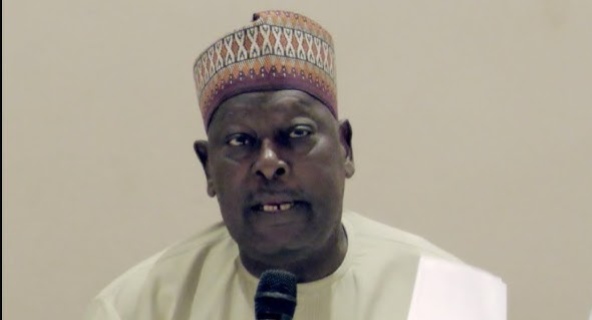
Former Secretary to the Government of the Federation (SGF), Babachir Lawal, has urged Nigerians not to vote for former Vice President Atiku Abubakar in the 2027 presidential election, citing concerns over what he described as ethnic politics.
Lawal made the remarks during a political engagement, arguing that the country’s leadership should reflect broader national interests as political parties and aspirants begin positioning ahead of the next general election.
According to Lawal, Nigeria’s political future should be guided by principles that promote national unity, fairness and inclusiveness.
He expressed reservations about Atiku’s presidential ambition, urging voters to carefully consider the issues before making their choice in the 2027 election.
His comments have added to the growing political conversations surrounding the race for the presidency.
Supporters of the former vice president have rejected the allegations, insisting that Atiku’s political career reflects a commitment to national unity and democratic governance.
His camp has maintained that he remains focused on presenting his vision for Nigeria and has dismissed attempts to portray his ambition through an ethnic lens.
Neither Atiku nor his campaign organisation has announced a formal response beyond previous statements rejecting claims of ethnic bias.
With less than a year before political parties intensify preparations for the 2027 elections, key political figures continue to make strategic endorsements, criticisms and alliances.
Analysts say such exchanges are likely to increase as aspirants seek to influence public opinion ahead of party primaries and the general election.
The remarks highlight the growing political debate ahead of the 2027 elections.
As campaigns gradually take shape, issues of leadership, national unity, governance and regional representation are expected to feature prominently in public discourse.











The National Publicity Secretary of the Nigeria Democratic Congress (NDC), Osa Director, has called on Nigerians to support the party in the 2027 general election, describing it as the most credible alternative for the country’s future.
Speaking during an interview on Symfoni TV, Director said the NDC is offering Nigerians a leadership team with what he described as verifiable records of public service, integrity, and experience.
According to him, the party’s leadership comprises individuals whose contributions to governance and national development are already in the public domain, making it easier for Nigerians to assess their suitability for public office.
Among those he highlighted were the NDC’s presidential candidate, Peter Obi; vice-presidential candidate, Senator Rabiu Musa Kwankwaso; former Bayelsa State Governor Seriake Dickson; the party’s National Chairman, Senator Moses Cleopas; and other national officers.
Director maintained that the NDC’s leadership is built on accountability, transparency, and competence, arguing that these qualities distinguish the party from its political rivals.
“Our leaders have established records that Nigerians can verify. We are asking Nigerians to judge us based on our pedigree, our performance in public service, and our commitment to national development,” he said during the interview.
He urged voters to evaluate political parties based on their leadership quality, governance track record, and policy direction rather than campaign rhetoric.
The NDC spokesperson also said the party remains committed to addressing Nigeria’s economic, security, and governance challenges through policies aimed at promoting national unity, institutional reforms, and sustainable development.
His comments come as political parties continue to intensify consultations and public engagement ahead of the 2027 general elections.
The NDC has in recent months positioned itself as one of the major opposition platforms seeking to challenge the ruling All Progressives Congress (APC) in the next presidential election.
As of the time of filing this report, neither the APC nor other political parties had officially responded to Director’s remarks.
Political analysts note that as the election season gathers momentum, parties are expected to increasingly highlight their strengths while seeking to persuade voters through policy proposals, campaign messages, and public debates.
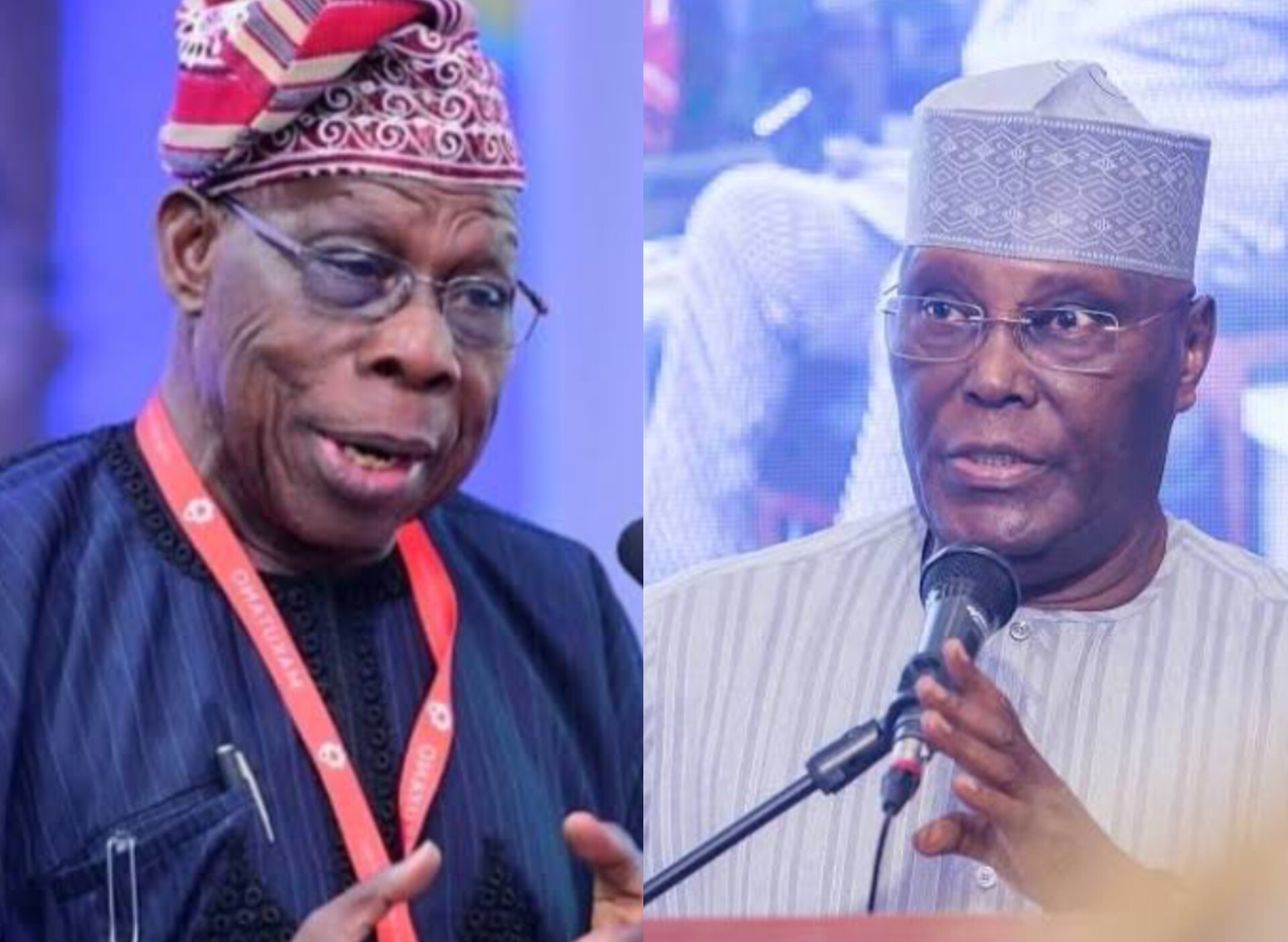
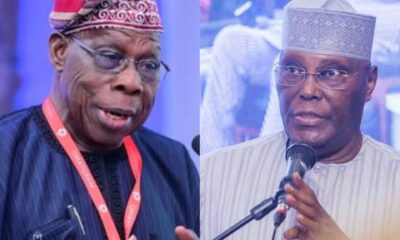
Former President Olusegun Obasanjo has described his decision to select former Vice President Atiku Abubakar as his running mate in the 1999 presidential election as the greatest mistake of his political career.
Obasanjo made the remark on Friday during a fireside chat with veteran entertainer and activist Charles Oputa, popularly known as Charly Boy, at an event in Lagos organised to unveil the Charly Boy Foundation and launch his memoir, 999: A Memoir in Tribute to Late Justice Chukwudifu Oputa.
Reflecting on his years in office, the former president said that, with the benefit of hindsight, he would not have chosen Atiku as his vice-presidential candidate.
“I would say the greatest mistake I made was picking Atiku Abubakar as my vice president in 1999,” Obasanjo said.
Despite the fallout that later characterised their relationship, Obasanjo said he harboured no bitterness over the events that unfolded during their time in government.
“There is no bitterness in me over what happened. Despite everything, I was able to achieve what I set out to achieve while in power,” he added.
Obasanjo and Atiku were elected on the platform of the Peoples Democratic Party (PDP) in 1999 and jointly governed Nigeria for two consecutive terms from 1999 to 2007.
Their political alliance, however, deteriorated during Obasanjo’s second term in office amid disagreements over governance, policy direction, and the controversial third-term agenda.
The dispute eventually led to a public and prolonged political rivalry that has continued for nearly two decades.
During the discussion, the former president also addressed long-standing speculation about his ancestry, stating that his family’s roots are in Abeokuta, the Ogun State capital.
“I still know our family house there,” he said.
The event attracted several prominent personalities, including former Commonwealth Secretary-General Chief Emeka Anyaoku, Peter Obi, businessman Leo Stan Ekeh, veteran broadcaster Bisi Olatilo, political communication expert Dr. Austin Tam-George, and other dignitaries.
In support of the newly launched Charly Boy Foundation, Leo Stan Ekeh announced donations of ₦20 million each on behalf of Obasanjo and Chief Emeka Anyaoku.
Obasanjo’s comments are likely to reignite discussions about one of Nigeria’s most consequential political partnerships and its eventual collapse, particularly as political realignments continue ahead of the 2027 general elections.
As of the time of this report, Atiku Abubakar had not publicly responded to Obasanjo’s remarks.

Nigeria’s First Lady, Senator Oluremi Tinubu, has called for stronger collaboration with the Kingdom of Saudi Arabia to reform the country’s Almajiri education system by integrating Islamic education with formal Western learning.
Mrs. Tinubu made the appeal during a meeting with the Ambassador of Saudi Arabia to Nigeria, emphasizing the need to modernize the traditional Almajiri system in a way that preserves Islamic values while equipping children with contemporary education and practical skills.
According to the First Lady, reforming the Almajiri education system is critical to addressing the growing number of out-of-school children and reducing the social challenges associated with the phenomenon, including youth vulnerability, poverty, and insecurity.
She stressed that combining Qur’anic education with formal academic instruction would provide children with broader opportunities and better prepare them to contribute meaningfully to national development.
The First Lady also highlighted the long-standing diplomatic and religious relationship between Nigeria and Saudi Arabia, expressing optimism that deeper cooperation in education, humanitarian initiatives, and social development would benefit both countries.
The Almajiri system, which has existed for centuries in northern Nigeria, traditionally involves children receiving Islamic education under the guidance of religious teachers.
However, concerns have grown over the years about the welfare of many Almajiri children, particularly those who resort to street begging due to inadequate support and living conditions.
Successive Nigerian governments have introduced various programmes aimed at integrating Qur’anic education with conventional schooling.
Despite these efforts, implementation challenges, funding constraints, and socio-economic factors have limited the impact of many reform initiatives.
Education experts have long argued that comprehensive reform of the Almajiri system requires collaboration among federal and state governments, traditional and religious institutions, development partners, and local communities to ensure that children receive both religious instruction and quality formal education.
The meeting also underscored the broader diplomatic ties between Nigeria and Saudi Arabia, with discussions focusing on expanding cooperation in education, humanitarian assistance, women’s development, and youth empowerment.
Further details of any specific agreements or joint initiatives resulting from the discussions have not yet been made public.
-

 Breaking News1 week ago
Girl Dies in Uyo House Fire After Allegedly Accompanying Man Home from Nightclub
-
 News2 weeks ago
NEMA Urges Residents in Flood-Prone Areas to Relocate as Heavy Rains Intensify
-

 Judiciary | Public Safety2 weeks ago
Analysis: Why Would Mary Habila’s Father Oppose an Autopsy?
-
 Security2 weeks ago
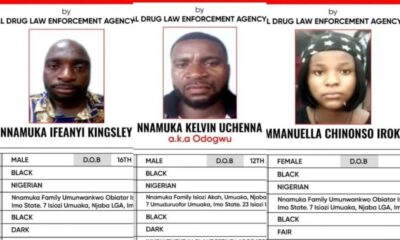
NDLEA Declares Alleged Drug Kingpin, Three Associates Wanted, Freezes ₦9.8bn Linked to Syndicate
-

 Editorial2 weeks ago
When Nigeria’s Elite Choose Foreign Classrooms, What Does It Say About Our Universities?
-
 Judiciary | Public Safety2 weeks ago
Court to Rule Friday on NDLEA’s Bid to Destroy ₦480bn Meth Lab in Ogun
-
 2027 Elections5 days ago
Naira Redesign, Buhari-Era Hardship Helped Peter Obi Defeat Tinubu in Lagos, Says Oshiomhole
-
 National Affairs1 week ago
ICPC Uncovers 908 Suspected Ghost Workers Across 50 Federal MDAs, Recovers ₦942 Million