
News
Chinese Hospital Implants Eye Chip in Blind Man, Helps Him Recognise Letters

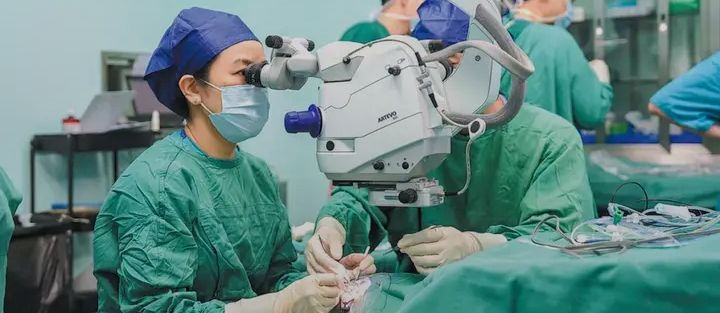
A hospital in China has implanted a microchip in the eye of a blind man, enabling him to recognise letters and numbers, grasp objects and navigate around obstacles after more than 30 years of visual impairment.
The procedure was performed in July at Renmin Hospital of Wuhan University in Hubei Province, China, on a patient identified only by his surname, Qiu, according to a report by China Daily on Thursday.
The technology uses specially designed glasses equipped with cameras to capture images of the patient’s surroundings and convert them into electrical signals, which are transmitted wirelessly to a chip implanted in the outer wall of his eyeball.
The implant stimulates nearby nerve pathways, sending signals to the brain’s visual cortex and allowing the patient to perceive visual patterns.
The hospital’s vice-president, Xiao Xuan, said Qiu began training after resting for a month following the surgery and achieved results that exceeded expectations.
According to Xiao, the patient could perceive light spots almost immediately after putting on the specially designed glasses.
She explained that after three weeks of training, conducted three times weekly, Qiu had developed the ability to recognise and write down numbers, letters and Chinese characters.
He could also grasp objects accurately and walk independently along visual markers.
However, Xiao noted that the patient would require prolonged and systematic training to read texts accurately and distinguish objects with finer details.
She compared the rehabilitation process to how babies learn to understand their surroundings, explaining that patients must gradually learn to associate electrical stimulation patterns with objects through repeated practice.
How the Eye Implant Technology Works
According to China Daily, the implant is smaller than half a fingernail and is designed not to penetrate the eyeball.
Unlike some existing approaches, the device does not require connecting wires between the inside and outside of the eye or external magnetic attachments.
Xiao said implanting the chip in the sclera, the white outer wall of the eyeball, rather than directly against the retina could reduce tissue damage associated with similar surgical procedures.
The technology aims to restore a degree of visual perception by using electrical stimulation to activate nerve pathways that transmit information to the brain.
However, the experience differs significantly from natural vision.
Rather than producing clear, detailed images, the system generates small points of light known as phosphenes. These appear as pixel-like patterns that the brain must learn to interpret.
As a result, patients may gradually learn to identify shapes, letters and objects without necessarily achieving the clarity associated with normal eyesight.
Technology Could Benefit Patients With Different Eye Conditions
Xiao said the approach could potentially help patients affected by seven types of blindness associated with nerve damage.
These include retinitis pigmentosa, advanced age-related macular degeneration, advanced glaucoma and diabetic retinopathy.
However, she explained that the treatment would not be suitable for patients whose eyeballs and optic nerves had been completely destroyed.
The technology also faces significant scientific challenges before it can reproduce more complex aspects of natural vision.
According to Xiao, researchers must still work on reproducing colour vision and accurately mapping electrical signals between retinal nerves, the optic nerve and the brain’s visual cortex.
These challenges are important because recognising basic patterns is different from seeing detailed objects, judging distances or perceiving the world in three dimensions.
The long-term goal is to help patients with severe visual impairment achieve greater independence in their daily activities.
Xiao said the technology could eventually assist users with tasks such as travelling alone, avoiding obstacles and identifying banknotes.
Blind Patient Hopes Technology Will Improve Independence
Qiu, who has worked as a blind massage therapist, said his visual impairment had made travelling alone difficult and potentially dangerous.
He recalled an experience in which he nearly collided with an electric motorbike, an incident that left him reluctant to go out by himself.
He expressed happiness at gradually regaining some visual perception and hope that the technology would make everyday activities easier.
Although the procedure has produced encouraging results for Qiu, further rehabilitation will be necessary to improve his ability to interpret visual information.
The report also noted that he experienced mild eye irritation during the initial electrical stimulation and device adjustment but adapted quickly.
The development highlights ongoing efforts to use electronic implants and neural stimulation to restore limited visual function in people who have lost their sight.
While the technology does not yet reproduce natural vision, its ability to help a patient recognise characters, grasp objects and move around obstacles could represent a meaningful step towards improving independence for some people living with blindness.
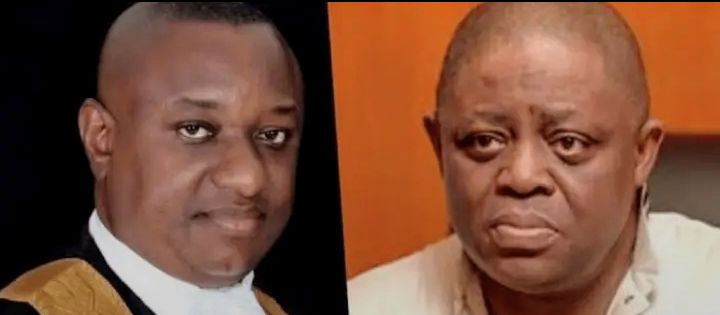
The Minister of Aviation and Aerospace Development, Festus Keyamo, and former Minister of Aviation, Femi Fani-Kayode, have criticised former Vice President Atiku Abubakar over his decision to refer to President Bola Tinubu as “Bola” while challenging the Federal Government’s 30-day petrol discount initiative.
The exchange has intensified political tensions between supporters of the Tinubu administration and opposition figures, with the controversy shifting attention from the government’s fuel price intervention to the language used by the political actors involved.
Keyamo reportedly told Atiku that he needed mental support, while Fani-Kayode also criticised the former vice president over his remark about the President.
Atiku had used Tinubu’s first name while questioning the effectiveness of the government’s temporary petrol discount, arguing that the administration had adopted his proposed production subsidy without incorporating the essential elements needed to make the policy sustainable.
The former vice president likened the government’s approach to a student copying another student’s examination answers, suggesting that the administration had borrowed his proposal but failed to implement it adequately.
He argued that the 30-day petrol discount was a limited intervention that did not address the broader issues surrounding fuel prices and the need for a more sustainable policy.
The Federal Government’s initiative has therefore become the latest subject of political disagreement, with opposing camps offering sharply different assessments of its merits and implementation.
While Atiku has questioned whether the temporary discount can deliver meaningful and lasting relief to Nigerians, Tinubu’s supporters have challenged both his assessment of the policy and his manner of addressing the President.
Keyamo and Fani-Kayode’s reactions have further heightened the exchange, turning what began as a disagreement over economic policy into a broader political confrontation.
The controversy also comes amid growing political activities ahead of the 2027 general election, with leading political figures and their supporters increasingly engaging in public exchanges over government policies and the direction of the country.
Despite the criticism directed at Atiku, the central issue remains whether the government’s 30-day petrol discount can provide sufficient relief to consumers and whether a longer-term approach would be more effective in addressing fuel affordability.
The debate highlights the continuing disagreement between the ruling party and opposition figures over the government’s economic policies, as Nigerians contend with the cost of living and the impact of fuel prices on transportation, food and other essential goods.

The Chairman of Fufore Local Government Area of Adamawa State, Yahya Saidu, has died in a hospital in Kaduna State, less than three months after assuming office.
Saidu’s death was announced by the Adamawa State chapter of the Association of Local Governments of Nigeria, which expressed grief over the loss of the council chairman in a statement issued on Saturday.
The state ALGON Chairman, Titus Obadiah, described the deceased as a dedicated leader whose contributions to the development of Fufore Local Government Area and Adamawa State would be missed.
Obadiah said he received the news of Saidu’s death with sadness, while extending condolences to the deceased’s family, friends, associates and the people of Fufore.
“It is with a heavy heart and total submission to the will of Almighty God that I received the sad news of the passing of the executive chairman of Fufore Local Government Area, Dr. Yahaya Saidu,” the statement read.
He described the chairman’s death as a significant loss to his immediate family, constituents and the state, noting that he had demonstrated commitment to serving his people.
“Dr Yahaya Saidu was a committed leader who gave his best in service to his people. My heart goes out to his family, friends, associates, and the good people of Fufore Local Government Area during this very difficult time,” Obadiah said.
The ALGON chairman also prayed for strength and comfort for the bereaved family and the people of Fufore as they mourn the loss.
Saidu was sworn in as chairman of Fufore Local Government Area on July 15, 2026, on the platform of the Peoples Democratic Party.
His death comes less than three months after his inauguration and marks another loss for the council, following the death of his predecessor, Shuaibu Babas, who died in office on April 23, 2025.
The circumstances surrounding Saidu’s death were not disclosed in the statement.
His passing is expected to leave the people of Fufore mourning the loss of their elected council chairman, who had only recently begun his tenure.

The Federal Government has expanded its National Poverty Reduction with Growth Strategy, targeting about five million Nigerians for poverty reduction over the next four years through skills acquisition, entrepreneurship development and economic empowerment initiatives.
As part of the programme, the government has trained 700 youths in Oyo State, equipping them with vocational skills, digital devices and business starter kits to enable them to establish businesses and achieve financial independence.
The Senior Special Assistant to the President on Technical, Vocational and Entrepreneurship Education, Dr Abiola Arogundade, disclosed this at the graduation ceremony for the beneficiaries held at the Kensington Adebutu Hall, University of Ibadan, on Friday.
Arogundade said the initiative reflected President Bola Tinubu’s commitment to tackling poverty by creating opportunities for Nigerians to acquire relevant skills, become economically productive and build sustainable livelihoods rather than depend solely on direct financial assistance.
According to her, the programme is designed to empower young Nigerians with practical knowledge and the necessary tools to compete in the labour market, establish businesses and participate in the growing digital economy.
“What we want to do, and what the President wants to do, is to move as many people out of poverty as possible.
“Mr President believes that our young people do not simply need assistance. They need opportunity. They need skills. They need the tools to compete and build sustainable livelihoods. And that is what today represents,” she said.
The training programme, which commenced on September 28 and ended on October 9, 2026, culminated in the graduation ceremony, where participants received equipment and other resources intended to help them translate their newly acquired skills into income-generating activities.
The intervention, implemented through the Office of the Senior Special Assistant to the President on Technical, Vocational and Entrepreneurship Education, seeks to address unemployment, bridge existing skills gaps and promote entrepreneurship among young Nigerians.
Under the Oyo State phase, 30 participants received specialised training in artificial intelligence and graphics design, while 85 beneficiaries were trained in make-up artistry and another 85 in fashion design.
Arogundade added that 500 participants would receive digital devices to support their involvement in the expanding digital economy.
The beneficiaries received equipment, including laptops, make-up kits, sewing machines and digital tablets, depending on their respective areas of training and the support allocated to them.
She urged the graduates to maximise the opportunity by establishing sustainable businesses and using their knowledge to create additional opportunities for other people in their communities.
Arogundade stressed that the intervention should not be regarded as a one-time empowerment initiative but as an opportunity for beneficiaries to build businesses capable of generating income and creating employment.
“What you receive today (Friday) is not the destination. It is the beginning. Take the skills you have learnt. Take the tools you have received, and build something with them.
“Don’t use it as a one-man solution or one-man empowerment. There’s a multiplier effect. Train your neighbours, train your community people, and also continue to impact and learn more,” she said.
AI Training, Vocational Skills Key to Economic Growth
The keynote speaker and Principal Consultant, Mrs Oluronke Shonubi, underscored the importance of equipping young Nigerians with artificial intelligence skills, noting that major economies were increasingly integrating the technology into different sectors.
She said countries such as the United States and China were investing heavily in artificial intelligence applications across industries, including manufacturing, agriculture and automobile production.
According to her, exposing young Nigerians to emerging technologies would help them acquire relevant competencies, improve productivity and position themselves to benefit from opportunities in the evolving global economy.
Also speaking, the make-up artistry instructor, Rukayat Muhammad, said the vocational training could provide beneficiaries with a pathway to financial independence if they developed their skills and marketed their services effectively.
Muhammad described make-up artistry as a marketable vocation capable of supporting successful businesses, urging the beneficiaries to approach the profession with commitment and a willingness to improve their expertise.
She advised the trainees to regard the equipment provided by the government as an investment in their economic future rather than merely as gifts.
According to her, the ability of beneficiaries to establish and grow their businesses would depend partly on how effectively they deployed the resources provided and attracted customers.
Alli Urges Beneficiaries to Create Jobs
Addressing the graduates, the governorship candidate of the All Progressives Congress in Oyo State, Sharafadeen Alli, urged them to use the training as a foundation for economic independence and employment creation.
Alli encouraged the beneficiaries to embrace entrepreneurship, strengthen their professional competencies and apply the knowledge acquired to establish businesses that could provide income for themselves and employment opportunities for others.
He said programmes that combined practical training with the provision of equipment were important to addressing unemployment and reducing poverty, particularly among young people.
The APC candidate added that the long-term impact of the intervention would depend on the ability of beneficiaries to transform their training into viable enterprises.
“I urge all the beneficiaries to make the best use of this opportunity. The training and equipment provided are not just gifts; they are tools to build sustainable businesses, achieve financial independence and create employment for others,” he said.
One of the beneficiaries, Olaleye Idowu, a 400-level International Relations student at the Federal University Oye-Ekiti, said the artificial intelligence and graphics design training had introduced him to the fundamentals of the technology and its potential applications.
Idowu explained that the programme helped participants understand how artificial intelligence could be applied to improve efficiency and support work across different fields.
“The training introduced us to the fundamentals of AI, its applications, and its potential to make work more efficient,” he said.
The Federal Government’s poverty reduction initiative places emphasis on skills development, access to business equipment and entrepreneurship as pathways to economic empowerment.
With the Oyo State programme providing training and starter equipment to hundreds of young people, the government’s broader target is to extend similar opportunities to millions of Nigerians over the next four years. To
-

 Security3 months ago
NDLEA Declares Alleged Drug Kingpin, Three Associates Wanted, Freezes ₦9.8bn Linked to Syndicate
-

 Business/Finance3 months ago
How to Apply for Tunde Onakoya’s ₦250 Million Scholarship Programme and Free Laptop Offer
-
 National Affairs3 months ago
ICPC Uncovers 908 Suspected Ghost Workers Across 50 Federal MDAs, Recovers ₦942 Million
-

 Judiciary | Public Safety3 months ago
INEC Tells Court Voter Information Is Not Confidential in Emeka Ike’s ₦10bn Lawsuit
-

 Politics2 months ago
Atiku Challenges Tinubu to Reveal Details of ₦15.13bn SUV Procurement in 2026 Budget
-

 Judiciary | Public Safety3 months ago
Court to Rule Friday on NDLEA’s Bid to Destroy ₦480bn Meth Lab in Ogun
-
 Security2 months ago
Family Paid ₦50 Million Ransom to Secure Release of Abducted Kebbi Judge
-

 News3 months ago
2026 Budget: FG Earmarks ₦962.83bn for SUVs, Empowerment Projects Amid Debt Concerns