
Business/Finance
North-East Govs Plan Regional Air Shuttle, CNG Stations to Cut Transport Costs

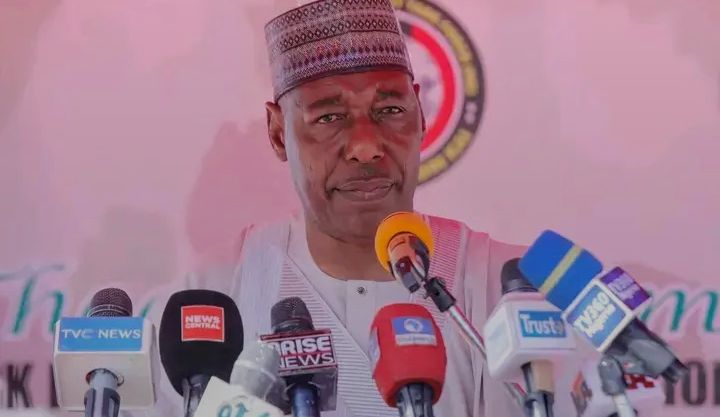
Governors of the six North-East states have resolved to establish a regional air shuttle and expand Compressed Natural Gas and Liquefied Natural Gas infrastructure as part of measures to reduce transportation costs and boost economic activities across the subregion.
The decision was contained in a communiqué issued at the end of the 13th meeting of the North-East Governors’ Forum held in Maiduguri, Borno State, on Saturday.
The forum comprises the governors of Adamawa, Bauchi, Borno, Gombe, Taraba and Yobe states.
According to the communiqué signed by the forum’s Chairman and Borno State Governor, Prof. Babagana Zulum, the proposed regional air shuttle is expected to make the movement of people and goods between and within the six states faster and easier.
“The Forum also resolved to float the North-East regional Air shuttle which would make inter and intra-regional movement of people and goods faster and easier,” the communiqué stated.
The governors also agreed to partner with Green Ville Energy to establish more CNG and LNG stations across the region.
The initiative, according to the forum, is intended to ease transportation costs, strengthen logistics and create an environment for increased economic activities.
“To ease the cost of transportation, strengthen logistics and open the region to more economic activities, the Forum agreed to partner with Green Ville Energy to build and provide more CNG and LNG stations within the region,” the communiqué added.
Electric buses, tricycles
The governors also welcomed Federal Government support through the North-East Development Commission for the provision of 10,000 electric tricycles, 10 electric buses and 300 electric taxis.
The vehicles are expected to be launched in October as part of efforts to improve transportation and reduce dependence on conventional fuel across the subregion.
The forum said the intervention would complement other measures being pursued by the states to improve mobility and reduce the cost of transportation.
Governors seek renewed infrastructure development
On infrastructure, the governors expressed appreciation to President Bola Tinubu for renewed attention to major transportation and energy projects in the region.
They specifically highlighted the Port Harcourt–Jos–Bauchi–Gombe–Maiduguri rail corridor and the Akwanga–Jos–Bauchi–Gombe–Biu–Maiduguri highway.
The forum also welcomed developments around frontier oil exploration at Kolmani.
However, the governors urged the Federal Government to revisit oil exploration activities that were earlier commenced but subsequently stalled in Magumeri and Gubio Local Government Areas of Borno State.
They also renewed their call for the completion and take-off of the Mambila Hydropower Project, urging the Federal Government to take advantage of the recent resolution of the legal dispute surrounding the project.
The forum noted that the Dadinkowa Hydropower Plant had commenced feeding electricity into the national grid.
It consequently urged member states to take advantage of the opportunities provided by the new electricity law and the region’s abundant sunshine to expand solar power and mini-grid solutions.
Security remains priority
On security, the governors acknowledged what they described as “appreciable success” in the fight against insurgency and commended the Armed Forces and other security agencies for their sacrifices.
They also praised residents of the region for their resilience in the face of persistent security and humanitarian challenges.
Despite the progress recorded, the governors acknowledged that the North-East continued to face serious humanitarian and infrastructural challenges.
The forum therefore reaffirmed its commitment to supporting security agencies while strengthening inter-state cooperation, intelligence sharing, community engagement and coordinated responses to emerging threats.
The governors also stressed the need to tackle socio-economic conditions that could make young people vulnerable to exploitation by criminal and extremist groups.
North-East govs seek more investment in education
The forum described the region’s young population as both “an enormous opportunity and a responsibility,” pledging to promote quality education, vocational and entrepreneurial training, technology and employment opportunities.
The governors called on the North-East Development Commission to increase investment in education and release long-awaited scholarship awards to indigent students across the subregion.
They also urged greater efforts to reduce the number of out-of-school children and provide coordinated support for Tsangaya education.
While acknowledging interventions by the NEDC, the governors said additional resources were needed to address the region’s educational challenges.
Governors tackle deforestation
The forum also expressed concern over the scale of environmental degradation and deforestation across the North-East.
To address the problem, the governors resolved to partner with the Institute of Forest Research to train forest experts in the region.
They said stronger cooperation would be required to protect the environment while promoting sustainable development.
Six years of regional cooperation
The governors noted that cooperation among the six states had continued to evolve since the inaugural meeting of the North-East Governors’ Forum in Gombe in March 2020.
They said their collective voice had produced tangible results in infrastructure and development, while acknowledging that the forum’s role remained a “work in progress.”
The governors recommitted themselves to speaking with one voice and acting with one purpose on issues affecting security, social development, economic integration and infrastructure in the subregion.
The meeting was attended by Governor Zulum; Adamawa State Governor, Ahmadu Umaru Fintiri; Gombe State Governor, Muhammadu Inuwa Yahaya;
Bauchi State Deputy Governor, Mohammed Auwal Jatau; Yobe State Deputy Governor, Idi Barde Gubana; and Borno State Deputy Governor, Umar Usman Kadafur.
The next meeting of the North-East Governors’ Forum is scheduled to hold on December 18 and 19, 2026, in Gombe State.






Marketing Director of FrieslandCampina WAMCO Nigeria Plc, Maureen Ifada, has been honoured with the Leadership Award in Marketing at the 2026 EDGE Awards.
Ifada received the recognition at the 14th edition of the EDGE Awards, organised by MARKETING EDGE in Lagos, in recognition of her leadership and contributions to Nigeria’s marketing communications industry.
The awards ceremony, themed “Celebrating Excellence Beyond Borders,” brought together leading professionals, brands, agencies and business executives across the marketing and communications sector.
The latest honour adds to a growing list of recognitions for Ifada, who has built a career spanning more than two decades in the fast-moving consumer goods and marketing industry.
Her latest achievement comes shortly after another major career milestone. In August, she was unveiled in Lagos as one of three African marketing and brand leaders selected for the Africa 2 Class of Black At’s 2027 DARE Awards.
She was selected alongside Mabel Adeteye of Wema Bank and Amaechi Okobi of Access Bank.
Ifada joined FrieslandCampina WAMCO in 2003 as a management trainee in the Consumer Marketing Department. Since then, she has held several strategic positions within the company before rising to the position of Marketing Director.
Beyond her corporate responsibilities, Ifada has also established a presence within the international marketing community.
In 2026, she served on judging panels for the SABRE Awards EMEA, Native Advertising Awards and International ECHO Awards, further highlighting her involvement in the wider global marketing industry.
Her recent EDGE Awards recognition is also the latest in a series of honours received throughout her career.
In 2025, Ifada was named Marketing Director of the Year at the Brand Handlers Awards. She also received the Outstanding Marketing Amazon of the Year award at the EDGE Awards.
She was further recognised as Nigeria Marketing Amazon at the Nigeria Marketing Awards and has twice been listed among WIMCA’s Top 50 Most Influential Women in Marketing and Communications.
Speaking at the ceremony, Managing Director and Editor-in-Chief of MARKETING EDGE, Amos Oladele, said the awards were created to recognise professionals and organisations that challenge conventional approaches, embrace innovation and demonstrate outstanding performance.
For Ifada, the latest recognition represents another milestone in a career defined by sustained involvement in marketing, brand development and the FMCG sector.
Her more than 20 years at FrieslandCampina WAMCO have seen her take on increasingly strategic responsibilities while contributing to the company’s marketing activities in Nigeria and beyond.
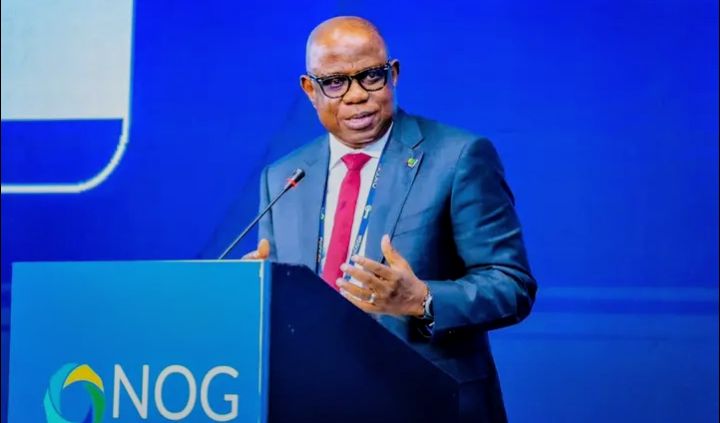
The Nigerian National Petroleum Company Limited (NNPC Ltd) recorded a 33 per cent increase in profit after tax to N7.2tn in 2025, despite pressure on its revenue from lower crude oil prices and reduced product volumes.
The Group Chief Executive Officer of NNPC Ltd, Bayo Ojulari, disclosed this on Tuesday in Abuja while presenting the company’s 2025 audited financial results, operational achievements and strategic outlook.
Ojulari said the company’s profit after tax increased by N1.8tn from N5.4tn recorded in 2024 to N7.2tn in 2025.
According to him, NNPC generated N34.5tn in revenue during the year, while earnings per share stood at N35.9.
He also disclosed that the company’s taxes, royalties and other remittances to the Federal Government rose by 39 per cent to N22.3tn in 2025.
“We have released the NNPC Limited 2025 audited financial results. I want to explain what they mean, what drove them and where we go from here,” Ojulari said.
“The central result is clear. Profit after tax rose 33 per cent, from N5.4tn in 2024 to N7.2tn in 2025. Revenue was N34.5tn. While taxes, royalties and other remittances to government rose 39 per cent to N22.3tn.”
Lower crude prices, product volumes affect revenue
Explaining the financial performance, Ojulari said NNPC’s revenue came under pressure during the year as international crude oil prices declined and product volumes fell following changes in Nigeria’s domestic petroleum market.
He said the reduction in revenue was also linked to developments following the removal of fuel subsidy.
“Revenue declined as crude oil prices fell for those, as you recall, in 2025.
But we also had some decline that resulted from a wide product volume reduction. Following the market regulation, as you know, with the removal of subsidy,” he said.
Despite the revenue pressures, the NNPC chief executive said the company was able to improve its profitability through operational improvements and tighter financial discipline.
“Yet, profit grew because we improved the way we operate. And we maintained discipline across our businesses,” Ojulari said.
Oil production hits five-year high
Beyond its financial performance, NNPC also reported an improvement in crude oil and condensate production during the year.
According to Ojulari, the company’s crude oil and condensate output peaked at 1.77 million barrels per day, representing the highest level recorded in five years.
He also said Nigeria’s gas supply reached a three-year high of 7.2 billion standard cubic feet per day.
“These gains reflect sustained attention to our assets, infrastructure and our focus on delivering visible results,” Ojulari said.
The production figures point to improved output from the company’s upstream operations at a time when increasing oil production remains important to Nigeria’s fiscal position and energy security.
NNPC remittances to government rise
The increase in NNPC’s remittances also featured prominently in the company’s 2025 results.
Taxes, royalties and other remittances to government increased by 39 per cent to N22.3tn, according to the figures presented by Ojulari.
The development means that the company’s contribution to government revenue increased alongside its profit, despite the pressure on its overall revenue.
Ojulari said the stronger performance would provide NNPC with greater capacity to invest in its businesses, contribute to public revenue and support Nigeria’s energy security.
“The numbers matter because of what they enable. Stronger performance gives NNPC Limited more capacity to invest, more capacity to contribute to public revenue and strengthen Nigeria’s energy security,” he said.
He, however, acknowledged that the improved results had raised expectations for the company and would require NNPC to build stronger capacity to sustain the performance.
“It also gives us higher standards to meet. As we deliver exceptional results, the following year we strive to even beat those records,” he added.
Ojulari sets higher performance target
The NNPC boss said recording stronger results would not reduce the pressure on the company, but instead raise the standard it would be expected to meet in subsequent years.
“So having a good performance is not just easy. It means that the bar has been set one level higher. So we now need to focus on building the capacity to deliver,” Ojulari said.
The 2025 results show that NNPC increased its bottom-line performance despite a decline in revenue.
However, the company did not provide a detailed breakdown of the contribution of its individual business segments to the increase in profit in the figures presented.
The results come as NNPC continues its transition from a state-owned corporation to a commercially oriented limited liability company under the Petroleum Industry Act, with profitability, operational efficiency and increased investment capacity forming key parts of its strategy.
The Monetary Policy Committee (MPC) of the Central Bank of Nigeria (CBN) took a significant step last week by reducing the Monetary Policy Rate (MPR) from 26 per cent to 23 per cent.
The 350-basis-point reduction, announced at the 370th meeting of the MPC, was larger than many observers had anticipated.
The CBN justified the decision with improvements in key economic indicators, including moderating inflation, exchange-rate stability, improved liquidity in the foreign exchange market and growth in the country’s external reserves.
Alongside the MPR reduction, the committee narrowed the Standing Facility Corridor to +50/-300 basis points around the MPR.
It, however, retained the Cash Reserve Ratio at 45 per cent for deposit money banks, 16 per cent for merchant banks and 75 per cent for non-Treasury Single Account (TSA) public-sector deposits.
Explaining the decision, the CBN governor said the adjustments represented an “operational realignment” aimed at restoring the MPR as the primary signal for monetary policy and improving the transmission of monetary policy decisions to market interest rates.
The CBN also cautioned that the reduction should not be interpreted simply as monetary easing. According to the apex bank, the adjustment is part of efforts to sustain the disinflation process and gradually transition the country towards an inflation-targeting framework.
The bank said the large gap that previously existed between the official policy rate and prevailing money-market rates had weakened the effectiveness of monetary policy.
However, the adoption of the Nigerian Overnight Financing Rate (NIBOR) as a transaction-based benchmark has, according to the CBN, improved transparency in money-market operations and created better conditions for the latest policy adjustment.
What the MPR cut means for investment
The reduction has potentially important implications for domestic investment.
The MPR is not simply an interest rate that individuals or businesses directly pay to the CBN. Rather, it is a key policy rate that influences the broader cost of money in the financial system and serves as a signal for other market interest rates.
When the cost of funds declines, banks can potentially reduce lending rates, although the extent and speed of such reductions depend on several other factors, including banks’ funding costs, risk assessments, liquidity conditions and operating expenses.
In principle, lower interest rates can encourage businesses to borrow for expansion, equipment purchases and working capital. Households may also face lower borrowing costs. Increased credit to productive sectors can, in turn, support investment, production and employment.
The latest policy action could therefore provide some relief to businesses that have struggled with exceptionally high borrowing costs.
There could also be implications for government finances. If market borrowing costs decline, the government could eventually face lower debt-servicing costs, depending on the structure and maturity of its outstanding obligations and the rates at which it refinances its debt.
Funds that would otherwise go towards servicing debt could potentially be redirected towards infrastructure and other public investments.
However, these benefits are not automatic. The reduction in the policy rate must eventually translate into lower effective lending rates and greater access to credit before its full impact can be felt by businesses and consumers.
Avoiding the crowding-out effect
As the CBN moves towards a less restrictive monetary stance, it must remain vigilant about liquidity and credit conditions.
One major concern is the possibility of a crowding-out effect, where heavy government borrowing absorbs funds that could otherwise be available to private businesses.
There is persistent competition between the public and private sectors for credit in the financial market. Where financial institutions perceive government securities as relatively attractive or less risky than private-sector lending, banks and other investors may prefer to allocate a greater proportion of available funds to government.
That can leave businesses, particularly small and medium-sized enterprises, with limited access to affordable credit.
This would undermine one of the objectives of lowering the MPR.
The coordination between the CBN and the Ministry of Finance is therefore important. Monetary policy cannot achieve its desired effect in isolation if fiscal policy simultaneously creates intense competition for available credit.
The government should be encouraged to reduce unnecessary reliance on domestic financial institutions, particularly where such borrowing places pressure on the same pool of funds needed by businesses to finance their operations and investments.
Inflation remains the critical test
The CBN’s decision has come against the backdrop of moderating inflation.
Headline inflation reportedly declined from 15.43 per cent in July to 15.39 per cent in August 2026. Food inflation also fell from 20.31 per cent to 19.57 per cent over the same period, while core inflation reportedly dropped from 14.97 per cent to 13.29 per cent.
The CBN has attributed the moderation partly to the impact of its previous contractionary monetary policy.
But monetary policy is only one of the factors influencing prices in Nigeria.
The effect of fuel-price changes, transportation costs, electricity costs, logistics, insecurity, production constraints and other supply-side factors means that inflation cannot necessarily be explained entirely by the amount of money circulating in the economy.
The recent increase in fuel prices, for instance, illustrates how a supply-side shock can put upward pressure on prices even when monetary conditions remain tight.
This means the CBN faces a delicate balancing act. It needs to support economic activity and investment without allowing the recent moderation in inflation to reverse.
Manufacturers need consumers
Another important dimension is weak consumer demand.
According to figures cited from the Manufacturers Association of Nigeria (MAN), manufacturers invested about N4.54 trillion in the Nigerian economy in 2025, while goods worth more than N2 trillion reportedly remained unsold because of weak consumer spending.
If businesses are producing goods but consumers cannot afford to buy them, additional investment alone may not be enough to generate sustainable economic growth.
This is where monetary policy becomes particularly important.
A prolonged period of expensive credit can constrain business expansion and household spending.
Businesses may postpone investments, reduce inventories and limit hiring, while consumers may reduce purchases because of declining disposable income and high borrowing costs.
The resulting weakness in demand can feed back into production decisions and employment.
There is, however, a need to distinguish between monetary constraints and the wider structural problems affecting Nigeria’s economy.
Weak purchasing power is also linked to food prices, energy costs, transportation expenses, unemployment, exchange-rate movements and other factors.
Liquidity must reach the productive economy
The latest reduction in the MPR therefore represents only one stage in the process.
The real test will be whether the policy eventually produces cheaper and more accessible credit for productive businesses without triggering renewed inflationary pressure.
There are also concerns about the timing of increased liquidity in the economy and the possibility that political spending ahead of the 2026 and 2027 electoral cycles could affect monetary conditions.
Such concerns require careful monitoring and evidence-based assessment rather than assumptions about where liquidity is ultimately held or spent.
The CBN must therefore continue to monitor money supply, bank lending, inflation, exchange-rate conditions, asset prices and credit allocation.
The effectiveness of the policy should be assessed against measurable outcomes: Are lending rates falling? Is credit reaching manufacturers and small businesses? Is private investment increasing? Is consumer demand recovering? Is inflation continuing to moderate? And are exchange-rate gains being sustained?
The answers to these questions will determine whether the MPR reduction translates into broader economic benefits.
The CBN’s latest decision provides an opportunity to move away from exceptionally tight monetary conditions while maintaining attention to price stability. But lower interest rates by themselves cannot solve Nigeria’s economic challenges.
For the policy to have its intended impact, monetary and fiscal authorities will need to work together to ensure that liquidity supports productive investment rather than excessive public-sector borrowing.
Regular monitoring of the policy’s results against its expected objectives will therefore be essential in determining whether the outcome is positive, negative or neutral for investment, production, employment and the wider Nigerian economy.
-

 Security3 months ago
NDLEA Declares Alleged Drug Kingpin, Three Associates Wanted, Freezes ₦9.8bn Linked to Syndicate
-

 Business/Finance2 months ago
How to Apply for Tunde Onakoya’s ₦250 Million Scholarship Programme and Free Laptop Offer
-
 National Affairs2 months ago
ICPC Uncovers 908 Suspected Ghost Workers Across 50 Federal MDAs, Recovers ₦942 Million
-

 Judiciary | Public Safety2 months ago
INEC Tells Court Voter Information Is Not Confidential in Emeka Ike’s ₦10bn Lawsuit
-
 Politics2 months ago
Atiku Challenges Tinubu to Reveal Details of ₦15.13bn SUV Procurement in 2026 Budget
-

 Judiciary | Public Safety2 months ago
Court to Rule Friday on NDLEA’s Bid to Destroy ₦480bn Meth Lab in Ogun
-
 Security2 months ago
Family Paid ₦50 Million Ransom to Secure Release of Abducted Kebbi Judge
-

 News2 months ago
2026 Budget: FG Earmarks ₦962.83bn for SUVs, Empowerment Projects Amid Debt Concerns