
World News | International Affairs
Centre LSD Urges Men to Challenge Patriarchy, Prevent Gender-Based Violence


The African Centre for Leadership, Strategy and Development (Centre LSD) has called on men to take more active and accountable roles in challenging patriarchy, preventing gender-based violence (GBV) and advancing women’s rights.
The organisation stressed that male participation in gender-equality advocacy must translate into measurable changes in individual behaviour, institutional policies and power relations without undermining women’s leadership.
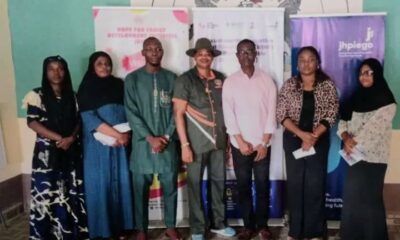
Project Director of the Male Feminists Network and founding Executive Director of Centre LSD, Dr Otive Igbuzor, made the call on Thursday in Abuja during a two-day capacity-strengthening programme for Women’s Rights Organisations (WROs).
The programme, themed “From Principles to Practice: Institutionalising Accountable Male Allyship in Women’s Rights Programming,” brought together representatives of prominent women’s rights organisations from across the country.
The training was conducted using the Amandla Institute’s Strengthening Women’s Movement in Nigeria Manual.
Speaking at the event, Igbuzor warned against what he described as “performative allyship”, where men participate in gender-equality campaigns primarily for visibility, status or access to resources without confronting patriarchal practices in their personal lives and institutions.
“Men should become more visible in challenging patriarchy, but they should not become more powerful within the women’s rights movement,” he said.
According to him, genuine male allyship requires men to deploy their voices, influence, resources and social positions to challenge discrimination and harmful gender norms while remaining accountable to women, girls, feminist principles and women-led organisations.
He said male allies must listen before leading, support rather than replace women’s leadership, challenge harmful behaviour among other men, examine their privileges and accept correction when necessary.
Igbuzor emphasised that men could not independently determine whether their participation was beneficial to the women’s rights movement, insisting that accountability must be guided by the experiences and feedback of women and the organisations working to advance their rights.
“Accountability cannot be self-defined by the ally,” he said.
The women’s empowerment advocate also called for gender-equitable values to be integrated into institutional policies, budgets, leadership structures and accountability systems, arguing that sustainable change required more than occasional public statements against gender-based violence.
He identified traditional and religious institutions as important partners in the campaign, noting that their influence could be used to challenge harmful practices and promote gender justice within communities.
According to him, the participation of a traditional ruler in a gender-equality workshop is useful, but adopting a community charter against harmful practices would demonstrate a stronger institutional commitment.
Similarly, he urged religious leaders to move beyond preaching against gender-based violence by integrating gender justice into sermons, premarital counselling, safeguarding mechanisms and institutional responses to reported cases of abuse.
Igbuzor further cautioned Women’s Rights Organisations against creating a parallel men’s movement that competes with women-led organisations for influence, legitimacy or resources.
He said WROs must establish clear criteria for selecting male allies, defining their responsibilities, determining the values they must uphold and specifying the consequences of violating agreed feminist principles.
The Centre LSD director disclosed that the Male Feminists Network had trained more than 12,000 male feminists across Nigeria.
However, he cautioned that the number of men trained should not be regarded as proof of meaningful transformation.
He said the impact of the initiative should instead be measured through changes in behaviour, institutional reforms, gender-responsive workplace policies, a fairer distribution of unpaid care responsibilities and feedback from women and women’s rights organisations.
He added that the project was using post-training action plans, mentoring and feedback mechanisms to monitor whether participants were translating the lessons into practical changes.
Igbuzor outlined seven principles of accountable male allyship: keeping women’s leadership central, addressing power imbalances rather than attitudes alone, accepting accountability, combining personal and institutional transformation, challenging other men, measuring outcomes and ensuring that male engagement does not harm feminist movements.
He said the programme was designed to equip participants with practical strategies for identifying and engaging male allies, preventing abuses of power and assessing whether male participation strengthened or undermined the objectives of the feminist movement.
“The ultimate test of accountable male allyship will not be how many men call themselves feminists. It will be whether women and girls experience greater voice, greater agency, greater safety, greater equality and greater power over the decisions that shape their lives,” he said.
Centre LSD Seeks Early Intervention Against Gender-Based Violence
Also speaking, the Project Lead of the Male Feminist Project, Mrs Victoria Oseyande Udoh, said Centre LSD deliberately involved men in the campaign against gender-based violence because advocacy driven largely by women had not sufficiently engaged those responsible for perpetrating violence.
Udoh, who is also the organisation’s Director of Monitoring, Evaluation and Learning, said the project was established to mobilise men to work alongside women to prevent gender-based violence before it occurs.
She explained that the initiative was focused on addressing the conditions and behaviours that lead to violence rather than concentrating only on responses after incidents had occurred.
“We don’t want it to start. We don’t want to start talking about survival. We want it not to start at all,” she said.
Udoh added that the involvement of male allies could make it easier to challenge harmful attitudes and behaviour within male-dominated spaces, particularly when men openly speak against violence and discrimination.
She also identified traditional rulers as important partners because of their influence as custodians of customs and traditions.
According to her, Centre LSD was working with traditional leaders to identify harmful practices in their communities and develop approaches to address them.
She called for stronger government support for initiatives aimed at preventing violence against women, stressing that the responsibility should not be left to women’s rights organisations alone.
Disability Rights Advocate Calls for Inclusive Participation.
Meanwhile, a participant at the programme, Ejiro Sharon Okotie of the Hope Inspired Foundation for Women and Youth with Disabilities, urged Women’s Rights.
Organisations to ensure that women with disabilities and other marginalised groups were meaningfully involved in decisions affecting them.
Okotie said inclusion should extend beyond representation to guarantee that women from excluded communities could participate in decision-making and assume leadership roles in programmes designed to address their challenges.
“For me, inclusion, not only as a woman but as a woman with disability, is a society where my voice is heard and I am able to meaningfully participate and make my contributions,” she said.
She urged rights organisations to avoid designing interventions for marginalised communities without involving their members in the planning, implementation and evaluation processes.
According to her, women with disabilities should be recognised as active participants and decision-makers rather than passive beneficiaries of advocacy programmes.
“We do not exclude them. We do not speak for them. We ensure that they are at the centre of every transformation that is being done,” she said.
Okotie cited the disability rights principle, “Nothing about us without us,” to reinforce her call for meaningful participation and leadership by people directly affected by exclusion.
The programme highlighted the need for men, women’s rights organisations, traditional institutions, religious leaders and government agencies to work together to address gender-based violence while ensuring that women and girls remain at the centre of decisions concerning their rights, safety and empowerment.









World News | International Affairs
Nigeria @66: Tinubu admits economic hardship, vows to defeat poverty
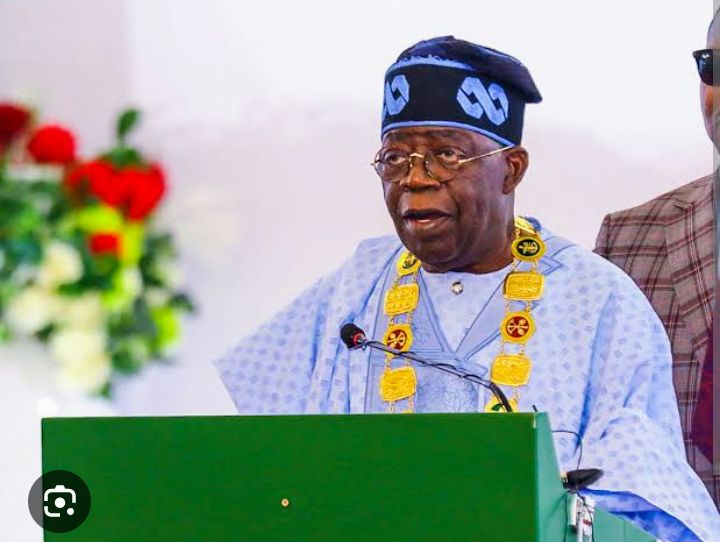
President Bola Tinubu has acknowledged that millions of Nigerians are still struggling to afford basic necessities, including food, school fees, medical bills and transportation, but said his administration would not settle for merely managing poverty.
Tinubu made the admission in his Independence Day address to Nigerians on Thursday as the country marked its 66th anniversary, saying the hardship facing households had accumulated over several decades.
The President, who returned to Nigeria on Wednesday after a working vacation in France, said the government recognised its responsibility to improve the living conditions of vulnerable Nigerians despite the longstanding nature of the challenges.
According to him, the difficulties confronting many families were linked to decades of low productivity, inadequate infrastructure, limited opportunities and institutions that had failed to adequately serve citizens.
“I am also conscious that millions of our fellow citizens cannot wait for tomorrow. Some Nigerian families still struggle today for the next meal, the next school fee, the next medical bill, or simply enough money to get to work.
“Their circumstances did not begin with the reforms of the last three years. Their struggle is the accumulated consequence of decades of low productivity, inadequate infrastructure, insufficient opportunity and institutions that too often failed those who needed them most,” Tinubu said.
The President, however, acknowledged that the government could not reverse in four years problems that had accumulated over generations.
He said his administration could nevertheless change the country’s direction and progressively lift Nigerians out of poverty.
“We cannot erase in four years what accumulated over generations. But we can change its course.
We can build an economy that steadily lifts people out of poverty while ensuring that those who remain vulnerable are not abandoned along the way,” he said.
Tinubu highlights social interventions
Tinubu said the government was strengthening direct support for the poorest households and improving the National Social Register to ensure that assistance reached Nigerians who genuinely needed it.
He also highlighted the Nigerian Education Loan Fund, saying the scheme was helping children from low-income families pursue higher education despite their parents’ inability to meet the financial demands of tertiary education.
The President cited the Consumer Credit Corporation, CREDICORP, as another intervention aimed at helping working Nigerians acquire essential assets such as vehicles, solar systems and digital devices without having to save for several years before making such purchases.
He added that the Federal Government would continue to work with state and local governments to strengthen primary healthcare, basic education and other essential public services on which poorer Nigerians depend.
Tinubu also said his administration had paid salaries and pensions on time and in full since 2023 and reformed the national pension programme to benefit retirees and vulnerable Nigerians.
However, he stressed that such interventions were not designed to become permanent substitutes for economic prosperity.
“These programmes are not substitutes for prosperity. They are a bridge to aid our nation’s citizens on their path towards it.
Our objective is not to manage poverty more efficiently. We will defeat it,” he declared.
Cost of living remains priority
Tinubu said defeating poverty would require time, discipline, sustained economic growth and the creation of millions of productive opportunities.
He said the next phase of his administration would focus on ensuring that the economic reforms introduced over the past three years translated into tangible improvements in the lives of ordinary Nigerians.
According to the President, prosperity should not be measured solely by the size of the economy or macroeconomic indicators, but by whether Nigerians can afford basic necessities and access productive opportunities.
“When I speak of prosperity, I do not speak merely of a larger economy, abstract numbers or better statistics. I mean something much more personal,” he said.
Tinubu said he wanted to see a Nigeria where farmers could cultivate their land safely, produce more at lower cost and earn decent returns; where factories had reliable electricity;
businesses could access credit; and young people could find productive employment.
He added that food and transportation should become more affordable, while education should remain within reach of ordinary families.
The President said lowering the cost of living would therefore remain at the centre of the government’s next phase.
“Our priority is to bring down the cost of living. We will achieve this by lowering the cost of producing and moving the things Nigerians consume,” he said.
Agriculture, infrastructure to drive lower prices
Tinubu identified increased agricultural production, mechanised irrigation, improved access to seeds and fertiliser, better storage facilities and transportation infrastructure as key measures being pursued to reduce food prices.
He said the government was also building and completing roads, railways and ports to improve the connection between farms, factories and markets.
“Our logic is simple.
When a farmer produces more cheaply, when fewer crops are lost between the farm and the market, when a manufacturer spends less on electricity, when a truck reaches its destination faster, and when the business environment fosters fair competition, all those savings will ultimately find their way into the price of goods in the market,” the President said.
Jobs, youth empowerment take centre stage
The President also linked poverty reduction to job creation, particularly as Nigeria’s youthful population continues to expand.
Tinubu said millions of young Nigerians enter adulthood every year with talent, energy and ambition, stressing that the government’s responsibility was to turn the country’s demographic strength into an engine of production.
“Nigeria is a young country. Millions of young Nigerians enter adulthood every year with talent, energy and ambition.
Our responsibility is to ensure that this great demographic strength becomes an engine of production rather than a source of despair,” he said.
He said the government would deploy gas to power new industries, support businesses seeking to revive factories, expand digital connectivity and invest in skills required by employers.
“We are therefore placing jobs, enterprise, and industrial growth at the heart of our government’s policies,” Tinubu added.
From economic reforms to household relief
The President’s remarks came against the backdrop of his administration’s repeated argument that its economic reforms were necessary to address structural weaknesses and lay the foundation for sustained economic growth.
In his May 2026 third-anniversary address, Tinubu acknowledged that the reforms had placed “enormous pressure” on families, workers and businesses, while maintaining that the economy had stabilised.
The Federal Government also acknowledged in July that improvements in macroeconomic indicators would have to translate into better household livelihoods, with the next phase of reforms expected to focus more directly on living standards.
Tinubu’s Independence Day address therefore placed renewed emphasis on the gap between macroeconomic recovery and the daily experiences of households.
The President acknowledged that many Nigerians remained unable to wait indefinitely for the long-term benefits of economic reforms, stressing that the ultimate measure of success would be an economy capable of steadily lifting people out of poverty and creating opportunities across different sections of society.
“I want to see more Nigerians making things. I want to see more Nigerian farms feeding our cities and supplying our factories.
I want to see Nigerian businesses selling Nigerian goods to the whole world.
I want young Nigerians building unicorns and creating opportunities for others here at home,” he said.
Tinubu ended the address by urging Nigerians to remain committed to the country’s future, saying the sacrifices made during the reform period should ultimately produce tangible benefits.
“The Promised Land before us is a Nigeria of abundance and opportunity; a nation where prosperity is broadly shared, where every child can dream beyond the circumstances of his birth, and where our country’s immense promise is finally reflected in the lives of our people,” he said.
World News | International Affairs
Stakeholders Seek Evidence-Driven Strategy to Improve Healthcare Access in Nigeria

Stakeholders in Nigeria’s health sector have called for a locally driven and evidence-based health financing research strategy to guide reforms, expand health insurance coverage and strengthen financial protection for Nigerians.
The call was made on Monday in Abuja at the inaugural Nigeria Health Financing Research and Learning Forum, organised around the theme, “Evidence and Learning for Nigeria’s Health Financing Future: Building a Locally Led Research and Learning Ecosystem.”
The Director-General of the National Health Insurance Authority (NHIA), Dr Kelechi Ohiri, said Nigeria must take greater ownership of the research used to shape its health financing policies and reforms.
Ohiri said reliance on occasional, externally driven studies had made it difficult for the country to build a sustained evidence base capable of supporting long-term reforms.
“For too long, our health financing initiatives in Nigeria have been shaped by well-meant studies designed, commissioned, analysed, reported, synthesised and presented to us at the finish line,” he said.
He noted that while such studies had provided valuable insights, episodic research could not provide the enduring policy foundation required to sustain health financing reforms.
According to him, Nigeria must move towards a system where it determines its own research priorities, commissions studies based on identified needs and integrates findings directly into policy implementation.
Ohiri clarified that research sovereignty did not mean cutting Nigeria off from international partners.
“Research sovereignty doesn’t mean isolating ourselves from support and partners globally, but rather it means putting Nigeria in the driver’s seat in terms of defining our own questions, pushing to commission our own research, embedding learning directly into implementation,” he said.
He added that international partnerships should increasingly focus on strengthening Nigeria’s domestic research capacity and supporting priorities determined within the country.
NHIA identifies key health financing priorities
Ohiri said the two-day forum would review five NHIA-commissioned studies focused on embedded learning, while also examining health financing experiences from Ethiopia, Ghana and India.
He stressed that the forum was designed not only for researchers but also for policymakers and other stakeholders involved in implementing health reforms.
“This forum is not an academic exercise. It’s not held in isolation. It doesn’t cater to just the researchers, but it’s also one that policymakers can benefit from,” he said.
The NHIA boss identified mandatory health insurance coverage, equity, quality of care and sustainability as major areas of focus in the authority’s health financing research agenda.
He disclosed that the authority had identified 15 studies linked to its strategic priorities and was working with national research institutions, universities and other stakeholders to develop a stronger health financing research ecosystem.
Ohiri also drew attention to the fragmented nature of Nigeria’s health insurance system, noting that the country currently has 37 government health insurance schemes and more than 95 private health insurance companies.
“That has resulted in a lot of fragmented things that question sustainability. And so one of the areas of our research focus is really how do we enhance the sustainability of health insurance and financial protection,” he said.
As part of efforts to institutionalise research and learning, the NHIA is planning a national health financing observatory, a national research agenda for health financing, 15 research action plans and regional collaboration frameworks.
Ohiri said evidence must directly support reforms aimed at expanding health insurance coverage, improving healthcare quality and strengthening financial protection for households.
“Evidence must serve reform,” he said, stressing that health financing should evolve into an economic infrastructure capable of protecting Nigerian households from the financial consequences of healthcare needs.
WHO backs locally led research
The World Health Organisation (WHO) Representative in Nigeria, Dr Pavel Ursu, described health financing as fundamental to achieving universal health coverage.
Ursu said implementation research was particularly important because it could help policymakers answer practical questions emerging from ongoing health sector reforms.
He commended the establishment of the Nigeria Health Financing Research and Learning Forum, describing it as an institutional opportunity for Nigeria to translate global commitments on health financing and universal health coverage into concrete actions.
“The establishment of the Nigeria Health Financing Research and Learning Forum platform is really a great institutional opportunity, which will help us to a great extent with really unpacking the research questions and increasingly drive Nigeria’s own policy and implementation steps,” he said.
NISER calls for continuous national learning
Representing the Nigerian Institute of Social and Economic Research (NISER), Dr Yetunde Aluko said Nigeria needed locally generated evidence to guide health financing decisions.
She argued that research should become part of a continuous national learning system involving policymakers, researchers, healthcare practitioners, communities and those responsible for implementing policies.
“For too long, research in many development sectors has been developed outside of Nigeria and is funded by short-term grants,” Aluko said.
While acknowledging the value of development partnerships, she said Nigeria needed an enduring national system through which stakeholders could jointly identify priority research questions, generate evidence, learn from implementation and continuously adapt policies.
Aluko said health financing research should go beyond producing reports and academic publications.
She said research should establish what interventions work, who benefits, the circumstances under which they work and the cost involved, while also considering equity and sustainability.
GIZ highlights social factors affecting healthcare decisions
Also speaking on behalf of development partners, GIZ Cluster Manager and Head of Programme, Fatima Zannah, said locally generated evidence was necessary to design health financing approaches that reflected the realities of Nigerians.
She noted that culture, religion, geography, income, education, gender and social networks all influenced how people accessed healthcare and made decisions about treatment.
“These realities shape the choices that people make about their care. We need to better understand how Nigerians find, where and how they seek care, and what influences barriers to the decisions that they are making,” Zannah said.
She urged stakeholders to apply evidence to strengthen decision-making, transparency, equity and accountability within the health system.
Zannah also encouraged Nigeria to learn from countries facing similar health financing challenges while developing solutions suited to its own circumstances.
WHO Alliance urges Nigeria to build domestic research capacity
The Executive Director of the WHO Alliance for Health Policy and Systems Research, Dr Kumanan Rasanathan, said research and learning should be treated as essential components of a functioning health system rather than optional activities.
“Research cannot be a luxury. Learning cannot be a luxury. It is the foundation for health systems. If you don’t have your own knowledge, if you don’t know your own problems, if that is not preserved for future generations, you cannot be sovereign,” Rasanathan said.
He expressed concern over the dependence of research institutions in developing countries on external funding, warning that declining development assistance could weaken domestic knowledge systems.
Rasanathan called for stronger national institutions capable of generating, preserving and applying knowledge while maintaining links with policymakers and providing independent advice.
He said Nigeria’s emerging health financing research ecosystem should increasingly be driven by nationally and sub-nationally determined priorities and supported by institutions capable of sustaining continuous learning.
“If you don’t have your own research and learning system, you don’t have a map. And if someone else owns the map, you’re certainly not in charge of your journey,” he said.
The stakeholders agreed that a stronger locally led research system would be critical to helping Nigeria design health financing reforms that respond to its own realities, improve access to healthcare and provide greater financial protection for households.
World News | International Affairs
REA Seeks Unified Approach to Expand Electricity Access Across Nigeria
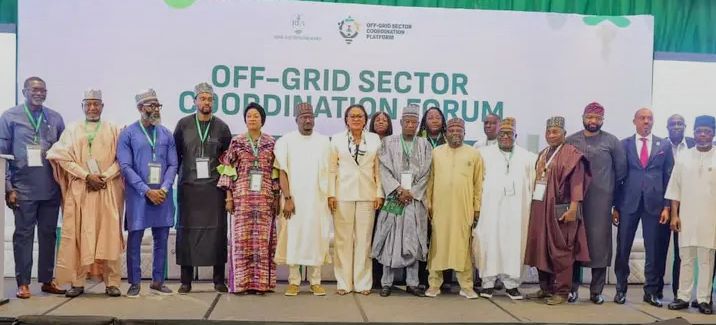
The Rural Electrification Agency (REA) has called for stronger coordination among government agencies, state governments, development partners, private operators and other stakeholders to accelerate electricity access across Nigeria.
The Managing Director of the REA, Dr Abba Abubakar Aliyu, made the call on Monday in Abuja at the official relaunch of the Off-Grid Stakeholder Coordination and Partnership Forum.
Aliyu said greater collaboration was necessary to prevent duplication of electricity projects, optimise limited resources and ensure that interventions reached communities and Nigerians with the greatest need for access to electricity.
According to him, an analysis of the 2024 and 2025 Federal Government budgets using Artificial Intelligence showed that several government institutions were implementing power-related projects, making stronger coordination across the sector increasingly important.
He noted that some of the institutions involved in electricity-related projects were not traditionally regarded as major players in the power sector.
Aliyu warned that failing to bring state governments into a coordinated national framework could undermine efforts to expand electricity access.
“If we continue to work the way we currently do without bringing the states into this conversation and coordination, I can tell you that we will simply be planning to fail.”
The REA boss disclosed that the agency had itself encountered instances where projects being implemented under different programmes overlapped in the same locations.
He said the challenge had become more critical as funding available to the electricity sector continued to decline, stressing the need for stakeholders to share data and coordinate interventions.
Aliyu advocated the creation of a centralised sector data platform that would enable stakeholders to identify existing projects, prevent duplication and determine locations where new interventions were most needed.
FG moves to strengthen off-grid coordination
In his keynote address, the Minister of Power, Joseph Tegbe, represented by his Chief of Staff, Doyin Adelabu, identified fragmentation as a major obstacle to effective electricity project delivery.
Tegbe said the Federal Government was establishing a standing Off-Grid Coordination Secretariat to track commitments and risks, convene issue-based working groups and generate shared market intelligence.
He described poor coordination as a hidden cost to the sector, noting that duplication of efforts and missed investment opportunities could slow the delivery of electricity to underserved communities.
The minister urged development partners, financiers, private operators, state governments and civil society organisations to nominate focal points, share relevant data and commitments, and participate actively in the working groups.
He added that the Federal Ministry of Power would continue to provide policy direction through the National Electrification Strategy and Implementation Plan while supporting the development of state electricity markets under the Electricity Act.
REA calls for continuous stakeholder engagement
The Executive Director of the Rural Electrification Fund, Doris Uboh-Ogunkoya, said coordination should become a continuous function rather than an activity restricted to periodic stakeholder meetings.
She said the Off-Grid Coordination Secretariat would provide a mechanism for stakeholders to identify gaps, address implementation bottlenecks and monitor commitments.
“The aim is not simply to hold more meetings, but to align our efforts, identify gaps, address bottlenecks, and follow through on commitments between meetings,” she said.
Also speaking at the forum, the Heinrich Böll Stiftung Nigeria representative, Ikenna-Donald Ofoegbu, urged stakeholders to broaden the way the success of off-grid electricity projects was measured.
Ofoegbu said while the number of mini-grids installed, solar home systems deployed and connections delivered remained important indicators, stakeholders should pay greater attention to what happens after communities gain access to electricity.
He called for more emphasis on productive use of electricity, innovative financing mechanisms, sustainability and the development of local capacity.
According to him, the sector needs to move from individual successful interventions to projects capable of achieving scale, from connections to productive economic activities, and from donor-supported projects to investable markets.
Over 7.5 million Nigerians gain electricity access through off-grid projects
The Off-Grid Stakeholder Coordination and Partnership Forum began as a donor roundtable in April 2017 and is now being relaunched under a new coordination framework.
The Federal Government said more than 7.5 million Nigerians had gained electricity access through over 200 solar hybrid mini-grids and approximately 1.8 million solar home system connections.
It added that the Distributed Access through Renewable Energy Scale-Up programme is targeting an additional 17 million Nigerians and about 465 megawatts of new renewable energy capacity.
Nigeria is also participating in the broader Mission 300 initiative, which aims to connect 300 million Africans to electricity by 2030.
The renewed coordination framework is expected to bring government institutions, state authorities, development partners, private-sector operators, financiers and civil society organisations into a more integrated approach to expanding electricity access, particularly in underserved and unserved communities across the country.
-

 Security3 months ago
NDLEA Declares Alleged Drug Kingpin, Three Associates Wanted, Freezes ₦9.8bn Linked to Syndicate
-

 Business/Finance3 months ago
How to Apply for Tunde Onakoya’s ₦250 Million Scholarship Programme and Free Laptop Offer
-

 National Affairs3 months ago
ICPC Uncovers 908 Suspected Ghost Workers Across 50 Federal MDAs, Recovers ₦942 Million
-

 Judiciary | Public Safety3 months ago
INEC Tells Court Voter Information Is Not Confidential in Emeka Ike’s ₦10bn Lawsuit
-
 Politics2 months ago
Atiku Challenges Tinubu to Reveal Details of ₦15.13bn SUV Procurement in 2026 Budget
-

 Judiciary | Public Safety3 months ago
Court to Rule Friday on NDLEA’s Bid to Destroy ₦480bn Meth Lab in Ogun
-
 Security2 months ago
Family Paid ₦50 Million Ransom to Secure Release of Abducted Kebbi Judge
-

 News2 months ago
2026 Budget: FG Earmarks ₦962.83bn for SUVs, Empowerment Projects Amid Debt Concerns