
National Affairs
CNG: Commuters Await Fare Cuts as FG Attracts $2.5bn Investment


The Federal Government is intensifying efforts to ensure commuters benefit from lower transportation fares under its Compressed Natural Gas initiative, but uneven implementation, inadequate refuelling infrastructure and slow adoption across several states continue to delay the impact.
The Federal Government has begun engaging state governors, transport unions and commercial fleet operators to enforce lower transportation fares for commuters using Compressed Natural Gas-powered vehicles, as private-sector investment in the CNG ecosystem surpasses $2.5bn.
The Presidential Initiative on Compressed Natural Gas and Electric Vehicles said it would introduce stickers displaying approved routes and fares on buses deployed under its programme to improve transparency and prevent operators from charging passengers more than the approved rates.
However, findings across several states indicate that the implementation of the initiative remains uneven, with commuters in some areas yet to benefit from fare reductions despite government investments in alternative-energy transportation.
The Head of Brand and Communications at Pi-CNG and EV, Onyekachi Eke, disclosed this in an interview, explaining that the initiative had started engaging state governors to identify transport routes and establish mechanisms for enforcing lower fares.
According to her, a meeting with the Jigawa State governor was scheduled to map out routes and determine how the programme would be implemented in the state.
She said the initiative was working with state governments, fleet operators and transport unions to ensure that the savings from cheaper fuel were reflected in the fares paid by passengers.
Eke explained that buses distributed under the programme would carry stickers indicating their designated routes and approved fares, allowing commuters to know the applicable charges before boarding.
The initiative is also working with transport unions and commercial fleet operators to promote compliance, although the official did not disclose the specific fare reductions expected on each route or the penalties for operators who fail to comply.
She said Abuja had recorded reductions on designated routes, with commercial vehicles converted to CNG under a partnership with the National Union of Road Transport Workers offering passengers a 40 per cent fare reduction.
Similar interventions, she added, were producing fare reductions in Borno, Enugu, Niger and Abia states.
However, Eke acknowledged that the benefits had not reached every route or commuter, noting that the programme was being expanded while officials continued to engage state governments and transport operators.
She maintained that reducing the cost of operating commercial vehicles would be insufficient if passengers continued to pay fares based on petrol-powered transportation.
According to her, the National Affordable CNG Transit Programme is designed to ensure that the benefits of cheaper energy reach commuters through lower transportation costs.
FG Attracts $2.5bn in Private Investment
Eke said the initiative had mobilised more than $2.5bn in private-sector investment across the CNG value chain, including refuelling infrastructure, vehicle conversion centres and vehicle assembly.
She clarified that the figure represented private-sector investment attracted into the CNG ecosystem rather than direct Federal Government expenditure.
According to her, federal interventions have supported the procurement of vehicles and conversion kits, conversion incentives, infrastructure development, technical training and other measures aimed at accelerating the adoption of CNG-powered transportation.
She said a consolidated figure for Federal Government spending would be provided separately to distinguish public expenditure from private investment.
The initiative is also targeting students through Project Sprout, which is expected to provide buses to 20 universities in its first phase to ease transportation challenges within and around participating institutions.
Eke disclosed that public awareness campaigns were also being conducted to encourage Nigerians to embrace CNG-powered transportation, including a campaign and roadshow in Kano State.
She added that Pi-CNG and EV was working on a proposed partnership with ride-hailing platform inDrive to encourage vehicle conversion and make CNG-powered cars easier for passengers to identify.
Under the proposed arrangement, participating drivers would convert their vehicles to CNG and display identifying signs, although details of the partnership, including the number of drivers expected to participate and the implementation timeline, had yet to be finalised.
Eke expressed concern that some commercial drivers who had switched to CNG were still charging passengers the same fares as petrol-powered vehicle operators despite benefiting from lower fuel costs.
She said the initiative was working to address the situation by developing fare-reduction frameworks with state governments, unions and commercial operators.
Tinubu Targets Nationwide Fare Reductions
President Bola Tinubu had, on August 27, 2026, announced that the Federal Government and state governors had agreed to take measures to reduce transportation fares nationwide from October 1 by leveraging cheaper energy sources, particularly CNG.
Tinubu said the objective was to ensure that Nigerians benefited from lower fuel costs through reduced transportation fares.
The President disclosed that more than 120,000 vehicles had been converted under the Presidential CNG Initiative, while over 100,000 additional conversion kits were being processed.
He also said the Federal Government was financing more than 100 gas projects through the Midstream and Downstream Gas Infrastructure Fund, including 15 CNG mother stations and 86 daughter stations.
According to him, the government had directed the rollout of an additional 500 CNG refuelling stations, on top of 500 previously ordered, bringing the planned total to 1,000 nationwide.
Tinubu said a vehicle running on CNG could spend between 60 and 80 per cent less on fuel than a comparable petrol-powered vehicle.
On September 19, 2026, the President announced that an implementation committee had been established under the Nigeria Governors’ Forum, chaired by Kwara State Governor AbdulRahman AbdulRazaq.
The committee, working with the Presidential Initiative on CNG and Electric Vehicles, state governments and other stakeholders, was expected to identify priority transport corridors and determine interventions capable of reducing transportation costs.
Tinubu cited Borno, Kaduna, Oyo, Enugu, Plateau, Edo and Kano as states where the adoption of cheaper energy sources could translate into lower fares.
In a statement issued on Sunday, October 11, the President reiterated the government’s commitment to expanding CNG and electric-powered transportation following the removal of the petrol subsidy.
He cited examples of commuters benefiting from reduced fares, including a passenger who reportedly paid N500 for a journey from Masaka to Berger in the Federal Capital Territory, compared with the previous fare of N1,500.
The President also cited a reduction in fares on the Enugu-Nsukka route from N4,000 to N1,600.
He said the government was working with state administrations and private investors to expand affordable transportation through the National Affordable CNG Transportation Programme.
Mixed Progress Across States
Despite the October 1 target announced by the President, findings across several states show that some governments are still preparing to deploy CNG-powered vehicles or establish the infrastructure required to operate them.
In other locations, commuters continue to pay existing fares, with limited evidence that the savings from cheaper fuel have translated into lower transportation costs.
Bayelsa Allocates N25bn for CNG
In Bayelsa State, the government earmarked N25bn in its approved 2026 budget for CNG buses and the establishment of refuelling stations.
However, checks in Yenagoa showed that no confirmed CNG-powered buses were operating on major intra-city routes at the time of the findings.
The state’s existing Prosperity Transport Scheme provides affordable transportation through buses, but the vehicles operating under the scheme had not been identified as CNG-powered.
The N25bn allocation does not necessarily represent money already spent, as no public record confirming the release or expenditure of the entire amount was available.
Transport operators in Yenagoa have previously identified the cost of vehicle conversion and inadequate refuelling infrastructure as major obstacles to adopting CNG.
Imo Commuters Still Pay High Fares
In Imo State, transportation fares remained high despite the President’s October 1 target.
Checks at Ama JK, Warehouse Junction, Fire Service, Control Post, Arugo Park and Old Okigwe Park in Owerri showed no immediate reduction in fares.
A driver who spoke on condition of anonymity said CNG-powered buses were yet to become available to commuters in the state.
He cited fares of N4,500 from Owerri to Akokwa and N9,000 from Owerri to Awka, arguing that the government should address fuel prices while CNG vehicles were being introduced.
Another driver, identified as John, questioned how many passengers would benefit from the programme, noting that private operators dominated public transportation in the state.
He said fares had risen significantly on routes connecting Owerri to Umuahia and Enugu, with some journeys costing substantially more than they did previously.
However, the spokesperson for the All Progressives Congress in Imo State, Jones Onwuasoanya, maintained that the President’s promise of lower fares was being implemented.
He said the state had started taking delivery of CNG vehicles and expected transportation costs to drop significantly once operations commenced.
Onwuasoanya also said the government would need to consider the interests of private shuttle bus operators and other small-scale transport businesses to avoid disrupting their livelihoods.
Kaduna Expects 120 Additional CNG Buses
Kaduna State is expecting another 120 CNG-powered buses, which would increase its fleet to 220.
The state’s Commissioner for Information and Culture, Ahmed Maiyaki, said the government currently had 100 CNG buses.
He declined to disclose the total investment, explaining that the figure would need to be obtained from the relevant government offices because the vehicles were procured through a formal process.
Maiyaki also disclosed that the state was working on a major bus terminal project to complement its Bus Rapid Transit system.
The proposed terminals would be located in the eastern, southern and northern parts of the state, with provisions for dedicated BRT lanes.
Transport Unions Seek Clarity
The President of the Road Transport Employers’ Association of Nigeria, Musa Mohammed, said he was unaware of the Federal Government’s latest arrangements to enforce lower fares on CNG-powered vehicles.
He said he had not received information about the routes where the vehicles would be deployed or how the proposed fare reductions would be implemented.
Meanwhile, calls and text messages sent to the National President of the National Union of Road Transport Workers, Musiliu Akinsanya, and the union’s Ogun State Chairman, Mustapha Adewale, were not answered.
The Ogun State Secretary of RTEAN, Kabir Akingbade, popularly known as Paulo Rossi, said he was at the airport and promised to respond later but did not do so before the report was filed.
The lack of clarity among some transport union officials raises questions about how quickly the proposed fare-enforcement arrangements can be implemented across the country.
Sokoto, Kebbi Invest in Conventional Buses
While the Federal Government is promoting CNG-powered transportation, some state governments have continued to invest in conventional buses and other vehicles for public transportation.
In Sokoto State, budget implementation documents showed that at least N3.45bn was earmarked for 10 luxury 50-seater buses, 20 Mitsubishi Canter vehicles and 20 Toyota 18-seater buses in the 2025 budget.
In September 2026, the Sokoto State Transport Authority disclosed that it had acquired seven 18-seater buses for N511m using internally generated revenue, while three additional buses had been ordered for N219m.
However, the authority has also started converting petrol-powered vehicles to CNG.
Its General Manager, Ibrahim Muhammad, said 20 vehicles were undergoing conversion at N750,000 each, bringing the cost of the exercise to approximately N15m.
He said the programme began with the authority’s Iyaye Mata vehicles, which provide subsidised transportation for women, with plans to extend the conversion to larger buses after the initial phase.
In Kebbi State, the 2026 Citizens’ Budget provides N5.25bn for the purchase of 100 18-seater Toyota Hiace buses under the mass transit programme.
The Commissioner for Transport and Renewable Energy, Bala Muhammad Gagga, said the state had deployed more than 50 new 18-seater buses through the Kebbi State Transport Authority.
The buses operate on routes linking Birnin Kebbi with the headquarters of the state’s 21 local government areas at subsidised fares.
Records also show that Kebbi previously invested N1.9bn in 21 new 18-seater Toyota Hiace buses, with one allocated to each local government area.
However, no comparable state-funded CNG conversion expenditure has been publicly disclosed.
The state now has a federal CNG conversion centre following the inauguration of the National Automotive Training and CNG Conversion Centre at Waziri Umaru Federal Polytechnic, Birnin Kebbi, in July 2026.
The facility is expected to provide conversion, repair and maintenance services.
Despite these investments, transportation fares have largely remained unchanged on commercial routes in Sokoto and Kebbi.
In Kebbi, state-owned buses charge approximately N3,500 for journeys to Sokoto, compared with around N5,000 charged by commercial bus operators.
Slow CNG Adoption in Benue, Jigawa
In Benue State, the government is yet to procure CNG-powered vehicles, according to the Technical Adviser to Governor Hyacinth Alia on Natural Gas and Renewable Energy and Coordinator of the Benue CNG project, Jonathan Ashir.
Ashir said the state was laying the groundwork for the programme before procuring vehicles, citing safety concerns and the need to expand technical capacity.
He explained that the state had conducted an awareness programme and planned to begin additional technical training to increase the number of conversion centres and improve the availability of qualified personnel.
According to him, the government was also discussing the acquisition of a mobile refuelling unit that could provide temporary refuelling services while the programme was being developed.
Ashir did not disclose the amount spent on the initiative, saying only that substantial funds had been committed.
In Jigawa State, commuters are also yet to experience significant benefits from the programme despite claims that 100 vehicles had been converted to CNG.
Checks across major roads and motor parks showed that CNG-powered buses were not operating on routes to reduce fares.
Passengers continued to pay N3,500 from Dutse to Kano, N5,000 from Dutse to Hadejia and N4,500 from Dutse to Gumel.
A passenger at Dutse Central Motor Park, Sani Habibu, said commuters could not readily identify or access CNG-converted vehicles.
He said fares remained high despite the government’s involvement in the programme.
Another commuter, Abida Mukhtar, who regularly travels between Dutse and Kano, said she continued to pay the same fare and had never boarded a government CNG bus.
The Jigawa State Chairman of the National Association of Transport Owners, Bello Usman Dunaro, confirmed that about 100 vehicles had been converted under the government initiative.
However, he said the programme was ongoing and required more refuelling stations and additional support to deliver significant benefits to passengers.
Dunaro disclosed that the state had only one CNG filling station, located in Dutse, limiting the ability of converted vehicles to operate efficiently across different routes.
Zamfara State also lacks a CNG station, leaving motorists dependent on petrol and contributing to transportation costs.
In Bauchi State, the state-owned Yankari Express Corporation said the government had yet to make a commitment to adopting CNG for public transportation.
The corporation’s Information Officer, Jalaluddeen Usman, said it had not started converting its buses from petrol to CNG.
He said the corporation had not received any concrete commitment regarding the adoption of the technology.
Meanwhile, the Kano State Government said it was pursuing the CNG programme in collaboration with the Federal Government.
The state’s Commissioner for Transport, Haruna Dederi, said the administration was working to implement the initiative with the objective of reducing transportation fares.
Infrastructure, Enforcement Key to Success
The experiences across the states highlight the challenges facing the Federal Government’s effort to translate cheaper fuel into affordable transportation.
Although the initiative has attracted more than $2.5bn in private investment and supported the conversion of thousands of vehicles, access to CNG-powered buses remains uneven.
In some states, governments are still acquiring vehicles, training technicians or developing refuelling infrastructure. In others, converted vehicles are too few to significantly influence fares, while commercial operators continue to charge passengers based on prevailing market conditions.
The proposed stickers displaying approved routes and fares could help commuters identify participating vehicles and challenge overcharging. However, their effectiveness will depend on clear pricing arrangements, adequate monitoring and sanctions for operators who fail to comply.
The Federal Government will also need to work closely with state governments and transport unions to expand refuelling infrastructure, support vehicle conversions and ensure that CNG-powered buses operate on routes with substantial passenger demand.
For commuters facing rising transportation costs, the ultimate measure of success will not be the amount of investment attracted or the number of vehicles converted, but whether they can travel more affordably.
Until the programme reaches more routes and operators consistently pass on fuel savings to passengers, the promise of nationwide fare reductions will remain an uneven reality.





The Oyo State Road Traffic Management Authority (OYRTMA) has launched its 2026 ember months road safety campaign, targeting zero road fatalities through intensified enforcement, public enlightenment and improved emergency response during the festive season.
The campaign, themed “Safe Road, Safe Life: Drive Responsibly,” was unveiled by the OYRTMA Chairman, Maj. Adekoya Adesagba (retd.), during a media briefing at the state Secretariat in Ibadan on Thursday.
Adesagba said the initiative would focus on five strategic areas: advocacy, enforcement, emergency response, inter-agency collaboration, and monitoring and evaluation.
He explained that the agency would intensify enforcement activities and strengthen emergency response mechanisms through improved collaboration with relevant agencies, alongside a more effective referral and monitoring system.
The chairman identified over-speeding, driving against traffic, drunk driving, overloading and the use of mobile phones while driving as major causes of road crashes during the ember months.
According to him, these dangerous driving practices often contribute to the seasonal increase in road traffic accidents, making stricter compliance with traffic regulations essential to protecting lives.
Adesagba also disclosed that OYRTMA would engage religious leaders across the state to promote road safety, with awareness messages incorporated into sermons and other activities in places of worship.
He announced that the statewide campaign would commence on Monday, November 2, 2026, with a road walk and continue until January 2027 through sustained sensitisation and public enlightenment programmes.
The chairman said extending the campaign beyond the festive season was necessary because of the volume of return traffic passing through Oyo State, particularly from northern parts of the country.
He added that the agency would collaborate with the Park Management System, the Nigeria Police Force, Vehicle Inspection Officers and other law enforcement agencies to coordinate traffic management and improve road safety during the period.
As part of efforts to strengthen emergency response, Adesagba announced the activation of the state’s emergency traffic lines, 615 and 0912 888 8878.
He urged residents and other road users to use the numbers to report traffic emergencies, road obstructions and related incidents requiring urgent attention.
The OYRTMA chairman called on commercial drivers, private motorists and other road users to take responsibility for their safety and that of other road users by obeying traffic regulations and avoiding risky driving practices.
He also urged relevant stakeholders to work together to ensure that the ember months were characterised by safe journeys and peaceful festive celebrations rather than preventable road crashes and fatalities.
Speaking on behalf of the state chairman of the Park Management System, the deputy chairman, Jimoh Tajudeen, urged motorists, transport operators and passengers to support the initiative by complying with traffic regulations and adopting safe road practices.
Tajudeen stressed that collective commitment to traffic rules and safety measures was essential to reducing road crashes and ensuring safer journeys during the festive period.
The ember months, traditionally associated with increased travel towards the end of the year, often witness heavier traffic as Nigerians travel to reunite with family members and participate in festive activities.
The increase in vehicular movement during the period makes responsible driving, regular vehicle maintenance and strict compliance with traffic regulations critica
l to preventing road crashes and loss of life.
Through the campaign, OYRTMA is seeking to strengthen public awareness, improve traffic enforcement and encourage safer driving habits across Oyo State as residents prepare for the festive season.
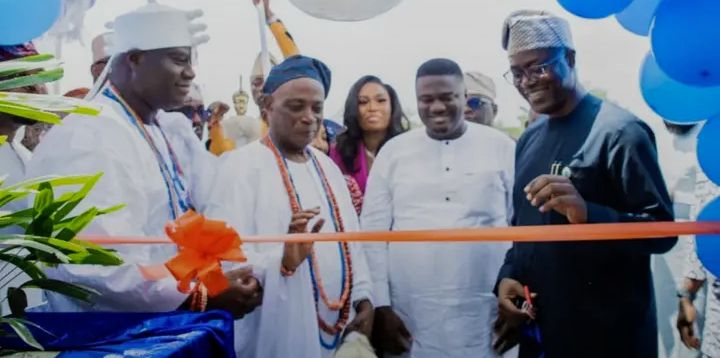
Oyo State Governor, Seyi Makinde, has reaffirmed his administration’s commitment to supporting entrepreneurs and private sector investment, declaring that natural resources alone cannot guarantee economic prosperity without innovation, skills, knowledge and increased production.
Makinde stated this on Wednesday at the 10th anniversary celebration and commissioning of the global headquarters of CapitalSage Holdings in Ibadan, the Oyo State capital.
The governor’s position was contained in a statement issued by his Special Adviser on Media, Dr Sulaimon Olanrewaju, and made available to journalists in Ibadan.
He congratulated the management of CapitalSage Holdings on its growth into a diversified business conglomerate, describing the establishment of its global headquarters in Ibadan as a significant milestone for the state’s investment and economic development drive.
According to Makinde, Nigeria’s abundant natural resources must be complemented by entrepreneurial initiatives, risk-taking, innovation and investment to translate the country’s economic potential into sustainable prosperity.
“Nigeria is a wealthy country in terms of natural resources, but natural resources alone cannot lead to economic prosperity.
Prosperity must be driven by entrepreneurship, skills, knowledge and intensive production,” he said.
The governor stressed that the government had a responsibility to create an enabling environment for businesses to operate, expand and contribute to economic growth.
He assured investors that his administration would continue to support private enterprises through improved security, investment facilitation, infrastructure development and other legitimate interventions aimed at promoting business expansion.
Makinde also said his administration had worked to ensure that economic activities could continue beyond traditional working hours by providing the infrastructure, stability and security required for businesses to thrive.
He described the commissioning of CapitalSage Holdings’ headquarters as evidence that Ibadan could accommodate major business organisations and compete with Lagos in attracting investments.
“For many years, people viewed Oyo State as playing second fiddle to Lagos in terms of business and investment. Today, we are proving that Oyo State can stand shoulder to shoulder with any state in the federation in attracting investment and supporting enterprise,” he said.
Makinde reiterated his administration’s readiness to partner with CapitalSage Holdings and other investors, particularly businesses that create employment opportunities, strengthen local industries and contribute to the state’s economy.
He cited the brown sugar and sorbitol factories among industrial projects that had received government support because of their contributions to employment generation and economic development.
The governor said CapitalSage Holdings would receive similar support, adding that his administration remained committed to policies that encourage businesses to establish, grow and expand within the state.
“This occasion is particularly significant because CapitalSage is demonstrating that Ibadan can host the headquarters of major business organisations,” he said.
Makinde congratulated the company on its 10th anniversary, expressing optimism that it would record greater achievements in the coming years.
CapitalSage Commends Oyo Government
In his welcome address, the Founder and Group Managing Director of CapitalSage Holdings, John Alamu, commended the Makinde.
administration for providing an environment that enabled the company to grow from a small enterprise in Oyo State into a diversified business conglomerate headquartered in Ibadan.
Alamu reaffirmed the group’s commitment to building stronger businesses, developing its workforce, deepening strategic partnerships and delivering greater value to its customers.
CapitalSage Holdings has grown into a conglomerate comprising about 20 companies, according to the governor, with its global headquarters expected to further strengthen Ibadan’s profile as a business and investment destination.
The anniversary celebration and commissioning attracted traditional rulers, financial partners, local and international investors, and other prominent figures in the business community.
Among those present were the Olubadan of Ibadanland and former Oyo State governor, Oba Rashidi Adewolu Ladoja; the Ooni of Ife, Oba Adeyeye Enitan Ogunwusi; the Soun of Ogbomosoland, Oba Ghandi Afolabi Olaoye; and the Deji of Akure, Oba Aladetoyinbo Ogunlade Aladelusi.
Members of the Oyo State Government delegation included the Secretary to the State Government, Prof. Musibau Babatunde; Deputy Chief of Staff, Kazeem Adeniyi; Commissioner for Investment, Trade, Cooperatives and Industry, Prof. Salihu Adelabu; and Director-General of the Oyo State Investment and Public-Private Partnership Agency, Tilewa Folami.
Other officials at the event included commissioners, local government representatives, the Babaloja-General of Oyo State, Yekini Abass, and other government functionaries.
The state government said its continued engagement with private investors formed part of its broader strategy to expand economic opportunities, attract businesses and promote employment generation across Oyo State.

Akwa Ibom State Government has disclosed that electronic ticket sales to tricycle and minibus operators generate about ₦14 million weekly, boosting the state’s Internally Generated Revenue (IGR).
The Commissioner for Transport, Dr Anthony Luke, disclosed this on Saturday while speaking with journalists in Uyo, the state capital, describing the revenue increase as one of the achievements of Governor Umo Eno’s administration in the transport sector over the past three years.
According to Luke, the state records about ₦2 million daily from the electronic ticketing system, which requires tricycle, popularly known as keke, and minibus operators to purchase daily tickets before commencing operations.
He explained that the ministry sells 100,946 electronic tickets daily to transport operators at rates of ₦200 for tricycle riders and ₦300 for minibus drivers, with collections expected before 9 am.
“Now we record ₦2m daily and receive ₦14m in a week. We have recruited 143 enforcers for sales of the e-tickets to the transport operators.
The money is sent straight to government coffers under the present Single Treasury Account. This increases Akwa Ibom Internal Generated Revenue (IGR) daily,” Luke said.
The commissioner noted that the introduction of electronic ticketing had helped the government identify revenue leakages in the transport sector, particularly among operators who previously failed to pay their daily ticket fees.
He recalled that the ministry’s records showed that 5,794 tricycle operators had been registered, but the electronic ticketing system revealed that many were not complying with the daily payment requirement.
Luke said the transition to electronic payments had improved accountability and enabled the government to collect revenue directly from transport operators.
He added that the initiative had contributed to a 109 per cent increase in the state’s internally generated revenue, although he did not provide the baseline figures or period used to calculate the increase.
The commissioner attributed the success of the system to collaboration between the Ministry of Transport and the Ministry of Science and Digital Economy, headed by Ekpenyong Udo Ekpenyong, which provided the technical support required to implement the electronic ticketing platform.
Cameras Deployed to Monitor Transport Operators
Providing further details, Ekpenyong described the electronic ticketing initiative as an unprecedented development in the state’s transport sector under Governor Eno’s Arise Agenda.
He said surveillance cameras had been installed at strategic locations across Uyo metropolis to monitor the activities of tricycle and minibus operators.
According to him, the surveillance system is intended to strengthen compliance with ticket payments, improve passenger safety and support security agencies in tracking suspects involved in criminal activities.
“With cameras installed around the city, no keke operator would escape from paying for the ticket,” Ekpenyong said.
He added that the cameras would make it more difficult for criminals to use tricycles to commit offences, as surveillance footage could help investigators identify and trace suspected offenders.
The commissioner said the security information obtained through the system would assist relevant agencies in their investigations and efforts to maintain public safety.
The state government’s electronic ticketing initiative combines digital revenue collection with surveillance and monitoring of commercial transport operations within Uyo.
The development comes as state governments increasingly explore digital systems to improve revenue collection, reduce leakages and strengthen accountability in public finance.
However, the long-term impact of the initiative will depend on sustained compliance by transport operators, transparent revenue reporting and the effective use of surveillance technology to improve passenger safety and security.
-

 Security4 months ago
NDLEA Declares Alleged Drug Kingpin, Three Associates Wanted, Freezes ₦9.8bn Linked to Syndicate
-

 Business/Finance3 months ago
How to Apply for Tunde Onakoya’s ₦250 Million Scholarship Programme and Free Laptop Offer
-

 National Affairs3 months ago
ICPC Uncovers 908 Suspected Ghost Workers Across 50 Federal MDAs, Recovers ₦942 Million
-

 Judiciary | Public Safety3 months ago
INEC Tells Court Voter Information Is Not Confidential in Emeka Ike’s ₦10bn Lawsuit
-

 Politics3 months ago
Atiku Challenges Tinubu to Reveal Details of ₦15.13bn SUV Procurement in 2026 Budget
-

 Judiciary | Public Safety3 months ago
Court to Rule Friday on NDLEA’s Bid to Destroy ₦480bn Meth Lab in Ogun
-

 Security3 months ago
Family Paid ₦50 Million Ransom to Secure Release of Abducted Kebbi Judge
-

 News3 months ago
2026 Budget: FG Earmarks ₦962.83bn for SUVs, Empowerment Projects Amid Debt Concerns