
News
Okonjo-Iweala Reveals How Obasanjo’s Team Secured $30 Billion Debt Relief for Nigeria

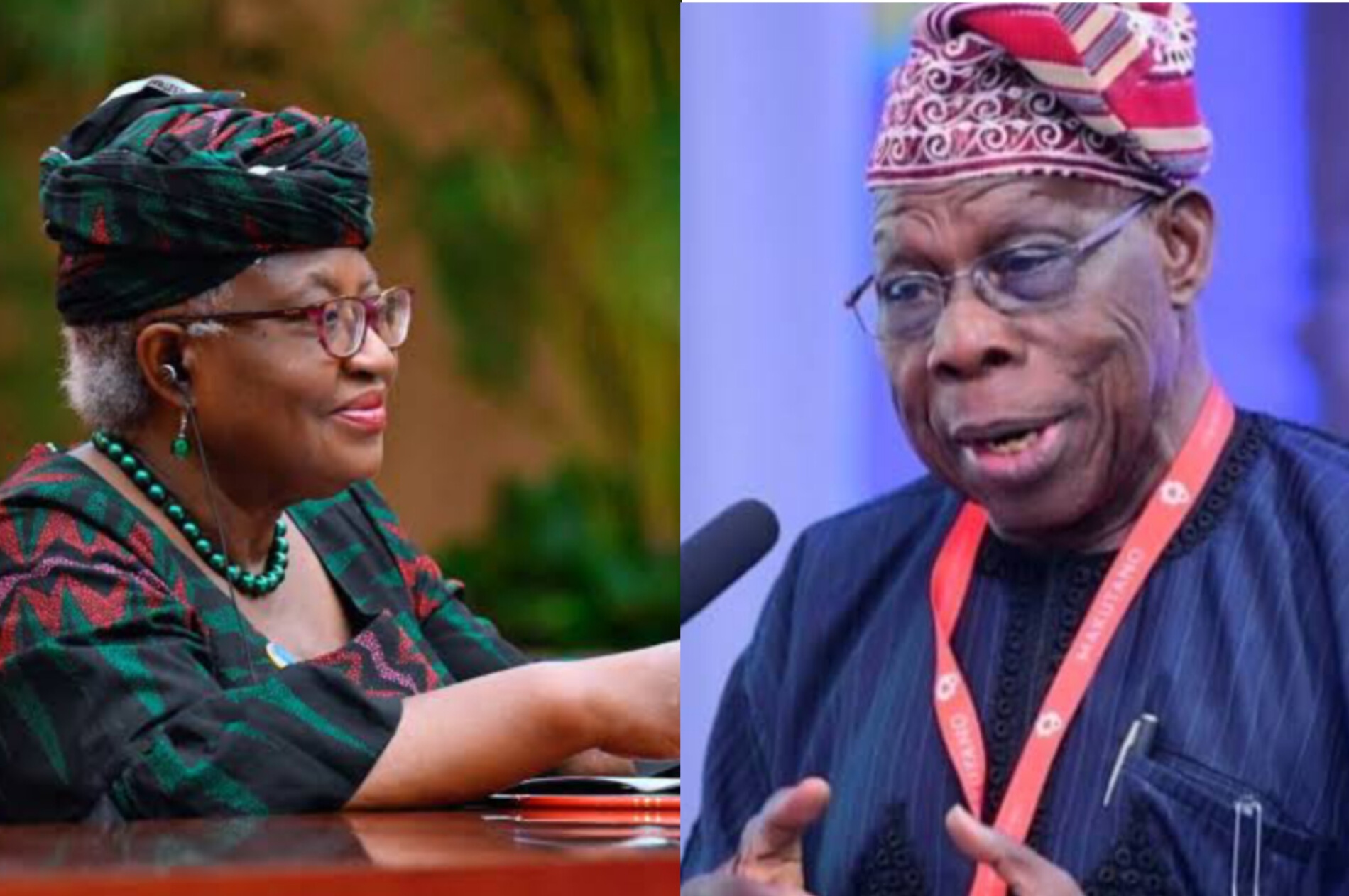
Director-General of the World Trade Organization (WTO), Ngozi Okonjo-Iweala, has recounted how the administration of former President Olusegun Obasanjo successfully secured approximately $30 billion in debt relief for Nigeria through negotiations with the Paris Club of creditors.
According to Okonjo-Iweala, the achievement was the result of a carefully coordinated strategy that combined economic reforms, diplomacy and an effective communication campaign.
Okonjo-Iweala explained that Nigeria’s negotiating team worked to convince international creditors that the country deserved debt relief after implementing significant economic and fiscal reforms.
She said the government presented a compelling case that Nigeria’s growing debt burden was hindering economic development and poverty reduction.
The former Nigerian Finance Minister noted that strategic communication played a key role in the negotiations.
She explained that the team actively engaged international stakeholders, policymakers and opinion leaders to build support for Nigeria’s request, ensuring that the country’s reform efforts were well understood by creditors.
According to her, this approach strengthened Nigeria’s position during negotiations with the Paris Club.
Nigeria reached a landmark debt relief agreement with the Paris Club in 2005, leading to the cancellation of a substantial portion of the country’s external debt.
The agreement significantly reduced Nigeria’s debt burden and created more fiscal space for investments in development and public services.
The debt deal is widely regarded as one of the most significant economic milestones of the Obasanjo administration.
The debt relief agreement reshaped Nigeria’s economic outlook by reducing external debt obligations and improving the country’s fiscal position.
Okonjo-Iweala’s account provides insight into the diplomatic and economic strategies that contributed to one of Nigeria’s most notable financial achievements.


The Akwa Ibom State Police Command has rescued two people after a speedboat sank along the Ibaka waterways in Mbo Local Government Area of the state.
The incident occurred at about 1:30 p.m. on Thursday when a blue W23 speedboat marked “LET’S PRAY” sank while travelling from Oron to Cameroon with goods onboard.
The Police Public Relations Officer in the state, DSP Timfon John, disclosed this in a statement issued on Friday in Uyo.
According to the police, preliminary investigations indicated that the boat driver, identified as Mr Daniel, was attempting to adjust the vessel’s seacock to drain accumulated water when the situation escalated.
John said waves generated by a passing boat reportedly destabilised the vessel, causing it to take in more water before it eventually sank.
The driver and his conductor, identified as Mr Kani, were rescued by personnel of the Marine Police Operational and Surveillance Patrol Team, who were conducting patrol operations along the waterways at the time of the incident.
The prompt intervention of the marine officers prevented what could have resulted in loss of lives, according to the police command.
The Commissioner of Police in Akwa Ibom State, CP Baba Mohammed Azare, commended the Marine Police personnel for their swift response and dedication to protecting lives and property on the state’s waterways.
Azare also urged boat operators and passengers to observe basic safety measures while travelling on the waterways.
He advised operators to ensure that their vessels are seaworthy before embarking on trips and warned against overloading boats.
The police commissioner further stressed the importance of providing and wearing life jackets for all passengers and crew members onboard.
He also urged maritime users to exercise greater caution when navigating areas with heavy marine traffic, noting that the movement of other vessels can create waves capable of destabilising smaller boats.
The Akwa Ibom Police Command said it would continue to strengthen patrols and surveillance operations across the state’s waterways in collaboration with other security agencies.
The command said the measures were aimed at enhancing the safety of maritime users and protecting lives and property.
The incident comes amid concerns over boat accidents in different parts of Nigeria, particularly in communities where waterways are an important means of transportation.
In August, several residents of Gorau community in Goronyo Local Government Area of Sokoto State reportedly lost their lives in a boat accident.
A preliminary account from a resident indicated that the Sokoto incident occurred when a boat carrying about 40 passengers, including men, women and children, capsized.
The latest incident in Akwa Ibom, however, ended without reported fatalities after the Marine Police patrol team reached the affected vessel and rescued the two occupants.
The Federal Government has announced plans to convene the National Youth Confab in October 2026, nearly two years after President Bola Tinubu first pledged to organise the gathering.
The Minister of Youth Development, Ayodele Olawande, disclosed this on Thursday while addressing State House correspondents during the ‘Meet the Press’ session organised by the Presidential Communications Team at the Aso Rock Villa, Abuja.
Olawande said the conference would provide a platform for young Nigerians to participate actively in discussions on the country’s future and develop practical solutions to national challenges.
According to him, the Federal Government, through the Federal Ministry of Youth Development, in collaboration with youth networks and other stakeholders, will convene the conference under the theme, “Next Gen Nigeria: Crafting Solutions, Owning the Future.”
He explained that the theme was designed to move young Nigerians beyond participation in national conversations to taking an active role in developing solutions and shaping the country’s future.
“It is not another youth conference where speeches are delivered, reports are produced, and nothing changes,” Olawande said, stressing that the initiative would focus on moving from discussions to concrete action.
The minister said the Confab would last two weeks and consist of a virtual consultation phase followed by a physical conference in Abuja.
He disclosed that the physical gathering would bring together one delegate from each of the 360 federal constituencies, alongside six delegates representing Nigerians in the diaspora.
The discussions, he added, would be structured around six key pillars covering governance, the economy, education, technology, climate and security.
FG outlines plan to implement recommendations
Olawande said the government had designed an implementation framework to prevent the recommendations of the youth confab from suffering the fate of those produced by the 2014 National Conference.
The 2014 conference produced more than 600 recommendations, many of which were not implemented after a change in administration in 2015.
Addressing concerns about a possible repeat of that experience, Olawande said members of the current administration who participated in the 2014 conference understood the shortcomings of the previous process.
He said the recommendations from the 2026 Confab would be divided according to the responsibilities of the three arms of government.
“We have the executive. We have the legislative… After the conference, we are going to sit down, have our task force, and put everything into three sections: what should be handled by the judiciary, what by the executive, and what by the legislature,” he said.
The minister said the government would seek Federal Executive Council resolutions on recommendations within the executive’s jurisdiction, while proposals requiring legislative action would be forwarded to the National Assembly.
He added that the judiciary would also be expected to act on recommendations falling within its constitutional responsibilities.
Olawande said the implementation process would begin from November, insisting that the government was determined to move beyond producing reports.
“Enough of documentation. We are not going back to filing reports,” he added.
Government addresses concerns over delay
The announcement comes about two years after Tinubu first pledged the initiative during his October 2024 Independence Day broadcast.
The delay has raised questions about the timing of the conference, particularly with the 2027 general elections approaching.
Special Assistant to the President on Social Media, Segun Dada, defended the period spent preparing for the initiative, saying the government had studied previous conferences to identify shortcomings and develop a more effective framework.
“What we did was look at the past confabs, the mistakes that were made, and how to ensure we don’t repeat them,” Dada said.
He also pointed to the involvement of young people in the current administration and the President’s appointment of a young Minister of Youth Development as part of the government’s approach.
The Senior Special Assistant to the President on Digital and New Media, Otega Ogra, similarly defended the timeline, saying several youth-focused programmes had been implemented while preparations for the Confab were ongoing.
Ogra cited the revamp of the National Youth Service Corps, increased participation in the Nigeria Education Loan Fund, employment initiatives through MSME centres, the Technical and Vocational Education and Training programme, and the 3 Million Technical Talent programme.
Delegate selection
Olawande also addressed concerns that the selection of delegates could be influenced by political interests ahead of the 2027 elections.
He maintained that the structure of the Confab was designed to minimise monetary and political influence in the selection process.
The government said the broad representation from the 360 federal constituencies was intended to ensure that young Nigerians from different parts of the country participate in shaping the conference’s agenda and recommendations.
The latest announcement follows an earlier attempt to organise the exercise in 2025.
On June 16, 2025, Olawande launched a Youth Confab registration portal under the same theme, with plans to accommodate 36,000 participants from the 360 federal constituencies.
The registration deadline was subsequently extended from June 30 to July 14, 2025, to allow for wider grassroots participation.
With the new October 2026 timeline, the Federal Government is now expected to commence the final stages of mobilisation, consultation and delegate selection ahead of the physical conference in Abuja.


A chieftain of the All Progressives Congress (APC), Farouk Aliyu, has warned Minister of the Federal Capital Territory, Nyesom Wike, against actions or comments he said could deepen divisions within the ruling party ahead of the 2027 general elections.
Aliyu’s warning followed Wike’s recent description of some APC governors as “politically lazy” and “419ners” while defending his Rainbow Coalition and his support for President Bola Ahmed Tinubu’s re-election bid.
Speaking on Arise Television’s Morning Show on Thursday, Aliyu said APC members would not accept the kind of internal political confrontation Wike had experienced within the Peoples Democratic Party (PDP) being replicated inside the ruling party.
“We will not allow Wike to bring the PDP crisis into our party.”
Aliyu stressed that his criticism was directed at Wike’s political conduct rather than his personality, saying the APC was prepared to accommodate politicians from other parties who were willing to support the President.
‘Wike’s comments are in bad taste’
Aliyu specifically objected to Wike’s description of some APC governors as “lazy” and “419ners.”
He said the remarks were unacceptable to members of the ruling party, particularly at a time when APC leaders were attempting to consolidate support for Tinubu ahead of 2027.
“The language Nyesom Wike used to describe governors as ‘419ners’ or ‘lazy’ is in bad taste. All members of the APC reject that comment.”
Aliyu said political disagreements were inevitable but argued that those supporting the President should avoid language capable of creating further divisions within the party.
He also urged Wike to engage political actors more respectfully, particularly given the broader challenges confronting the Federal Government.
The disagreement follows an escalating dispute between Wike and the APC’s Progressive Governors’ Forum over his Rainbow Coalition, which the FCT minister has promoted as part of his political strategy ahead of 2027.
APC governors recently said they would not support political arrangements capable of weakening the party, creating divided loyalty or undermining APC candidates.
The governors said their commitment was to APC candidates at all levels and that campaign structures should align with the objectives of the party and Tinubu’s re-election effort.
Wike, however, has rejected the idea that his political activities require the approval of APC governors.
He has maintained that his principal political commitment is to Tinubu’s presidential re-election and argued that supporting Tinubu does not prevent politicians from supporting candidates from other parties in governorship or legislative elections.
‘My business is with Tinubu’
Responding to the governors, Wike said his political arrangement was discussed with Tinubu and that he had never presented himself to the APC Governors’ Forum for approval.
He cited the 2023 experience of the G5 governors, who supported Tinubu’s presidential candidacy despite belonging to the PDP.
Wike also pointed to instances where voters supported presidential candidates from one party while electing National Assembly candidates from another, arguing that the Nigerian electorate is capable of making different choices at different levels of an election.
He questioned the political influence of governors who were unable to deliver their states to Tinubu during the 2023 presidential election while winning their own legislative contests.
It was in that context that Wike described some of those opposing his coalition as “politically lazy” and compared them to “419ners.”
Farouk: APC will welcome Wike, but there must be a unified structure
Despite his criticism, Aliyu said the APC was not opposed to Wike supporting Tinubu.
He acknowledged Wike’s contribution to the President’s political fortunes and said politicians from outside the APC could support the ruling party.
According to Aliyu, the problem was the possibility of competing campaign structures operating alongside the APC.
The APC chieftain said the party wanted a unified campaign structure at the national and state levels.
That position closely mirrors the concern expressed by the APC Governors’ Forum, which has rejected arrangements that could produce “confusion, divided loyalty or competing interests” within the party’s campaign architecture.
‘Wike has been settled’
Aliyu also defended Wike’s continued position within the Tinubu administration, noting that the former Rivers governor had been given a prominent federal appointment.
His argument was essentially that Wike had been accommodated within the Tinubu administration and should therefore avoid actions that could generate unnecessary conflict with APC leaders.
However, the dispute is becoming more complicated because Wike remains a member of the PDP while serving as a minister under an APC administration and simultaneously supporting Tinubu’s 2027 presidential bid.
That political arrangement has allowed Wike to maintain relationships across party lines, but it has also generated questions about how his political machinery will operate alongside the APC’s formal campaign structures.
The disagreement is no longer simply a personal exchange between Wike and individual governors.
It reflects a larger question about how Tinubu’s 2027 coalition will be organised.
Wike’s approach is based on building a broad political network that can support Tinubu beyond the formal APC structure.
The APC Governors’ Forum, meanwhile, wants the party’s candidates and campaign machinery to remain central to the electoral process.
Aliyu’s intervention illustrates the tension between those two approaches.
For the moment, Aliyu says Wike remains welcome as a supporter of Tinubu, but the APC’s internal structure cannot be treated as an extension of a separate political coalition.
As the 2027 election approaches, the relationship between Wike’s cross-party political network, Tinubu’s presidential campaign and the APC’s state-level machinery is likely to remain an important political issue.
-
 Security2 months ago
NDLEA Declares Alleged Drug Kingpin, Three Associates Wanted, Freezes ₦9.8bn Linked to Syndicate
-
 National Affairs2 months ago
ICPC Uncovers 908 Suspected Ghost Workers Across 50 Federal MDAs, Recovers ₦942 Million
-

 Business/Finance2 months ago
How to Apply for Tunde Onakoya’s ₦250 Million Scholarship Programme and Free Laptop Offer
-
 Politics2 months ago
Atiku Challenges Tinubu to Reveal Details of ₦15.13bn SUV Procurement in 2026 Budget
-

 Judiciary | Public Safety2 months ago
INEC Tells Court Voter Information Is Not Confidential in Emeka Ike’s ₦10bn Lawsuit
-
 Judiciary | Public Safety2 months ago
Court to Rule Friday on NDLEA’s Bid to Destroy ₦480bn Meth Lab in Ogun
-
 Security2 months ago
Family Paid ₦50 Million Ransom to Secure Release of Abducted Kebbi Judge
-

 Breaking News2 months ago
Girl Dies in Uyo House Fire After Allegedly Accompanying Man Home from Nightclub