
Business/Finance
NIPCO Plans $3bn FLNG Project, Targets Indigenous Construction


NIPCO Group has announced plans to develop a Floating Liquefied Natural Gas (FLNG) project in Nigeria, with the proposed investment estimated at more than $3 billion.
The project, which would mark NIPCO’s entry into the Liquefied Natural Gas (LNG) sector, is expected to have an LNG production capacity of approximately three million metric tonnes per annum, subject to the outcome of ongoing feasibility studies, regulatory approvals and a final investment decision.
The Managing Director of NIPCO Group, Nagendra Verma, disclosed this on Thursday at a press conference, stating that the company was evaluating potential locations in the Escravos area of Delta State and the Akwa Ibom region.
Verma explained that the final location would be determined after the completion of the ongoing feasibility studies, with the company considering sites that would provide access to upstream gas resources, processing facilities, marine transportation and both domestic and international markets.
“This proposed development is envisaged to comprise an FLNG facility along with associated marine and export infrastructure with the potential to serve both the international LNG market and growing domestic LNG demand in Nigeria,” he said.
According to him, the proposed project is currently estimated to require an investment of more than $3 billion.
He, however, stressed that the projected capacity and investment size remained subject to further technical and commercial assessments, as well as regulatory approvals and the company’s final investment decision.
Project assessment ongoing
Verma said NIPCO had been evaluating the FLNG project for between six and nine months and was currently undertaking preliminary technical, commercial and feasibility assessments.
He said the company was examining different development concepts, technology options, financing structures and commercial models to determine the most technically viable and commercially sustainable approach.
The proposed development will comprise an FLNG facility and associated marine and export infrastructure.
The infrastructure is expected to support LNG supplies to international markets while also providing opportunities to meet Nigeria’s increasing domestic demand for gas.
“The project is presently envisaged to have an LNG production capacity of approximately three million tonnes per annum,” Verma said.
“However, this remains subject to the outcome of the ongoing feasibility and technical studies, project economics, regulatory approvals and final investment decisions.”
NIPCO considers indigenous construction
The NIPCO managing director also disclosed that the company was considering opportunities for significant local participation in the development of the proposed project, including the use of indigenous construction and engineering capabilities where technically and commercially feasible.
He said the company was assessing the infrastructure and supply-chain requirements that would be necessary to deliver the project while also examining the potential contribution of Nigerian companies to different aspects of its development.
The company is also evaluating the shipping and logistics infrastructure needed to support both export and domestic LNG distribution.
According to Verma, the ongoing assessment covers upstream gas availability and reserves, FLNG technology and configuration, LNG production capacity, marine and export infrastructure, domestic LNG supply opportunities, shipping and logistics, project economics and financing arrangements.
The proposed investment comes amid efforts to expand Nigeria’s gas utilisation and strengthen its position in the global LNG market.
NIPCO said further decisions on the project would be taken after the completion of the relevant technical and commercial studies and other regulatory processes.









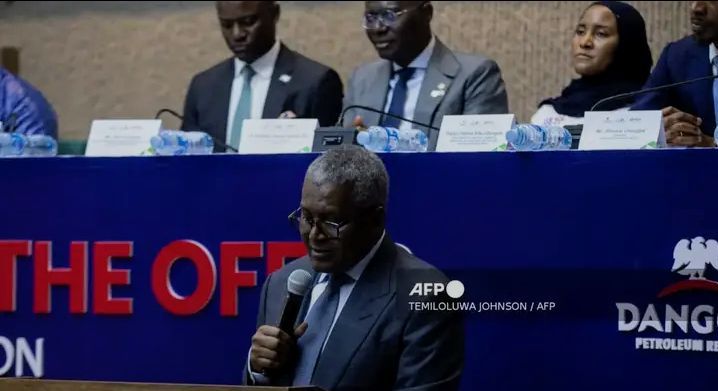
Nigerian billionaire Aliko Dangote, the Ethiopian government and Djibouti are set to develop a $660 million refined petroleum products pipeline aimed at strengthening fuel supply infrastructure and reducing transportation costs between Ethiopia and Djibouti.
The project, which was disclosed on Thursday by a spokesperson in the office of Ethiopian Prime Minister Abiy Ahmed, will involve the construction of a 120-kilometre pipeline connecting the two East African countries.
The development will also include petroleum storage facilities with a combined capacity of about 1.175 million cubic metres in Djibouti and Ethiopia.
According to the Ethiopian government, the pipeline is expected to become operational within 18 months.
Prime Minister Abiy announced the project during a visit to Djibouti, where he met with Djiboutian President Ismail Omar Guelleh and Dangote.
Abiy said on X that the project would be developed through a partnership between Ethiopian Investment Holdings and Dangote Group.
The planned pipeline will run from Damerjog in Djibouti to Dewele in Ethiopia.
Damerjog will host approximately 375,000 cubic metres of petroleum storage capacity, while another 800,000 cubic metres will be provided at Dewele in Ethiopia.
The project is expected to address some of the logistical challenges associated with transporting petroleum products along the Ethiopia-Djibouti corridor.
According to the announcement, the infrastructure is designed to reduce logistics costs and delays while strengthening energy security and improving supply chain resilience in both countries.
The Ethiopia-Djibouti corridor is an important trade route for Ethiopia, a landlocked country that relies heavily on Djibouti for access to international markets and the importation of key commodities, including petroleum products.
The proposed pipeline is therefore expected to provide a more direct infrastructure network for the movement and storage of refined petroleum products between the two countries.
The project further expands Dangote Group’s investments and interests across Africa, particularly in the energy and industrial sectors.
Dangote Group already has several investments in Ethiopia, including a reported $4 billion fertiliser project and power plant, as well as a polypropylene packaging facility.
The latest investment comes as the Nigerian industrialist continues to expand his energy interests beyond Nigeria.
Meanwhile, Dangote and the Kenyan government are expected to break ground next week for a proposed 700,000-barrel-per-day crude oil refinery in Lamu.
The planned Kenyan refinery represents another major expansion of Dangote’s activities in East Africa’s energy sector.
Dangote has in recent years expanded from cement and manufacturing into large-scale investments in refining, fertiliser production, petrochemicals and other areas of the energy value chain.
The $660 million Ethiopia-Djibouti pipeline is expected to add another major infrastructure asset to the group’s growing portfolio across the continent when completed.
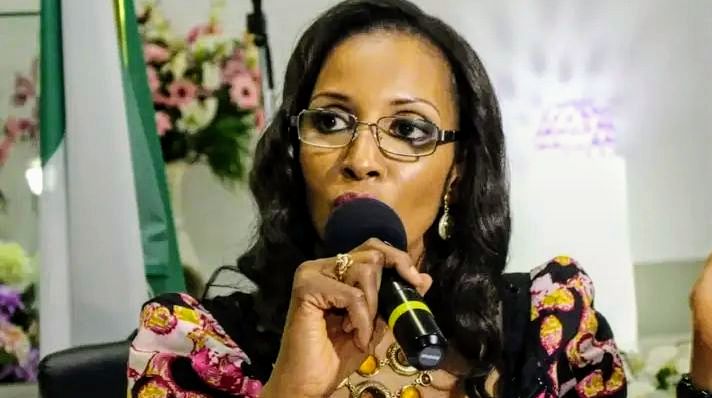
The Minister of Foreign Affairs, Ambassador Bianca Odumegwu-Ojukwu, has called on Nigerians living abroad to deploy their expertise, investments, networks and international experience towards accelerating Nigeria’s development.
Odumegwu-Ojukwu made the call during a Town Hall Meeting with Nigerians in the Diaspora in New York on Wednesday evening, held on the sidelines of the 81st United Nations General Assembly.
The meeting was attended by Vice President Kashim Shettima and provided an opportunity for the Federal Government to engage directly with Nigerians living abroad on their welfare, concerns and potential contributions to national development.
In a statement issued on Thursday in Abuja and signed by the Minister’s Special Assistant on Communication and New Media, Magnus Eze, Odumegwu-Ojukwu said the presence of the Vice President demonstrated the importance the Federal Government attaches to Nigerians in the Diaspora.
She described Nigerians abroad as an important pillar of Nigeria’s foreign policy, stressing that their contributions should go beyond remittances to include knowledge, innovation, investment, mentorship and international partnerships.
“Nigerians abroad are more than a source of remittances. You are professionals, entrepreneurs, academics, innovators and important bridges between Nigeria and the international community,” the minister said.
Diaspora as strategic partners
The minister said Nigerians living overseas should be regarded as strategic partners in Nigeria’s development rather than merely as sources of foreign exchange through remittances.
According to her, Nigerians abroad possess valuable expertise and international exposure that can be channelled into strengthening businesses, institutions and innovation ecosystems in the country.
She therefore called for stronger collaboration between the Federal Government and the Diaspora in areas including investment, innovation, knowledge transfer, mentorship and international business linkages.
“Your knowledge and international exposure are invaluable assets to our country. We want a stronger partnership with our Diaspora,” she said.
Odumegwu-Ojukwu encouraged Nigerians abroad to mentor young Nigerians, support innovation, establish partnerships with Nigerian institutions and help connect Nigerian businesses and entrepreneurs to opportunities in international markets.
FG pledges stronger consular support
The minister also reaffirmed the commitment of the Ministry of Foreign Affairs to Citizens Diplomacy, which places the welfare and interests of Nigerian citizens at the centre of the country’s diplomatic engagements.
She directed Nigeria’s embassies, high commissions and consulates to remain accessible and responsive to Nigerians within their respective jurisdictions, particularly when citizens require legitimate consular assistance.
“The welfare of Nigerians abroad must remain a priority. Our Missions must listen, engage and assist our citizens within the limits of international law and the laws of host countries,” she stated.
She assured Nigerians in the Diaspora that the Federal Government would continue to strengthen mechanisms for engagement, consular support and collaboration while creating opportunities for them to contribute meaningfully to national development.
Minister urges Nigerians abroad to uphold Nigeria’s image
While seeking greater support from Nigerians abroad, the minister also urged them to respect the laws of their host countries and conduct themselves in ways that would protect Nigeria’s reputation internationally.
She noted that Nigeria’s image on the global stage was shaped not only by the activities of its diplomats but also by the conduct and achievements of millions of Nigerians living and working around the world.
“Nigeria is represented internationally not only by its diplomats, but also by millions of Nigerians whose achievements, professionalism and character speak for our nation every day,” she said.
According to her, Nigerians in the Diaspora have an important role to play in projecting the country positively while building stronger relationships between Nigeria and the international community.
Trust, communication key to Diaspora engagement
Odumegwu-Ojukwu described the New York town hall as an important part of the Federal Government’s continuing dialogue with Nigerians abroad.
She said effective Diaspora engagement must be built on trust, openness and sustained communication between the government and citizens living outside the country.
The minister further assured the gathering that the Ministry of Foreign Affairs would continue to work with the Nigerians in Diaspora Commission, Nigeria’s diplomatic missions and other relevant institutions to strengthen engagement with Nigerians overseas.
She said the collaboration would also focus on advancing the legitimate interests of Nigerians abroad and creating avenues for their expertise and resources to contribute to national development.
“Wherever you may reside, Nigeria remains our common heritage.
Distance does not diminish citizenship. Where there are challenges, let us work together to address them; where there are opportunities, let us seize them together,” she said.
The minister concluded by emphasising the importance of Nigerians abroad to the country’s future.
“You are an important part of Nigeria’s story, and you are indispensable to Nigeria’s future,” she told the gathering.

The National Agricultural Development Fund has commenced the validation of its proposed Non-Interest Finance Framework and Guidelines as part of efforts to widen access to agricultural financing and support the Federal Government’s food security objectives.
NADF disclosed this in a statement on Tuesday following a Strategic Roundtable and Validation Session on the proposed framework and guidelines.
The initiative is designed to provide farmers, agribusinesses and other participants across the agricultural value chain with access to diverse and innovative financing options.
The Executive Secretary/Chief Executive Officer of NADF, Mohammed Ibrahim, said non-interest finance had become an important component of Nigeria’s financial system, offering ethical, asset-backed and risk-sharing financing models that could complement conventional financing.
“Our objective is not simply to introduce another financing framework.
It is to broaden the financing ecosystem for agriculture by ensuring that every credible financing option is available to Nigerian farmers, agribusinesses, and other value chain actors,” Ibrahim said.
According to NADF, the proposed framework would establish a structured and transparent basis for delivering agricultural interventions through licensed non-interest financial institutions.
It would also institutionalise governance, operational and Shari’ah compliance standards for the implementation of the financing interventions.
Ibrahim explained that the documents were deliberately presented as drafts to enable stakeholders to scrutinise their contents and contribute technical expertise and practical experience before finalisation.
“Today’s gathering marks an important milestone in that journey,” he said, urging participants to critically examine the draft documents, challenge assumptions where necessary and provide practical recommendations.
The Director of the Development Finance Advisory Department of the Central Bank of Nigeria, Dr Paul Oluikpe, said significant work remained to be done to improve access to agricultural finance in Nigeria.
Oluikpe welcomed the proposed framework, describing it as an opportunity to bring non-interest financing, which he said was often overlooked, into the mainstream of agricultural financing.
“With the non-interest finance framework that is being looked at and validated today, it’s really a key opportunity for us to bring in that particular dimension, because oftentimes it’s overlooked,” he said.
Also speaking, the Deputy Chairman of the CBN’s Financial Regulation Advisory Council of Experts, Professor Bashir Aliyu Umar, said the initiative was consistent with efforts to promote financial inclusion and expand access to finance.
“What we are witnessing today is also following this trajectory of financial inclusion and easing access to finance and having a level playing field and even developmental perspective for the whole country whereby no segment of society is left out,” Umar said.
Providing an overview of the initiative, NADF’s Head of Investment, Olalekan Alabi, said the framework and guidelines were developed to establish a structured mechanism for deploying non-interest financing to eligible agricultural activities and value-chain interventions.
He said the documents would provide clarity on how NADF’s non-interest financing interventions would be structured, assessed, approved, implemented, monitored and reported.
“Together, the Framework and Guidelines are expected to provide clarity on how NADF’s non-interest financing interventions will be structured, assessed, approved, implemented, monitored and reported,” Alabi said.
He added that the validation exercise was intended to assess the technical strength and practical applicability of the proposed documents rather than simply endorse their preparation.
“We are not here simply to confirm that the documents have been prepared.
We are here to test their technical robustness and practical applicability,” he said.
Alabi said stakeholders were expected to identify gaps, inconsistencies, overlaps and provisions requiring further clarification before the documents were finalised.
“Our objective is to have a set of Framework and Guidelines that are clear, technically sound, operationally practical, appropriately governed and capable of supporting NADF’s non-interest agricultural financing interventions,” he said.
The validation session brought together representatives of government institutions and regulatory agencies, development partners, non-interest finance experts, financial institutions and other stakeholders in the agricultural and financial sectors.
The initiative is expected to broaden the range of financing instruments available to Nigeria’s agricultural sector and provide additional channels for funding farmers and agribusinesses across the value chain.
-

 Security2 months ago
NDLEA Declares Alleged Drug Kingpin, Three Associates Wanted, Freezes ₦9.8bn Linked to Syndicate
-
 National Affairs2 months ago
ICPC Uncovers 908 Suspected Ghost Workers Across 50 Federal MDAs, Recovers ₦942 Million
-

 Business/Finance2 months ago
How to Apply for Tunde Onakoya’s ₦250 Million Scholarship Programme and Free Laptop Offer
-

 Politics2 months ago
Atiku Challenges Tinubu to Reveal Details of ₦15.13bn SUV Procurement in 2026 Budget
-

 Judiciary | Public Safety2 months ago
INEC Tells Court Voter Information Is Not Confidential in Emeka Ike’s ₦10bn Lawsuit
-
 Judiciary | Public Safety2 months ago
Court to Rule Friday on NDLEA’s Bid to Destroy ₦480bn Meth Lab in Ogun
-

 Security2 months ago
Family Paid ₦50 Million Ransom to Secure Release of Abducted Kebbi Judge
-

 News2 months ago
2026 Budget: FG Earmarks ₦962.83bn for SUVs, Empowerment Projects Amid Debt Concerns