
News
Over 7,000 Nigerian Refugees Return Home in 2026, Says Minister

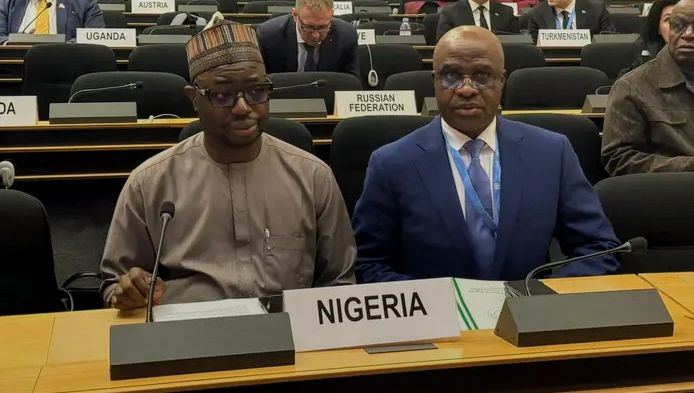
More than 7,000 Nigerian refugees have voluntarily returned home from neighbouring countries in 2026 under Tripartite Agreements, the Minister of Humanitarian Affairs and Poverty Reduction, Dr Bernard Doro, has disclosed.
Doro made this known while delivering Nigeria’s national statement at the 77th Session of the Executive Committee of the United Nations High Commissioner for Refugees (UNHCR) in Geneva, Switzerland.
The session, which focuses on refugee protection and humanitarian issues, is holding from October 12 to 16, 2026.
According to the minister, improving security conditions in some parts of Nigeria have created opportunities for refugees to return voluntarily after years of displacement.
He said the government was also making arrangements to facilitate the return of thousands of other Nigerians still living as refugees in neighbouring countries.
Doro disclosed that approximately 14,000 Nigerian refugees in Cameroon had registered their intention to return home, while an agreement covering the voluntary repatriation of 2,000 Nigerians from Niger was being finalised.
“Over 7,000 Nigerian refugees voluntarily return home this year. The progress to improved security conditions in parts of the country has created opportunities for refugees to return voluntarily,” the minister said.
The developments represent progress in Nigeria’s efforts to facilitate the safe and voluntary return of citizens displaced across international borders by insecurity and other humanitarian challenges.
Tripartite Agreements generally provide a framework for cooperation among the country of origin, the host country and the UNHCR to ensure that refugee returns are voluntary and conducted in safety and dignity.
For Nigeria, the arrangements are particularly important for citizens who fled to neighbouring countries amid insecurity and other conditions that forced them to leave their homes.
The registration of 14,000 refugees in Cameroon indicates that a significant number of Nigerians are considering returning home, although their actual repatriation will depend on the arrangements put in place by the relevant authorities.
Similarly, the proposed agreement covering 2,000 Nigerians in Niger could provide a pathway for another group of refugees to return, subject to the completion of the necessary procedures.
However, the successful reintegration of returnees will require sustained attention to security, shelter, healthcare, education, livelihoods and other essential services in their communities of origin.
Ensuring that returning refugees can rebuild their lives and access basic necessities will be important to the long-term success of the repatriation process.
The minister’s disclosure at the UNHCR meeting highlights the continuing need for cooperation between Nigeria, its neighbouring countries and international humanitarian organisations to address displacement and support affected populations.
The return of refugees is also expected to require coordination among relevant government agencies and humanitarian partners to ensure that those coming home receive appropriate assistance and can reintegrate into their communities.
With thousands more Nigerians indicating their willingness to return, the next phase will involve translating the ongoing arrangements into safe, orderly and sustainable returns.









The President of the Trade Union Congress (TUC), Festus Osifo, has faulted the Nigerian Labour Congress (NLC) over its handling of negotiations with the Federal Government, insisting that the TUC must be involved in discussions on salaries and allowances affecting Nigerian workers.
Osifo described the agreement on the N70,000 transport allowance recently approved by President Bola Tinubu as an aberration, arguing that the NLC lacked the authority to negotiate on behalf of the TUC without its participation or consultation.
The TUC president made the position known on Monday while appearing on Channels Television’s The Morning Brief, amid the disagreement between the two labour centres over negotiations with the Federal Government.
He criticised the NLC President, Joe Ajaero, questioning his understanding of the labour movement’s responsibilities and the relationship between the two unions.
“I went to his office and told him that, ‘Ajaero, this is wrong!’ What you used JNC to do is fundamentally wrong!” he said.
The disagreement comes amid tensions between the two labour centres over the N70,000 transport allowance approved by the Federal Government for public servants, further highlighting differences over representation and collective bargaining within Nigeria’s organised labour movement.

The Senior Pastor of Victory Life Bible Church International, Apostle Lawrence Achudume, has criticised Nigeria’s societal values, warning that the celebration of questionable wealth and the growing perception of politics as a route to personal enrichment are discouraging creativity and entrepreneurship.
Achudume said the tendency to celebrate individuals who accumulate wealth through questionable political means, rather than hold them accountable, was undermining the country’s capacity to develop innovative businesses and nurture talented individuals.
He spoke during the thanksgiving service marking the 50th anniversary of the Ogun State Council of the Nigeria Union of Journalists (NUJ) in Abeokuta, Ogun State.
According to a statement issued by the church’s media office on Sunday, the cleric expressed concern that politics was increasingly being regarded as a shortcut to wealth instead of an opportunity to serve the public.
He argued that Nigeria needed more individuals willing to deploy their talents, ideas and creativity to address societal challenges, establish businesses and inspire others.
Achudume maintained that celebrating questionable sources of wealth could discourage hardworking and innovative people who were committed to building sustainable ventures through legitimate means.
The pastor also criticised what he described as the declining standard of societal values, particularly the promotion of indecent dressing and nudity under the guise of entertainment and fashion.
“They celebrate emptiness and call it showbiz. They celebrate nakedness and call it fashion,” he said.
He further expressed concern over the growing emphasis on social media popularity, observing that some individuals increasingly measured their relevance and influence by the number of followers they had online.
Achudume urged Nigerians to make responsible choices, resist negative societal influences and embrace values that promote purpose, creativity and meaningful contributions to national development.
On spirituality, the cleric advised Christians to establish a strong relationship with God before encountering difficult circumstances.
He noted that challenges were inevitable in different aspects of life, including business, marriage and careers, urging believers to remain steadfast in their faith when confronted with difficulties.
He cautioned Christians against abandoning their convictions or seeking questionable spiritual alternatives in their quest for solutions to life’s challenges.
Meanwhile, the Ogun State NUJ Chairman, Wale Olanrewaju, commended Achudume for his longstanding support for journalism and his contributions to society.
Olanrewaju described the cleric as a social crusader who had consistently used his platform to challenge government actions and draw attention to issues requiring urgent public intervention.
He said Achudume’s relationship with journalists and willingness to support the journalism profession had earned him the respect and affection of media practitioners.
The NUJ chairman added that the cleric’s contributions to public discourse extended beyond his religious responsibilities, describing him as a worthy recipient of the council’s recognition.
In recognition of his contributions to journalism and society, Achudume was presented with the Ogun NUJ Golden Jubilee Ambassador Award during the thanksgiving service held as part of activities marking the council’s 50th anniversary.

The Nigeria Customs Service (NCS) has announced plans to deploy Artificial Intelligence (AI) and digital intelligence tools to tackle fake news, online scams and misleading information targeting the organisation.
The Comptroller-General of Customs, Bashir Adeniyi, disclosed this in a statement issued on Sunday in Abuja by the service’s spokesperson, Deputy Comptroller Abdullahi Maiwada.
Adeniyi spoke at the 2026 Nigerian Council of the Institute of Public Relations Roundtable, themed “Algorithm Influence and Public Relations.”
He explained that the initiative would enable the service to monitor online information, verify claims and counter misleading narratives capable of damaging its reputation.
According to him, the technology would also support collaboration with relevant government agencies to identify and apprehend individuals responsible for spreading false information and fraudulent content.
The Customs boss emphasised the need for effective communication between the service and the public, noting that Nigerians should understand the reasons behind the actions and operations of Customs officers.
He said Artificial Intelligence had become increasingly important to the service, not only in its operational activities but also in strategic communication and public engagement.
“The role of AI cannot be overemphasised, especially within our operations. Over the years, AI has been deployed in our core operational duties as well as strategic communication,” Adeniyi said.
He explained that AI-assisted risk management systems were already being used to assess imported goods and classify them according to different risk levels, enabling officers to determine appropriate interventions.
Beyond its operational applications, Adeniyi said the technology could also help the service analyse public sentiment and understand how Nigerians perceive its activities.
He added that the NCS was leveraging digital platforms to verify information, address misleading reports and strengthen cooperation with other agencies in tackling individuals involved in spreading fraudulent claims.
The initiative forms part of efforts to improve the service’s communication strategy and respond more effectively to the growing influence of digital platforms.
The 2026 roundtable examined the increasing impact of digital technologies and Artificial Intelligence on public relations, particularly how algorithms shape information dissemination, public perception and institutional reputation.
-

 Security4 months ago
NDLEA Declares Alleged Drug Kingpin, Three Associates Wanted, Freezes ₦9.8bn Linked to Syndicate
-

 Business/Finance3 months ago
How to Apply for Tunde Onakoya’s ₦250 Million Scholarship Programme and Free Laptop Offer
-

 National Affairs3 months ago
ICPC Uncovers 908 Suspected Ghost Workers Across 50 Federal MDAs, Recovers ₦942 Million
-

 Judiciary | Public Safety3 months ago
INEC Tells Court Voter Information Is Not Confidential in Emeka Ike’s ₦10bn Lawsuit
-

 Politics3 months ago
Atiku Challenges Tinubu to Reveal Details of ₦15.13bn SUV Procurement in 2026 Budget
-

 Judiciary | Public Safety3 months ago
Court to Rule Friday on NDLEA’s Bid to Destroy ₦480bn Meth Lab in Ogun
-

 Security3 months ago
Family Paid ₦50 Million Ransom to Secure Release of Abducted Kebbi Judge
-

 News3 months ago
2026 Budget: FG Earmarks ₦962.83bn for SUVs, Empowerment Projects Amid Debt Concerns