
Government/Policies
Jigawa Assembly Receives Constitution Amendment Bill, Promises Action Before Deadline

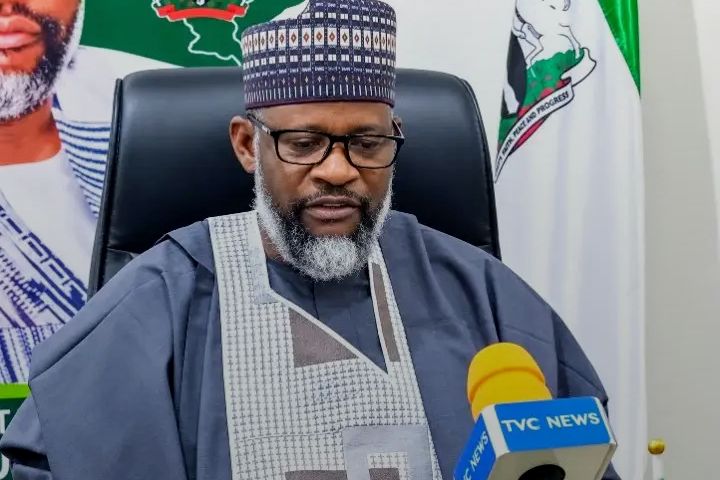
The Jigawa State House of Assembly has received the Constitution Amendment Bill transmitted by the National Assembly and pledged to complete its consideration within the stipulated timeframe.
Speaker of the Assembly, Haruna Dangyatim, disclosed this on Friday during an interactive session with journalists at his office in the Assembly Complex, Dutse.
Dangyatim said the bill was transmitted to state Houses of Assembly last Wednesday for consideration and concurrence as required by law.
He assured that the Jigawa legislature would not delay the process and would complete the necessary legislative procedures before the deadline at the end of September.
“We have received the Constitution Amendment Bill from the National Assembly, and I want to assure you that we will do the needful before the deadline given to all state assemblies, which is the end of this month,” the Speaker said.
According to him, the state assemblies have 30 days from the date they receive the transmission letter to complete the legislative process on the proposed constitutional amendments.
The Speaker disclosed that the Jigawa Assembly had already constituted a committee to examine the proposed amendments and make recommendations that would reflect the interests and aspirations of residents of the state.
He described the constitutional amendment exercise as an important process for strengthening Nigeria’s democratic institutions and addressing areas of concern in the 1999 Constitution.
Dangyatim said the Assembly would give the bill accelerated consideration while ensuring that its provisions were thoroughly examined before the House takes a position.
“We are studying the document thoroughly to ensure that our position aligns with the aspirations of our people,” he said.
The Speaker also disclosed that the Assembly would consult relevant stakeholders as part of the consideration process.
Those expected to contribute to the deliberations include traditional rulers, civil society organisations and professional bodies.
He said the consultations would enable the lawmakers to obtain wider perspectives before reaching a final decision on the proposed amendments.
Dangyatim further assured that transparency, patriotism and the interests of Jigawa State and Nigeria would guide the Assembly throughout the process.
“We will not compromise the interest of Jigawa State and Nigeria at large,” he stated.
The Constitution Amendment Bill is expected to undergo consideration across the various state Houses of Assembly, with the concurrence of the required number of state legislatures forming part of the constitutional amendment process.









Thousands of people took to the streets of Madrid on Saturday to protest the eviction of an 87-year-old woman from her lifelong home, demanding stronger protection for tenants and urgent government action to address Spain’s worsening housing crisis.
The protest followed the eviction earlier this week of Maricarmen Abascal, whose removal from her Madrid apartment after living there for about 70 years has sparked widespread public outrage and renewed debate over housing costs and tenant rights.
Images of Abascal being carried out of her apartment on a stretcher on Wednesday, after police broke down the door, have brought renewed attention to Spain’s housing crisis ahead of the country’s 2027 general election.
Demonstrators marched through central Madrid carrying placards and chanting slogans demanding measures to control rising rents and make it more difficult for tenants to be evicted from their homes.
One of the banners carried during the demonstration read: “You could be the next Maricarmen.”
Abascal, who has become a symbol of Spain’s housing crisis, appealed to members of the public to continue the campaign for stronger tenant protections.
In a video message released online just hours before Saturday’s demonstration, she urged Spaniards to ensure that what happened to her would not be repeated.
“I want what has happened to me to serve so that it does not happen to other people,” she said from hospital, where she has been receiving treatment for exhaustion following her eviction.
“I want it to encourage people to fight and to help change the laws that have allowed me to be evicted,” she added.
The video was posted by Spain’s main tenants’ union, which has been campaigning for stronger legal protections for renters.
According to the union, Abascal was forced to leave the apartment after a real estate company acquired the property and increased the rent by 275 per cent to €2,650 ($3,000).
Her case has since become a rallying point for housing campaigners, with regular demonstrations taking place across Spain following her eviction.
The controversy has also increased pressure on Socialist Prime Minister Pedro Sánchez’s government to introduce additional measures to protect tenants.
Sánchez had pledged last year to make housing a priority for his administration, but the government is now facing growing demands to take concrete steps to address rising rents and evictions.
The government is expected to consider a package of housing measures at its next cabinet meeting, reportedly referred to as the “Maricarmen decree” in reference to Abascal’s case.
Among the proposed measures are automatic renewal of rental contracts and further restrictions on evictions.
However, it remains uncertain whether the proposals will secure parliamentary approval because Sánchez’s government does not have a majority in parliament.
A similar housing bill was defeated earlier this year, but Abascal’s eviction has renewed pressure on political parties to find common ground on measures aimed at protecting vulnerable tenants.
Housing has increasingly become a major political and social issue in Spain, with rising rents and limited affordable housing affecting residents in major cities.
For protesters in Madrid, Abascal’s case has come to represent concerns that elderly and vulnerable tenants could be pushed out of long-term homes as property values and rental costs increase.
The latest demonstration is therefore expected to add further pressure on the Spanish government and political parties to reach an agreement on housing reforms before the 2027 general election.
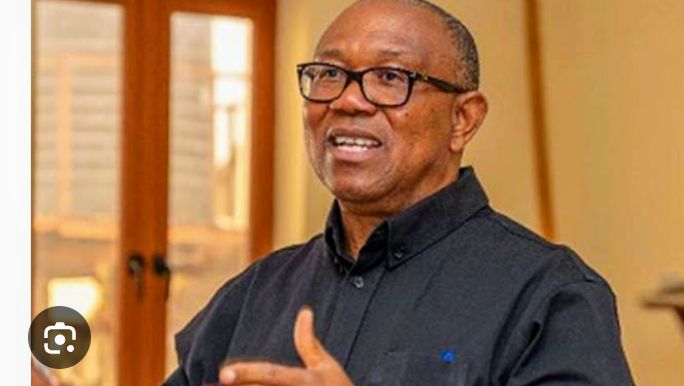
Former Anambra State Governor and presidential candidate of the Nigeria Democratic Congress (NDC), Peter Obi, has said he has no disagreement with his successor, Governor Chukwuma Soludo, amid the ongoing controversy over debts and financial obligations linked to projects undertaken during his administration.
Obi also ruled out any possibility of seeking the governorship of a state again, saying he would not return to the office even if the Constitution were amended to permit it.
He made the remarks on Friday while responding to issues that have generated public debate in recent days, particularly the disagreement over Anambra’s external borrowing during his tenure.
The former governor said his recent silence on the matter was partly because he had been mourning his late elder brother and friend, Chief Okey Ezeibe.
“I wish to assure the public that I have no disagreement with my dear elder brother, Governor Soludo, or with any governor in Nigeria.
I am not seeking the office of governor in any state, and I will not seek that position again, even if the Constitution is amended,” Obi stated.
The clarification comes amid a growing exchange between Obi and the Soludo administration over the financial obligations associated with eight external borrowing facilities linked to projects implemented while Obi was governor.
Obi disputes N127.4bn debt claim
The Anambra State Government had said the eight external borrowing facilities had a combined contracted value of $123.77 million, with $92.35 million still outstanding as of June 30, 2026.
The state government said the outstanding balance amounted to about N127.4 billion at the official exchange rate and argued that the loans were among the financial obligations inherited by successive administrations.
According to the state government, the facilities were used for projects covering areas including healthcare, education, malaria control, erosion management and agricultural development.
Obi, however, rejected the description of the facilities as “debt owed by Peter Obi”, arguing that the figures being presented by the state government failed to distinguish between the amount approved, the amount actually drawn and the balance outstanding at different periods.
He said the facilities were primarily World Bank and International Fund for Agricultural Development (IFAD) development programmes negotiated by the Federal Government and made available to participating states through subsidiary arrangements.
According to Obi, they should therefore not be treated as conventional commercial loans personally obtained by him as governor.
“The government has combined these distinct categories, added them together, and described the resulting US$123.77 million as ‘loans left by Peter Obi.’ That is an incorrect application of public-sector accounting,” he argued.
‘I did not borrow or issue bonds’
Obi maintained that he did not personally approach any financial institution to obtain a loan or issue a bond on behalf of Anambra State during his eight years in office.
He also cited a statement attributed to the then Director-General of the Debt Management Office, Abraham Nwankwo, who, according to Obi, described him at his farewell ceremony as the only state governor during Nwankwo’s 10-year tenure who had not approached him for a loan facility.
Obi further insisted that his administration left no unpaid salaries, gratuities or pensions and no verified debts owed to contractors or suppliers who had completed and certified their work.
“When I left office, the Anambra State Government owed no unpaid salaries, gratuities, or pensions. Neither did it owe any contractor or supplier who had completed work that the government had verified and certified,” he said.
Obi questions DMO figures
The former governor also questioned how the $123.77 million figure being attributed to his administration was calculated.
He said published Debt Management Office records showed Anambra’s total external debt at about $18 million when he began his tenure in March 2006 and about $30 million when he left office in March 2014.
He further referenced a figure of about $45.15 million recorded in December 2014, nine months after his departure.
Obi argued that these figures raised questions about the state’s presentation of the $123.77 million in external facilities.
“The Anambra State Government must therefore clarify how a state whose recorded external debt was about US$30 million in March 2014 and US$45.15 million in December 2014 could supposedly have inherited US$123.77 million from Peter Obi, who left office in March of that same year,” he said.
The Anambra State Government, however, has maintained that its figure represents the external borrowing facilities contracted during Obi’s tenure and the balances still outstanding on those facilities, rather than a claim that Obi personally owed the money.
Obi appeals for open political campaigns
Beyond the debt controversy, Obi appealed to state governors to allow presidential candidates and other contestants to campaign freely in their states, regardless of political affiliation.
He said governors could support their preferred presidential candidates but should not prevent other candidates from presenting their programmes to voters.
“Ultimately, voters should be allowed to determine whom they wish to serve them,” he said.
Obi also urged political actors to focus on the challenges facing Nigerians rather than allow political disagreements to become distractions from the country’s economic and social difficulties.
The former governor’s latest comments add another dimension to the continuing debate over Anambra’s debt records, with Obi disputing the interpretation of the figures and the state government maintaining that outstanding obligations from previous administrations remain part of the state’s financial commitments.
Government/Policies
2027: APC Challenges Atiku to Explain Legal, Financial Basis of Fuel Subsidy Plan
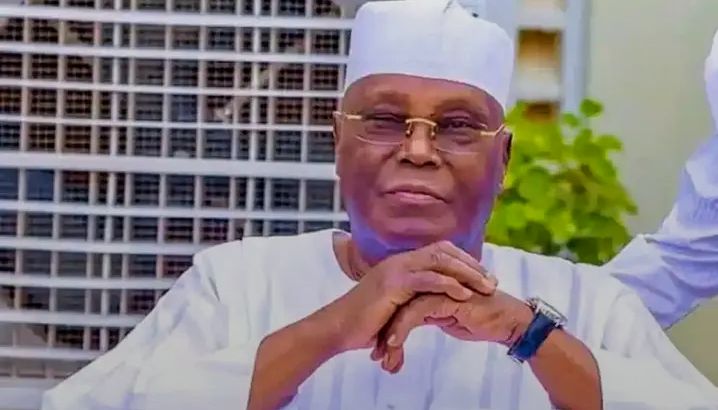
The All Progressives Congress Presidential Campaign Council (APC-PCC) has challenged the presidential candidate of the African Democratic Congress (ADC), Atiku Abubakar, to explain the legal, financial and operational framework for his proposed production subsidy on locally refined petroleum products.
The council said Atiku must clarify how the proposed intervention would operate within the provisions of the Petroleum Industry Act (PIA) 2021 and how the Federal Government would finance the scheme if implemented.
The demand followed Atiku’s recent proposal for a production subsidy targeted at petroleum products refined in Nigeria and sold to Nigerian consumers.
Atiku had said the proposed policy, which he would introduce if elected president in 2027, would be different from the previous petrol subsidy regime because it would support domestic refining rather than subsidise imported fuel.
He said only products confirmed to have been refined in Nigeria would qualify, while the programme would operate under a fixed spending limit, National Assembly approval and independent audits.
However, in a statement issued on Sunday, APC-PCC spokesman, Dele Alake, said the proposal raised important legal, fiscal and practical questions that Atiku needed to address.
APC questions PIA compliance
Alake cited Section 205(1) of the Petroleum Industry Act, which provides for wholesale and retail prices of petroleum products to be determined under unrestricted free-market pricing conditions.
The APC-PCC therefore asked Atiku to explain whether refineries that benefit from the proposed subsidy would be required to sell petrol at a government-prescribed price.
“If the answer is yes,” the council said, Atiku should identify the legal framework that would allow government to impose such a condition and explain how it would remain consistent with the PIA.
The council also asked what would happen if refiners received government support without being required to reduce their pump prices.
According to Alake, Atiku should explain how public support to refiners would translate into lower prices for consumers if there were no enforceable mechanism linking the subsidy to pump prices.
The debate comes as the Nigerian Midstream and Downstream Petroleum Regulatory Authority (NMDPRA) maintains that it does not fix petrol pump prices or issue administrative pricing templates except where statutory conditions for intervention are met.
APC demands cost of proposed subsidy
The ruling party’s campaign council also questioned the potential cost of Atiku’s proposal and how it would be funded.
Atiku has previously explained that his model could involve reducing the cost of crude supplied to qualifying domestic refineries.
He has argued that lowering the cost of refinery feedstock would enable local refiners to produce petrol more cheaply without forcing them to sell below cost.
But the APC-PCC argued that preferentially priced crude could reduce the value accruing to the Federation and, consequently, affect revenues available to the federal, state and local governments.
The council claimed that, depending on the size of the discount, the volume covered and whether the intervention applied to the entire crude barrel or only petrol sold domestically, the cost could run into trillions of naira annually.
It therefore asked Atiku to provide details on the proposed subsidy rate, annual spending limit, volume of crude or petrol to be covered, source of funding and the mechanism that would ensure that consumers actually benefit through lower pump prices.
The APC-PCC also requested safeguards against diversion, smuggling and fraudulent claims, as well as clarification on whether amendments to the Petroleum Industry Act would be required.
Council questions Atiku’s previous position
Alake also questioned Atiku’s current position on subsidy in relation to his previous support for downstream petroleum deregulation.
He recalled that Atiku, while speaking at the Lagos Business School in November 2022, had described the petrol subsidy system as fraudulent and pledged to complete its removal.
The APC spokesman also referred to an August 25, 2026 post by Atiku on X in which the former vice president stated that he would “restore it”, arguing that Atiku should explain the difference between his earlier position and the proposed production subsidy.
Alake said Atiku should also explain how the proposed arrangement would avoid problems associated with the former subsidy system, including alleged abuses, smuggling and fiscal losses.
The council further recalled that diesel and aviation fuel were deregulated during the administration of former President Olusegun Obasanjo, when Atiku served as vice president.
It said petrol remained the major petroleum product under the old subsidy arrangement before the reform process culminated in the Petroleum Industry Act.
Atiku says subsidy would support local refining
Atiku has maintained that his proposal is not a return to the former system of subsidising imported petrol.
He has described the policy as a production subsidy designed to reduce the cost of locally refined fuel.
According to him, government support would be directed at domestic refining so that qualifying refineries could obtain crude at a lower effective cost, produce petroleum products more cheaply and pass the benefit to consumers.
He has also argued that lower fuel prices could reduce transportation and logistics costs, with possible effects on the prices of food and other goods.
Atiku has compared the proposal to government support for local manufacturers, saying the objective would be to lower production costs while encouraging domestic investment and job creation.
APC highlights CNG and deregulation
The APC-PCC contrasted Atiku’s proposal with the Tinubu administration’s efforts to reduce transportation costs through compressed natural gas (CNG) conversion and electric mass transit initiatives.
The council said more than 120,000 vehicles had been converted to CNG and that CNG and electric-bus programmes had reduced fares on some routes.
It also maintained that the Federal Government would continue operating a deregulated downstream petroleum market, which it said had encouraged investment in domestic refining.
The council cited the Dangote Petroleum Refinery as an example of increased domestic refining capacity.
Fuel prices remain major political issue
The renewed dispute over petrol subsidy comes as fuel prices remain a major economic and political issue ahead of the 2027 presidential election.
Atiku has argued that the removal of petrol subsidy since 2023 has contributed to higher transportation, production and logistics costs, placing pressure on households and businesses.
The APC-PCC, however, said the administration would continue implementing measures aimed at reducing transportation costs while maintaining the deregulated petroleum market.
The council also said the NMDPRA was working with the Federal Competition and Consumer Protection Commission on concerns about price-gouging and with the Nigeria Customs Service to tackle the diversion of petroleum products across Nigeria’s borders.
The APC-PCC ultimately challenged Atiku to publish a detailed policy document alongside an independent legal and fiscal assessment of the proposed production subsidy.
Until those details are provided, Alake said, the proposal lacks a clearly established legal and operational framework.
The exchange has further placed fuel pricing, domestic refining and the future of petroleum subsidies at the centre of the economic debate ahead of the 2027 presidential election.
-
 Security2 months ago
NDLEA Declares Alleged Drug Kingpin, Three Associates Wanted, Freezes ₦9.8bn Linked to Syndicate
-
 National Affairs2 months ago
ICPC Uncovers 908 Suspected Ghost Workers Across 50 Federal MDAs, Recovers ₦942 Million
-

 Business/Finance2 months ago
How to Apply for Tunde Onakoya’s ₦250 Million Scholarship Programme and Free Laptop Offer
-
 Politics2 months ago
Atiku Challenges Tinubu to Reveal Details of ₦15.13bn SUV Procurement in 2026 Budget
-
 Judiciary | Public Safety2 months ago
INEC Tells Court Voter Information Is Not Confidential in Emeka Ike’s ₦10bn Lawsuit
-
 Judiciary | Public Safety2 months ago
Court to Rule Friday on NDLEA’s Bid to Destroy ₦480bn Meth Lab in Ogun
-
 Security2 months ago
Family Paid ₦50 Million Ransom to Secure Release of Abducted Kebbi Judge
-
 News2 months ago
2026 Budget: FG Earmarks ₦962.83bn for SUVs, Empowerment Projects Amid Debt Concerns