
National Affairs
Ekiti Showcases Arinta Waterfall, Woos Investors to Tourism Sector


The Ekiti State Government has intensified efforts to position tourism as a major driver of economic growth, employment creation and investment, with a renewed focus on attracting private-sector investment into the state’s tourism assets.
Governor Biodun Oyebanji, who called on investors to explore opportunities in the sector, also expressed the government’s readiness to partner with communities seeking to transform their tourism potentials into sustainable economic ventures.
Oyebanji spoke on Sunday through the Director-General of the Ekiti State Bureau of Tourism Development, Wale Ojo-Lanre, during the 2026 World Tourism Day celebration held at Arinta Waterfall in Ipole-Iloro.
The celebration, which had traditional rulers, tourism enthusiasts, youths, students, government officials and community leaders in attendance, focused on the potential of Arinta Waterfall and the use of digital technology and artificial intelligence to promote tourism destinations in Ekiti to a global audience.
The 2026 World Tourism Day theme, “Digital Agenda and Artificial Intelligence to Redesign Tourism”, provided the platform for stakeholders to examine how emerging technologies could be deployed to improve tourism promotion, visitor experiences and investment opportunities.
Ekiti opens tourism sector to investors
Oyebanji said Ekiti was open to tourism investments, stressing that the state offered significant opportunities for investors because of the growing demand for recreational and tourist destinations.
The governor particularly highlighted the large population of students in the state’s tertiary institutions as part of the potential market for tourism attractions such as Arinta Waterfall.
He said the government was prepared to work with investors to develop the waterfall into a world-class tourist centre, assuring potential investors of the viability of tourism investments in the state.
“Ekiti is open for tourism investment, and the return on investment is very high because there is demand. We have many tertiary institutions here in Ekiti, and the students are always enthusiastic to visit tourist sites.
Arinta Waterfall is one of them. We are very open to investment,” the governor said.
Oyebanji also expressed willingness to partner with host communities and other stakeholders to unlock the economic potential of tourism sites across the state.
Arinta Waterfall positioned for global visibility
Ojo-Lanre described Arinta Waterfall as one of Nigeria’s notable waterfalls, noting that its seven waterfalls within the site made it a distinctive tourism attraction.
He explained that the decision to host the 2026 World Tourism Day celebration at Arinta Waterfall was deliberate, as the event was expected to increase the site’s visibility and attract the attention of tourists and prospective investors.
According to him, digital platforms and artificial intelligence could significantly change how communities promote their tourism destinations by enabling them to reach wider audiences beyond their immediate locations.
He said the technologies could also improve the experiences of visitors by providing better access to information about tourist sites and available services.
The Technical Adviser to the Governor on Youth Inclusion, Ayo Ojo, similarly described the celebration as an opportunity to showcase Arinta Waterfall and other tourism assets in Ekiti to the world.
Ojo said the state had effectively “unlocked” the waterfall and designated it as a tourism laboratory where digital and artificial intelligence technologies could be deployed to promote the destination internationally.
He noted that the presence of other attractions, including the Ikogosi Warm Springs axis, could complement the development of Arinta Waterfall and strengthen Ekiti’s position as a tourism destination.
Monarch seeks infrastructure, private investment
The Olupole of Ipole-Iloro Kingdom, Oba Ezekiel Oladele, commended the state government for choosing Arinta Waterfall as the venue for the celebration.
The monarch appealed for sustained government support and increased private-sector participation to transform the waterfall into a major ecotourism destination.
He said adequate infrastructure, professional management, environmental protection and private investment would enable the site to attract more visitors, create employment opportunities for youths, increase income for residents and stimulate economic activities within the community.
Oba Oladele also called for the deployment of digital maps, virtual tours, online booking platforms, social media and artificial intelligence tools to promote Arinta Waterfall both within Nigeria and internationally.
While advocating greater investment in the site, the monarch stressed the need to ensure that tourism development did not damage the environment or undermine the cultural heritage of the host community.
Media pledges support for tourism promotion
The Chairman of the Nigeria Union of Journalists, Ekiti State Council, Kayode Babatuyi, pledged continued media support for the promotion of Arinta Waterfall and other tourism attractions across the state.
Babatuyi urged journalists to maximise digital platforms to tell compelling stories about Ekiti’s natural and cultural heritage.
He said sustained media coverage would improve the visibility of Arinta Waterfall and other tourist destinations while helping to attract visitors and potential investors.
The renewed focus on Arinta Waterfall comes as Ekiti seeks to diversify its economic opportunities by leveraging its natural attractions, cultural heritage and growing digital infrastructure.
With government, communities and private investors working together, stakeholders believe tourism assets such as Arinta Waterfall and Ikogosi Warm Springs could play a greater role in creating jobs, generating local income and positioning Ekiti as a destination for domestic and international tourists.




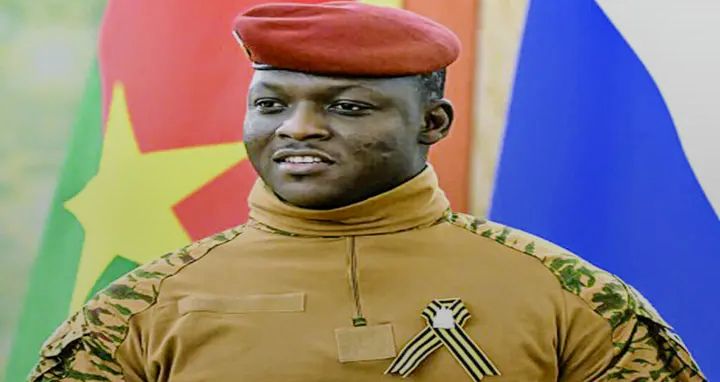
Burkina Faso has inaugurated its first-ever gold refinery as the West African country intensifies efforts to process its mineral resources locally and gain greater control over the lucrative gold industry.
The refinery was officially opened on Monday in the capital, Ouagadougou, by the country’s military leader, Captain Ibrahim Traore, who has made economic sovereignty and domestic industrialisation central to his administration.
Burkina Faso is one of Africa’s major gold producers, ranking third on the continent and producing more than 94 tonnes of gold in 2025, according to figures from the World Gold Council.
However, the country has faced longstanding difficulties in regulating its informal gold mining sector, which has been affected by smuggling and insecurity linked to jihadist groups operating across the Sahel.
The presidency described the inauguration of the refinery as a “historic milestone” in Burkina Faso’s efforts to achieve greater economic independence.
Traore, who seized power in a 2022 coup, said the country’s objective was to move beyond exporting unprocessed minerals and establish a complete domestic value chain.
“Our ambition is no longer to be a country that simply extracts and ships our raw materials abroad,” the presidency quoted Traore as saying.
“We want to refine all our metals locally… we want to have the entire value chain here.”
The development is part of a broader push by Traore’s administration to increase state involvement in the mining sector and revive domestic industrial production.
Under his leadership, Burkina Faso has nationalised several gold mines while also promoting local production in sectors including cotton, tomatoes and textiles.
Authorities have also taken measures to tighten control over gold produced by informal miners.
In 2024, the government suspended gold exports from informal mining operations, with Mines Minister Yacouba Zabre Gouba saying the measure was intended to help authorities better organise the sector.
Traore has previously warned that significant quantities of Burkina Faso’s gold were being smuggled out of the country, arguing that illicit trade could contribute to the financing of armed groups.
Burkina Faso has been battling jihadist insurgencies for years, with armed groups controlling or operating in large parts of the country and carrying out frequent attacks.
The government has mobilised civilian volunteers to support the military in its fight against the insurgents.
Gold has become increasingly valuable as international prices have reached record levels in recent months, making the precious metal an important source of revenue while also contributing to trafficking networks across the Sahel.
According to the presidency, the newly inaugurated National Gold Refinery of Burkina Faso, known as RAFFINOR-BF, has an annual production capacity of 164 tonnes of gold.
The refinery, which has been under construction since 2023, is expected to eventually increase its capacity to as much as 515 tonnes annually.
The facility was built at a cost of 11 billion CFA francs, equivalent to about $19 million, with funding provided by the Burkinabe state in partnership with domestic private-sector investors.
The government expects the refinery to strengthen its ability to monitor gold production and commercialisation while retaining more of the economic value generated from the country’s mineral resources.
The inauguration represents another step in Burkina Faso’s effort to shift from exporting raw materials towards domestic processing and industrialisation.
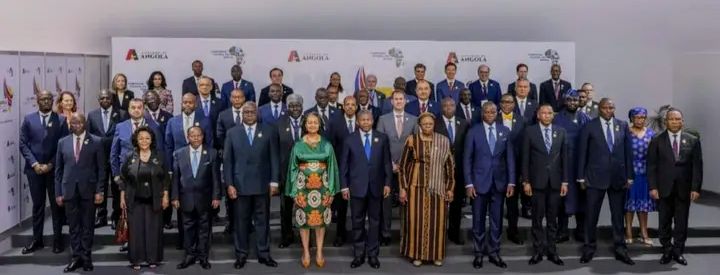
More than 20 African heads of state and government representatives are expected to gather in Egypt on Friday for the inaugural Alamein Africa Forum, a three-day business summit aimed at deepening trade, investment and economic cooperation across the continent.
The summit, which will take place in the Mediterranean city of Alamein, is part of Egypt’s renewed efforts to strengthen its economic and diplomatic influence in Africa amid the growing presence of China and Gulf countries, particularly the United Arab Emirates.
Egypt, which has traditionally focused much of its foreign policy attention on the Middle East and Mediterranean region, has in recent years sought to expand its engagement with African countries through trade, investment and infrastructure projects.
The forum is expected to bring together African political leaders, business executives, bankers and representatives of development institutions to discuss opportunities in infrastructure, trade, agriculture, healthcare, mining, technology and renewable energy.
Egypt’s Deputy Foreign Minister for African Affairs, Mohamed Abu Bakr Saleh, described the gathering as an African platform designed to facilitate business partnerships across the continent.
He said a major objective was to enable businesses from different African regions to establish agreements and partnerships through the forum.
According to Saleh, the event is expected to become a biennial gathering under an African Union mandate.
Egypt seeks stronger economic ties
Egyptian officials estimate the country’s investments across Africa at about $14 billion, with infrastructure projects forming a significant part of its economic engagement.
One of the country’s flagship investments is the $3 billion Julius Nyerere Hydropower Project in Tanzania, which was constructed by a consortium led by Egyptian companies.
Cairo is also seeking to use stronger economic ties with African countries to expand its influence at a time when China and Gulf states have become major investors across the continent.
Saleh said Africa had significant economic potential but required greater investment and stronger intra-African trade to fully exploit its resources.
“Africa possesses vast resources, but they are still not being exploited to the level we would like to see,” he said.
Trade among African countries stood at about $192 billion in 2023, representing roughly 15 per cent of the continent’s total trade.
This compares with more than 55 per cent of total trade conducted within Asia and over 70 per cent in Europe.
Africa also attracted about $70 billion in foreign direct investment in 2025, according to United Nations figures, compared with approximately $1.6 trillion invested globally.
GERD dispute remains a major backdrop
The summit is also taking place against the backdrop of Egypt’s longstanding dispute with Ethiopia over the Grand Ethiopian Renaissance Dam (GERD) on the River Nile.
The approximately $5 billion project, which Ethiopia inaugurated last year, is Africa’s largest hydroelectric project and is viewed by Addis Ababa as critical to economic development and electricity generation.
Egypt, however, has repeatedly raised concerns that the operation of the dam could affect its access to Nile waters, on which the country heavily depends.
More than a decade of negotiations between Egypt, Ethiopia and Sudan has failed to produce a binding agreement governing the filling and operation of the dam.
Egypt has maintained that any arrangement must protect what it describes as its water security.
“Our position on Egypt’s water security has not changed and will not change,” Saleh said, describing the issue as existential for Egypt.
The Alamein Africa Forum therefore comes as Egypt seeks to deepen economic relationships across the continent while continuing to navigate one of Africa’s most persistent disputes over shared water resources.
National Affairs
Dougha Tamarkuro Initiative Supports 50 Police Officers, 20 Children of Fallen Heroes in Bayelsa
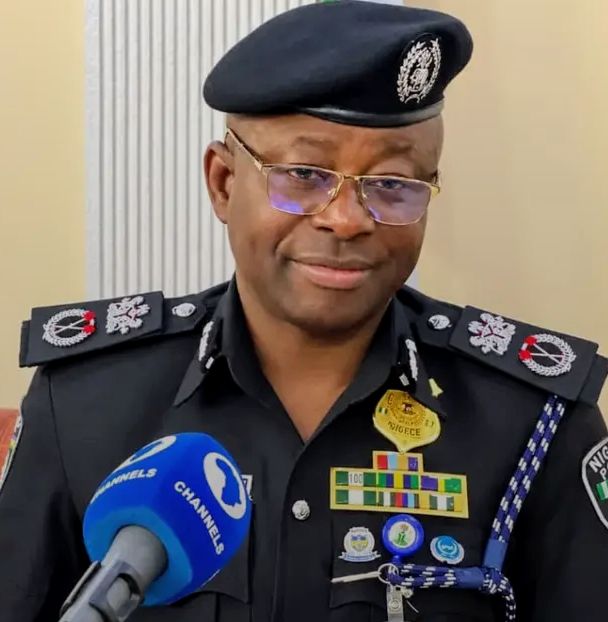
The Dougha Tamarkuro Humanitarian Initiatives (DTHI) has provided welfare and educational support to 50 serving police officers and 20 children of officers who died in active service in Bayelsa State.
The intervention was carried out on Monday at the Police Officers’ Mess in Yenagoa under the organisation’s National Police Welfare and Resilience Programme.
Tagged “The Police Are Our Friends,” the programme was designed to promote the psychological well-being and resilience of police personnel while also supporting the educational needs of children of fallen officers.
The 50 police beneficiaries, drawn from junior, mid-level and senior ranks, participated in a mental health and resilience workshop as part of the programme.
They also received welfare food support aimed at providing additional assistance to personnel serving in the state.
Twenty children of deceased police officers benefited from DTHI’s Fallen Heroes Education Support Scheme, which focuses on supporting the educational needs of children whose parents lost their lives while serving the country.
Speaking at the event, the Bayelsa State Commissioner of Police, CP Ajao Adewale, described the intervention as a significant gesture of support for police personnel and families of officers who died in the line of duty.
Adewale said the initiative complemented the welfare efforts of the Inspector-General of Police, IGP Olatunji Rilwan Disu, towards improving the well-being of police officers and their families.
He stressed the importance of addressing the mental and emotional health of police personnel, noting that the demanding nature of police work required adequate support for officers to effectively perform their duties.
“The mental and emotional well-being of police personnel is essential to effective, professional and compassionate policing. Officers who are adequately supported are better positioned to discharge their responsibilities with renewed commitment and resilience,” the commissioner said.
Adewale commended DTHI for extending its intervention beyond serving officers to include children of fallen police personnel.
He described the support as a recognition of the sacrifices made by police officers who lost their lives while serving the country.
According to him, providing assistance to the families of deceased officers was important to ensure that the sacrifices of fallen personnel continued to be recognised and appreciated.
The commissioner also said humanitarian interventions targeted at police personnel could help strengthen the relationship between the police and members of the public.
He expressed appreciation to DTHI for its commitment to supporting police officers and families of fallen personnel in Bayelsa State.
The intervention underscores the importance of welfare and psychosocial support for security personnel, particularly officers working in demanding environments, while providing assistance to families left behind by personnel who died in active service.
-
 Security2 months ago
NDLEA Declares Alleged Drug Kingpin, Three Associates Wanted, Freezes ₦9.8bn Linked to Syndicate
-

 Business/Finance2 months ago
How to Apply for Tunde Onakoya’s ₦250 Million Scholarship Programme and Free Laptop Offer
-
 National Affairs2 months ago
ICPC Uncovers 908 Suspected Ghost Workers Across 50 Federal MDAs, Recovers ₦942 Million
-
 Politics2 months ago
Atiku Challenges Tinubu to Reveal Details of ₦15.13bn SUV Procurement in 2026 Budget
-

 Judiciary | Public Safety2 months ago
INEC Tells Court Voter Information Is Not Confidential in Emeka Ike’s ₦10bn Lawsuit
-
 Judiciary | Public Safety2 months ago
Court to Rule Friday on NDLEA’s Bid to Destroy ₦480bn Meth Lab in Ogun
-
 Security2 months ago
Family Paid ₦50 Million Ransom to Secure Release of Abducted Kebbi Judge
-
 News2 months ago
2026 Budget: FG Earmarks ₦962.83bn for SUVs, Empowerment Projects Amid Debt Concerns